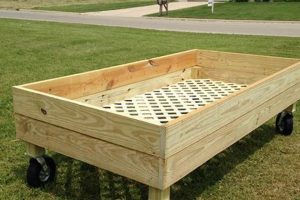
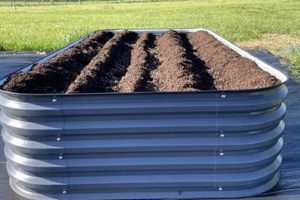
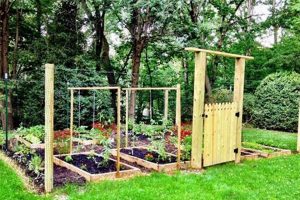
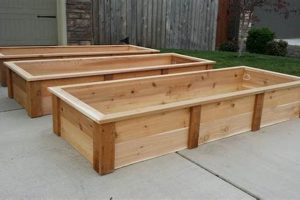
Elevated planting structures constructed using reclaimed timbers offer a distinctive method for cultivating plants above ground level. These structures utilize robust wooden beams, often repurposed from railway infrastructure, to create enclosed areas for soil and vegetation. The design provides an alternative to traditional in-ground gardening, offering enhanced control over soil composition and drainage.
The implementation of such a gardening approach presents several advantages. It mitigates soil compaction, improves accessibility for individuals with mobility constraints, and can extend the growing season by providing better temperature regulation. Historically, similar construction methods have been employed in regions with poor soil quality or limited space, offering a practical solution for food production and ornamental horticulture. The robust nature of the materials used contributes to the longevity of the installations.
The subsequent discussion will delve into the considerations for designing and building these elevated structures, including material selection, construction techniques, and the environmental implications of using repurposed materials. It will also address the appropriate plant selection and maintenance practices for successful cultivation within this specific type of garden setting.
Construction and Maintenance Tips
The following recommendations offer guidance for the successful design, construction, and maintenance of elevated planting structures utilizing reclaimed timbers. Adherence to these principles will contribute to the longevity and productivity of the garden.
Tip 1: Material Assessment: Prior to construction, rigorously inspect the timbers for structural integrity and potential contaminants. Timbers exhibiting significant decay or leaching harmful substances should be rejected.
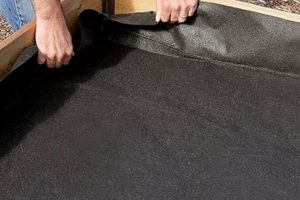
Tip 2: Protective Lining: Consider lining the interior of the structure with a durable, non-toxic barrier. This prevents direct contact between the soil and the treated timber, minimizing the risk of chemical leaching into the growing medium.
Tip 3: Drainage Implementation: Ensure adequate drainage by incorporating a layer of gravel or similar material at the base of the structure. This prevents waterlogging and promotes healthy root development.
Tip 4: Soil Composition: Utilize a well-draining soil mixture specifically formulated for raised bed gardening. Amend the soil with organic matter, such as compost, to improve fertility and water retention.
Tip 5: Structural Reinforcement: For larger structures, consider implementing internal bracing or external supports to enhance structural stability and prevent bowing or collapse over time.
Tip 6: Site Selection: Careful site selection is crucial. Consider sunlight exposure, proximity to a water source, and accessibility for maintenance tasks before constructing the bed.
Tip 7: Regular Inspection: Implement a regular inspection schedule to identify and address any signs of deterioration, pest infestation, or structural issues promptly. Timely intervention prevents minor problems from escalating.
Tip 8: Plant Selection: Choose plants that are well-suited to the growing conditions within the bed, considering factors such as sunlight, soil pH, and available space. Companion planting strategies can further enhance the health and productivity of the garden.
Implementing these guidelines will contribute to a robust and productive garden, minimizing potential environmental concerns and maximizing the longevity of the structure.
The following section will address common concerns associated with these types of gardens and offer solutions for mitigating potential risks.
1. Material Contamination
The utilization of reclaimed timbers in the construction of elevated planting structures introduces the potential for material contamination, a critical consideration impacting both plant health and environmental safety. Timbers sourced from railway applications are frequently treated with preservatives to extend their lifespan and resist decay. Creosote, a common wood preservative, contains polycyclic aromatic hydrocarbons (PAHs) and other substances categorized as potential carcinogens. Direct contact between treated timbers and soil can lead to the leaching of these chemicals into the growing medium, subsequently affecting plant uptake and potentially introducing contaminants into the food chain. The extent of contamination depends on the type and concentration of the preservative used, the age and condition of the timber, and the soil’s pH and organic matter content. Therefore, a thorough assessment of the timber’s history and composition is essential before construction.
Instances of plant damage and soil contamination stemming from treated timbers have been documented. For example, studies have shown that certain vegetables grown in proximity to creosote-treated wood exhibit elevated levels of PAHs. While the degree of uptake varies depending on the plant species, the potential for contamination exists, necessitating preventative measures. Practical applications of this understanding involve careful timber selection, the use of impermeable liners to separate the wood from the soil, and the implementation of soil testing protocols to monitor for the presence of contaminants. Where contamination is detected, remediation strategies, such as soil replacement or the use of phytoremediation techniques, may be required.
In summary, the potential for material contamination represents a significant challenge in the construction of elevated planting structures using reclaimed timbers. Addressing this concern requires a comprehensive approach, encompassing thorough material assessment, the implementation of preventative barriers, and ongoing monitoring for contamination. The long-term success and safety of these gardens hinge on a diligent understanding and mitigation of these risks, ensuring that the benefits of elevated gardening are not overshadowed by unintended environmental or health consequences.
2. Structural Integrity

The structural integrity of elevated planting structures using reclaimed timbers is a paramount consideration, directly influencing both the longevity of the garden and the safety of the surrounding environment. The inherent weight of soil, especially when saturated with water, exerts significant pressure on the retaining walls. Timbers that are compromised by rot, insect damage, or previous structural weaknesses can fail under this load, leading to collapse. This failure not only destroys the garden itself but also poses a potential hazard to individuals and property in the vicinity. Therefore, a thorough assessment of the structural soundness of each timber is an essential first step in the construction process. Factors to evaluate include the presence of large knots, cracks, or any signs of fungal decay. The dimensions of the timbers must also be appropriate for the intended height and width of the bed, ensuring sufficient resistance to bending and shearing forces.
Practical applications of structural integrity principles include proper joint construction and reinforcement. Simple butt joints are often inadequate for withstanding the lateral pressure of the soil. Interlocking joints, such as mortise and tenon or lap joints, provide greater strength and stability. Additionally, the use of metal fasteners, such as screws or bolts, can further enhance the connection between timbers. For larger structures, internal bracing or external supports may be necessary to distribute the load and prevent bowing or outward movement of the walls. The long-term performance of these structures is directly correlated with the initial investment in sound materials and robust construction techniques. The absence of structural integrity can lead to premature failure, necessitating costly repairs or complete reconstruction.
In summary, structural integrity is a non-negotiable aspect of elevated planting structures using reclaimed timbers. Compromised materials or inadequate construction methods inevitably result in compromised performance and potential hazards. A comprehensive understanding of load-bearing principles, combined with careful material selection and meticulous construction techniques, is essential for creating durable and safe garden beds that can withstand the test of time. Attention to structural details minimizes the risk of failure, maximizes the lifespan of the garden, and ensures a safe environment for all involved.
3. Soil Compatibility

Soil compatibility represents a critical determinant of success within elevated planting structures utilizing reclaimed timbers. The enclosed environment necessitates a careful selection of soil media, as it directly influences plant health, nutrient availability, and overall productivity. The lack of direct contact with native soil profiles, inherent in raised bed design, isolates the growing medium, thereby amplifying the importance of its physical and chemical properties. Incompatible soil mixtures can lead to nutrient deficiencies, waterlogging, or pH imbalances, resulting in stunted growth, disease susceptibility, or complete crop failure. For instance, a heavy clay-based soil within a timber-framed bed impedes drainage, creating anaerobic conditions detrimental to root development, whereas a sandy soil may drain too rapidly, leading to moisture stress and nutrient leaching.
Practical considerations for ensuring soil compatibility involve assessing the specific needs of the intended plant species and tailoring the soil mixture accordingly. Amending the soil with organic matter, such as compost or aged manure, improves water retention, aeration, and nutrient content. Incorporating materials like perlite or vermiculite enhances drainage and prevents compaction. Soil pH testing is crucial to determine whether the soil requires amendments to achieve the optimal range for the selected plants. For example, acid-loving plants, such as blueberries or rhododendrons, necessitate a lower pH, achieved through the addition of sulfur or peat moss. Conversely, alkaline-preferring plants benefit from the incorporation of lime. Furthermore, considering the potential for chemical leaching from treated timbers, the inclusion of a barrier layer between the wood and the soil can mitigate the risk of contamination and maintain soil integrity.
In summary, soil compatibility is indispensable for maximizing the benefits of elevated planting structures with reclaimed timbers. An understanding of soil composition, drainage characteristics, and plant nutrient requirements is essential for selecting and amending the soil medium appropriately. By addressing these factors proactively, growers can create a thriving environment for plants, minimize the risk of soil-related problems, and ensure the long-term productivity of their elevated garden beds. The emphasis on soil suitability is vital, linking environmental protection and the garden’s longevity.
4. Drainage Efficiency

Drainage efficiency is a critical determinant of plant health within elevated planting structures constructed using reclaimed timbers. The enclosed nature of these beds, combined with the potential for soil compaction, can impede water flow and create waterlogged conditions. Inadequate drainage leads to anaerobic soil environments, inhibiting root respiration and increasing the risk of root rot and other fungal diseases. The structural components of the bed, particularly if improperly sealed or constructed, can further exacerbate drainage problems by trapping water within the soil profile. Failure to address drainage concerns can result in stunted growth, reduced yields, and ultimately, plant death. For example, if a raised bed utilizing timbers is situated on a compacted clay surface without a permeable base, water will accumulate, saturating the soil and suffocating plant roots. Conversely, well-drained raised beds promote vigorous root development, efficient nutrient uptake, and increased plant resilience to environmental stressors.
Practical applications of effective drainage strategies in these systems include incorporating a layer of coarse gravel or crushed stone at the base of the bed to facilitate water flow away from the soil. Utilizing a well-draining soil mix, amended with materials such as perlite or vermiculite, further enhances drainage capacity. Ensuring proper spacing between the timbers allows for adequate air circulation and prevents water from becoming trapped against the wood, thereby reducing the risk of rot. The installation of drainage pipes or weep holes at strategic locations along the base of the structure can provide an outlet for excess water. Regular monitoring of soil moisture levels is crucial to identify drainage problems early and implement corrective measures. For example, if water remains standing on the soil surface for extended periods after irrigation or rainfall, it indicates poor drainage that requires immediate attention.
In summary, drainage efficiency is an indispensable element of successful elevated planting structures employing reclaimed timbers. Neglecting drainage considerations can compromise plant health, reduce productivity, and shorten the lifespan of the garden bed. Proactive implementation of appropriate drainage techniques, coupled with regular monitoring and maintenance, is essential for creating a thriving environment for plants and ensuring the long-term functionality of the structure. The ability to manage water effectively within these systems directly translates to healthier plants, increased yields, and a more sustainable gardening practice. Ignoring drainage can undermine the benefits of raised-bed gardening.
5. Environmental Impact

The construction of elevated planting structures utilizing reclaimed timbers, particularly those sourced from railway infrastructure, carries a significant environmental impact that necessitates careful consideration. This impact extends from the initial sourcing of materials to the long-term consequences of their use within a garden setting. Mitigating potential adverse effects requires a comprehensive understanding of the various environmental facets involved.
- Resource Depletion and Timber Sourcing
The utilization of reclaimed railroad ties can contribute to reduced demand for newly harvested timber, potentially alleviating pressure on forest ecosystems. However, the extraction and transportation of these heavy materials involve energy consumption and associated emissions. Furthermore, the original felling of trees for the initial construction of the railroad ties contributes to deforestation and habitat loss. A comprehensive life cycle assessment is necessary to fully evaluate the net environmental benefit of using reclaimed versus newly sourced timber.
- Preservative Leaching and Soil Contamination
Railroad ties are typically treated with preservatives, such as creosote, to prevent decay. These preservatives can leach into the surrounding soil over time, contaminating the growing medium and potentially affecting plant health. Creosote contains polycyclic aromatic hydrocarbons (PAHs), which are known carcinogens. Mitigation strategies include lining the raised bed with an impermeable barrier and selecting plants that are less susceptible to PAH uptake. Soil testing should be conducted periodically to monitor for contamination and ensure the safety of the garden environment.
- Waste Management and Disposal
The eventual decommissioning and disposal of reclaimed railroad ties present a waste management challenge. Due to the presence of preservatives, these timbers cannot be readily composted or incinerated without releasing harmful pollutants. Landfilling is often the only viable option, contributing to landfill volume and potential long-term environmental risks. Exploring alternative disposal methods, such as controlled incineration with emission capture, is crucial to minimizing the environmental burden.
- Carbon Footprint and Transportation Emissions
The transportation of heavy railroad ties from their original location to the garden site contributes to greenhouse gas emissions. The distance traveled, mode of transport, and fuel efficiency all impact the overall carbon footprint. Sourcing timbers locally can significantly reduce transportation emissions. Additionally, the initial carbon sequestration by the trees used to create the original railroad ties is offset by the eventual release of carbon during decomposition or incineration. A holistic assessment of the carbon life cycle is necessary to determine the overall climate impact.
The environmental implications of utilizing reclaimed timbers in elevated planting structures are multifaceted and interconnected. While the reuse of materials can be seen as a sustainable practice, the potential for preservative leaching, waste management challenges, and carbon emissions necessitate a thorough evaluation of the environmental trade-offs. Implementing best practices in material selection, construction, and disposal is essential for minimizing the negative impacts and maximizing the environmental benefits of this gardening approach. Further research is needed to quantify the long-term environmental consequences and develop more sustainable alternatives.
Frequently Asked Questions
The following section addresses common inquiries regarding the construction, maintenance, and potential environmental implications of utilizing reclaimed timbers for elevated planting structures. These questions and answers aim to provide clear and concise information to promote informed decision-making.
Question 1: Are reclaimed timbers safe for growing edible plants, considering potential preservative treatments?
Reclaimed timbers may contain preservatives such as creosote, which can leach into the soil and potentially be absorbed by plants. The safety of growing edibles depends on the type and concentration of preservative, the plant species, and mitigation measures employed. Lining the bed with an impermeable barrier is recommended to minimize soil contamination.
Question 2: How can the structural integrity of a raised bed constructed with reclaimed timbers be ensured?
Structural integrity is crucial for preventing collapse. Timbers should be thoroughly inspected for rot, insect damage, or existing weaknesses. Interlocking joints and metal fasteners enhance stability. Internal bracing or external supports may be necessary for larger structures.
Question 3: What type of soil is best suited for elevated planting structures using reclaimed timbers?
A well-draining soil mix amended with organic matter is ideal. Heavy clay soils should be avoided due to their tendency to waterlog. Soil pH should be adjusted to meet the specific requirements of the intended plant species.
Question 4: How can drainage be improved in a raised bed utilizing reclaimed timbers?
A layer of coarse gravel or crushed stone at the base of the bed promotes drainage. Proper spacing between timbers allows for air circulation. Drainage pipes or weep holes can provide an outlet for excess water. Soil moisture should be regularly monitored.
Question 5: What are the environmental considerations when using reclaimed timbers for raised beds?
Environmental considerations include the potential for preservative leaching, the carbon footprint associated with transportation, and the eventual disposal of the timbers. Sustainable sourcing practices and responsible disposal methods are essential to minimize environmental impact.
Question 6: How long can a raised garden bed constructed with reclaimed timbers be expected to last?
The lifespan of a raised bed constructed with reclaimed timbers depends on the quality of the materials, construction techniques, and maintenance practices. Properly constructed and maintained beds can last for several decades, while poorly constructed beds may require more frequent repairs or replacement.
These frequently asked questions highlight the key considerations associated with utilizing reclaimed timbers in elevated planting structures. Careful planning and informed decision-making are essential for ensuring the success and sustainability of this gardening approach.
The following section provides concluding remarks on the benefits and challenges of utilizing this garden type.
Conclusion
The foregoing analysis has illuminated the multifaceted considerations inherent in the construction and maintenance of raised garden beds with railroad ties. While offering distinct advantages in terms of accessibility, soil control, and potential extension of the growing season, the implementation of this gardening method necessitates a thorough understanding of material properties, structural engineering, and environmental implications. The presence of wood preservatives, potential for soil contamination, and challenges associated with end-of-life disposal require careful planning and mitigation strategies.
Ultimately, the successful and sustainable utilization of raised garden beds with railroad ties hinges on a responsible approach that prioritizes environmental stewardship and human health. Prospective gardeners must weigh the benefits against the potential risks and commit to informed decision-making throughout the project lifecycle. Continued research and innovation in alternative materials and construction techniques are crucial for advancing sustainable gardening practices and minimizing the environmental footprint of food production.