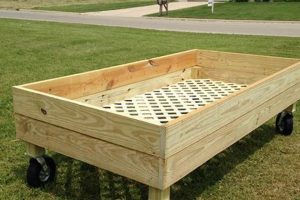
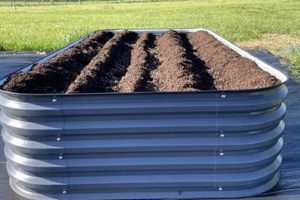
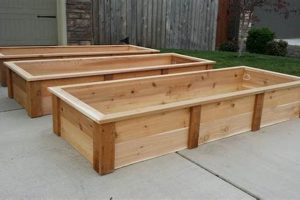
These components are structural elements employed in the construction of elevated planting containers. They provide reinforcement and shape to the corners of the beds, ensuring the integrity of the overall framework. As an example, galvanized steel pieces fitted to the intersecting edges of a wooden raised garden bed illustrate a practical application.
Their significance lies in enhancing the longevity and stability of the raised garden. They protect the corner joints from stress and potential damage caused by soil pressure, moisture, and temperature fluctuations. Historically, less durable materials were used, resulting in quicker degradation; the utilization of metal represents an advancement in garden bed construction, offering increased resistance to environmental factors.
The subsequent sections will delve into the various types of these components, their material properties, installation techniques, and considerations for selecting the appropriate option for diverse gardening needs and aesthetic preferences.
Construction and Maintenance Guidance
The following guidelines provide critical information regarding the selection, installation, and upkeep of corner reinforcements in elevated planting structures.
Tip 1: Material Selection: Prioritize galvanized steel or powder-coated aluminum for optimal corrosion resistance in outdoor environments. Untreated metals are susceptible to rust and degradation, reducing the lifespan of the structure.
Tip 2: Gauge Thickness: Employ a sufficient metal gauge to withstand soil pressure. A thicker gauge provides enhanced structural integrity and prevents bowing or deformation of the corners, particularly in larger beds.
Tip 3: Fastener Compatibility: Utilize stainless steel fasteners to prevent galvanic corrosion between dissimilar metals. This ensures a secure and long-lasting connection between the metal components and the bed’s framing material.
Tip 4: Proper Installation: Ensure precise alignment and secure fastening during installation. Misalignment can compromise structural stability and lead to premature failure of the corner joints.
Tip 5: Drainage Considerations: Implement adequate drainage within the raised bed to minimize water accumulation and prevent accelerated corrosion of the metal elements. Gravel layers or drainage holes can mitigate this issue.
Tip 6: Regular Inspection: Conduct periodic inspections for signs of rust, damage, or loosening of fasteners. Address any issues promptly to prevent further deterioration and maintain the structural integrity of the bed.
Tip 7: Soil pH Management: Monitor and adjust soil pH levels to minimize corrosive effects on the metal. Highly acidic or alkaline soils can accelerate corrosion processes.
Adherence to these guidelines ensures the structural integrity and extends the lifespan of elevated planting structures, maximizing the investment and enhancing gardening outcomes.
The subsequent sections will explore specific design considerations and advanced techniques for optimizing the performance of raised gardens utilizing metallic corner reinforcements.
1. Durability

Durability, concerning raised garden beds, is directly influenced by the construction materials used, especially at the corners. Metallic corner reinforcements contribute substantially to the overall lifespan and resistance to environmental stressors.
- Material Composition and Corrosion Resistance
The inherent properties of the metal used directly impact its ability to withstand prolonged exposure to moisture, soil chemicals, and fluctuating temperatures. Galvanized steel, stainless steel, or powder-coated aluminum provide superior protection against corrosion compared to untreated metals. The specific alloy composition also determines its resistance to oxidation and degradation over time. This corrosion resistance mitigates structural weakening and extends the operational lifespan of the raised bed.
- Gauge Thickness and Structural Load
The thickness of the metal corners dictates their capacity to bear the load of the soil and resist deformation under pressure. A thicker gauge provides enhanced structural integrity, preventing bowing or bending of the corners, particularly in larger beds filled with heavy soil. Insufficient gauge thickness can lead to premature failure and necessitate repairs or replacements, diminishing the overall durability of the raised garden.
- Joint Integrity and Fastening Mechanisms
The method by which the metal corners are attached to the surrounding frame significantly affects the structural integrity and durability of the assembly. Secure and properly installed fasteners, such as stainless steel screws or bolts, prevent loosening or separation over time. Weak or improperly installed joints represent points of vulnerability, potentially leading to structural collapse under stress. The integration of robust fastening mechanisms ensures a stable and long-lasting connection.
- Resistance to Physical Damage
Durable corner components withstand impacts from gardening tools, accidental bumps, and general wear-and-tear. The inherent strength of the metal protects the corner joints from physical damage that could compromise the structural integrity of the bed. This resistance to physical damage is particularly important in high-traffic garden areas or where heavy equipment is used.
In summation, the selection of durable metal corner reinforcements is a crucial factor in maximizing the longevity and stability of raised garden beds. Prioritizing corrosion resistance, adequate gauge thickness, secure fastening, and resilience against physical damage ensures a sustained structural integrity and minimizes the need for costly repairs or replacements over the lifespan of the garden.
2. Corrosion Resistance

The long-term viability of elevated planting containers incorporating metallic edge supports hinges critically on their inherent resistance to corrosive processes. The prolonged exposure to soil moisture, fertilizers, and varying environmental conditions creates an aggressive environment that can degrade many metals. The resultant corrosion weakens the structural integrity of the corners, leading to eventual failure of the entire raised bed. Therefore, the selection of materials exhibiting a high degree of inertness in the presence of corrosive agents is paramount. For instance, untreated steel will rust rapidly when in direct contact with damp soil, leading to significant structural weakening within a relatively short timeframe. Galvanized steel, stainless steel, and powder-coated aluminum represent viable alternatives due to their enhanced resistance to oxidation and chemical degradation.
The practical application of corrosion-resistant corners manifests in several ways. A garden bed constructed with galvanized steel corners will demonstrably outlast one using untreated steel, reducing the need for frequent repairs or replacements. Furthermore, the choice of materials directly influences the health of the plants. Certain corrosion byproducts can leach into the soil, potentially harming plant growth or contaminating the produce. For example, copper-based materials, while corrosion-resistant to some extent, may release ions that are toxic to certain plant species. The correct application of corrosion-resistant materials avoids these issues.
In summary, the successful incorporation of metallic edge supports in elevated planting necessitates a rigorous consideration of material corrosion resistance. Failure to prioritize this characteristic results in reduced structural lifespan, increased maintenance costs, and potential harm to the garden’s ecosystem. Choosing appropriate materials and ensuring proper protective coatings represent critical steps in maximizing the longevity and productivity of the raised garden.
3. Structural Integrity

Structural integrity, in the context of raised garden beds, refers to the ability of the bed to maintain its shape and withstand external forces without collapsing or deforming. Corner components play a fundamental role in ensuring this stability. The joints, where the sides of the bed meet, are inherently the weakest points. Without adequate reinforcement, these points are susceptible to failure under the combined pressure of the soil, moisture, and any external loads. Metallic reinforcements at these junctions mitigate this weakness by distributing stress and preventing separation of the adjoining materials. A concrete example is a raised bed constructed with untreated wooden corners versus one with steel corner brackets. The former is likely to bow outwards or even collapse after a few seasons due to soil pressure and rot, while the latter maintains its form and functionality for an extended period.
The selection of appropriate metallic reinforcement directly impacts the bed’s long-term stability. Factors such as the gauge thickness of the metal, the type of metal (e.g., galvanized steel versus aluminum), and the method of attachment (e.g., screws versus bolts) all contribute to the overall strength of the corner joints. Insufficiently robust corners can lead to a cascading effect, where the failure of one corner places undue stress on the others, ultimately compromising the entire structure. The choice of using metal corners is not merely an aesthetic one, but a functional requirement for ensuring the raised bed can withstand environmental stressors and maintain its shape and integrity over time.
In conclusion, the presence of metallic corner reinforcements is essential for achieving and maintaining structural integrity in raised garden beds. These components serve as critical stress-bearing elements, preventing deformation and collapse of the bed under load. Understanding the relationship between corner design, material properties, and overall structural performance is crucial for selecting appropriate components and ensuring the long-term functionality and aesthetic appeal of the raised garden.
4. Ease of Installation

The characteristic of simple assembly is a crucial consideration in the design and selection of metallic corner components for elevated planting structures. Complex or cumbersome installation procedures can deter potential users, increase construction time, and potentially compromise the structural integrity of the finished product. The design of these elements, therefore, directly impacts the efficiency and accessibility of raised garden bed construction. As an example, corner brackets featuring pre-drilled holes and compatible fastener kits significantly simplify the assembly process compared to those requiring custom drilling or sourcing of specialized hardware. The resulting reduction in assembly time and effort translates to a more user-friendly and readily adoptable gardening solution. This ease contributes to the wider adoption of raised beds.
Furthermore, the method of attachment directly affects installation simplicity. Slip-on corner pieces require minimal effort and typically involve only securing with screws, while weld-on components require specialized equipment and expertise. Threaded corner posts facilitate quick assembly of modular raised beds with interlocking side panels. The availability of clear, concise instructions and readily available tools further enhances the installation experience. Failure to prioritize ease of installation can lead to user frustration, incorrect assembly, and potentially compromised structural integrity. A bed with difficult corner installations can decrease the structure’s potential longevity.
In summary, ease of installation is a critical attribute of metallic corner components for raised garden beds. Simplified designs, pre-drilled holes, compatible hardware, and clear instructions contribute to a more efficient and accessible construction process. Prioritizing this aspect enhances user satisfaction, reduces assembly errors, and ultimately promotes the widespread adoption of raised bed gardening. The success of metal corners relies on ease of use.
5. Aesthetic Compatibility

The visual integration of structural components significantly influences the perceived value and acceptance of constructed elements. Metallic corner reinforcements for raised garden beds are subject to this principle; their appearance must harmonize with the surrounding environment and the overall design of the garden. Discrepancies in style, color, or finish can detract from the visual appeal, impacting the perceived quality of the installation. For example, stark, unpainted steel brackets on a rustic wooden bed can create a jarring visual contrast, undermining the intended aesthetic. This incompatibility can reduce the overall appeal.
The selection of appropriate corner finishes and designs addresses this concern. Powder-coated metal pieces in colors that complement the surrounding landscape or match the bed’s material provide a more cohesive and visually pleasing result. Similarly, the form factor of the corners whether rounded, squared, or ornate should align with the overall design theme. A modern garden may benefit from sleek, minimalist metal corners, while a more traditional setting might call for decorative elements. The practical application of this understanding lies in considering the existing garden design and choosing corner reinforcements that blend seamlessly or provide a complementary visual accent.
In conclusion, aesthetic compatibility is a crucial, though often overlooked, aspect of metallic corner reinforcements for raised garden beds. Careful consideration of color, finish, and design ensures a visually cohesive and appealing installation, enhancing the overall aesthetic of the garden. Failure to prioritize this element can lead to visual disharmony, detracting from the perceived value and quality of the raised bed system.
6. Material Thickness

Material thickness, pertaining to metallic corner reinforcements for elevated planting structures, is directly proportional to the structural integrity and longevity of the raised bed. The thickness of the metal stock used in manufacturing these components dictates their capacity to withstand the outward pressure exerted by the soil fill, moisture, and root systems. Insufficient thickness compromises the corner’s ability to maintain its shape under load, leading to bowing, deformation, and eventual structural failure. For instance, a corner fabricated from thin-gauge steel (e.g., 22 gauge) is demonstrably more susceptible to bending under the weight of saturated soil than a comparable corner constructed from thicker gauge steel (e.g., 14 gauge). This effect is exacerbated in larger raised beds, where the soil volume and corresponding pressure are significantly increased. A thicker material provides increased resistance to stresses.
The practical application of understanding the relationship between material thickness and structural performance manifests in the selection process. Gardeners constructing raised beds must consider the size and intended use of the bed when choosing corners. Larger beds or those intended for heavy soils (e.g., clay) necessitate the use of thicker gauge corners to prevent deformation and ensure long-term stability. Furthermore, the type of metal influences the required thickness. Aluminum, being inherently less rigid than steel, typically requires a greater thickness to achieve comparable load-bearing capacity. Proper application of this understanding will ensure the longevity and prevent future structural failures of the plant structure.
In summary, material thickness is a critical determinant of the structural performance of metallic corner reinforcements. The selection of an appropriate gauge thickness is essential for preventing deformation, ensuring long-term stability, and maximizing the lifespan of raised garden beds. Insufficient thickness represents a significant point of vulnerability, while an informed selection based on bed size, soil type, and material properties ensures a robust and durable planting structure. It is a crucial element to consider.
7. Fastening Security

Fastening security is a critical determinant of the overall structural integrity and longevity of raised garden beds utilizing metallic corner reinforcements. The effectiveness of these corner pieces in providing support and preventing deformation is directly contingent upon the strength and reliability of the fastening methods employed. Inadequate fastening can negate the benefits of even the most robust metal corners, leading to joint separation, instability, and premature failure of the entire structure. For example, using undersized screws or bolts to secure the corners can result in loosening over time due to soil pressure and environmental factors, ultimately compromising the structural integrity of the bed. This can result in a hazardous failure.
Several factors contribute to fastening security, including the type of fastener (e.g., screws, bolts, rivets), the material of the fastener (e.g., stainless steel, galvanized steel), and the installation technique. Stainless steel fasteners are preferred due to their resistance to corrosion, which ensures long-term reliability in damp soil conditions. Proper installation, including pre-drilling pilot holes and using appropriate torque settings, is crucial for achieving a secure and durable connection. The choice of fastening method should be carefully considered based on the materials being joined and the expected load on the corner joints. For instance, thicker wooden frames may require longer and more robust fasteners to adequately distribute the load. Proper fastening is essential.
In summary, fastening security represents a vital and often overlooked aspect of raised garden bed construction utilizing metal corners. Secure and corrosion-resistant fasteners, combined with proper installation techniques, are essential for ensuring the long-term structural integrity and stability of the bed. Neglecting this aspect can lead to premature failure and necessitate costly repairs or replacements. The correct application of stable corner joining leads to reliable soil containments.
Frequently Asked Questions
The following section addresses common inquiries regarding the selection, application, and maintenance of metal components for strengthening the corners of raised garden beds. These answers aim to provide clarity and facilitate informed decision-making.
Question 1: What is the optimal metal for corner reinforcements in terms of corrosion resistance?
Galvanized steel and powder-coated aluminum offer superior resistance to corrosion compared to untreated steel. Stainless steel provides the highest level of corrosion protection, but may be a more expensive option. The selection should consider budget constraints and the expected lifespan of the raised bed.
Question 2: How does the gauge thickness of metal corners influence their structural performance?
A thicker gauge metal offers greater resistance to bending and deformation under load. Thicker gauges are recommended for larger raised beds or those intended for heavy soil types such as clay. Insufficient thickness can lead to bowing and eventual failure of the corner joints.
Question 3: Are specialized tools required for the installation of metal corner reinforcements?
The tools required depend on the specific type of corner reinforcement. Most installations necessitate basic hand tools such as a drill, screwdriver, and wrench. Some corner designs may require specialized tools for cutting or welding metal.
Question 4: How can galvanic corrosion be prevented when using dissimilar metals in raised bed construction?
Galvanic corrosion can be minimized by using stainless steel fasteners to connect dissimilar metals. This prevents the flow of electrons between the metals, which is the underlying cause of galvanic corrosion. A dielectric barrier can be applied between different metals as well.
Question 5: Is it necessary to apply a protective coating to metal corners used in raised beds?
Applying a protective coating, such as paint or sealant, can further enhance the corrosion resistance of metal corners. This is particularly important in regions with high humidity or acidic soils. However, ensure the coating is non-toxic and safe for use in gardening applications.
Question 6: How frequently should metal corners be inspected for signs of corrosion or damage?
Metal corners should be inspected at least annually for signs of rust, deformation, or loose fasteners. Any identified issues should be addressed promptly to prevent further deterioration and maintain the structural integrity of the raised bed.
These FAQs address key considerations for utilizing metal supports in elevated planting structures. Understanding these facets is crucial to maximize the effectiveness and lifespan of your gardening solution.
The subsequent section provides a comparative analysis of different materials commonly employed in the construction of supports for this garden structure.
Conclusion
This exploration has detailed the vital role that metal corners play in raised garden bed construction. Key attributes such as durability, corrosion resistance, structural integrity, ease of installation, aesthetic compatibility, material thickness, and fastening security have been examined, highlighting their individual contributions to the overall performance and longevity of these gardening structures. The selection of appropriate materials and construction techniques remains paramount to realizing the full potential of raised beds.
Therefore, a thorough understanding of these factors is critical for both amateur and professional gardeners seeking to create robust and aesthetically pleasing elevated planting solutions. The continued advancement in material science and design promises further improvements in the effectiveness and sustainability of raised garden bed systems, underscoring the enduring importance of well-engineered metallic corner reinforcements.