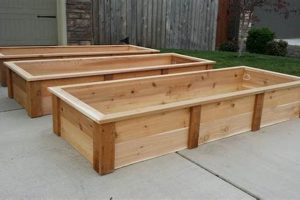
Cultivation structures made from permeable, geotextile materials that elevate the growing surface are becoming increasingly popular. These structures offer an alternative to traditional in-ground gardens or rigid raised beds, providing a contained environment for plants while allowing for air and water permeability. These containers are available in various sizes and shapes, catering to different gardening needs and spatial constraints.
The implementation of elevated soil containment offers several advantages. Improved drainage, enhanced aeration, and temperature regulation contribute to healthier root systems and vigorous plant growth. Furthermore, the structures mitigate soil compaction, making gardening more accessible to individuals with physical limitations. Historically, elevated gardening techniques have been employed to overcome poor soil conditions or extend growing seasons; the current iteration provides a lightweight and versatile solution.
The following sections will delve into the specifics of material properties, construction considerations, ideal plant selection, appropriate maintenance practices, and the comparative advantages and disadvantages of this type of gardening system versus other options available to the horticultural enthusiast.
Optimizing Geotextile Garden Beds
The following tips outline best practices for achieving optimal results when utilizing geotextile containers for gardening purposes. Careful consideration of these points will contribute to increased plant health and overall productivity.
Tip 1: Site Selection: Prior to installation, assess the intended location’s sunlight exposure and drainage patterns. Geotextile allows water to permeate; however, excessive saturation in the underlying ground can still negatively impact plant health.
Tip 2: Soil Composition: Select a soil mix specifically formulated for container gardening. This type of mix generally contains a balance of organic matter, perlite, and vermiculite, which promotes drainage and aeration within the confined space.
Tip 3: Watering Practices: Monitor soil moisture levels regularly. Due to the increased aeration and drainage inherent in geotextile, watering may be required more frequently compared to traditional in-ground gardens.
Tip 4: Fertilization Strategies: Implement a balanced fertilization schedule appropriate for the specific plants being cultivated. Slow-release fertilizers or liquid feeds can be applied according to package instructions.
Tip 5: Pest and Disease Management: Regularly inspect plants for signs of pests or disease. Early detection and intervention are crucial to prevent widespread infestations or infections within the contained environment.
Tip 6: Bed Maintenance: Periodically remove any accumulated debris from the surface of the geotextile to prevent clogging and maintain optimal water permeability. Consider replacing the growing medium every few seasons to replenish nutrients and prevent compaction.
Tip 7: Choosing the Right Plants: Select plants that are well-suited for container gardening and the available space. Avoid overcrowding, as this can lead to competition for resources and increased susceptibility to disease.
Adhering to these recommendations will enhance the functionality and longevity of geotextile gardening systems, resulting in abundant harvests and aesthetically pleasing displays.
The subsequent section will address common challenges encountered when utilizing geotextile beds and provide practical solutions for overcoming them.
1. Material Durability

The correlation between material durability and the performance of elevated cultivation structures constructed from geotextiles is paramount. The geotextile’s composition dictates its resistance to degradation from ultraviolet radiation, moisture, and physical stress. A compromised material integrity directly impacts the structural integrity of the elevated bed, potentially leading to collapse, soil loss, and compromised plant health. For instance, a geotextile susceptible to UV degradation may weaken and tear within a single growing season, rendering the structure unusable and necessitating costly replacement. The selection of high-quality, durable geotextiles is therefore not merely a cosmetic consideration, but a fundamental prerequisite for long-term functionality and cost-effectiveness.
Specific examples highlighting the significance of durable materials include comparing woven versus non-woven geotextiles. Woven materials, often constructed from polypropylene, tend to exhibit higher tensile strength and resistance to tearing compared to some non-woven counterparts. This translates to increased resistance to expansion and contraction cycles caused by soil moisture fluctuations and freeze-thaw events. Furthermore, the material’s resistance to microbial degradation plays a crucial role in maintaining its integrity over time. Geotextiles treated with antimicrobial agents can prevent the breakdown of the material by soilborne microorganisms, further extending the lifespan of the elevated bed.
In summary, the longevity and efficacy of elevated geotextile cultivation depend heavily on the inherent durability of the chosen material. Premature degradation leads to structural failure, soil erosion, and ultimately, compromised plant growth. Selecting geotextiles engineered for resistance to UV radiation, physical stress, and microbial degradation is a critical investment that ensures the sustainable operation and economic viability of this gardening method.
2. Drainage Efficiency

The performance of elevated cultivation structures constructed from geotextile materials is inextricably linked to the drainage efficiency of the chosen fabric. Unlike traditional impermeable containers, the permeable nature of geotextiles allows for the passive release of excess water from the soil matrix. This characteristic mitigates the risk of waterlogged soil, a primary cause of root rot and nutrient deficiencies in plants. A compromised drainage system, due to fabric clogging or improper soil composition, can lead to anaerobic conditions within the root zone, inhibiting nutrient uptake and ultimately jeopardizing plant health. For instance, the cultivation of moisture-sensitive plants, such as lavender or rosemary, in a poorly draining environment will invariably result in stunted growth and increased susceptibility to fungal diseases. Therefore, adequate drainage represents a foundational element for successful utilization of geotextile gardening systems.
The effectiveness of drainage hinges not only on the fabric’s permeability but also on the composition of the growing medium. A heavy clay soil, even within a permeable container, will impede water flow and negate the drainage benefits offered by the geotextile. Conversely, a well-draining soil mix, composed of materials such as perlite, vermiculite, and composted bark, facilitates the efficient removal of excess water, thereby maintaining optimal soil aeration. Furthermore, the strategic placement of drainage layers, such as gravel or coarse sand, at the base of the container can further enhance drainage capacity, particularly in areas with heavy rainfall or poor underlying soil conditions. The interplay between fabric permeability, soil composition, and supplemental drainage layers constitutes a holistic approach to water management within these cultivation systems.
In conclusion, the implementation of elevated geotextile cultivation methods necessitates a thorough understanding of the relationship between drainage efficiency, material properties, and soil composition. Inadequate drainage predisposes plants to a cascade of detrimental effects, ranging from nutrient deficiencies to root rot and ultimately, plant death. Selecting appropriate geotextiles, employing well-draining soil mixes, and implementing supplemental drainage strategies are critical steps in ensuring the long-term health and productivity of plants cultivated within these systems.
3. Soil Volume

The volume of soil contained within elevated cultivation structures constructed from geotextile material is a critical determinant of plant growth and overall system performance. A direct correlation exists between available soil volume and the root development potential of cultivated plants. Insufficient soil volume restricts root expansion, limiting nutrient and water uptake, and consequently impacting plant vigor and yield. Conversely, an appropriately sized soil volume provides ample space for root growth, facilitating access to essential resources and supporting robust plant development. The selection of container size should therefore align with the specific requirements of the intended plant species, considering mature size, root structure, and nutrient demands. For instance, shallow-rooted herbs may thrive in smaller containers, while larger vegetable plants, such as tomatoes or peppers, necessitate significantly greater soil volumes to support their extensive root systems.
The practical significance of understanding soil volume requirements extends beyond mere plant size. Adequate soil volume provides a buffer against fluctuations in moisture and nutrient availability. A larger soil mass retains more water, reducing the frequency of irrigation, and offers a greater reservoir of nutrients, minimizing the risk of deficiencies. This stability is particularly important in challenging environments or for gardeners with limited time for maintenance. Furthermore, soil volume influences soil temperature. Larger volumes tend to exhibit greater thermal inertia, buffering against rapid temperature changes that can stress plant roots. The selection of appropriate container dimensions represents a proactive measure to mitigate environmental stressors and promote plant resilience. For example, in regions with hot summers, larger soil volumes help maintain cooler root temperatures, preventing heat stress and optimizing plant performance. This underscores the critical role of informed soil volume selection in tailoring the geotextile cultivation system to specific environmental conditions and plant requirements.
In conclusion, the relationship between soil volume and plant health within elevated geotextile structures is fundamental. Insufficient volume restricts root growth and resource access, while an appropriately sized volume promotes vigorous development and enhances resilience to environmental stressors. The selection of container dimensions should be guided by the specific needs of the intended plant species and the prevailing environmental conditions. Overcoming the challenge of determining optimal soil volumes requires a careful assessment of plant characteristics and a proactive approach to tailoring the growing environment to meet those needs. This understanding is essential for maximizing the potential of geotextile cultivation and achieving successful gardening outcomes.
4. Portability Options
The inherent design and construction of fabric raised garden beds present distinct portability advantages compared to traditional in-ground gardens or rigid raised bed structures. The ability to relocate a garden bed offers significant benefits in terms of optimizing sunlight exposure, adapting to changing environmental conditions, or facilitating relocation of the entire gardening operation. The following details outline key facets of portability options within this context.
- Integrated Handles and Straps
Many commercially available fabric raised garden beds incorporate reinforced handles or straps sewn directly into the fabric. These features provide designated lifting points, enabling a single individual, or two depending on the size and soil saturation, to move the bed short distances. This is particularly useful for repositioning the bed to capture optimal sunlight or to protect plants from inclement weather events.
- Lightweight Material Construction
Compared to wooden or concrete raised beds, fabric raised garden beds are significantly lighter, even when filled with soil. This reduced weight facilitates easier handling and relocation, especially when the bed is only partially filled. The use of lightweight materials also minimizes the risk of back strain or injury during the moving process.
- Temporary Garden Solutions
The portability aspect allows for temporary garden installations, ideal for renters or individuals with limited permanent space. Fabric beds can be easily set up in a desired location and subsequently dismantled and moved when necessary, leaving minimal impact on the underlying surface. This flexibility offers a significant advantage over fixed garden structures.
- Adaptability to Seasonal Changes
Portability enables adaptation to seasonal changes. During colder months, beds can be relocated to a more sheltered location, such as a greenhouse or against a building’s south-facing wall, to extend the growing season. Similarly, during excessively hot periods, the beds can be moved to a shadier area to protect plants from heat stress.
These facets of portability enhance the adaptability and utility of fabric raised garden beds. The ability to easily relocate the growing environment provides gardeners with increased control over environmental factors, facilitating optimized plant growth and enabling flexible gardening solutions for a variety of situations and limitations, compared to fixed gardening approaches. This offers a key benefit that increases the accessibility and appeal of gardening to a broader range of individuals.
5. Aeration Benefits

The increased air circulation within the root zone of plants cultivated in fabric raised garden beds constitutes a primary advantage of this gardening method. Unlike traditional containers or in-ground planting, the permeable nature of the fabric allows for enhanced gas exchange, facilitating the diffusion of oxygen into the soil and the release of carbon dioxide. This improved aeration directly promotes healthier root development, as oxygen is essential for root respiration and nutrient uptake. For example, root vegetables such as carrots and radishes, which require well-aerated soil to prevent deformation and promote uniform growth, thrive in fabric raised garden beds due to this inherent advantage. The improved gaseous exchange is a critical element in supporting plant metabolism and overall vigor.
The practical implications of enhanced aeration extend beyond improved root health. Well-aerated soil supports a thriving population of beneficial microorganisms, including bacteria and fungi, which play a crucial role in nutrient cycling and disease suppression. These microorganisms require oxygen for their metabolic processes, and their activity directly contributes to the availability of essential nutrients to plants. Furthermore, improved aeration reduces the risk of anaerobic conditions developing in the soil, which can lead to the production of toxic compounds that inhibit plant growth. In heavier clay soils, the aeration benefits of fabric raised beds are particularly pronounced, as the fabric helps to break up soil compaction and improve drainage, creating a more favorable environment for root growth and microbial activity. Real-world examples include increased yields of crops such as tomatoes and peppers when grown in fabric beds compared to traditional containers.
In summary, the aeration benefits derived from the use of fabric raised garden beds significantly contribute to improved plant health, increased yields, and enhanced disease resistance. The permeable fabric promotes optimal gas exchange within the root zone, fostering healthy root development, supporting beneficial microbial activity, and preventing the accumulation of toxic compounds. While challenges such as potential moisture loss due to increased aeration need to be addressed through appropriate watering practices, the overall benefits of enhanced aeration make fabric raised garden beds a valuable tool for gardeners seeking to optimize plant growth and create a thriving garden environment.
Frequently Asked Questions About Geotextile Elevated Cultivation Structures
The subsequent questions and answers address common inquiries and misconceptions regarding the utilization of fabric raised garden beds, providing clarity and guidance for prospective users.
Question 1: What is the expected lifespan of a standard geotextile gardening container?
The lifespan varies considerably based on material quality, environmental conditions, and maintenance practices. Generally, a well-constructed unit employing UV-resistant geotextiles can last from three to five years. Consistent exposure to direct sunlight, extreme weather events, and inadequate care may reduce longevity.
Question 2: Is it feasible to utilize any type of soil in elevated gardening containers constructed from geotextiles?
While the permeable nature of the geotextile allows for some degree of soil flexibility, optimal performance requires a well-draining soil mix specifically formulated for container gardening. Heavy clay soils should be avoided due to their propensity to compact and impede drainage.
Question 3: How does one mitigate the increased watering frequency often associated with geotextile containers?
The enhanced drainage inherent in geotextile materials can lead to increased moisture loss. To counter this, implement regular monitoring of soil moisture levels, incorporate moisture-retentive amendments such as coco coir, and consider utilizing drip irrigation systems for efficient water delivery.
Question 4: Are fabric raised garden beds suitable for cultivation in climates characterized by cold winters?
Elevated gardening structures constructed from geotextiles can be utilized in colder climates; however, appropriate winterization strategies are essential. This may involve insulating the container, relocating it to a sheltered area, or selecting plant varieties that are cold-hardy.
Question 5: Can geotextile containers effectively prevent the spread of invasive plant species?
Elevated geotextile structures offer a degree of containment; however, they do not constitute an absolute barrier against invasive species. Vigilant monitoring and removal of any escaping plant material are necessary to prevent unwanted spread.
Question 6: Is it advisable to reuse geotextile containers for multiple growing seasons?
Reuse is generally permissible, provided the fabric remains structurally sound and free from disease or pest infestations. Thorough cleaning and sterilization of the container between plantings are recommended to minimize the risk of pathogen transmission.
In essence, thoughtful planning and diligent maintenance are paramount for maximizing the benefits and mitigating the potential drawbacks associated with utilizing geotextile-based gardening systems.
The succeeding segment will explore various strategies for troubleshooting common issues encountered when utilizing elevated gardening structures constructed from geotextiles.
Conclusion
This exploration of fabric raised garden beds has elucidated their inherent benefits and potential limitations. Key considerations, including material durability, drainage efficiency, and soil volume, directly influence the success of these cultivation systems. Portability offers enhanced flexibility, while the aeration benefits significantly contribute to plant health. Successful utilization hinges on informed decision-making and diligent maintenance practices.
As urban gardening and sustainable agricultural practices gain prominence, the role of innovative solutions like fabric raised garden beds will continue to expand. Prudent implementation, guided by a thorough understanding of material properties and environmental considerations, will unlock their full potential, fostering productive and environmentally responsible gardening endeavors. Further research into optimized soil compositions and long-term material performance will undoubtedly shape the future of this evolving gardening method.