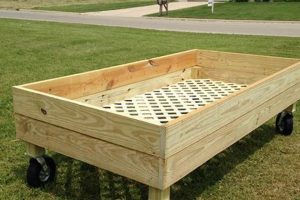
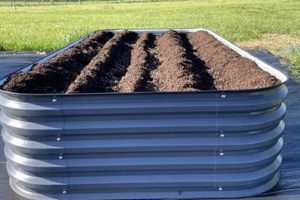
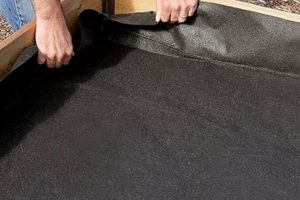
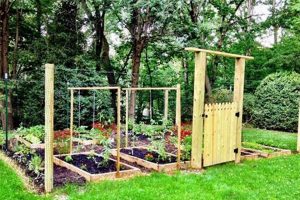
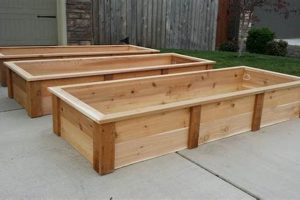
Constructing elevated planting areas on inclines involves creating level, contained spaces for growing plants where the ground is uneven. This technique mitigates challenges presented by sloping terrain, allowing for better soil retention and water management. For example, a series of tiered platforms can be built along a hillside, each providing a flat, usable surface for cultivation.
Such projects maximize usable growing space in yards with uneven topography, preventing soil erosion and facilitating efficient irrigation. Historically, terraced agriculture has been practiced for centuries to cultivate crops on hillsides, demonstrating the long-standing effectiveness of managing sloping land for agricultural purposes. The resulting improved drainage and accessibility makes gardening easier and more productive.
The following sections will address critical aspects, including site assessment, material selection, construction techniques, and drainage considerations for successfully implementing this landscaping method. Detailed instructions will guide the reader through each stage of the process, ensuring a stable and productive planting area.
Construction Tips for Elevated Planting Areas on Inclines
The following are essential considerations for ensuring the successful construction and longevity of elevated planting structures on sloped ground.
Tip 1: Site Assessment is Crucial: Before commencing any construction, thoroughly evaluate the slope’s grade, soil composition, and drainage patterns. Understanding these factors will inform design choices and material selection, preventing potential structural issues later on.
Tip 2: Utilize Durable Materials: Select materials resistant to weathering, decay, and pest infestation. Pressure-treated lumber, naturally rot-resistant wood (e.g., cedar or redwood), or concrete blocks are recommended for longevity.
Tip 3: Ensure Proper Drainage: Incorporate drainage solutions to prevent waterlogging and root rot. This may involve adding gravel layers at the base of the construction, installing drainage pipes, or amending the soil with organic matter to improve drainage.
Tip 4: Level Each Tier Precisely: Use a spirit level to ensure each tier is perfectly horizontal. This prevents soil erosion, facilitates even water distribution, and creates a more aesthetically pleasing outcome.
Tip 5: Anchor the Structure Securely: Employ sturdy anchoring methods to prevent movement or collapse, especially on steeper slopes. This may involve using rebar stakes, buried timbers, or concrete footings.
Tip 6: Backfill Correctly: When backfilling, use a well-draining soil mix suitable for the intended plants. Compact the soil in layers to prevent settling and maintain structural integrity.
Tip 7: Consider Accessibility: Design the layout with accessibility in mind, leaving adequate space between tiers for maneuvering and tending to plants.
Implementing these guidelines will contribute to the creation of stable, functional, and aesthetically pleasing planting areas capable of withstanding the challenges presented by sloping landscapes.
The following sections will address the ongoing maintenance for a healthy garden.
1. Planning

Constructing elevated planting structures on an incline necessitates meticulous planning as a foundational element. This preliminary stage dictates the project’s feasibility, efficiency, and long-term success. Improper assessment of site conditions during the planning phase can result in structural instability, inadequate drainage, and ultimately, plant failure. For example, neglecting to analyze soil composition can lead to the selection of inappropriate backfilling materials, causing compaction and hindering root development.
Comprehensive planning involves several critical considerations. The angle of the slope determines the necessary degree of terracing or retaining wall support required. The presence of existing vegetation and underground utilities dictates the extent of site preparation and potential relocation efforts. Furthermore, understanding local climate patterns, including rainfall and sun exposure, informs decisions regarding drainage system design and plant selection. Without a well-defined plan, resource allocation becomes inefficient, potentially leading to cost overruns and delays. Consider a scenario where insufficient consideration is given to sunlight exposure; the planting structure might inadvertently shade other areas of the garden or fail to provide adequate light for the chosen plants.
In summary, diligent planning is not merely an initial step but an indispensable component that informs every subsequent stage of construction. From material selection to site preparation and planting design, the planning phase sets the stage for a stable, functional, and aesthetically pleasing elevated planting area on an incline. Failing to adequately plan increases the risk of structural failure, poor drainage, and ultimately, a diminished gardening experience. A thorough planning process ensures the construction process goes smoothly.
2. Excavation

Excavation is a fundamental component of constructing elevated planting structures on inclines, directly influencing the stability and functionality of the finished project. The process involves removing existing vegetation, topsoil, and unstable material to establish a solid, level base upon which the planting structure will rest. Inadequate excavation can lead to settling, structural failure, and compromised drainage, negating the benefits of the elevated construction. The depth and extent of excavation are dictated by the slope’s grade, the soil’s composition, and the designed size and weight of the planting structure. For example, on a steep slope with loose soil, a more extensive excavation might be necessary to reach a stable subsoil layer capable of supporting the structure’s load. Failure to properly excavate can result in a situation where the structure shifts or collapses over time, particularly after periods of heavy rainfall or freeze-thaw cycles.
The excavated area must be carefully prepared to ensure proper drainage and prevent water accumulation behind the structure. This often involves creating a slight back slope or installing drainage pipes to redirect water away from the foundation. The excavated material itself may need to be amended or replaced with a more suitable backfill material to promote proper drainage and root growth within the elevated bed. Consider a situation where dense clay soil is excavated but not replaced with a well-draining mix; this can lead to waterlogging within the bed, inhibiting plant growth and potentially damaging the structural integrity of the retaining walls. The accuracy of the excavation directly impacts the ease and success of subsequent leveling and stabilization efforts.
In summary, excavation is not merely the act of removing soil but a critical step in creating a stable and well-drained foundation for elevated planting structures on inclines. Careful planning and execution of the excavation process are essential to prevent future structural problems and ensure the long-term health and productivity of the garden. Proper excavation helps to avoid problems such as erosion that can damage the slope’s landscape.
3. Leveling

Leveling represents a critical stage in the construction of elevated planting structures on inclines, functioning as the linchpin for structural stability and optimal growing conditions. Achieving a perfectly horizontal plane within each tier of the planting structure directly impacts water distribution, soil retention, and overall aesthetic appeal. The failure to adequately level can result in uneven moisture levels, leading to nutrient deficiencies in certain areas and waterlogging in others. For instance, if one side of the bed is significantly lower than the other, water will accumulate on the lower side, potentially causing root rot while simultaneously depriving the higher side of essential hydration. This creates an imbalanced environment detrimental to plant health and productivity.
Precise leveling is typically achieved using tools such as spirit levels, laser levels, or builders’ levels, depending on the scale of the project. The process involves carefully adjusting the supporting structures, such as timbers or concrete blocks, to ensure a consistent elevation across the entire surface of the planting area. On steeper slopes, terracing becomes necessary, requiring multiple leveled tiers to accommodate the change in elevation. In such cases, each tier must be individually leveled and securely connected to the adjacent tiers to prevent slippage or collapse. An example includes the use of retaining walls anchored into the hillside to provide a stable foundation for each leveled platform.
In conclusion, leveling is not merely a cosmetic adjustment but an indispensable aspect of constructing elevated planting structures on inclines. Its impact extends beyond aesthetics, directly affecting plant health, water management, and long-term structural integrity. Accurate leveling ensures a uniform growing environment, promoting healthy plant growth and maximizing the productivity of the garden. Without careful attention to leveling, the entire structure is compromised, potentially leading to costly repairs and reduced yields. Proper water management, soil retention, and the beauty of the raised garden are all impacted by leveling.
4. Drainage

Effective drainage is inextricably linked to the success of constructing elevated planting structures on sloped ground. The inherent challenge presented by inclines is the natural concentration of water flow downhill, potentially leading to waterlogging and soil erosion within the planting area. Therefore, drainage considerations are not an optional addendum but a fundamental design element, directly impacting plant health, structural integrity, and the longevity of the construction. Failure to address drainage adequately results in an environment conducive to root rot, nutrient leaching, and ultimately, plant death. For example, without proper drainage, heavy rainfall saturates the soil, depriving roots of oxygen and creating anaerobic conditions that favor the development of fungal diseases.
Implementing appropriate drainage solutions involves a multifaceted approach. This may include incorporating a layer of gravel or crushed stone at the base of the bed to facilitate water percolation. Installing drainage pipes or French drains to redirect excess water away from the planting area is often necessary, particularly on steeper slopes. Amending the soil with organic matter, such as compost or peat moss, improves its drainage capacity and prevents compaction. Terracing, a common technique for managing slopes, also aids in drainage by slowing down water runoff and allowing for more even distribution. Neglecting to consider the slope’s natural drainage patterns can lead to water accumulating behind retaining walls, creating hydrostatic pressure that can compromise their structural integrity. Proper drainage can also prevent soil erosion, protecting the surrounding landscape.
In summary, drainage is not merely a component of constructing elevated planting structures on inclines; it is a prerequisite for their sustainability. Ignoring drainage concerns undermines the benefits of elevated planting, creating an environment that is both detrimental to plant health and potentially damaging to the structure itself. Implementing a comprehensive drainage strategy, tailored to the specific characteristics of the slope and soil, is essential for ensuring a thriving and long-lasting garden. A well-designed drainage system prevents water accumulation and provides the necessary growing conditions.
5. Stabilization

Stabilization is paramount in the construction of elevated planting structures on sloped terrain. It addresses the inherent instability of inclined surfaces, mitigating the risks of soil slippage, structural collapse, and long-term degradation of the raised garden bed. Effective stabilization techniques ensure the planting structure remains intact and functional, providing a secure and productive environment for plant growth.
- Retaining Walls and Terracing
Retaining walls are structures designed to hold back soil and prevent downslope movement. They are often constructed from materials such as timber, concrete blocks, or stone. Terracing involves creating a series of level platforms, each supported by a retaining wall or reinforced slope. Both techniques counteract gravitational forces, stabilizing the soil and providing level surfaces for planting. Without adequate retaining structures, the soil within the planting bed will gradually erode, undermining the stability of the entire structure. For example, a dry-stacked stone wall can provide both structural support and aesthetic appeal, while properly engineered concrete retaining walls offer superior strength on steeper slopes.
- Soil Reinforcement Techniques
Soil reinforcement involves incorporating materials into the soil mass to increase its shear strength and resistance to deformation. Geogrids, geotextiles, and soil nails are commonly used to reinforce slopes and prevent soil slippage. These materials interlock with the soil particles, creating a composite material with enhanced stability. Soil reinforcement is particularly useful in situations where space is limited, or traditional retaining walls are impractical. For instance, a geogrid can be layered within the soil mass behind a retaining wall to further enhance its stability and prevent soil creep.
- Drainage Control Measures
Excessive water accumulation within the soil can significantly reduce its shear strength and increase the risk of slope failure. Proper drainage control measures are essential for maintaining stability. These measures include installing drainage pipes, French drains, and surface water diversions to redirect water away from the planting area. A well-designed drainage system prevents hydrostatic pressure from building up behind retaining walls, reducing the risk of collapse. For example, a perforated drainage pipe installed at the base of a retaining wall can effectively remove excess water, preventing soil saturation and maintaining stability.
- Anchoring and Foundation Design
The foundation of the raised garden bed must be adequately anchored to the underlying soil or bedrock to prevent movement or collapse. The design of the foundation depends on the slope’s grade, soil conditions, and the size and weight of the structure. Anchoring methods include using rebar stakes, buried timbers, or concrete footings to secure the base of the structure. A properly designed foundation distributes the load of the planting bed evenly across the soil, minimizing the risk of settling or structural failure. For example, concrete footings extending below the frost line can provide a stable and frost-resistant foundation for the planting structure.
In conclusion, stabilization is not merely an add-on but an integral aspect of building raised garden beds on slopes. The use of retaining walls, soil reinforcement, drainage control, and proper anchoring techniques collectively contribute to the long-term stability and functionality of the planting structure. Neglecting stabilization measures compromises the investment and renders the raised garden bed susceptible to premature failure. Through diligent planning and implementation of appropriate stabilization methods, a sustainable and productive elevated garden can be successfully established on even the most challenging of slopes.
Frequently Asked Questions
The following elucidates common inquiries regarding the design, construction, and maintenance of raised planting beds on sloped terrain, addressing critical aspects for successful implementation.
Question 1: What are the primary structural considerations when building on a slope?
The stability and weight distribution of the structure must be assessed. Retaining walls, terracing, and proper anchoring are critical to prevent soil erosion and structural failure.
Question 2: How does one address drainage in a sloped planting bed?
Effective drainage is crucial to prevent waterlogging. Implementing a gravel base, installing drainage pipes, and amending the soil with organic matter are recommended practices.
Question 3: What materials are best suited for constructing raised beds on slopes?
Durable, weather-resistant materials such as pressure-treated lumber, naturally rot-resistant wood (e.g., cedar, redwood), or concrete blocks are ideal for longevity.
Question 4: How is leveling achieved on uneven terrain?
Precise leveling requires the use of tools such as spirit levels, laser levels, or builders’ levels to ensure a consistently horizontal planting surface.
Question 5: What anchoring techniques are recommended for stability?
Employ sturdy anchoring methods such as rebar stakes, buried timbers, or concrete footings to prevent movement, particularly on steeper slopes.
Question 6: How does one maintain the structural integrity of the planting bed over time?
Regularly inspect for signs of erosion, water damage, or structural weakness. Address any issues promptly to prevent further degradation and ensure long-term stability.
Careful planning and meticulous execution of construction methods, including proper drainage and anchoring, are paramount for building a successful and durable planting structure on a slope.
The subsequent sections will cover various design options for these specialized garden beds.
Conclusion
The preceding discussion comprehensively outlined the essential considerations for how to build a raised garden bed on a slope. It emphasized the importance of thorough planning, including site assessment, material selection, and drainage design. Effective excavation, precise leveling, and robust stabilization techniques, such as retaining walls and soil reinforcement, were identified as critical for structural integrity and long-term functionality.
The successful implementation of these guidelines ensures the creation of stable, productive, and aesthetically pleasing elevated planting areas on challenging terrains. Diligence in these processes is a direct determinant of the longevity and horticultural productivity of the resulting garden space, effectively transforming previously unusable slopes into thriving landscapes.