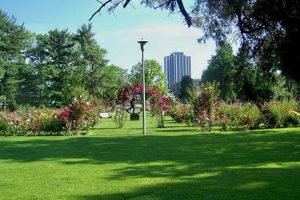
These dedicated spaces serve as enduring tributes to individuals who have served in the armed forces during times of conflict. They often incorporate floral displays, particularly roses, renowned for their beauty and symbolic association with love, peace, and remembrance. A central aspect is the creation of a serene and contemplative environment conducive to reflection and honoring sacrifice.
Such commemorative gardens provide significant social and emotional benefits. They offer a tangible focal point for collective mourning and remembrance, fostering community cohesion and acknowledging the human cost of war. Furthermore, these locations serve as valuable historical resources, educating current and future generations about the significance of past events and the importance of peace. The intentional design, incorporating specific rose varieties and memorial elements, contributes to the overall atmosphere of respect and gratitude.
The following sections will explore specific examples of these sites, examining their design elements, the historical narratives they convey, and their ongoing role in community life and veteran support.
Guidance for the Establishment and Maintenance of Commemorative Rose Gardens
The following recommendations provide insight into the creation and preservation of these spaces, ensuring their continued significance as places of remembrance and reflection.
Tip 1: Site Selection: Prioritize locations with high visibility and accessibility to the public. Consider factors such as soil quality, sunlight exposure, and drainage to ensure optimal rose health and longevity.
Tip 2: Rose Variety Selection: Choose rose varieties with symbolic significance and disease resistance. Hybrid Tea roses, Floribunda roses, and Grandiflora roses are common choices due to their beauty and hardiness. Research cultivars specifically bred for disease resistance in the local climate.
Tip 3: Memorial Elements: Integrate meaningful memorial elements such as plaques, statues, or engraved stones to honor veterans and their service. Ensure these elements are appropriately scaled and positioned within the garden design.
Tip 4: Sustainable Practices: Implement sustainable gardening practices to minimize environmental impact and ensure the long-term health of the garden. Utilize organic fertilizers, conserve water through efficient irrigation techniques, and promote biodiversity.
Tip 5: Community Involvement: Foster community involvement through volunteer programs, educational workshops, and fundraising initiatives. This ensures ongoing support and stewardship of the garden.
Tip 6: Historical Research: Conduct thorough historical research to inform the garden’s design and interpretation. Include information about local veterans and their contributions to the nation.
Tip 7: Accessibility Considerations: Design the garden to be accessible to individuals of all abilities. Incorporate paved pathways, ramps, and accessible seating areas.
These guidelines highlight critical factors in establishing and maintaining a respected and enduring place of commemoration, ensuring it continues to honor service and promote peace.
The subsequent sections will delve into the long-term impact of such memorials on individual and communal well-being.
1. Remembrance

The concept of Remembrance forms the core purpose of memorial rose gardens, providing a tangible and enduring space for honoring those who have served during times of conflict. These gardens transcend mere aesthetic appeal, acting as focal points for collective reflection and the preservation of historical memory.
- Perpetual Memorialization
The gardens offer a permanent location for remembrance, unlike temporary memorials or fleeting observances. The cyclical nature of the roses, with their annual bloom, symbolizes enduring memory and the ongoing need to honor sacrifice. Examples include the planting of specific rose varieties associated with remembrance, such as the Remembrance rose itself, contributing to a continuous visual and sensory reminder.
- Symbolic Representation of Loss and Gratitude
Rose gardens utilize symbolism to convey complex emotions associated with war and its aftermath. The roses represent beauty and life, contrasting with the loss and destruction inherent in conflict. Plaques and inscriptions integrated into the garden provide specific details about individuals or events, fostering a deeper understanding of the human cost of war. The act of tending the garden itself can become an act of gratitude and respect.
- Community Gathering and Collective Mourning
Memorial rose gardens provide a physical space for communities to gather and collectively mourn. Memorial Day and Veterans Day ceremonies are often held within these gardens, fostering a sense of shared experience and collective remembrance. The serene and contemplative environment encourages reflection and provides comfort to those who have lost loved ones.
- Educational Tool for Future Generations
These spaces serve as valuable educational resources, informing future generations about the sacrifices made by veterans and the importance of peace. Interpretive displays and guided tours provide historical context and promote understanding of the impact of war. The physical presence of the garden allows visitors to connect with history in a tangible and meaningful way.
In essence, Remembrance, as embodied by memorial rose gardens, serves as a multifaceted tribute. These spaces not only honor the past but also promote healing, understanding, and a commitment to peace, ensuring that the sacrifices made are never forgotten. The enduring presence of the rose garden acts as a constant reminder of the values worth protecting and the human cost of conflict.
2. Reflection
Reflection, in the context of these commemorative gardens, represents a crucial element that elevates them beyond simple displays of horticulture. It transforms these spaces into environments conducive to introspection, contemplation, and a deeper understanding of the impact of conflict on individuals and communities.
- Personal Contemplation of Sacrifice
The serene environment fosters personal reflection on the sacrifices made by veterans and their families. The beauty of the roses, juxtaposed with the somber purpose of the memorial, encourages contemplation on the cost of freedom and the human toll of war. Individuals can find solace and a sense of connection to the past while engaging in personal introspection within the garden.
- Historical Interpretation and Understanding
The gardens often incorporate historical markers and interpretive displays that promote a deeper understanding of the events and individuals being commemorated. These elements encourage visitors to reflect on the historical context of the conflicts, the motivations of those involved, and the long-term consequences of war. Reflection, in this context, involves active engagement with the past to inform the present.
- Emotional Processing and Healing
For veterans and their families, these gardens can provide a safe and supportive space for emotional processing and healing. The contemplative atmosphere allows for the expression of grief, the recognition of trauma, and the fostering of resilience. Reflection, in this sense, is a therapeutic process that contributes to emotional well-being.
- Promotion of Peace and Understanding
By encouraging reflection on the causes and consequences of war, these memorial gardens can contribute to the promotion of peace and understanding. Visitors may be prompted to consider the importance of diplomacy, conflict resolution, and the prevention of future conflicts. Reflection can lead to a renewed commitment to peace and a greater appreciation for the value of human life.
The facets of reflection are deeply intertwined with the intended purpose of honoring service and encouraging introspection. In fostering a space where individuals can engage with the past, process emotions, and contemplate the future, such gardens become more than just aesthetically pleasing environments; they become vital tools for healing, learning, and promoting peace.
3. Community
The presence of a dedicated rose garden commemorating war fosters a sense of shared identity and purpose within a community. It serves as a visible symbol of collective remembrance, uniting residents in honoring those who have served in the armed forces. The garden becomes a focal point for community gatherings, memorial services, and educational programs related to military history and veterans’ affairs. The act of establishing and maintaining such a space often involves collaborative efforts from local government, veterans’ organizations, garden clubs, and individual citizens, thereby strengthening communal bonds. For example, the municipal rose garden in Springfield, Illinois, hosts annual Memorial Day ceremonies organized by local veterans groups, drawing hundreds of participants and reinforcing a shared sense of patriotism and gratitude.
The tangible presence of the garden also provides therapeutic benefits for veterans and their families, offering a peaceful and supportive environment for reflection and healing. Community-led initiatives, such as horticultural therapy programs and volunteer gardening days, can further enhance these benefits by promoting social interaction and a sense of belonging. Furthermore, the gardens often serve as outdoor classrooms, educating younger generations about the sacrifices made by previous generations and fostering a greater appreciation for peace and freedom. A school in Golden, Colorado, partners with the local veterans’ association to maintain the community’s rose garden, providing students with hands-on learning opportunities and fostering intergenerational connections.
In conclusion, the reciprocal relationship between community and the memorial rose garden underscores the vital role these spaces play in strengthening social cohesion, preserving historical memory, and supporting the well-being of veterans and their families. The sustained success of such gardens hinges on continued community engagement and a shared commitment to honoring the sacrifices of those who have served. The enduring presence of these memorial spaces serves as a constant reminder of the values worth protecting and the importance of unity in commemorating service and striving for peace.
4. Beauty
In the context of memorial rose gardens, beauty serves as a powerful and multifaceted element that transcends mere aesthetic appeal. It becomes a poignant vehicle for conveying complex emotions, fostering remembrance, and promoting healing within a space dedicated to honoring sacrifice.
- Aesthetic Appeal and Emotional Resonance
The visual beauty of the roses, with their vibrant colors, delicate petals, and graceful forms, evokes a sense of peace and tranquility. This aesthetic appeal provides a calming atmosphere conducive to reflection and contemplation, allowing visitors to connect with the memorial on a deeper emotional level. The carefully curated selection of rose varieties and their arrangement within the garden contribute to an overall sense of harmony and serenity, creating a space where visitors can find solace and inspiration.
- Symbolic Representation of Hope and Renewal
Roses, as symbols of love, beauty, and resilience, offer a counterpoint to the somber nature of a war memorial. Their annual bloom represents hope, renewal, and the enduring spirit of life, even in the face of loss and destruction. The presence of roses can offer a sense of comfort and optimism, reminding visitors of the possibility of healing and growth after trauma. Specific rose varieties with symbolic names or colors can further enhance this representation, adding layers of meaning to the overall design.
- Contrast with the Harsh Realities of War
The beauty of the rose garden provides a stark contrast to the harsh realities of war, serving as a reminder of what is lost during conflict and what is worth protecting. This contrast can be particularly powerful for veterans and their families, who have directly experienced the devastation of war. The garden offers a space to appreciate the beauty of life and to reconnect with the values of peace, compassion, and humanity.
- Catalyst for Community Engagement and Stewardship
The beauty of the rose garden can inspire community engagement and stewardship, encouraging individuals to actively participate in the preservation and maintenance of the memorial. Volunteer gardening days, educational workshops, and fundraising events can foster a sense of ownership and pride within the community, ensuring that the garden continues to thrive as a place of remembrance and reflection. The shared responsibility for maintaining the beauty of the garden strengthens communal bonds and reinforces the values of respect, gratitude, and collective memory.
Beauty, therefore, is not merely a superficial element within these memorials. It is a carefully cultivated and intentionally deployed attribute that amplifies the garden’s message of remembrance, healing, and hope, while simultaneously engaging and unifying the community in its stewardship.
5. History

The historical dimension is integral to understanding the significance of commemorative rose gardens. These spaces are not merely horticultural displays but are deliberately created to preserve and communicate specific narratives related to armed conflict and its consequences. The design, selection of rose varieties, and inclusion of memorial elements are often directly informed by historical research and a desire to honor specific individuals, units, or events. For example, the rose garden within the National Memorial Arboretum in the United Kingdom incorporates varieties named after battles or military figures, linking the floral display directly to military history. This deliberate integration ensures the garden serves as a tangible representation of past events, transforming it from a passive landscape into an active repository of collective memory. Without this historical context, the garden’s meaning and impact would be significantly diminished.
Historical understanding informs the ongoing maintenance and interpretation of these memorials. Knowledge of the specific battles, individuals, or units being honored allows for the creation of educational materials, guided tours, and community events that further enrich the visitor experience. Furthermore, historical awareness ensures that the memorial remains relevant and meaningful to successive generations. Maintaining accurate records of the individuals and events commemorated, as well as the symbolism embedded within the garden’s design, is essential for preserving its historical integrity. This requires ongoing research, documentation, and collaboration with historical societies, veterans’ organizations, and academic institutions. The Brooklyn Botanic Gardens Cranford Rose Garden, for instance, houses roses that date back to the World War I era, offering tangible links to that period. These varieties are carefully preserved and interpreted, providing visitors with a direct connection to the past.
The successful integration of historical elements into commemorative rose gardens requires a commitment to accuracy, sensitivity, and inclusivity. It is crucial to acknowledge the complexities and nuances of historical events and to avoid perpetuating biased or incomplete narratives. Engaging with diverse perspectives and incorporating multiple voices into the memorial’s design and interpretation can ensure that it serves as a catalyst for dialogue and understanding. Therefore, the relationship between history and these dedicated spaces is dynamic and multifaceted, requiring ongoing effort to preserve, interpret, and communicate the lessons of the past. Ultimately, these gardens stand as enduring testaments to human experience, serving as poignant reminders of the sacrifices made and the importance of striving for peace.
Frequently Asked Questions
The following addresses common inquiries and misconceptions regarding the purpose, creation, and maintenance of these dedicated spaces.
Question 1: What defines a space as a “war memorial rose garden?”
It is a garden dedicated to honoring veterans and those who have served in the armed forces, incorporating roses as a primary design element, and intended to serve as a place of remembrance and reflection.
Question 2: What is the significance of roses in these memorials?
Roses are associated with love, peace, and remembrance, adding symbolic depth to the memorial and providing a visual representation of beauty amidst the somber nature of war commemoration.
Question 3: Who typically funds and maintains these gardens?
Funding and maintenance often involve a combination of sources, including local governments, veterans’ organizations, garden clubs, and private donations. Sustainable maintenance plans are crucial for long-term viability.
Question 4: How are specific rose varieties selected for inclusion?
Selection often considers factors such as disease resistance, climate suitability, and symbolic significance. Some gardens incorporate roses named after battles, historical figures, or virtues associated with service.
Question 5: What are common design elements found in these spaces beyond the roses themselves?
Design may include memorial plaques, statues, engraved stones, benches for contemplation, and pathways for accessibility. The overall layout aims to create a serene and respectful environment.
Question 6: What is the role of community involvement in such memorials?
Community involvement is critical for the long-term success of these gardens. Volunteer programs, educational workshops, and fundraising initiatives foster a sense of ownership and ensure continued stewardship.
These spaces serve as lasting tributes, but require dedication to sustain the vision.
The next section will provide a detailed discussion of individual site selection guidelines.
Concluding Remarks on Commemorative Rose Gardens
This exploration has illuminated the multifaceted significance of the war memorial rose garden, underscoring its role as a space for remembrance, reflection, community engagement, and historical preservation. Such spaces serve as tangible tributes to those who have served, offering a serene environment for contemplation and a focal point for collective mourning and gratitude. The intentional integration of symbolic elements, such as specific rose varieties and memorial markers, amplifies the garden’s message and strengthens its connection to historical narratives.
The enduring presence of the war memorial rose garden serves as a poignant reminder of the human cost of conflict and the importance of striving for peace. These spaces warrant continued support and preservation, ensuring their availability for future generations as places of learning, healing, and remembrance. Their existence compels a continued commitment to honoring service, fostering community, and promoting a more peaceful world.

![Find Rose Garden Funeral Home Obituaries: [Location] Tributes | The Ultimate Gardening Guide: Grow a Thriving Garden Year-Round](https://MyGardenPatch.com/wp-content/uploads/2025/07/th-1895-300x200.jpg "Find Rose Garden Funeral Home Obituaries: [Location] Tributes The Ultimate Gardening Guide: Grow a Thriving Garden Year-Round")