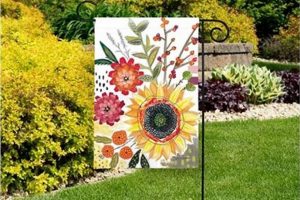
These decorative items serve as poignant tributes within outdoor spaces, often used to commemorate loved ones who have passed away. Typically crafted from durable, weather-resistant materials, they are designed for placement in garden settings. For instance, a flag displaying a personalized message or symbol can mark the location where a cherished individual’s ashes were scattered.
The incorporation of these symbolic markers offers a tangible form of remembrance, providing solace and a focal point for reflection in a serene environment. Throughout history, gardens have been employed as spaces for contemplation and memorialization, and these additions build upon that tradition by offering a personalized and visually impactful means of honoring those who are no longer present. The benefit lies in providing a lasting symbol of remembrance that integrates seamlessly with the natural environment.
Considerations for selecting appropriate garden dcor for memorial purposes encompass various factors, including material durability, design symbolism, and personalization options. Further discussion will examine the available choices, optimal placement strategies, and the ethical considerations involved in establishing a respectful and meaningful memorial landscape.
Guidance on Selecting and Displaying Memorial Garden Flags
The following guidelines offer practical advice for choosing and arranging garden ornamentation used to commemorate deceased individuals. Thoughtful consideration should be given to each of these points to ensure a dignified and lasting tribute.
Tip 1: Material Durability: Opt for weather-resistant materials such as treated nylon, polyester, or fade-resistant inks. This ensures the flag’s longevity and vibrancy, even when exposed to outdoor elements. For example, select a flag constructed with UV-resistant dyes to prevent premature fading from sunlight exposure.
Tip 2: Design Symbolism: Choose designs that reflect the deceased’s personality, interests, or beliefs. Symbolic imagery such as flowers, birds, or religious icons can add depth and meaning to the memorial. A flag featuring a specific flower that the individual cherished provides a personalized connection.
Tip 3: Personalization Options: Consider incorporating personalized elements, such as the individual’s name, dates of birth and death, or a short, meaningful quote. Customization enhances the flag’s significance and creates a unique remembrance. Employing professional embroidery services ensures quality and legibility of personalized text.
Tip 4: Size and Placement: Select a size appropriate for the garden space and consider the surrounding landscape. Ensure the flag is easily visible but does not overshadow other memorial elements or disrupt the overall aesthetic. A smaller flag may be suitable for a compact garden, while a larger flag complements a more expansive area.
Tip 5: Secure Installation: Utilize a sturdy flagpole or mounting system to prevent the flag from being damaged or displaced by wind or weather. Proper installation ensures the flag remains securely displayed and contributes to the memorial’s overall presentation. Consider using a ground stake designed for garden flags for secure placement.
Tip 6: Respectful Maintenance: Regularly clean the flag to remove dirt, debris, or mildew. Prompt maintenance preserves its appearance and demonstrates ongoing respect for the deceased. Gentle washing with a mild detergent and water can help maintain the flag’s cleanliness and vibrancy.
Thoughtful application of these suggestions will contribute to the creation of a meaningful and enduring tribute. The selection and presentation of memorial garden ornamentation should reflect careful consideration and respect for the individual being honored.
The subsequent sections will delve into ethical considerations regarding memorial practices and provide guidance on creating a comprehensive and respectful memorial landscape.
1. Enduring Materiality
The principle of enduring materiality is of paramount importance in the selection of items intended for memorialization, particularly in the context of garden settings. “Memorial garden flags,” designed to withstand the elements and serve as lasting tributes, must be constructed from materials capable of resisting degradation over prolonged periods.
- Weather Resistance
Materials selected for memorial flags must exhibit resistance to the damaging effects of prolonged exposure to sunlight (UV degradation), precipitation, and temperature fluctuations. For instance, flags made of untreated cotton would rapidly deteriorate, while those crafted from UV-resistant nylon or polyester maintain their integrity. The choice of material directly impacts the flag’s long-term visibility and symbolic value.
- Fade Resistance
The colors and designs incorporated into memorial flags should be produced using dyes or inks that resist fading over time. This ensures that the flag retains its visual impact and remains a vibrant symbol of remembrance. Sublimation printing or the use of UV-resistant inks are commonly employed to enhance fade resistance in outdoor flag applications. This ensures the message and symbolism remain legible and poignant.
- Structural Integrity
The structural integrity of a memorial flag is crucial for its longevity. Reinforcements such as double-stitched hems, reinforced corners, and durable grommets contribute to the flag’s ability to withstand wind and prevent tearing. Flags with substandard construction are prone to damage, diminishing their memorial value and necessitating frequent replacement.
- Resistance to Biological Degradation
In a garden environment, materials are susceptible to biological degradation from mold, mildew, and insects. Choosing materials that are inherently resistant or treated to prevent such degradation extends the flag’s lifespan. For example, certain synthetic fabrics are less susceptible to mold growth compared to natural fibers. This protects the flag and its message from being obscured or damaged by biological processes.
The careful consideration of material properties ensures that memorial garden flags fulfill their intended purpose as enduring symbols of remembrance. Selecting materials that resist environmental degradation and maintain their structural integrity is essential for creating a lasting tribute that honors the deceased and provides solace to those who grieve.
2. Symbolic Representation

The essence of “memorial garden flags” resides significantly in their capacity for symbolic representation. These flags transcend mere decoration; they function as visual embodiments of remembrance and respect, designed to communicate complex emotions and memories through carefully selected imagery and motifs. The chosen symbols directly influence the emotional impact and personal resonance of the memorial, making their selection a critical aspect of the overall memorialization process. A flag bearing a specific flower associated with the deceased, such as a rose symbolizing love or a forget-me-not representing remembrance, exemplifies this connection. The cause is a desire to personalize the memorial; the effect is a flag that deeply resonates with those who knew the individual.
Effective symbolic representation within these flags involves considering the deceased’s personality, interests, and beliefs. For instance, a flag incorporating nautical elements may be fitting for an individual who enjoyed sailing, while a flag featuring religious symbols could appropriately honor a person of faith. Furthermore, colors themselves carry symbolic weight: blue may represent peace, green may signify hope, and purple can denote dignity. The strategic use of these symbolic components allows for the creation of a personalized tribute that accurately reflects the life and values of the individual being commemorated. Many families will request a cardinal bird, known for symbolism.
Ultimately, the symbolic representation woven into memorial garden flags serves to transform a simple garden accent into a profound statement of remembrance. It allows survivors to create a tangible connection to the deceased, fostering a sense of peace and continued presence within the memorial space. However, the challenge lies in balancing personal symbolism with universally understood imagery to ensure the message is both meaningful and respectful. Understanding this connection underscores the importance of thoughtful design in creating a truly meaningful memorial.
3. Personalized Messaging
The incorporation of personalized messaging transforms a standard garden decoration into a deeply meaningful memorial tribute. These messages serve as direct expressions of love, remembrance, and enduring connection to the deceased, elevating the flag from a simple marker to a poignant symbol of individual legacy.
- Direct Expressions of Affection
Personalized messages on memorial garden flags provide an opportunity to convey sentiments of love, admiration, and respect directly to the memory of the departed. Examples include phrases such as “Forever in our Hearts,” “Beloved Mother,” or “In Loving Memory,” which clearly communicate the survivors’ emotions. The emotional impact of these direct expressions offers solace and reinforces the enduring bond.
- Unique Identifiers and Biographical Details
The inclusion of the individual’s name, birth and death dates, or significant life events personalizes the flag and creates a lasting record of their existence. For instance, a flag displaying “John Smith, 1945-2023, Dedicated Educator” not only identifies the individual but also highlights a defining aspect of their life. This serves as a tangible reminder of their contributions and unique identity.
- Meaningful Quotes and Personal Mottos
Integrating quotes that held special significance for the deceased or reflecting their personal philosophy adds depth and character to the memorial. For example, a flag bearing the quote “To live in hearts we leave behind is not to die” conveys a message of enduring impact. The selection of such quotes adds a layer of intimacy and provides insight into the individual’s values and beliefs.
- Symbolic Representation through Text
Personalized messaging can also incorporate symbolic language that resonates with the deceased’s personality or interests. A flag displaying the coordinates of a cherished location or a phrase in a language they loved creates a subtle yet meaningful connection. Such symbolic textual elements add a layer of personal meaning that transcends literal interpretation.
Ultimately, the strategic application of personalized messaging enhances the emotional resonance and commemorative value of memorial garden flags. These messages provide a direct means of expressing love, preserving individual identity, and sharing meaningful reflections, thereby transforming a garden marker into a lasting testament to a life well-lived.
4. Respectful Placement
The placement of memorial garden flags within a landscape necessitates careful consideration to ensure the tribute is both visible and maintains the solemnity associated with remembrance. Location and surroundings play crucial roles in honoring the deceased appropriately.
- Visibility and Accessibility
The flag should be situated where it is easily visible to those visiting the memorial space. However, it should not obstruct pathways or impede access to other areas of the garden. For example, placing the flag near a bench or prominent feature in the garden ensures it is noticed, while avoiding placement in high-traffic zones prevents accidental damage or disruption. This balance between visibility and accessibility is crucial for a respectful presentation.
- Harmony with the Environment
The flag’s design and size should complement the surrounding landscape. Overly large or garishly colored flags can detract from the natural beauty of the garden. Selecting colors and materials that blend harmoniously with the environment creates a serene and dignified memorial space. A flag featuring muted tones and natural materials, for instance, integrates seamlessly into a peaceful garden setting.
- Consideration of Cultural and Religious Norms
Placement should respect any cultural or religious traditions associated with death and mourning. Certain faiths may have specific guidelines regarding the orientation or positioning of memorial markers. Adhering to these norms demonstrates sensitivity and respect for the deceased’s beliefs. Consultation with religious or cultural leaders may be necessary to ensure compliance with relevant customs.
- Protection from the Elements
While the flag’s material should be durable, its placement can also contribute to its longevity. Positioning the flag in a location sheltered from strong winds or direct sunlight minimizes wear and tear. Utilizing natural features such as trees or shrubs for partial protection can extend the flag’s lifespan and maintain its visual appeal. Strategic placement ensures the memorial remains dignified and intact over time.
The conscientious application of these principles of respectful placement ensures that memorial garden flags serve as fitting tributes, harmonizing with their surroundings and honoring the memory of the deceased in a dignified manner. Disregard for these considerations can result in a memorial that is jarring or disrespectful, undermining its intended purpose.
5. Continued Maintenance

The long-term efficacy of “memorial garden flags” as tributes directly correlates with consistent maintenance. Neglecting upkeep leads to deterioration, diminishing the flag’s visual appeal and symbolic value. Environmental exposure, including sunlight, rain, wind, and biological factors such as mold and mildew, accelerates degradation. For instance, a flag left unattended in a humid climate may develop mildew, obscuring its design and shortening its lifespan. The act of neglecting maintenance sends an unintentional message of disregard for the deceased and the memorial itself. Therefore, regular attention is not merely cosmetic; it is integral to preserving the integrity and intended purpose of the memorial.
Practical application of continued maintenance involves several key tasks. Regular cleaning removes dirt, debris, and biological growth. Gentle washing with mild soap and water is often sufficient, while specialized cleaners may be required for stubborn stains or mildew. Inspection for tears, fraying, or fading allows for timely repairs or replacement, preventing further damage. Proper storage during inclement weather, such as high winds or winter conditions, minimizes stress on the flag’s material and construction. Furthermore, ensuring the flagpole or mounting hardware remains secure and functional prevents the flag from becoming dislodged or damaged. These actions preserve the visual presentation and physical structure.
The challenge of consistent maintenance often lies in time constraints and awareness. However, allocating even a small amount of time regularly can significantly extend the lifespan and impact of a “memorial garden flag.” Recognizing maintenance as an essential component of the memorial process, rather than an optional task, fosters a deeper sense of respect and dedication. Ultimately, continued maintenance ensures that the memorial continues to serve its intended purpose: a lasting and dignified tribute to the deceased.
Frequently Asked Questions About Memorial Garden Flags
The following section addresses common inquiries regarding the selection, use, and care of garden flags intended for memorial purposes. The information presented aims to provide clarity and guidance for individuals seeking to create respectful and enduring tributes.
Question 1: What materials are best suited for memorial garden flags intended for year-round outdoor display?
Durable, weather-resistant materials such as treated nylon or polyester are recommended. These materials exhibit resistance to UV degradation, moisture damage, and tearing, ensuring the flag’s longevity and visual integrity. Avoid natural fibers like cotton, which are prone to rapid deterioration when exposed to the elements.
Question 2: How can a memorial garden flag be personalized to reflect the unique life of the deceased?
Personalization options include incorporating the individual’s name, dates of birth and death, a meaningful quote, or symbolic imagery that represents their interests or beliefs. Custom embroidery or printing services can be utilized to create a flag that accurately reflects the individual’s personality and legacy. Avoid generic designs that lack personal connection.
Question 3: What are the ethical considerations regarding the placement of a memorial garden flag in a shared or public space?
Placement should be respectful of the surrounding environment and any existing regulations or restrictions. Obtain permission from property owners or governing bodies before installing a flag in a shared or public area. Ensure the flag does not obstruct pathways, create safety hazards, or disrupt the tranquility of the space. Adhere to principles of consideration and non-interference.
Question 4: How can the colors and design of a memorial garden flag be chosen to convey specific emotions or sentiments?
Colors and symbols carry inherent emotional associations. Blue often represents peace, green signifies hope, and purple denotes dignity. Symbolic imagery such as flowers, birds, or religious icons can also evoke specific feelings or memories. Choose colors and designs that resonate with the deceased’s personality and the desired tone of the memorial. Avoid using colors or imagery that could be perceived as disrespectful or insensitive.
Question 5: What steps can be taken to protect a memorial garden flag from damage caused by wind or severe weather?
Secure the flag to a sturdy flagpole or mounting system designed to withstand wind. Consider placing the flag in a location sheltered from direct exposure to strong winds. Remove the flag during severe weather events such as hurricanes or blizzards to prevent damage or loss. Proper installation and proactive measures mitigate the risk of weather-related damage.
Question 6: How often should a memorial garden flag be cleaned and maintained to preserve its appearance and longevity?
Regular cleaning is recommended to remove dirt, debris, and biological growth. Gentle washing with mild soap and water is typically sufficient. Inspect the flag periodically for tears, fraying, or fading, and address any issues promptly. The frequency of cleaning and maintenance depends on environmental conditions and the flag’s material, but a proactive approach ensures its lasting beauty and symbolic value.
In summary, selecting, placing, and maintaining memorial garden flags requires careful attention to detail and a commitment to creating a respectful and enduring tribute. Consideration of material durability, personalization options, ethical concerns, and ongoing maintenance ensures the flag serves its intended purpose as a meaningful symbol of remembrance.
The subsequent section will explore alternative memorial options and strategies for creating a comprehensive and personalized memorial landscape.
Conclusion
This exploration has detailed the various facets of “memorial garden flags,” underscoring their role as tangible expressions of remembrance. From material selection and personalized messaging to respectful placement and continued maintenance, each element contributes to the efficacy of these tributes. The inherent symbolism embedded within these flags offers solace and a focal point for reflection on the lives of those commemorated.
As enduring symbols, “memorial garden flags” invite continued contemplation and a commitment to preserving legacies. Their presence within memorial landscapes serves as a reminder of the enduring bonds that connect individuals across generations. The act of selecting and maintaining these tributes embodies a dedication to remembrance and a recognition of the profound impact of those who have passed.