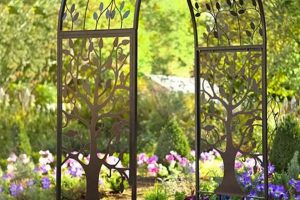
Structures crafted from durable materials, designed to support climbing plants, often found adorning outdoor spaces. These frameworks, typically fashioned from wrought iron, steel, or aluminum, provide vertical support for vines, flowering plants, and even some fruits and vegetables. An example is a wrought iron structure positioned against a brick wall, allowing climbing roses to ascend and create a visually appealing display.
The incorporation of such frameworks offers several advantages. They maximize space in gardens with limited horizontal area, providing an upward growth trajectory for plants. This enhances the aesthetic appeal of landscapes, introducing vertical elements and visual interest. Historically, these structures have been utilized for both functional and decorative purposes, influencing garden design across various cultures and eras.
The following sections will delve into the diverse styles and designs available, examining the materials used in their construction and outlining best practices for installation and maintenance. This exploration will further elucidate the role they play in enhancing garden environments.
Metal Garden Trellises
Maximizing the longevity and aesthetic contribution of structures requires careful consideration during selection, installation, and maintenance. The following tips offer guidance to ensure optimal performance and lasting visual appeal.
Tip 1: Material Selection: Opt for powder-coated steel or aluminum for enhanced resistance to corrosion and weathering. Wrought iron provides a classic aesthetic but necessitates regular maintenance to prevent rust.
Tip 2: Load Capacity Assessment: Evaluate the anticipated weight of mature plants before purchase. Select structures with sufficient load-bearing capacity to prevent structural failure under the weight of dense foliage.
Tip 3: Foundation Stability: Ensure stable anchoring, particularly for freestanding structures. Use ground anchors or concrete footings to prevent tipping or movement due to wind or plant weight.
Tip 4: Plant Compatibility: Consider the growth habit of the intended plants. Select designs with appropriate spacing and support features to accommodate their climbing style, whether twining, clinging, or scrambling.
Tip 5: Regular Inspection and Maintenance: Conduct periodic inspections to identify and address potential issues such as rust, loose fasteners, or structural damage. Promptly repair any damage to prevent further deterioration.
Tip 6: Pruning and Training: Regularly prune and train plants to maintain desired shape and prevent excessive weight accumulation. This enhances both the structure’s aesthetic appeal and its structural integrity.
Tip 7: Soil Considerations: Ensure proper soil drainage around the base of the structure to prevent water accumulation and potential corrosion or rotting of support posts.
Implementing these tips promotes the longevity and effectiveness of these supports, contributing to a thriving and aesthetically pleasing garden environment.
The subsequent sections will address specific design considerations and advanced installation techniques to further optimize the utilization of these structures.
1. Material Durability

The service life and functionality of frameworks are intrinsically linked to the durability of the materials used in their construction. Premature failure due to corrosion, weathering, or structural fatigue negates the intended purpose of providing support for climbing plants. Therefore, material selection is a critical factor determining the long-term performance and aesthetic value of the structure. The environmental conditions to which the structure is exposed exert a significant influence on material degradation rates; coastal environments, for example, accelerate corrosion in susceptible metals.
Consider the contrasting examples of wrought iron and powder-coated aluminum. Wrought iron, while possessing a traditional aesthetic appeal, is susceptible to rust when exposed to moisture. Regular maintenance, including painting or protective coatings, is necessary to mitigate corrosion and extend its lifespan. Conversely, powder-coated aluminum exhibits superior corrosion resistance, requiring less frequent maintenance and proving more durable in humid or coastal climates. This inherent material property directly affects the long-term cost of ownership, reducing the need for frequent repairs or replacements.
In conclusion, understanding the relationship between material durability and the performance of these garden structures is paramount. Selecting materials appropriate for the specific environmental conditions ensures a longer lifespan, reduced maintenance costs, and sustained aesthetic appeal. The initial investment in durable materials translates into long-term value and reliable support for climbing plants, contributing to a thriving and visually pleasing garden landscape.
2. Structural Integrity

Structural integrity is paramount to the functionality and longevity of frameworks designed to support climbing plants. It dictates the capacity to withstand applied loads, environmental stressors, and the gradual increase in plant weight over time. A lack of structural integrity compromises the intended purpose, potentially leading to collapse and damage to both the plants and the surrounding environment.
- Material Strength and Load Capacity
The material composition directly influences the load-bearing capacity. Steel, with its high tensile strength, can support heavier plant species compared to lighter-gauge aluminum. The welds, joints, and fastening mechanisms must be robust enough to distribute the load evenly across the structure. Failure to account for the mature weight of plants, particularly those with dense foliage or heavy fruits, can result in bending, buckling, or complete failure of the support structure.
- Foundation and Anchoring
A stable foundation is critical to preventing tipping or displacement, especially in areas prone to high winds. Anchoring methods, such as concrete footings or ground stakes, must be appropriate for the soil type and the expected wind loads. Insufficient anchoring can lead to structural instability and potential hazards. Consider the example of a freestanding framework supporting a mature wisteria vine, which, if inadequately anchored, could be uprooted during a storm.
- Corrosion Resistance
Corrosion weakens the metal over time, reducing its load-bearing capacity. Protective coatings, such as powder coating or galvanization, mitigate corrosion by providing a barrier against moisture and environmental contaminants. Regular inspection and maintenance are essential to identify and address areas of corrosion before they compromise structural integrity. Neg
lecting corrosion can lead to gradual degradation and eventual failure, necessitating costly repairs or replacements. - Design and Construction Techniques
The design of the structure itself contributes significantly to its overall stability. Triangulation, for example, enhances rigidity and distributes forces more effectively than simple rectangular frames. The quality of welds and the precision of assembly are crucial for ensuring structural integrity. Poorly executed welds or misaligned components can create weak points that are susceptible to failure under stress. Careful attention to detail during the design and construction phases is essential for creating a durable and reliable support structure.
In summary, the structural integrity of metal plant supports is a multifaceted concept encompassing material strength, foundation stability, corrosion resistance, and design considerations. Each of these facets contributes to the overall ability to withstand the forces exerted by climbing plants and the environment, ensuring long-term functionality and aesthetic value. Prioritizing structural integrity is crucial for creating safe, durable, and visually appealing supports that enhance garden environments.
3. Design Versatility
The adaptable nature of structures is a key attribute, enabling seamless integration into diverse garden settings and catering to various aesthetic preferences and functional requirements. Their flexibility in design ensures compatibility with a wide array of climbing plants and spatial constraints.
- Form and Style Variations
The availability of structures in numerous forms including obelisks, arches, wall-mounted grids, and freestanding panels allows for customization to suit specific garden layouts and architectural styles. A minimalist, geometric grid complements a modern urban garden, whereas an ornate, wrought-iron arch enhances a traditional cottage garden. This adaptability in style ensures cohesive integration with the overall design.
- Size and Scale Customization
The ability to tailor the dimensions ensures compatibility with spaces ranging from compact balconies to expansive landscapes. A small, wall-mounted structure is suitable for supporting a single climbing rose in a confined area, while a large, freestanding panel can accommodate multiple vines and create a dramatic focal point in a larger garden. Scaling appropriately maximizes the visual impact.
- Material and Finish Options
The availability of various materials, such as powder-coated steel, aluminum, and wrought iron, coupled with diverse finish options, provides further design versatility. Powder coating enables a wide range of colors, allowing for coordination with existing garden elements. The choice of material also impacts durability and maintenance requirements, contributing to the overall design considerations.
- Adaptability to Plant Types
Different designs cater to the specific growth habits of various climbing plants. A structure with closely spaced rungs is ideal for twining vines, while one with larger openings is better suited for plants with tendrils or aerial roots. Understanding plant characteristics informs design selection, ensuring optimal support and visual appeal.
In essence, design versatility significantly expands the applicability of supporting climbing plants, rendering them suitable for diverse garden contexts. This adaptability ensures that they not only fulfill their functional purpose but also contribute significantly to the aesthetic coherence and visual appeal of the landscape.
4. Plant Support

The provision of adequate plant support constitutes a fundamental function of metal garden structures. The structural integrity of the metal framework directly influences the plants ability to thrive and exhibit its full aesthetic potential. Inadequate support leads to stunted growth, increased susceptibility to disease, and diminished visual appeal. The design and construction of the structure must therefore directly address the specific support requirements of the plants it is intended to accommodate. For example, heavy vines, such as wisteria, necessitate robust frameworks capable of bearing significant weight, while delicate climbing flowers require finer, more intricate designs that facilitate tendril attachment without causing damage. The connection is therefore causal: the metal provides support, leading to enhanced plant health and visual appeal; a lack of adequate support causes diminished plant vigor and aesthetic detriment.
The practical significance of understanding this relationship lies in the ability to select appropriate structures for specific plant species and to maintain those structures effectively. Choosing a flimsy support for a heavy vine will inevitably result in structural failure, damaging the plant and potentially creating a safety hazard. Conversely, selecting an overly robust support for a delicate plant can be aesthetically unappealing and may even hinder the plants natural growth patterns. Consider the application of metal frameworks in vertical gardening systems. These systems rely on the load-bearing capacity of the metal to facilitate the upward growth of various edible plants, maximizing yield in limited spaces. Regular inspection and maintenance, including addressing corrosion and ensuring secure anchoring, are crucial for maintaining the structural integrity of the frameworks and ensuring continuous, effective plant support.
In summary, the connection between metal garden structures and plant support is critical for successful gardening outcomes. Careful consideration of the plants needs and the structures capabilities, combined with consistent maintenance, enables the creation of visually appealing and biologically thriving vertical landscapes. The challenge lies in balancing aesthetic considerations with functional requirements, selecting designs that not only complement the garden environment but also provide reliable and durable support for the plants they are intended to showcase. By understanding this intricate relationship, gardeners can maximize the benefits of integrating metal structures into their outdoor spaces.
5. Installation Methods

The efficacy and longevity of metal garden structures are intrinsically linked to appropriate installation techniques. Proper installation ensures structural stability, optimal plant support, and aesthetic integration within the garden landscape. Neglecting correct procedures can compromise the structural integrity of the trellis and hinder the healthy growth of climbing plants.
- Ground Anchoring and Foundation Stability
Securing structures to the ground is critical, especially for freestanding models. Methods include concrete footings, ground stakes, and anchoring systems designed for specific soil types. Insufficient anchoring results in instability, increasing the risk of tipping or displacement due to wind or plant weight. The selection of anchoring method must account for soil composition and expected wind loads.
- Wall Mounting Techniques
When affixing structures to walls or fences, appropriate fasteners and spacing are essential. The type of fastener must be compatible with the wall material (e.g., brick, wood, concrete). Insufficient or incorrect fasteners can lead to detachment, posing a safety hazard and potentially damaging the wall. Careful consideration of the wall’s structural integrity is also necessary. - Assembly Procedures and Component Integration
Many structures require assembly prior to installation. Following manufacturer instructions and ensuring all components are properly connected is crucial. Incorrect assembly weakens the overall structure, reducing its load-bearing capacity and increasing the risk of premature failure. Inspecting all welds and joints for integrity is also recommended.
- Plant Proximity and Spacing Considerations
The placement of structures in relation to existing plants and structures must be carefully considered. Adequate spacing allows for proper air circulation and sunlight exposure, promoting healthy plant growth. Overcrowding can lead to disease and reduced overall plant vigor. Furthermore, ensure the location does not obstruct walkways or create safety hazards.
The success of these structures hinges on a thorough understanding and meticulous application of these installation methods. Prioritizing proper installation guarantees structural stability, plant health, and long-term aesthetic appeal, solidifying the structure’s role as a valuable asset in the garden environment.
6. Maintenance Requirements

Sustained performance and aesthetic appeal are contingent upon adherence to consistent maintenance protocols. Neglecting necessary upkeep accelerates degradation, diminishing the functional lifespan and compromising structural integrity.
- Corrosion Prevention
Rust formation on ferrous metals weakens structural components. Regular inspection for signs of corrosion, followed by appropriate treatment such as sanding, priming, and painting, is crucial. Powder-coated surfaces require less frequent intervention but should be monitored for chips or scratches that expose the underlying metal to moisture. For example, a wrought iron structure in a humid climate necessitates annual rust prevention measures to avoid significant degradation.
- Structural Integrity Assessment
Periodic evaluation of welds, joints, and fasteners ensures structural stability. Loose connections should be tightened or replaced to prevent collapse under the weight of mature plants or during inclement weather. A visual inspection should identify any bending, cracking, or warping that indicates structural fatigue. Freestanding frameworks, in particular, require careful monitoring of ground anchors for stability.
- Plant Management and Debris Removal
Overgrown vegetation can place excessive strain on structures, leading to deformation or failure. Regular pruning and training of plants are essential to manage their weight and distribution. Accumulated debris, such as leaves and twigs, can trap moisture, accelerating corrosion. Removal of such debris promotes airflow and minimizes the risk of material degradation.
- Surface Cleaning
Accumulation of dirt, algae, and other surface contaminants detracts from the aesthetic appeal and can contribute to corrosion. Periodic cleaning with a mild detergent and water removes these contaminants, preserving the finish and enhancing the overall appearance. A pressure washer can be used with caution, ensuring that the pressure does not damage the surface coating or underlying metal.
Attentive adherence to these maintenance practices directly correlates with the longevity and visual appeal of metal garden frameworks. By proactively addressing potential issues, the lifespan is extended, minimizing replacement costs and ensuring continued support for thriving plant life.
Frequently Asked Questions About Metal Garden Trellises
This section addresses common inquiries regarding the selection, installation, and maintenance of metal structures designed to support climbing plants, providing clarity on key aspects for informed decision-making.
Question 1: What factors should be considered when selecting a structure to support climbing plants?
The selection process requires careful evaluation of material durability, structural integrity, design compatibility with the intended plants, and integration with the existing garden aesthetic. Consider the mature weight of the plants, environmental conditions, and the need for long-term maintenance.
Question 2: How does material choice impact the longevity of a metal support?
Material selection directly affects resistance to corrosion and weathering. Aluminum offers superior corrosion resistance compared to wrought iron, but wrought iron provides a traditional aesthetic. Powder coating enhances the durability of both steel and aluminum by providing a protective barrier against moisture and UV radiation.
Question 3: What are the recommended methods for ensuring structural stability?
Structural stability is achieved through proper ground anchoring, use of appropriate fasteners when attaching to walls, and regular inspection of welds and joints. Consider using concrete footings for freestanding structures in areas prone to high winds.
Question 4: How often should a metal framework be inspected for maintenance purposes?
A minimum of twice-yearly inspections is recommended, ideally in the spring and fall. These inspections should focus on identifying signs of corrosion, loose connections, and structural damage. More frequent inspections may be necessary in harsh environmental conditions.
Question 5: What techniques are effective for preventing rust formation?
Preventive measures include applying protective coatings such as paint or rust inhibitors, ensuring proper drainage around the base of the structure, and promptly addressing any chips or scratches that expose the underlying metal. Regular cleaning to remove dirt and debris also helps prevent rust formation.
Question 6: How does the design of a structure impact plant growth?
Design influences the ability to effectively support specific plant types. Structures with closely spaced rungs are suitable for twining vines, while those with larger openings accommodate plants with tendrils or aerial roots. Proper design ensures adequate air circulation and sunlight exposure, promoting healthy plant growth.
These frequently asked questions highlight the importance of careful planning and execution when incorporating these structures into garden spaces. Understanding these key considerations contributes to long-term success and enjoyment.
The following section will present case studies illustrating the practical application of these principles in diverse garden settings.
Metal Garden Trellises
This exploration of metal garden trellises has underscored their multifaceted role in landscape design. From material selection and structural integrity to design versatility, plant support, installation methods, and maintenance requirements, each aspect critically influences the effectiveness and longevity of these garden features. The preceding discussion has illuminated the importance of informed decision-making in optimizing their functional and aesthetic contributions.
The
enduring appeal and practical benefits warrant careful consideration and diligent implementation of the principles outlined herein. As gardens continue to evolve and adapt, metal garden trellises will undoubtedly remain a valuable tool for enhancing vertical space, supporting plant life, and creating visually compelling outdoor environments. Their significance extends beyond mere ornamentation, representing a harmonious blend of form and function that enriches the gardening experience. Future development will likely focus on sustainable materials and innovative designs that further minimize environmental impact and maximize plant health.