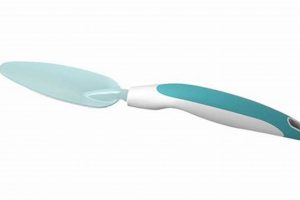
Devices designed to facilitate the sowing of plant propagules represent a category of horticultural tools employed to precisely place seeds in soil at predetermined depths and spacing. These tools range from simple hand-held implements used in small-scale gardening to sophisticated automated systems found in large-scale agricultural operations. An example includes a push-type implement with adjustable depth settings for efficient planting of row crops.
The utilization of these devices offers several advantages, including enhanced seed germination rates, reduced seed waste, and improved crop yield. Historically, methods relied on manual broadcasting of seeds, leading to uneven distribution and increased competition among seedlings. The development and adoption of precision sowing tools mark a significant advancement in agricultural and horticultural practices, optimizing resource utilization and promoting plant health.
The subsequent sections will delve into the various types of seed sowing tools, their operational mechanisms, factors influencing selection, and best practices for achieving optimal planting outcomes.
Optimizing Seed Sowing Device Utilization
To maximize the efficacy of seed sowing devices, a systematic approach incorporating preparatory measures, operational techniques, and post-planting care is essential. The following guidelines serve to optimize planting outcomes and promote robust plant establishment.
Tip 1: Soil Preparation is Paramount: Ensure the planting bed is properly prepared by removing debris, tilling the soil to an appropriate depth, and incorporating amendments as needed. A well-drained, friable soil structure facilitates optimal seed-to-soil contact and root development.
Tip 2: Calibrate Device Settings: Prior to commencing planting, meticulously calibrate the device to the specified seed size and desired planting depth. Refer to the manufacturer’s instructions and conduct test runs to verify accuracy. Inconsistent depth placement can significantly impact germination rates.
Tip 3: Seed Quality Assessment: Employ only high-quality seeds with a documented germination rate. Conduct a germination test to ascertain seed viability before large-scale planting. Diseased or damaged seeds will compromise plant health and overall yield.
Tip 4: Maintain Consistent Planting Speed: When using push-type or mechanical devices, maintain a uniform planting speed to ensure consistent seed spacing. Erratic speed can result in uneven distribution, leading to competition among seedlings.
Tip 5: Adequate Moisture Management: Following planting, maintain adequate soil moisture levels to facilitate germination. Employ appropriate irrigation techniques, such as drip irrigation or overhead sprinklers, to prevent soil crusting and ensure uniform moisture distribution.
Tip 6: Monitor for Pest and Disease Pressure: Regularly inspect newly planted areas for signs of pest or disease infestation. Implement integrated pest management strategies to minimize damage and prevent the spread of pathogens.
Tip 7: Consider Environmental Factors: Adjust planting schedules based on prevailing environmental conditions, such as soil temperature and moisture availability. Optimal germination occurs within specific temperature ranges for each plant species.
These practices, when diligently implemented, contribute to enhanced seed germination, reduced seedling mortality, and ultimately, a more productive and sustainable horticultural endeavor. The subsequent section will address common troubleshooting scenarios encountered during operation.
1. Seed Depth Accuracy

Seed depth accuracy, the precision with which propagules are placed at a predetermined soil level, is a critical parameter directly influencing germination success and subsequent plant development. The efficacy of these devices in achieving and maintaining consistent seed depth is paramount to optimizing crop yields and minimizing resource wastage.
- Impact on Germination Rates
Placement at the correct depth ensures adequate moisture availability for imbibition and emergence. Too shallow, and the seed may desiccate; too deep, and the seedling may exhaust its energy reserves before reaching the surface. These sowing devices, when properly calibrated, mitigate these risks by enabling consistent depth control, thereby enhancing germination rates.
- Uniformity of Emergence
Variations in planting depth lead to staggered emergence, creating an uneven canopy and complicating subsequent management practices such as irrigation and fertilization. Sowing implements promote uniform emergence by minimizing depth variation, facilitating synchronized crop development and simplifying agronomic interventions.
- Influence on Root Development
Seed depth impacts the initial architecture of the root system. Proper depth encourages downward root growth, providing anchorage and access to deeper soil resources. Inaccurate placement can result in shallow root systems, rendering plants more susceptible to drought stress and nutrient deficiencies. These sowing devices, therefore, contribute to the development of robust and resilient root systems.
- Efficacy of Herbicide Applications
Seed depth accuracy directly affects the sensitivity of seedlings to pre-emergent herbicide applications. Inconsistent depth can result in some seedlings being more exposed to herbicide than others, leading to phytotoxicity or reduced weed control. Precise depth control, facilitated by these devices, allows for more effective and targeted herbicide applications, minimizing crop damage and maximizing weed suppression.
The capacity of sowing implements to consistently deliver accurate seed depth is thus integral to optimizing numerous aspects of plant establishment and subsequent growth. The proper calibration and operation of these tools, therefore, represent a critical element in achieving efficient and sustainable horticultural and agricultural outcomes.
2. Seed Spacing Uniformity

The degree of consistency in the distance between individual seeds planted, termed seed spacing uniformity, represents a critical performance metric for devices. Inconsistent inter-seed distances can result in suboptimal plant growth and reduced overall yields.
- Competition for Resources
Non-uniform seed spacing leads to localized overcrowding, increasing competition among seedlings for essential resources such as light, water, and nutrients. Devices engineered to deliver consistent spacing mitigate this competition, promoting even growth and resource utilization. For instance, unevenly spaced rows of corn will exhibit stunted growth in areas of high density, while uniformly spaced rows demonstrate consistent plan
t vigor. - Light Interception Efficiency
Regular inter-plant spacing optimizes light interception by the crop canopy, maximizing photosynthetic efficiency and biomass production. Seed sowing tools designed for uniform spacing facilitate the creation of a well-structured canopy that efficiently captures sunlight. Imagine a field of sunflowers where inconsistent spacing leads to some plants shading others, reducing the overall yield. A uniform distribution ensures each plant receives adequate sunlight.
- Air Circulation and Disease Mitigation
Adequate inter-plant spacing promotes air circulation within the crop canopy, reducing humidity levels and minimizing the risk of disease outbreaks. Devices that enable consistent spacing contribute to a healthier growing environment. Consider a tomato crop; tightly packed plants are more susceptible to fungal diseases due to restricted airflow, whereas evenly spaced plants experience better ventilation and reduced disease pressure.
- Harvest Efficiency
Uniform plant spacing simplifies harvesting operations, whether performed manually or mechanically. Sowing implements that deliver consistent spacing contribute to more efficient and less labor-intensive harvests. For example, consistently spaced rows of carrots allow for easier mechanical harvesting with minimal damage to the crop, compared to unevenly spaced rows that require more manual intervention.
Therefore, the capability of garden seed planters to consistently achieve uniform seed spacing is essential for maximizing crop productivity, minimizing resource inputs, and promoting sustainable agricultural practices. The implementation of appropriate planting strategies and the utilization of precision sowing devices are critical components in optimizing plant performance.
3. Soil Contact Optimization
Soil contact optimization, the process of ensuring close proximity between the seed and the surrounding soil particles, is a fundamental principle underpinning successful germination and seedling establishment when utilizing devices. A close interface facilitates efficient water uptake via capillary action, a process essential for imbibition and subsequent radicle emergence. Implements designed with features such as press wheels or soil firmers aim to consolidate the soil around the seed, eliminating air pockets and enhancing the continuity of the soil-seed matrix. Failure to achieve adequate consolidation can result in desiccation of the seed, hindering or preventing germination, particularly in coarse-textured soils or during periods of low rainfall. Consider the example of planting small seeds such as lettuce; if the soil is not adequately firmed around the seeds, they may fail to germinate due to insufficient moisture uptake.
The design and functionality of planters directly influence the degree of soil contact achieved. Models equipped with adjustable downforce mechanisms allow operators to tailor the pressure applied to the soil based on soil type and moisture conditions. This adjustability is crucial in preventing excessive compaction in fine-textured soils, which can impede root growth, while ensuring sufficient consolidation in looser soils. Furthermore, the shape and material of the furrow opener can affect soil disturbance and the subsequent ability of the planter to create a well-defined seedbed. Implement with a narrow profile opener minimizes soil disturbance, reducing the likelihood of air pockets and promoting better seed-to-soil contact. A real-world example is the use of planters with angled press wheels on no-till farms; these wheels effectively close the furrow and firm the soil around the seed without excessive soil manipulation.
In summary, soil contact optimization is an indispensable element in maximizing the efficacy of seed planters. The careful selection and proper operation of these implements, with a focus on features that promote soil consolidation and minimize soil disturbance, are essential for achieving consistent germination rates and establishing healthy, vigorous plant stands. Understanding the interplay between planter design, soil conditions, and seed characteristics allows for informed decision-making, ultimately contributing to improved crop yields and resource utilization.
4. Planter Material Durability

The longevity and operational effectiveness of sowing implements are intrinsically linked to the durability of the materials used in their construction. The demanding conditions encountered during planting, including abrasive soil types, corrosive fertilizers, and exposure to inclement weather, necessitate the selection of robust materials capable of withstanding prolonged use without significant degradation. The durability of key components, such as furrow openers, seed meters, and frame structures, directly impacts the planter’s ability to maintain precise seed placement, consistent seed metering, and structural integrity over its operational lifespan. For instance, a planter constructed with low-grade steel may exhibit premature wear on its furrow openers, leading to inconsistent seed depth and reduced germination rates. In contrast, a planter utilizing hardened steel or wear-resistant coatings on its critical components will maintain its performance characteristics for an extended period, minimizing downtime and reducing replacement costs.
The economic implications of planter material durability are substantial. Lower-cost implements constructed with less durable materials may require more frequent repairs or replacements, offsetting any initial cost savings. Furthermore, the increased downtime associated with these repairs can significantly impact planting schedules, potentially reducing crop yields and profitability. A practical example is the choice between a planter with plastic seed hoppers and one with stainless steel hoppers. While plastic hoppers may be less expensive initially, they are susceptible to cracking and degradation under prolonged exposure to sunlight and fertilizers, necessitating frequent replacements. Stainless steel hoppers, although more costly upfront, offer superior resistance to corrosion and impact damage, providing a longer service life and reducing maintenance expenses. The choice of materials must, therefore, consider the trade-off between initial cost and long-term performance and reliability.
In conclusion, the durability of materials employed in the construction of planting devices is a critical factor influencing their operational lifespan, performance consistency, and overall economic viability. Investing in implements constructed with high-quality, durable materials represents a sound agronomic practice, minimizing downtime, ensuring consistent seed placement, and maximizing return on investment. The selection of appropriate materials should be guided by a thorough understanding of the specific environmental conditions and operational demands to which the planter will be subjected, ensuring optimal performance and longevity.
5. Row Width Adjustment

Row width adjustment, a feature incorporated into numerous garden seed planters, directly influences plant density, resource av
ailability, and operational efficiency. The capacity to modify row width allows cultivators to optimize planting configurations according to specific crop requirements, field dimensions, and available machinery. This adjustment capability, therefore, functions as a pivotal component in tailoring planting strategies to diverse agricultural contexts.
The significance of row width adjustment is exemplified in the cultivation of soybeans and corn. Narrower row widths in soybean production can promote earlier canopy closure, enhancing weed suppression and maximizing light interception for increased photosynthetic activity. Conversely, wider row widths in corn cultivation may facilitate improved air circulation, reducing disease incidence and allowing for the use of larger harvesting equipment. The ability of garden seed planters to accommodate these varying row width requirements, through simple mechanical adjustments or more sophisticated electronic controls, empowers growers to fine-tune planting parameters for optimal yields. In smaller scale gardens, adjustable row width can help to maximize space utilization and improve accessibility for weeding and harvesting. For instance, a gardener may choose narrower rows for leafy greens to increase production in a limited space, while opting for wider rows for larger plants like tomatoes to allow for adequate growth and airflow.
In summation, row width adjustment constitutes a critical feature of garden seed planters, enabling adaptability to diverse crop types, field conditions, and management practices. The implementation of appropriate row width configurations, facilitated by adjustable sowing implements, directly contributes to enhanced plant health, optimized resource utilization, and ultimately, improved agricultural productivity. Challenges in implementing row width adjustment include the initial investment in adjustable equipment and the need for operator knowledge to effectively determine and implement optimal configurations. The ability to effectively leverage this functionality remains a key factor in maximizing the benefits derived from the use of these precision planting tools.
6. Planter Size Suitability
The selection of appropriately sized sowing implements is pivotal for optimizing operational efficiency and maximizing resource utilization across varying scales of horticultural and agricultural endeavors. The suitability of a planter’s dimensions, capacity, and operational scale must align with the specific characteristics of the planting area and the intended crop, thereby influencing planting precision, labor requirements, and overall productivity.
- Field Dimensions and Maneuverability
The physical dimensions of the planting area dictate the maximum permissible size of the sowing implement. Confined spaces, irregular field shapes, or terrain constraints necessitate the use of smaller, more maneuverable planters to avoid operational inefficiencies and potential damage to crops or equipment. Conversely, expansive planting areas can accommodate larger, multi-row planters, enhancing planting speed and reducing labor costs. An example includes a small-scale gardener utilizing a hand-pushed, single-row planter for a raised bed, while a large-scale farmer employs a tractor-drawn, multi-row planter for expansive acreage. This ensures efficient coverage and reduces operational bottlenecks.
- Crop Type and Spacing Requirements
Different crop types exhibit varying spacing requirements, influencing the optimal size and configuration of the sowing implement. Closely spaced crops, such as leafy greens or root vegetables, may be efficiently planted using smaller, more precise planters capable of maintaining narrow row widths and accurate seed placement. Widely spaced crops, such as corn or pumpkins, may necessitate larger planters with adjustable row spacing and higher seed capacities. For instance, precision planters designed for small vegetable seeds often feature smaller seed hoppers and tighter row spacing capabilities compared to planters used for larger grains or legumes.
- Labor Availability and Automation Level
The availability of labor and the level of automation integrated into the planting process influence the choice of planter size. Operations with limited labor resources may benefit from larger, automated planters that minimize manual input and maximize planting speed. Conversely, labor-intensive operations may opt for smaller, more manageable planters that can be operated and maintained with minimal technical expertise. A practical example involves a small, family-run farm relying on hand-operated planters to reduce operational costs, while a large commercial farm invests in automated planters to reduce labor requirements and improve planting efficiency.
- Seed Capacity and Refill Frequency
The seed capacity of the sowing implement and the frequency of seed refills directly impact operational efficiency and planting continuity. Planters with insufficient seed capacity necessitate frequent refills, interrupting the planting process and reducing overall productivity. The selection of a planter with adequate seed capacity, aligned with the size of the planting area and the seeding rate of the intended crop, minimizes downtime and maximizes planting efficiency. A comparative example is a gardener with a small plot using a hand seeder that requires frequent refilling, versus a market gardener with a larger plot using a push seeder with a larger hopper, reducing the need for constant replenishment.
The judicious selection of appropriately sized garden seed planters, considering factors such as field dimensions, crop type, labor availability, and seed capacity, is crucial for optimizing planting efficiency, minimizing resource waste, and maximizing overall productivity. A comprehensive understanding of these interrelated factors allows for informed decision-making and the implementation of tailored planting strategies, ultimately contributing to enhanced horticultural and agricultural outcomes.
7. Minimal Soil Disturbance

The operational objective of minimizing soil disturbance is increasingly recognized as a fundamental principle in contemporary horticultural and agricultural practices. Garden seed planters play a crucial role in achieving this objective by enabling precise seed placement with minimal disruption to the soil structure and the associated ecosystem. Excessive tillage practices, conversely, can lead to soil erosion, loss of organic matter, and disruption of beneficial microbial communities, ultimately degrading soil health and reducing long-term productivity.
The connection between minimizing soil disturbance and garden seed planters lies in the inherent design and functionality of these implements. No-till or reduced-tillage planters are specifically engineered to open a narrow furrow, deposit the seed, and close the furrow with minimal disruption to the surrounding soil. This approach preserves the integrity of the soil structure, reduces soil erosion, and conserves soil moisture. For example, direct seeding planters used in conservation agriculture minimize soil disturbance, allowing for the retention of crop residues on the soil surface, which provides a protective layer against erosion and enhances water infiltration. A specific example includes using a no-till planter to directly sow cover crop seeds into an exist
ing crop residue, promoting soil health and preventing soil loss.
The practical significance of understanding the relationship between minimizing soil disturbance and garden seed planters is multifaceted. Adopting minimal tillage practices through the use of appropriately designed planters can improve soil health, enhance water conservation, reduce input costs, and promote long-term sustainability. Furthermore, minimizing soil disturbance contributes to carbon sequestration, mitigating climate change and enhancing environmental stewardship. While challenges associated with no-till planting, such as managing crop residue and controlling weeds, exist, the long-term benefits of improved soil health and reduced environmental impact outweigh these challenges. The successful integration of minimal tillage practices into horticultural and agricultural systems requires a comprehensive understanding of soil properties, crop requirements, and planter technology, ultimately contributing to more sustainable and resilient food production systems.
Frequently Asked Questions
This section addresses common inquiries regarding the selection, utilization, and maintenance of seed sowing implements. The information presented aims to provide clarity and promote informed decision-making.
Question 1: What factors determine the optimal planting depth when using devices?
The optimal planting depth is contingent upon seed size, soil type, and environmental conditions. Larger seeds generally require deeper placement to access adequate moisture reserves. Lighter, sandy soils may necessitate deeper planting compared to heavier clay soils. Furthermore, prevailing weather conditions, such as temperature and rainfall patterns, should be considered when determining the appropriate sowing depth.
Question 2: How does seed spacing impact crop yield?
Appropriate seed spacing minimizes competition among seedlings for essential resources, including light, water, and nutrients. Uniform seed distribution promotes even growth and maximizes resource utilization, ultimately leading to increased crop yield. Overcrowding can result in stunted growth and reduced productivity.
Question 3: What are the key considerations when selecting a seed sowing implement for small-scale gardening?
For small-scale gardening, prioritize implements that are lightweight, easy to maneuver, and simple to operate. Hand-held or push-type devices with adjustable depth settings are generally suitable. Consider the size of the planting area and the types of seeds to be sown when selecting a device.
Question 4: What maintenance procedures are essential for prolonging the lifespan of these implements?
Regular cleaning to remove soil and debris is crucial. Lubricate moving parts to ensure smooth operation. Inspect for wear or damage to critical components, such as furrow openers and seed meters. Store devices in a dry, sheltered location to prevent corrosion and deterioration.
Question 5: Can garden seed planters be used for direct seeding of cover crops?
Certain models are specifically designed for direct seeding of cover crops, enabling minimal soil disturbance and promoting soil health. Select implements equipped with features suitable for handling cover crop seeds, such as adjustable seed metering mechanisms and appropriate furrow openers.
Question 6: How does soil type affect the performance of seed sowing devices?
Soil type influences the ease of operation and the precision of seed placement. Heavy clay soils may require implements with more aggressive furrow openers to ensure adequate seed-to-soil contact. Sandy soils may necessitate adjustments to planting depth to prevent seed desiccation. Proper soil preparation is essential for optimal performance, regardless of soil type.
The careful consideration of these factors contributes to enhanced sowing efficiency and improved plant establishment rates.
The next section will focus on emerging trends and innovations in the field.
Conclusion
The preceding exploration has illuminated the multifaceted nature of planting implements, underscoring their significance in modern horticultural and agricultural practices. Precise seed placement, optimized resource utilization, and enhanced operational efficiency are among the critical benefits derived from the appropriate selection and application of these tools. Factors such as planting depth, seed spacing, material durability, and soil contact emerge as key determinants of successful implementation.
Continued advancements in planting technology, coupled with a growing emphasis on sustainable agricultural practices, position garden seed planters as integral components of future food production systems. Diligent adherence to best practices, informed decision-making, and ongoing innovation will further enhance the capacity of these implements to contribute to improved yields, reduced environmental impact, and long-term food security.
![[Stunning] Garden Pointe Seattle Clip Art Designs [Free] | The Ultimate Gardening Guide: Grow a Thriving Garden Year-Round](https://MyGardenPatch.com/wp-content/uploads/2025/07/th-9292-300x200.jpg "[Stunning] Garden Pointe Seattle Clip Art Designs [Free] The Ultimate Gardening Guide: Grow a Thriving Garden Year-Round")