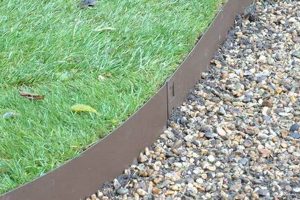
A planting design adapted for dry conditions constitutes a specialized horticultural approach. Such a design emphasizes drought-tolerant plant species and water-wise landscaping techniques. As an illustration, consider a landscape featuring succulents, cacti, and gravel mulch in a region with minimal rainfall; this exemplifies a water-conserving arrangement.
The significance of water-efficient landscapes lies in their environmental and economic advantages. They reduce water consumption, minimize the need for irrigation, and promote biodiversity in regions facing water scarcity. Historically, these landscapes have been crucial in arid and semi-arid climates where water resources are limited, supporting sustainable living practices.
Subsequent discussion will address specific plant selections, irrigation strategies, soil management techniques, and design principles for constructing and maintaining successful, drought-resistant outdoor spaces. Furthermore, the adaptation of traditional gardening practices to suit regions with low precipitation levels will be examined.
Cultivating Successful Landscapes in Dry Climates
The following guidelines offer practical advice for establishing and maintaining thriving landscapes in regions characterized by low rainfall and arid conditions. Employing these strategies maximizes water conservation and promotes the long-term health and aesthetic appeal of outdoor spaces.
Tip 1: Select Drought-Tolerant Plant Species: Prioritize plant varieties naturally adapted to arid environments. Examples include succulents such as agave and sedum, drought-resistant shrubs like lavender and rosemary, and native grasses known for their low water requirements. Research plant hardiness zones to ensure selected species are suited to the specific climate.
Tip 2: Implement Efficient Irrigation Systems: Utilize drip irrigation or soaker hoses to deliver water directly to plant roots, minimizing water loss through evaporation. Schedule irrigation during cooler hours of the day, such as early morning or late evening, to further reduce evaporation rates. Monitor soil moisture levels to avoid overwatering.
Tip 3: Employ Mulch to Conserve Moisture: Apply a layer of organic mulch, such as wood chips or shredded bark, around plants to retain soil moisture, suppress weed growth, and regulate soil temperature. Inorganic mulches, like gravel or decomposed granite, can also be effective in arid landscapes.
Tip 4: Improve Soil Drainage and Composition: Amend soil with organic matter, such as compost or well-rotted manure, to improve its water-holding capacity and drainage. Avoid soil compaction, which can hinder root growth and water infiltration. Consider raised beds or berms to enhance drainage in areas with heavy clay soil.
Tip 5: Practice Xeriscaping Principles: Xeriscaping involves designing landscapes that minimize water usage through careful plant selection, efficient irrigation, soil improvement, and the use of mulches. Group plants with similar water needs together to streamline irrigation efforts. Consider incorporating hardscape elements like patios and walkways to reduce the amount of irrigated area.
Tip 6: Utilize Rainwater Harvesting Techniques: Collect rainwater from rooftops and other impervious surfaces using rain barrels or cisterns. This harvested water can then be used for irrigation, reducing reliance on municipal water sources.
Effective water conservation strategies are essential for creating sustainable and aesthetically pleasing outdoor spaces in regions experiencing water scarcity. Adhering to these guidelines promotes responsible resource management and ensures the long-term health and vitality of plantings.
The following sections will further explore the specific techniques for selecting appropriate plant material and creating visually compelling, drought-resistant landscape designs.
1. Drought-tolerant Selection

The success of an arid planting design is intrinsically linked to drought-tolerant selection. This process dictates the long-term viability and sustainability of the landscape. Plant species that possess inherent adaptations to water scarcity form the foundational elements of such a garden. Without this careful selection, increased irrigation demands become inevitable, negating the primary purpose of the planting design. The effect of this selection is a reduced dependency on supplemental water, fostering an environmentally conscious and resource-efficient outdoor space. For instance, consider the implementation of native Californian species, such as California fuchsia (Epilobium canum) or manzanita (Arctostaphylos spp.), in a residential setting. These plants, naturally accustomed to the region’s dry summers, demonstrably thrive with minimal irrigation compared to non-native, water-intensive alternatives.
Further illustrating the importance of drought-tolerant selection is the reduced susceptibility to disease and pest infestations often observed in landscapes composed of adapted species. Plants stressed by inadequate water availability are inherently more vulnerable to pathogens and insect damage. By selecting species pre-adapted to the prevailing environmental conditions, the need for chemical interventions and the associated ecological consequences are diminished. The practical application of this understanding extends to informed decision-making during the initial design phase, prioritizing the incorporation of climate-appropriate varieties that are readily available through local nurseries and botanical gardens.
In summary, drought-tolerant selection is not merely a design consideration, but a fundamental prerequisite for establishing a sustainable and resilient landscape. The implications of this choice reverberate throughout the entire ecosystem of the landscape, influencing water consumption, plant health, and the overall environmental impact. The challenge lies in promoting greater awareness among landscape designers and homeowners regarding the availability and adaptability of various drought-tolerant species to different regional climates. By embracing this principle, a shift towards ecologically responsible landscape design practices can be achieved, contributing to the preservation of precious water resources and the creation of thriving arid gardens.
2. Efficient Irrigation

Efficient irrigation is an indispensable component of a successful planting design in arid regions. Its implementation directly impacts water conservation, plant health, and the long-term sustainability of such landscapes, providing the lifeblood necessary to sustain vegetation in environments with limited natural precipitation.
- Drip Irrigation Systems
Drip irrigation delivers water directly to the root zone of plants, minimizing water loss through evaporation and runoff. This method is particularly well-suited for planting areas in ari
d regions, as it optimizes water use and ensures that plants receive the necessary moisture without excessive waste. For example, a micro-drip system installed in a planting bed surrounding drought-tolerant shrubs ensures each plant receives a precise amount of water, tailored to its specific needs. - Smart Irrigation Controllers
Smart irrigation controllers utilize weather data, soil moisture sensors, and plant-specific information to automatically adjust irrigation schedules. These controllers prevent overwatering by only irrigating when necessary, based on real-time environmental conditions. An example would be a controller that monitors local weather forecasts and suspends irrigation during periods of rainfall, thereby conserving water and reducing water bills.
- Zoned Irrigation Systems
Zoned irrigation systems divide a landscape into distinct zones based on plant water requirements and sun exposure. This allows for customized irrigation schedules for each zone, ensuring that plants receive the appropriate amount of water. For instance, a zone containing sun-loving succulents might receive less water than a zone with shade-tolerant groundcover.
- Greywater Recycling Systems
Greywater recycling systems collect wastewater from sources such as showers, sinks, and washing machines, treat it, and reuse it for irrigation purposes. This reduces the demand for potable water and conserves valuable water resources. An example of this system would be the use of greywater to irrigate non-edible landscaping plants, providing them with a sustainable water source.
These efficient irrigation techniques, when integrated into design planning, are fundamental to the viability and beauty of the landscape. Through targeted delivery, intelligent control, customized zoning, and creative water reuse, arid regions can support thriving, environmentally responsible outdoor spaces.
3. Xeriscaping Principles

Xeriscaping principles serve as the foundational methodology for establishing and maintaining arid gardens. These principles, when effectively implemented, minimize water consumption while promoting plant health and aesthetic appeal in regions characterized by limited rainfall. A direct causal relationship exists between the application of xeriscaping principles and the sustainability of arid gardens; failure to adhere to these principles invariably results in increased water requirements, compromising the very essence of a planting design intended for dry conditions.
The seven principles of xeriscapingplanning and design, soil amendment, efficient irrigation, appropriate plant selection, mulching, turf alternatives, and maintenanceeach play a critical role in the success of an arid garden. Planning and design considerations determine the layout of the landscape, influencing water runoff and sun exposure. Soil amendment improves water retention and drainage. Efficient irrigation, often employing drip systems, delivers water directly to plant roots, minimizing waste. Appropriate plant selection prioritizes drought-tolerant species, reducing the overall demand for supplemental irrigation. Mulching conserves soil moisture by reducing evaporation. The use of turf alternatives, such as gravel or drought-tolerant groundcovers, minimizes water-intensive lawn areas. Finally, proper maintenance ensures the long-term health and vitality of the landscape.
The practical significance of understanding the connection between xeriscaping principles and the arid garden lies in the creation of sustainable landscapes that are both environmentally responsible and aesthetically pleasing. Consider a public park in a desert city: By adhering to xeriscaping principles, the park can provide a green space for recreation while significantly reducing water consumption compared to a traditional, water-intensive landscape. However, challenges remain in promoting widespread adoption of xeriscaping practices, requiring greater public awareness, education, and incentives to encourage homeowners and businesses to embrace these water-wise landscaping techniques.
4. Soil Amendment

Soil amendment is a critical process in the establishment and maintenance of an arid planting design. The inherent characteristics of soils in arid regions often present significant challenges to plant growth, necessitating intervention to improve soil structure, water retention, and nutrient availability.
- Improving Water Retention
Arid soils frequently exhibit low water-holding capacity due to their coarse texture and low organic matter content. Amending these soils with organic materials, such as compost or well-rotted manure, increases their ability to retain moisture. This is particularly crucial in arid gardens, where water is a scarce resource. For instance, incorporating compost into sandy soil improves its ability to hold water, reducing the frequency of irrigation required. In contrast, unimproved sandy soil allows water to drain rapidly, depriving plants of essential hydration.
- Enhancing Nutrient Availability
Arid soils are often deficient in essential nutrients required for plant growth. Soil amendments, especially organic matter, can provide a slow-release source of nutrients, promoting healthy plant development. For example, adding composted leaves to arid soil introduces vital nutrients, such as nitrogen, phosphorus, and potassium, that would otherwise be lacking. Without amendment, plants may exhibit stunted growth or nutrient deficiencies, impacting their overall health and aesthetic value.
- Improving Soil Structure
Arid soils can be compacted or have poor structure, hindering root growth and water infiltration. Amendments like gypsum or coarse sand can improve soil structure, creating a more favorable environment for root development. Consider the case of heavy clay soils: gypsum can improve drainage and aeration, facilitating root penetration and preventing waterlogging. Unamended clay soils, on the other hand, restrict root growth and increase the risk of root rot.
- Modifying Soil pH
The pH of arid soils can often be alkaline, which can limit the availability of certain nutrients to plants. Soil amendments, such as sulfur or acidic organic matter, can lower the pH, making nutrients more accessible. For instance, azaleas and rhododendrons, which prefer acidic soil, thrive in arid regions when soil pH is appropriately adjusted. Without pH modification, these plants struggle to absorb essential nutrients, resulting in chlorosis (yellowing of leaves) and poor growth.
The judicious application of soil amendment techniques is indispensable for creating a thriving planting area. These interventions mitigate the inherent limitations of arid soils, fostering conditions conducive to plant growth and ensuring the long-term sustainability of such designs. The choice of amendment should be tailored to the specific soil characteristics and plant requirements of the specific arid garden.
5. Mulch Application
Mulch application serves as a crucial element in the successful establishment and maintenan
ce of arid gardens. The practice mitigates water loss from the soil surface, regulates soil temperature, suppresses weed growth, and contributes to the overall health of plants adapted to dry conditions. The direct impact of mulch application is evident in reduced irrigation frequency and improved plant vigor within the context of a water-conserving landscape design. For instance, consider a gravel mulch applied around succulents: the gravel acts as a barrier against direct sunlight, reducing soil evaporation and moderating temperature fluctuations. Without mulch, the soil surface would be exposed, leading to increased water loss and potential heat stress on the plants.
The selection of appropriate mulch materials is paramount. Organic mulches, such as shredded bark or wood chips, decompose over time, enriching the soil with organic matter and improving its water-holding capacity. However, they may require periodic replenishment. Inorganic mulches, like gravel or decomposed granite, are more durable and provide excellent weed suppression but do not contribute to soil fertility. An example demonstrating practical application is the use of decomposed granite in pathways and around drought-tolerant shrubs, reducing water runoff and inhibiting weed germination. The cost-effectiveness and longevity of inorganic mulches make them a popular choice in many large-scale applications.
The importance of mulch application extends beyond water conservation. By suppressing weed growth, mulch reduces competition for water and nutrients, allowing desired plants to thrive. The moderation of soil temperature prevents extreme temperature fluctuations that can stress plant roots. Furthermore, certain types of mulch can deter soil erosion caused by wind and water, protecting the soil structure and preventing nutrient loss. In summary, mulch application is a multifaceted practice that is integral to creating sustainable, aesthetically pleasing, and ecologically sound landscapes. Successfully integrating mulch application into the arid garden requires careful material selection, proper application techniques, and ongoing maintenance to achieve optimal results.
6. Native Plants
The incorporation of native plant species is a cornerstone of successful arid planting design. Native plants, by definition, have evolved within a specific geographic region and are therefore inherently adapted to the local climate, soil conditions, and prevailing environmental stresses. Their utilization directly contributes to the sustainability, ecological integrity, and long-term resilience of arid landscapes.
- Reduced Water Requirements
Native plants typically require less supplemental irrigation compared to non-native species in an arid garden context. Having adapted to the natural precipitation patterns of the region, they possess physiological and morphological traits that enable them to efficiently capture and conserve water. For example, native grasses in the American Southwest often exhibit deep root systems that access groundwater sources unavailable to shallower-rooted introduced species. This translates to reduced water consumption and lower maintenance costs for the landscape.
- Enhanced Biodiversity Support
Native plants play a crucial role in supporting local biodiversity within an arid garden. They provide food and shelter for native insects, birds, and other wildlife that have co-evolved with these plants over time. Introducing non-native species can disrupt these ecological relationships, potentially leading to declines in native populations. A native wildflower meadow in an arid garden, for instance, can attract native pollinators such as bees and butterflies, contributing to the health and stability of the local ecosystem.
- Natural Resistance to Pests and Diseases
Native plants often exhibit greater resistance to local pests and diseases compared to non-native species in arid conditions. This is because they have evolved alongside these pests and pathogens, developing natural defense mechanisms. Using native plants can reduce the need for chemical pesticides and herbicides, minimizing the environmental impact of maintaining the landscape. An example is the resistance of many native desert shrubs to common fungal diseases that can plague non-native ornamentals.
- Soil Stabilization and Erosion Control
Native plant root systems are often well-adapted to the specific soil types found in arid regions, providing effective soil stabilization and erosion control. This is particularly important in areas prone to wind or water erosion. Native groundcovers, for instance, can form a dense mat that protects the soil surface from erosion, preventing soil loss and maintaining the integrity of the landscape. Utilizing native grasses on slopes is a particularly effective method to combat soil degradation.
The selection and integration of native plants are not merely aesthetic considerations, but essential components of a sustainable and ecologically responsible approach. This strategy promotes environmental harmony and ensures the preservation of precious water resources.
Frequently Asked Questions About Arid Gardens
The following addresses common inquiries regarding design, implementation, and maintenance of plantings in dry climates. This information aims to provide clarity and guidance for those seeking to establish sustainable, water-conserving outdoor spaces.
Question 1: What defines an “arid garden” as distinct from other garden types?
An arid garden is specifically designed for climates with low precipitation and high evaporation rates. Plant selection focuses on drought-tolerant species, minimizing the need for supplemental irrigation. This distinguishes it from traditional gardens that often rely on substantial water inputs.
Question 2: Is it possible to establish a aesthetically pleasing arid garden without sacrificing visual appeal?
Achieving aesthetic appeal is entirely feasible. Careful planning, plant selection considering foliage color and texture, and the integration of hardscape elements can create visually compelling landscapes, even with water-wise principles at the forefront.
Question 3: What are the primary benefits of opting for an arid garden instead of a conventional lawn?
The benefits are multifaceted: reduced water consumption, lower maintenance costs, decreased use of fertilizers and pesticides, and promotion of biodiversity by supporting native pollinators and wildlife. These factors contribute to environmental sustainability.
Question 4: How can I ensure the long-term survival of plants in an arid garden during prolonged drought periods?
Strategic planning includes deep watering techniques, proper soil preparation to enhance water retention, and regular monitoring of plant health. Selecting plants known for their extreme drought tolerance is crucial for long-term success.
Question 5: Are there specific soil types that are inherently unsuitable for establishing an arid garden?
While some soil types pose challenges, most can be modified to support plantings. Heavy clay soils benefit from amendment with organic matter and improved drainage. Sandy soils require amendments to enhance water retention.
Question 6: What ongoing maintenance is required for an arid garden, compared to a traditional garden?
The maintenance demands are generally lower. Pruning, occasional weeding, and infrequent irrigation during prolonged dry spells are typically suf
ficient. Regular monitoring for pests and diseases is recommended, though the incidence is often lower than in traditional gardens.
These answers provide a foundational understanding. Consulting local horticultural experts and researching specific plant species suited to your region is crucial for successful design and cultivation.
The following section will detail specific plant recommendations best suited to arid conditions, grouped by region and climate.
Arid Garden
This exposition has explored the principles and practices underpinning the establishment and maintenance of plantings in dry climates. From the selection of drought-tolerant species to the implementation of efficient irrigation systems and the application of xeriscaping methodologies, each element contributes to the long-term sustainability and ecological integrity of water-conserving landscapes. The emphasis on native flora, soil amendment, and strategic mulch application underscores the importance of holistic and informed design choices.
The cultivation of landscapes necessitates a responsible stewardship of natural resources. As water scarcity becomes an increasingly pressing global concern, the adoption of design principles offers a pathway toward environmentally conscious horticulture and resilient outdoor spaces. Further research and widespread implementation of these practices are critical to ensuring the future viability of landscapes in a world facing growing aridity and diminishing water supplies.