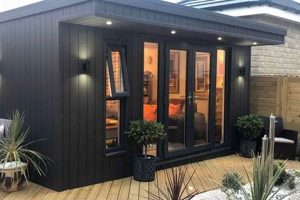
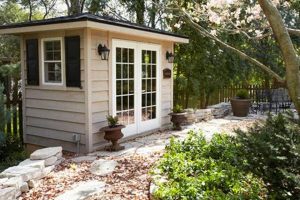
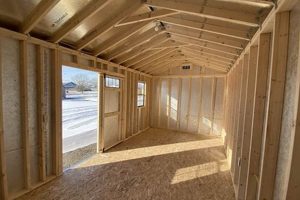
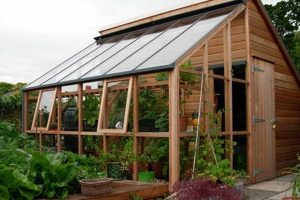
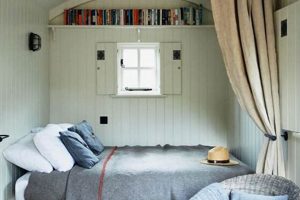
Structures designed to provide storage and workspace within a garden setting, particularly those constructed using materials and styles reminiscent of woodland environments, are the subject of this exposition. These outbuildings serve practical purposes, offering protection for gardening tools, equipment, and supplies. They can also function as potting sheds or small workshops for horticultural activities.
The utility of these garden structures extends beyond mere storage. They contribute to the overall aesthetic of a landscape, blending functionality with visual appeal. Historically, such buildings have provided essential space for gardeners and homeowners, enabling them to maintain and enhance their outdoor spaces efficiently. Their presence can improve organization, reduce clutter, and prolong the lifespan of gardening implements by shielding them from the elements.
This article will delve into the various aspects of these woodland-inspired outdoor buildings, exploring their design considerations, material choices, construction techniques, and the factors to consider when selecting or building one suitable for specific needs and preferences. Attention will also be given to their integration into existing garden layouts and their contribution to sustainable gardening practices.
Essential Considerations for Selecting a Woodlands Garden Shed
Selecting a garden outbuilding that complements a woodland aesthetic requires careful planning and consideration. The following tips offer guidance for making informed decisions regarding design, materials, and functionality.
Tip 1: Material Selection: Opt for natural, durable materials. Cedar, redwood, and pressure-treated lumber are ideal choices due to their resistance to decay and insect infestation. Untreated wood can be considered but will require regular maintenance and preservative treatments.
Tip 2: Roof Design: A pitched roof is recommended to facilitate water runoff and prevent moisture buildup. Consider a green roof option with drought-tolerant sedums or other low-maintenance plants to further blend the structure with its natural surroundings.
Tip 3: Size and Placement: Determine the required storage space before construction or purchase. Placement should consider sunlight exposure, proximity to gardening areas, and potential impact on existing vegetation. Avoid locations prone to waterlogging.
Tip 4: Foundation Requirements: A solid, level foundation is crucial for structural integrity. Options include a concrete slab, gravel base, or treated timber frame. Ensure proper drainage to prevent water damage and settling.
Tip 5: Ventilation: Adequate ventilation is essential to prevent moisture buildup and mildew growth. Install vents near the roofline and foundation to promote airflow. Consider operable windows for increased ventilation during warmer months.
Tip 6: Security Measures: Implement security measures to protect valuable tools and equipment. Install a robust lock, reinforce doors and windows, and consider a security system if necessary.
Tip 7: Aesthetic Integration: Strive for aesthetic harmony with the surrounding woodland environment. Choose natural stains or paints that complement the existing landscape. Incorporate design elements such as trellises or climbing plants to further integrate the structure.
Adhering to these guidelines will ensure the acquisition or construction of a functional and aesthetically pleasing garden structure that enhances the overall landscape.
The next section will explore specific design elements and construction techniques for optimizing the utility and longevity of a woodlands-inspired garden outbuilding.
1. Material Durability
Material durability is a foundational aspect in the context of garden outbuildings within woodland settings. The inherent exposure to the elements necessitates careful consideration of material properties to ensure structural integrity, longevity, and reduced maintenance costs.
- Resistance to Moisture and Decay
Woodland environments are often characterized by high humidity and precipitation levels. Materials used in garden shed construction must exhibit inherent resistance to moisture absorption and subsequent decay. Woods such as cedar and redwood contain natural oils that act as preservatives, mitigating the risk of rot and fungal growth. Pressure-treated lumber offers an alternative, though its chemical composition warrants consideration in environmentally sensitive areas.
- Protection Against Insect Infestation
Wood-boring insects pose a significant threat to wooden structures, particularly in wooded areas. Durable materials should possess natural or treated resistance to common pests like termites, carpenter ants, and wood-boring beetles. Cedar, due to its aromatic oils, offers some inherent protection, while borate treatments can be applied to other wood species to enhance their resistance.
- Weathering Characteristics
Exposure to sunlight, wind, and temperature fluctuations can degrade materials over time. Durable materials should exhibit minimal degradation under prolonged environmental stress. This includes resistance to cracking, warping, and fading. Surface treatments, such as stains and sealants, can further protect materials from weathering but require periodic reapplication.
- Structural Integrity Under Load
The materials used must be capable of supporting the weight of the structure itself, as well as any additional loads imposed by snow, wind, or stored items. The selection of appropriate lumber grades and dimensions is crucial to ensure sufficient structural capacity and prevent premature failure. The design should also minimize stress points and distribute loads evenly.
The long-term viability of any garden structure within a woodland environment hinges on the selection of durable materials. Prioritizing resistance to moisture, insects, weathering, and structural stress contributes to a sustainable and cost-effective solution, minimizing the need for frequent repairs or replacements and ensuring the lasting functionality of the installation.
2. Design Integration
Design integration, concerning garden structures within woodland settings, is the deliberate harmonization of the structure with its surrounding natural environment. It extends beyond mere aesthetic appeal, encompassing functional considerations that promote ecological compatibility and minimize disruption to the established ecosystem. Successful design integration results in a cohesive and sustainable addition to the landscape.
- Material Selection and Color Palette
The choice of building materials significantly influences the structure’s visual impact. Natural materials, such as locally sourced wood and stone, tend to blend more seamlessly with woodland environments. Color palettes should emulate the tones found in the surrounding foliage and soil. Earthy browns, greens, and muted grays are generally preferred over bright, artificial colors. The application of non-reflective finishes further reduces visual intrusion.
- Form and Scale Considerations
The shape and size of the garden structure should be proportional to the surrounding landscape. Overly large or geometrically complex structures can appear incongruous in a natural setting. Simpler, more organic forms often integrate more effectively. The structure’s height should be carefully considered to avoid obstructing sightlines or overshadowing existing vegetation. Low-profile designs are generally favored.
- Vegetation Incorporation
Integrating vegetation into the structure’s design helps to blur the lines between built and natural elements. Trellises supporting climbing plants can soften the structure’s edges and provide habitat for wildlife. Green roofs, planted with native species, can further enhance the structure’s ecological value and reduce stormwater runoff. Careful selection of plant species is crucial to ensure compatibility with the local ecosystem and minimize the risk of invasive species spread.
- Minimizing Environmental Impact
Design integration extends beyond aesthetics to encompass environmental considerations. Construction practices should minimize soil disturbance and habitat fragmentation. The structure’s footprint should be kept as small as possible, and permeable paving materials should be used to allow for water infiltration. Rainwater harvesting systems can be incorporated to reduce reliance on municipal water supplies. Proper waste management and erosion control measures are essential throughout the construction process.
Ultimately, design integration aims to create garden structures that are both functional and ecologically responsible. By carefully considering material selection, form, vegetation incorporation, and environmental impact, it is possible to construct buildings that seamlessly blend into the woodland environment, enhancing rather than detracting from its natural beauty and ecological integrity. The result is a harmonious synthesis of the built and natural worlds.
3. Foundation Stability

Foundation stability is a critical determinant of the longevity, structural integrity, and overall performance of garden outbuildings situated in woodland environments. A stable foundation mitigates the risks associated with ground movement, moisture infiltration, and uneven settling, all of which can compromise the structural integrity of the building. The type of foundation selected should be appropriate for the soil conditions, climate, and intended use of the shed.
- Load Bearing Capacity and Soil Type
The load-bearing capacity of the soil directly influences the type of foundation required. Woodland soils often exhibit variability in composition and drainage characteristics, ranging from well-drained sandy soils to poorly drained clay soils. Clay soils are prone to expansion and contraction with changes in moisture content, potentially causing foundation movement. Gravel or compacted base foundations may suffice for smaller sheds on well-drained, stable soils. Larger sheds or those situated on unstable soils necessitate a more substantial foundation, such as a concrete slab or pier and beam system, to distribute the load evenly and prevent settling.
- Drainage and Moisture Control
Woodland environments are typically characterized by high levels of precipitation and soil moisture. Inadequate drainage can lead to water accumulation around the foundation, promoting rot, mildew, and structural deterioration. Proper drainage systems, including French drains or grading the surrounding terrain to direct water away from the building, are essential for maintaining foundation stability. A vapor barrier placed beneath the foundation can further prevent moisture from wicking into the structure.
- Frost Heave Protection
In regions with freezing temperatures, frost heave can pose a significant threat to foundation stability. As soil moisture freezes, it expands, exerting upward pressure on the foundation. This can lead to cracking, shifting, and structural damage. Foundations should extend below the frost line to prevent frost heave. Alternatively, insulating the ground around the foundation can help to maintain a stable soil temperature and mitigate the risk of frost heave.
- Prevention of Settling and Subsidence
Uneven settling or subsidence can occur due to variations in soil compaction or the presence of underlying voids. This can result in structural distortion, door and window misalignment, and other problems. A properly compacted and leveled foundation base is essential for preventing settling. If the site is known to have unstable soil conditions, soil stabilization techniques, such as compaction grouting or deep soil mixing, may be necessary.
In summary, foundation stability is an indispensable element in the successful integration of garden structures within woodland landscapes. Careful assessment of soil conditions, climate, and intended use, coupled with the implementation of appropriate foundation design and construction practices, are crucial for ensuring the long-term structural integrity and functionality of the building, protecting it from the detrimental effects of ground movement, moisture, and frost.
4. Ventilation adequacy

Ventilation adequacy is a critical design parameter for garden structures situated in woodland environments. Insufficient ventilation within these buildings directly contributes to a range of detrimental effects, impacting both the structure itself and the items stored within. The cause-and-effect relationship is evident: limited airflow promotes moisture accumulation, fostering conditions conducive to mold, mildew, and fungal growth. This, in turn, accelerates the decay of wooden building components and stored organic materials. Conversely, adequate ventilation mitigates these risks, promoting a drier, healthier environment. For example, a garden shed used to store damp gardening tools or freshly harvested produce will quickly develop moisture issues if ventilation is inadequate, leading to corrosion of tools and spoilage of produce. Therefore, proper ventilation serves as a key preventative measure.
The practical significance of understanding ventilation adequacy extends beyond the preservation of stored items and structural integrity. It directly influences the long-term cost-effectiveness of the garden structure. Investing in appropriate ventilation solutions during the initial construction phase, such as installing vents near the roofline and foundation, significantly reduces the need for costly repairs and replacements associated with moisture damage. Furthermore, adequate ventilation contributes to a healthier environment for individuals who may spend time working or organizing items within the shed, minimizing exposure to potentially harmful mold spores and volatile organic compounds. The use of solar-powered vents can further enhance ventilation efficiency while reducing energy consumption.
In conclusion, ventilation adequacy is not merely an optional feature but an essential component of well-designed and maintained garden outbuildings. Neglecting this aspect can lead to significant problems, including structural damage, material degradation, and potential health hazards. By prioritizing ventilation and implementing effective strategies to promote airflow, the longevity, functionality, and overall value of the garden structure are substantially enhanced. Addressing the challenge of ventilation requires a holistic approach, considering climate, building materials, and intended use, to ensure the creation of a sustainable and healthy storage environment.
5. Security effectiveness
Security effectiveness is of paramount importance when considering garden structures located within woodland environments. The relative isolation and often limited visibility of these settings can present increased security risks, making robust security measures essential to protect valuable tools, equipment, and personal belongings stored within. A comprehensive security strategy addresses potential vulnerabilities and aims to deter unauthorized access and theft.
- Perimeter Security Measures
Perimeter security encompasses measures designed to prevent unauthorized access to the structure’s immediate surroundings. This includes features such as security lighting, strategically positioned to illuminate potential entry points and deter intruders. Fencing or thorny vegetation surrounding the structure can also serve as a physical barrier. Motion-activated security cameras, coupled with alarm systems, provide an additional layer of protection by monitoring activity and alerting authorities in the event of a breach. The effectiveness of perimeter security relies on its visibility and deterrent effect.
- Door and Window Reinforcement
Doors and windows represent common points of entry for intruders. Reinforcing these openings is crucial for enhancing security. Solid-core doors constructed of durable materials, such as wood or steel, provide greater resistance to forced entry than hollow-core alternatives. Deadbolt locks with long throw bolts offer enhanced security compared to standard latch mechanisms. Window reinforcement measures include laminated glass, security film, and window bars or grilles. Regularly inspecting doors and windows for signs of damage or wear is essential for maintaining their security effectiveness.
- Alarm Systems and Monitoring
Alarm systems provide an immediate response to unauthorized entry. These systems typically consist of sensors that detect door and window openings, motion detectors that monitor interior activity, and a central control panel that triggers an alarm upon detection of a breach. The alarm can be configured to sound locally, alerting nearby residents, or to transmit a signal to a central monitoring station, which can dispatch law enforcement. The presence of an alarm system serves as a strong deterrent to potential intruders. Regular testing and maintenance are essential to ensure the system’s reliability.
- Concealment and Camouflage
In woodland settings, concealment and camouflage can contribute to security effectiveness. Blending the structure with its surroundings reduces its visibility and makes it less appealing to potential intruders. This can be achieved through the use of natural building materials, earthy color palettes, and the strategic placement of vegetation. Avoiding the storage of high-value items in plain sight and maintaining a low profile further reduces the risk of attracting unwanted attention.
The implementation of comprehensive security measures tailored to the specific challenges of woodland environments is crucial for protecting the contents and integrity of garden structures. A layered approach, combining physical security enhancements, electronic surveillance, and proactive concealment strategies, maximizes security effectiveness and minimizes the risk of unauthorized access and theft, ultimately preserving the utility and value of the garden shed.
6. Spatial optimization

Spatial optimization, within the context of woodland garden sheds, refers to the strategic organization and efficient utilization of available space to maximize functionality and minimize wasted area. This is particularly crucial due to the inherent constraints of garden environments and the diverse storage and operational needs associated with gardening activities. The effectiveness of spatial optimization directly influences the shed’s utility, accessibility, and overall value as a resource within the woodland setting. A poorly optimized shed results in clutter, limited maneuverability, and difficulty locating stored items, thus impeding gardening efficiency. In contrast, a well-optimized space provides a streamlined and productive environment.
Real-life examples illustrate the practical significance of this concept. Consider a shed used for potting plants, storing tools, and overwintering tender bulbs. Without spatial optimization, tools might be scattered haphazardly, potting mix bags could obstruct walkways, and bulbs might be forgotten in dark corners. However, by implementing shelving systems to organize tools, utilizing vertical storage solutions for bagged materials, and employing clear labeling for bulb storage containers, the same space becomes far more functional and accessible. Further examples include utilizing wall-mounted tool racks, installing overhead storage lofts, and incorporating fold-down work surfaces to conserve space when not in use. Efficient spatial planning also considers traffic flow within the shed, ensuring ample room for maneuvering and accessing frequently used items.
In summary, spatial optimization is a critical component of a successful woodland garden shed. It transcends mere organization, representing a deliberate effort to enhance usability, accessibility, and overall efficiency. This includes using shelving and foldable tables to provide more space, and adding lights for dark weather conditions. Addressing challenges such as limited space and diverse storage needs requires thoughtful planning and the implementation of appropriate storage solutions. By prioritizing spatial optimization, the garden shed transforms from a mere storage facility into a valuable and productive asset, supporting and enhancing gardening activities within the woodland environment.
Frequently Asked Questions
This section addresses common inquiries regarding structures designed for storage and utility within garden environments, specifically those intended to harmonize with woodland settings. The information presented aims to provide clarity and informed decision-making concerning these specialized outbuildings.
Question 1: What are the primary considerations when selecting materials for woodland garden sheds?
Material selection should prioritize durability, resistance to moisture and insect infestation, and aesthetic compatibility with the surrounding environment. Cedar, redwood, and pressure-treated lumber are commonly employed due to their inherent properties. Untreated wood may be considered, but requires regular maintenance and preservative treatments to ensure longevity.
Question 2: How does the design of a woodland garden shed integrate with its surroundings?
Design integration focuses on harmonizing the structure with the natural landscape. This includes utilizing earthy color palettes, incorporating natural building materials, minimizing the structure’s visual footprint, and integrating vegetation, such as climbing plants or green roofs, to blend the shed seamlessly into the woodland environment.
Question 3: What foundation options are suitable for woodland garden sheds, and how do they ensure stability?
Suitable foundation options include concrete slabs, gravel bases, and treated timber frames. The choice depends on soil conditions, shed size, and local climate. Proper drainage is crucial to prevent water damage and settling. The foundation must provide a stable and level base to distribute weight evenly and prevent structural issues.
Question 4: Why is ventilation important in woodland garden sheds, and how can it be achieved?
Ventilation is essential to prevent moisture buildup, mold growth, and decay. Adequate ventilation can be achieved by installing vents near the roofline and foundation to promote airflow. Operable windows can also enhance ventilation during warmer months. Proper ventilation ensures a dry and healthy environment for stored items and the structural integrity of the shed itself.
Question 5: What security measures are recommended for woodland garden sheds?
Recommended security measures include robust door and window locks, reinforced doors and windows, security lighting, and alarm systems. Concealment and camouflage strategies, such as blending the shed with its surroundings, can also deter potential intruders. Regular inspection and maintenance of security measures are crucial for their effectiveness.
Question 6: How can the available space within a woodland garden shed be optimized for functionality?
Spatial optimization involves strategic organization and efficient utilization of available space. Techniques include installing shelving systems, utilizing vertical storage solutions, employing wall-mounted tool racks, and incorporating fold-down work surfaces. Careful planning of traffic flow and accessibility further enhances functionality and maximizes usable space.
These frequently asked questions highlight essential considerations when planning or acquiring garden structures intended for woodland settings. Adhering to these principles will contribute to a functional, durable, and aesthetically pleasing addition to the landscape.
The subsequent section will provide practical guidance on the construction and maintenance of such garden buildings.
Conclusion
This exposition has thoroughly examined structures designed for gardens that integrate with woodland environments. The discussion encompassed material selection favoring durability and natural aesthetics, design considerations promoting harmony with the landscape, and foundation requirements ensuring stability. The imperative need for adequate ventilation and effective security measures, alongside strategies for optimizing spatial arrangements within the structures, was underscored.
Ultimately, successful implementation of these principles yields a functional, aesthetically pleasing, and secure addition to the outdoor space. Investing in thoughtful planning and execution ensures that these structures not only serve their practical purpose but also enhance the overall integrity and value of the surrounding woodland setting. Further investigation and adherence to established best practices are encouraged to maximize the long-term benefits derived from these garden enhancements.