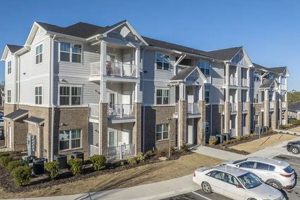
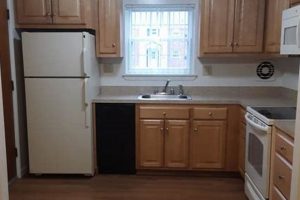
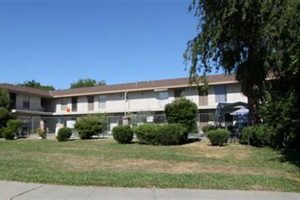
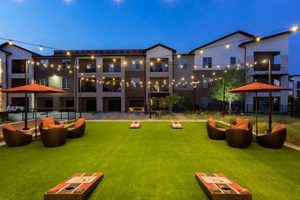
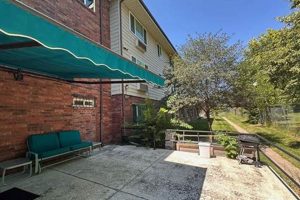
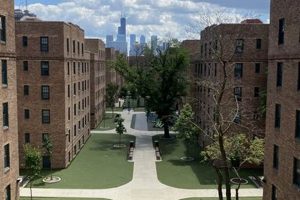
A type of multi-unit residential building characterized by its low-rise construction, typically one to three stories, and its significant landscaping. These complexes are designed to integrate outdoor green spaces, such as courtyards, gardens, and lawns, into the living environment. A common example features apartments surrounding a central green area with walkways and plantings, providing residents with accessible outdoor amenities.
The design fosters a sense of community and offers residents a more tranquil living experience compared to high-density urban dwellings. The inclusion of greenery can contribute to improved air quality and a connection with nature, potentially enhancing well-being. Historically, this style emerged as a response to the crowded conditions of urban centers, offering a suburban-like atmosphere within city limits.
Understanding the distinct features of this residential option is crucial when considering housing choices. Evaluating factors such as location, amenities, and the impact of landscaping on overall living quality becomes essential. This knowledge aids in making informed decisions about suitability based on individual needs and preferences.
The following points offer guidance for individuals considering residency in a low-rise, landscaped multi-family dwelling. Careful consideration of these aspects will facilitate a more informed decision-making process.
Tip 1: Assess Landscaping Maintenance. Inquire about the frequency and scope of groundskeeping services. Well-maintained landscaping enhances the aesthetic appeal and overall value of the property.
Tip 2: Evaluate Noise Levels. Due to the proximity of outdoor spaces, consider potential noise from landscaping equipment or communal activities. Visit the property at different times of day to assess noise pollution.
Tip 3: Investigate Pest Control Measures. Increased vegetation can attract pests. Determine the building’s pest control protocols and frequency of treatments.
Tip 4: Examine Natural Light Exposure. Landscaping, while aesthetically pleasing, can obstruct sunlight. Evaluate the apartment’s orientation and the impact of trees and shrubs on natural light levels within the unit.
Tip 5: Clarify Outdoor Space Usage Policies. Understand the rules and regulations governing the use of common outdoor areas, including restrictions on personal items or activities.
Tip 6: Inquire About Water Usage Fees. Extensive landscaping often results in higher water consumption. Determine how water costs are allocated among residents.
Tip 7: Consider Accessibility. Ground-floor units may offer greater accessibility. Evaluate the presence of ramps or elevators if mobility is a concern.
Adherence to these recommendations can lead to a more satisfactory living experience. Proper due diligence ensures that expectations align with the realities of this particular housing style.
This informed approach provides a solid foundation for transitioning to further exploration of residential housing options.
1. Low-rise construction

Low-rise construction is a fundamental characteristic defining multi-unit residential buildings; its significance is intrinsically linked to the very essence of the apartment style. The limited height, typically one to three stories, directly facilitates the integration of extensive landscaping and outdoor spaces that characterize the building. This architectural choice allows for accessible ground-level units and creates opportunities for community courtyards and gardens directly adjacent to living spaces. A taller structure would necessarily diminish the feasibility and appeal of such features.
The effect of low-rise construction on the occupant experience is significant. Residents benefit from increased access to natural light, reduced reliance on elevators, and a greater sense of connection to the surrounding environment. Furthermore, the lower density contributes to a quieter, more suburban atmosphere, contrasting with the often-congested feel of high-rise apartments. For example, communities featuring numerous apartments arranged around central green spaces are only possible due to the building height restrictions. This spatial arrangement promotes social interaction and a sense of shared community.
In summary, low-rise construction is not merely a superficial element; it is a foundational principle enabling the defining features of this specific apartment type. This understanding is practically significant for prospective residents, property developers, and urban planners, as it dictates the design possibilities, lifestyle afforded, and overall environmental impact of such residential complexes. The limitation in height is a deliberate choice that prioritizes accessibility, community, and the integration of natural elements into the living environment.
2. Abundant landscaping

Abundant landscaping is not merely an aesthetic addition but a core component defining a residential property. The integration of extensive green spaces gardens, lawns, trees, and shrubbery is instrumental in distinguishing this housing style from conventional apartment complexes. This design element directly influences the living experience and perceived value of the property.
The presence of abundant landscaping has several practical effects. It contributes to improved air quality, provides visual screening for enhanced privacy, and can buffer noise from adjacent streets or neighboring buildings. Landscaping requires regular maintenance, influencing maintenance costs and potentially impacting rental rates. Examples of these properties often showcase carefully manicured lawns, flower beds, and mature trees providing shade and visual appeal. These properties provide an inviting outdoor environment that encourages resident interaction and fosters a sense of community.
Understanding the significance of abundant landscaping is crucial for prospective residents. It informs their assessment of overall living quality and potential environmental impacts. For property managers, maintaining landscaping to a high standard is essential for attracting and retaining tenants. In summary, the concept of abundant landscaping directly dictates design principles, living experiences, and perceived value, highlighting its intrinsic role in defining the essence of such residential buildings. The challenge lies in balancing aesthetic appeal with the practical considerations of maintenance and resource consumption, thereby ensuring the long-term sustainability and desirability of such properties.
3. Community courtyards

Community courtyards represent a defining characteristic frequently observed in apartment complexes. Their presence serves as a central element in fostering social interaction and enhancing the overall living experience. The courtyard, typically a shared outdoor space enclosed by the building’s structure, provides residents with opportunities for recreation, relaxation, and community engagement. For instance, a building might feature a landscaped courtyard with seating areas, barbecue grills, and communal gardens, facilitating gatherings and fostering a sense of belonging among residents. The absence of such a communal area often diminishes the perceived sense of community and can lead to reduced resident satisfaction.
The impact of well-designed and maintained community courtyards extends beyond mere aesthetics. These spaces can contribute to increased property values and improved resident retention rates. Furthermore, courtyards offer practical benefits such as providing a safe and accessible outdoor environment for children to play and for residents to socialize. Consider, for example, apartment complexes that host community events within their courtyards, such as movie nights or seasonal celebrations. Such activities promote a sense of community spirit and encourage residents to actively participate in shared experiences. Conversely, poorly maintained or underutilized courtyards can become sources of discontent and detract from the overall living environment.
In summary, community courtyards are integral to the success and appeal of buildings, influencing resident satisfaction, property values, and the overall sense of community. Understanding the design principles and management strategies associated with these shared spaces is essential for property developers, managers, and residents alike. Challenges arise in balancing the needs of diverse residents and ensuring the responsible use and maintenance of communal areas. Ultimately, the presence and quality of community courtyards directly reflect the commitment to fostering a positive and engaging living environment.
4. Suburban atmosphere
The creation of a suburban atmosphere within multi-unit residential settings is a significant objective in the design and marketing of garden style apartments. This atmosphere aims to replicate the qualities of suburban livingpeace, quiet, and access to green spaceswhile offering the convenience of apartment living.
- Reduced Density Living
Garden style apartments typically feature lower building density compared to urban high-rises. This lower density contributes to a less crowded environment, mirroring the spaciousness often associated with suburban neighborhoods. Examples include sprawling complexes with ample parking and green areas surrounding each building. The implications are reduced noise levels and increased opportunities for outdoor activities.
- Emphasis on Landscaping and Green Spaces
A defining characteristic is the prioritization of landscaping and green spaces. These elements, including lawns, gardens, and trees, are designed to evoke the natural beauty and tranquility of suburban residential areas. An example is a complex with a central courtyard featuring walking paths, flower beds, and mature trees. This contributes to a more relaxed and aesthetically pleasing environment.
- Community Amenities and Social Spaces
Many garden style apartments incorporate community amenities designed to foster a sense of community, similar to suburban neighborhoods. These may include swimming pools, playgrounds, and communal barbecue areas. An example is a complex with a clubhouse and organized social events to encourage interaction among residents. Such features promote social cohesion and a sense of belonging.
- Quieter Environment
Garden style apartments are often located away from the central business districts of cities, contributing to a quieter and less hectic environment. The combination of lower density and ample green space helps to buffer noise and create a more peaceful living experience. An example is a complex situated on the outskirts of a city, offering a respite from urban noise and congestion. This characteristic appeals to individuals seeking a more relaxed lifestyle.
The pursuit of a suburban atmosphere significantly influences the design and appeal of these residences. The factors discussed contribute to a more relaxed and community-oriented living experience, appealing to individuals who desire suburban qualities without the responsibilities of homeownership. The effectiveness of achieving this atmosphere can vary based on location, design, and management practices.
5. Ground-level accessibility
Ground-level accessibility represents a critical component of the garden style apartment typology, directly impacting resident convenience and inclusivity. The low-rise nature of these buildings inherently facilitates direct access to units without reliance on elevators or extensive staircases. This accessibility is particularly significant for individuals with mobility impairments, families with young children, and older adults, providing a more convenient and safer living environment. A typical example would be a resident with a wheelchair being able to enter their apartment directly from a parking area or sidewalk, without encountering any architectural barriers. This ease of access contributes significantly to the desirability and livability of garden style apartments for a broad range of residents. The importance of this feature becomes even more pronounced in contexts where accessibility standards are rigorously enforced, ensuring compliance and promoting universal design principles.
The practical implications of ground-level accessibility extend beyond individual convenience. It simplifies the process of moving in and out of apartments, reduces the logistical challenges associated with carrying groceries or other heavy items, and facilitates quicker evacuation in emergency situations. Furthermore, direct ground-level access often allows for private patios or small gardens directly connected to the living space, blurring the boundary between indoor and outdoor living. The availability of ground-level units is frequently highlighted in marketing materials targeting specific demographics, such as seniors or individuals with disabilities, underscoring its perceived value and importance. The absence of ground-level access in other multi-story residential buildings underscores the distinct advantage offered by this specific design feature.
In summary, ground-level accessibility is not merely a desirable amenity but a fundamental characteristic intrinsically linked to the concept of the garden style apartment. It enhances convenience, promotes inclusivity, and contributes to a safer and more livable environment for a diverse range of residents. The value of this feature is particularly evident in its practical applications, impacting daily life and emergency preparedness. This understanding is crucial for both prospective tenants and property developers when evaluating or designing such residential complexes.
6. Outdoor amenity integration

Outdoor amenity integration is a defining characteristic in properties, fundamentally shaping the resident experience and distinguishing them from conventional apartment complexes. The seamless incorporation of outdoor features enhances livability and fosters a connection with nature.
- Designated Green Spaces
The presence of curated green spaces, such as lawns, gardens, and landscaped areas, serves as a core element of properties. These spaces provide residents with opportunities for relaxation, recreation, and social interaction. An example includes a central courtyard featuring walking paths, benches, and flower beds, creating an inviting outdoor environment. The implications are improved resident well-being and a greater sense of community.
- Recreational Facilities
The integration of recreational facilities, such as swimming pools, tennis courts, and playgrounds, enhances the active lifestyle options available to residents. These amenities encourage physical activity and social engagement within the community. A typical scenario is a complex featuring a swimming pool, a playground for children, and a barbecue area for social gatherings. This facilitates a more vibrant and engaging living environment.
- Outdoor Seating and Dining Areas
Outdoor seating and dining areas offer residents opportunities to enjoy meals, socialize, and relax in a natural setting. These spaces enhance the overall livability and appeal of the property. An example is a patio with tables, chairs, and umbrellas, providing a comfortable space for residents to dine outdoors or socialize with neighbors. This encourages residents to spend more time outdoors and interact with each other.
- Walking and Biking Paths
The incorporation of walking and biking paths promotes active transportation and provides residents with opportunities to explore the surrounding environment. These paths enhance the connectivity of the property and encourage a healthy lifestyle. Consider a complex featuring a network of paved paths that connect different areas of the property and provide access to nearby parks or trails. This fosters a sense of community and promotes physical activity.
The facets of outdoor amenity integration collectively shape the residential experience in properties. The seamless integration of these amenities contributes to a more desirable and engaging living environment, attracting residents who value a connection with nature and an active lifestyle. The strategic design and maintenance of these outdoor spaces are essential for maximizing their benefits and enhancing the overall appeal of properties. These factors all contribute to the definition of what it means to be a garden style apartment.
Frequently Asked Questions
The following addresses prevalent inquiries regarding the nature and characteristics of a specific residential building design. This information is intended to clarify common points of confusion.
Question 1: What distinguishes a garden style apartment from other multi-unit dwellings?
The defining feature lies in its low-rise construction, typically one to three stories, combined with substantial landscaping. The design prioritizes integrating outdoor green spaces into the living environment, differentiating it from taller, high-density apartment buildings.
Question 2: Are garden style apartments typically located in urban or suburban areas?
They can be found in both, although they are often favored in suburban or peri-urban settings. The design seeks to replicate the atmosphere of suburban living, even when located within city limits. Location impacts the overall experience.
Question 3: What are the common amenities associated with this type of housing?
In addition to the landscaping itself, common amenities include community courtyards, walking paths, swimming pools, and outdoor seating areas. The precise array of amenities varies depending on the specific property.
Question 4: Does the landscaping of these residences require additional maintenance considerations?
Yes, the abundant landscaping necessitates consistent maintenance, potentially influencing rental rates or homeowner association fees. Prospective residents should inquire about landscaping maintenance schedules and associated costs.
Question 5: Is ground-floor accessibility a standard feature?
Ground-floor accessibility is a common characteristic, facilitated by the low-rise construction. This is particularly advantageous for residents with mobility limitations or those seeking convenient access to outdoor spaces.
Question 6: Are they more expensive than typical apartments?
The cost can vary widely based on location, amenities, and market demand. While the landscaping and community features may command a premium, individual circumstances ultimately determine affordability.
The key takeaway is that the distinct features of this type of residence involve low-rise construction with a strong connection to the outdoors. Further research is recommended to understand your specific needs and preferences relative to the property. Understanding these nuances can facilitate informed decision-making.
This exploration paves the way for a deeper consideration of alternative housing options and the factors influencing residential choices.
What is a Garden Style Apartment
This exploration of what is a garden style apartment has illuminated its defining characteristics: low-rise construction, abundant landscaping, community courtyards, a suburban atmosphere, ground-level accessibility, and integrated outdoor amenities. These elements combine to create a residential option distinct from high-density urban dwellings, offering a blend of community, nature, and convenience.
The understanding of what is a garden style apartment equips prospective residents and property developers with the knowledge necessary to make informed decisions, weighing the benefits of tranquil living and accessibility against potential costs and maintenance considerations. Continued attention to sustainable landscaping practices and community-focused design will be crucial for the enduring appeal and relevance of this housing style.