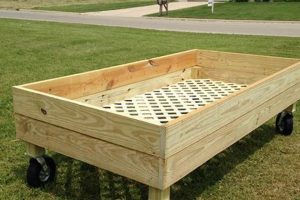
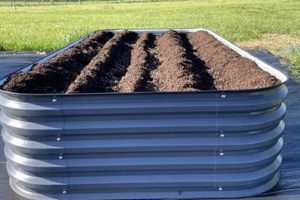
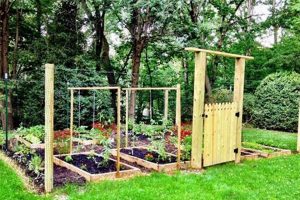
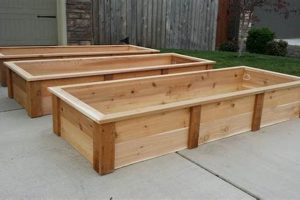
A planting structure, elevated above ground level and configured in a semi-circular or horseshoe design, offers enhanced accessibility for gardening tasks. This spatial arrangement permits easier reach to the center of the planting area, minimizing strain and maximizing the effective use of growing space. An example would be a structure constructed from cedar wood, approximately four feet high, wrapping around a patio corner to cultivate herbs and vegetables.
The adoption of this structural design can provide numerous advantages. Its elevated construction minimizes bending and kneeling, reducing physical strain for individuals with limited mobility. The enclosed shape maximizes planting density within a confined footprint. Historically, raised beds have been utilized to improve soil drainage and manage soil composition, and the “u” shape further optimizes these benefits through improved access and workflow.
This document will now examine various aspects related to optimizing this style of gardening, including material selection for construction, suitable plant varieties, irrigation strategies, and considerations for managing pests and diseases. The focus remains on maximizing the productivity and enjoyment derived from this horticultural approach.
Optimizing Cultivation Practices
The following guidelines provide practical advice for maximizing the efficiency and productivity of a semi-circular elevated planting configuration. These tips address crucial aspects of design, construction, and ongoing maintenance to ensure a successful gardening experience.
Tip 1: Material Selection: Prioritize durable, weather-resistant materials such as cedar, redwood, or composite lumber for the construction of the structure. Treated lumber may leach chemicals into the soil, potentially impacting plant health.
Tip 2: Ergonomic Considerations: The height of the bed should be carefully considered to minimize back strain. A height of 30-36 inches is generally recommended for standing cultivation, while lower heights may be suitable for seated gardeners.
Tip 3: Soil Composition: Utilize a well-draining soil mixture rich in organic matter. A combination of topsoil, compost, and peat moss provides optimal growing conditions for most vegetables and herbs. Regularly test the soil pH and amend as necessary to maintain a slightly acidic to neutral range (pH 6.0-7.0).
Tip 4: Irrigation Strategies: Implement an efficient irrigation system, such as drip irrigation or soaker hoses, to deliver water directly to the roots of the plants. This minimizes water waste and reduces the risk of foliar diseases.
Tip 5: Plant Spacing and Arrangement: Optimize space by intercropping compatible plant species. Taller plants should be positioned on the north side to avoid shading shorter plants. Consider the mature size of each plant when determining spacing requirements.
Tip 6: Pest and Disease Management: Regularly inspect plants for signs of pests or diseases. Implement preventative measures such as crop rotation, companion planting, and the use of organic pesticides or fungicides as needed.
Tip 7: Accessibility Adaptations: Incorporate features to enhance accessibility for individuals with mobility limitations, such as wide pathways, adjustable-height workstations, and adaptive gardening tools.
These recommendations aim to provide a comprehensive foundation for successfully managing a semi-circular elevated planting configuration. Adhering to these guidelines will contribute to increased yields, reduced maintenance, and an enhanced gardening experience.
The following sections will further delve into specific plant varieties suitable for this type of planting arrangement and address long-term maintenance strategies for sustained productivity.
1. Accessibility Optimization

Accessibility optimization, in the context of horticultural structures, directly impacts the inclusivity and usability of gardening practices for individuals with varying physical capabilities. The design and implementation of a “u shaped raised garden” significantly influence the ease with which individuals can engage in planting, maintenance, and harvesting activities.
- Reduced Physical Strain
Elevated construction minimizes the need for bending, stooping, and kneeling, thereby reducing strain on joints and muscles. This is particularly beneficial for individuals with arthritis, back pain, or limited mobility. The “u” shape further enhances this by providing closer access to plants from multiple angles, minimizing reaching.
- Wheelchair and Mobility Aid Compatibility
Careful consideration of the structure’s height, width, and surrounding pathways ensures compatibility with wheelchairs and other mobility aids. Adequate clearance allows for unimpeded access and maneuverability around the perimeter of the garden. Specific design adaptations, such as knee recesses, can further enhance accessibility for wheelchair users.
- Adaptive Tool Integration
Accessibility optimization includes the selection and integration of adaptive gardening tools. These tools are designed to compensate for limitations in grip strength, range of motion, or dexterity. Long-handled tools, ergonomic grips, and specialized planting aids can empower individuals to participate more fully in gardening activities.
- Sensory Considerations
Beyond physical accessibility, sensory considerations are also relevant. Raised beds can be designed to incorporate tactile elements, such as textured surfaces or aromatic plants, to enhance the gardening experience for individuals with visual impairments. Clear signage and contrasting colors can also improve navigation and orientation within the garden space.
The multifaceted approach to accessibility optimization, as demonstrated by the design considerations of a “u shaped raised garden”, fosters inclusivity and empowers individuals of all abilities to engage in the therapeutic and productive activity of gardening. By prioritizing ergonomic design, adaptive tool integration, and sensory considerations, these structures promote a more equitable and accessible horticultural experience.
2. Space utilization efficiency

The configuration inherently maximizes planting area within a constrained footprint. The “u” shape allows for more linear planting space than a traditional square or rectangular bed of equivalent perimeter. This configuration effectively utilizes corner spaces that might otherwise be rendered unusable in a traditional garden layout. Cause and effect are direct: the unique shape results in a greater surface area for planting relative to the ground space occupied. The importance of this efficiency is paramount, especially in urban environments or areas with limited land availability. The efficient layout allows for a diverse range of plants to be cultivated in a compact and organized manner, enhancing productivity per unit area.
For example, consider an urban balcony. A square raised bed might only accommodate four rows of vegetables. A structure of the specified geometry, however, could potentially fit six or more rows, with the curved design allowing for easier access to each plant. The practical significance lies in the increased yield and the ability to cultivate a wider variety of crops within the same spatial constraints. Furthermore, strategic planting, such as vertical gardening elements integrated into the inner curve, can further enhance space efficiency. This design also facilitates companion planting strategies, where mutually beneficial plants are grown in close proximity to optimize resource utilization.
In summary, the configuration directly addresses the challenge of limited space by providing a design that enhances planting density and accessibility. The efficient layout optimizes crop yield, promotes biodiversity, and allows gardeners to overcome spatial constraints. This understanding highlights the practical advantages of this design for maximizing horticultural productivity within limited areas.
3. Ergonomic construction parameters

Ergonomic construction parameters are a critical element in the design and implementation of a “u shaped raised garden,” influencing user comfort, accessibility, and long-term sustainability of gardening activities. The geometry inherently increases accessibility due to its curved shape, but this benefit is maximized when paired with thoughtful consideration of dimensions and materials tailored to the gardener’s physical needs. Failure to consider these parameters can lead to physical strain, reduced gardening enjoyment, and even injury. The cause is simple: an ill-designed structure places undue stress on the body during routine gardening tasks. The effect is reduced productivity and potential health problems.
The importance of these parameters is evident in several key areas. Height, for example, must be carefully determined based on the gardener’s height and reach. A structure that is too low forces excessive bending, while one that is too high requires constant reaching, both leading to back strain. Width is equally important; the interior of the “u” should be accessible without excessive stretching. Material selection also plays a crucial role. Lightweight, durable materials reduce the overall weight of the structure, making it easier to move or modify. A real-life example would be a structure built for wheelchair users necessitating a specific height to allow for easy access to plants and tools from a seated position. The material used should also be smooth and splinter-free to prevent injuries. The practical significance of this understanding lies in the creation of a sustainable and enjoyable gardening experience.
In summary, ergonomic construction parameters are not merely aesthetic considerations but essential design components of a successful “u shaped raised garden”. By carefully considering height, width, material selection, and user-specific needs, it is possible to create a structure that promotes comfort, accessibility, and long-term gardening enjoyment. The challenge lies in integrating these parameters seamlessly into the design process and adapting them to the individual gardener’s requirements. Ultimately, a well-designed structure enhances productivity, reduces physical strain, and fosters a deeper connection with nature.
4. Soil composition management

Soil composition management is a critical determinant of success within the framework. The enclosed environment necessitates deliberate intervention to ensure optimal growing conditions. Unlike in-ground gardens where plants can draw nutrients from a larger soil volume, structures of this design rely entirely on the quality and balance of the introduced soil mix. The cause is clear: the limited soil volume restricts the natural nutrient cycling that occurs in open ground. The effect is that plant health and productivity are directly correlated to the composition of the soil.
The importance of tailored soil composition is underscored by several factors. The structure’s geometry creates localized microclimates, potentially impacting moisture retention and temperature. Effective soil management allows for mitigation of these effects. A real-world example involves utilizing a soil mix enriched with vermiculite to improve water retention in areas prone to rapid drying. Another example would be amending the soil with compost to improve drainage in areas that tend to accumulate water. The practical significance lies in enhanced plant vigor, increased yields, and reduced susceptibility to disease. The tailored soil composition directly affects the plant’s ability to uptake nutrients, maintain hydration, and resist environmental stressors.
The effective management of soil composition challenges the gardener to consider carefully the specific needs of the intended plants, including pH requirements, nutrient demands, and drainage preferences. Regular soil testing and amendment are crucial. The design allows for simplified soil replacement, providing an advantage over inground gardens for amending persistent issues. The soil, once improved, can then be further customized with fertilizer and/or compost to create better conditions overall. In summary, soil composition is paramount, the challenge lies in adapting the mix and maintaining its balance over time.
5. Drainage system effectiveness

The efficacy of the drainage system is a critical factor in the successful cultivation within a “u shaped raised garden”. The enclosed nature of this design necessitates careful consideration of water management. Inadequate drainage results in waterlogged soil, leading to root rot, nutrient deficiencies, and ultimately, plant decline. The cause is a simple physical principle: excess water displaces oxygen in the soil, suffocating roots. The effect is stunted growth, increased susceptibility to disease, and reduced yields. The design further exacerbates this because the enclosed shape prevents natural dispersion of moisture, causing it to pool within the container.
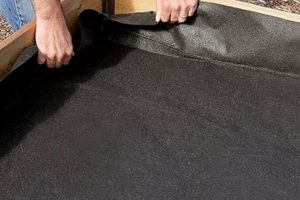
The importance of effective drainage is amplified by the specific characteristics of this type of garden. Its raised nature means that water cannot drain naturally into the surrounding earth as it would in a traditional garden. Therefore, the system must be designed to actively remove excess moisture. A practical example is the incorporation of drainage holes at the base of the structure, coupled with a layer of gravel or coarse material at the bottom to facilitate water flow. A real-world application involves using a porous liner to prevent soil from clogging the drainage holes while still allowing water to escape. The practical significance lies in the long-term health and productivity of the plants. The ability to control moisture levels provides a significant advantage, allowing for the cultivation of a wider range of plant species with differing water requirements. Furthermore, it reduces the risk of fungal diseases, which thrive in excessively moist environments.
In summary, drainage is not merely a design afterthought, but a fundamental requirement for a thriving “u shaped raised garden”. The challenge lies in creating a system that effectively removes excess water without causing the soil to dry out too quickly. It requires careful planning of the drainage holes, the soil composition and any liner used. By prioritizing effective drainage, it is possible to create a stable and sustainable environment for plant growth, maximizing yield and minimizing the risk of disease. The understanding underscores the importance of adopting a comprehensive approach to this style of gardening, where water management is integral to success.
Frequently Asked Questions About U Shaped Raised Gardens
The following section addresses common inquiries regarding the design, construction, and maintenance of planting structures of the specified geometry. These questions are designed to clarify practical considerations and potential challenges associated with this gardening method.
Question 1: What are the primary advantages of a U shaped raised garden compared to traditional rectangular raised beds?
The configuration optimizes accessibility by reducing the distance required to reach the center of the planting area. This shape maximizes usable planting space within a compact footprint and facilitates ergonomic gardening practices.
Question 2: What materials are most suitable for constructing a U shaped raised garden, and what are the associated considerations?
Durable, weather-resistant materials like cedar, redwood, or composite lumber are recommended. Untreated wood minimizes the risk of chemical leaching into the soil. The selection should account for structural integrity, longevity, and environmental impact.
Question 3: How should the soil composition be managed within a U shaped raised garden to ensure optimal plant health?
A well-draining soil mixture rich in organic matter is crucial. Regular soil testing and amendment are necessary to maintain appropriate pH levels and nutrient availability. Soil composition should be tailored to the specific needs of the cultivated plants.
Question 4: What drainage strategies are effective for preventing waterlogging in a U shaped raised garden?
Adequate drainage holes at the base of the structure are essential. A layer of gravel or coarse material at the bottom promotes water flow. Consider using a porous liner to prevent soil from clogging drainage openings.
Question 5: How can accessibility be optimized for individuals with mobility limitations when designing a U shaped raised garden?
The height of the structure should be adjusted to minimize bending and reaching. Wide pathways and smooth surfaces enhance maneuverability. Adaptive gardening tools can further improve accessibility.
Question 6: What are the long-term maintenance considerations for a U shaped raised garden to ensure sustained productivity?
Regular soil amendment, pest and disease monitoring, and structural inspections are critical. Periodic replacement of the soil mixture may be necessary to maintain optimal nutrient levels. Address any structural damage promptly to prevent deterioration.
In conclusion, the design presents unique advantages and challenges that require careful planning and proactive management. By addressing these frequently asked questions, gardeners can make informed decisions to maximize the benefits of this gardening method.
The subsequent section will offer guidance on selecting plant varieties that thrive in this type of planting structure.
Conclusion
This document has explored various facets of the u shaped raised garden, encompassing design considerations, construction materials, soil management techniques, and accessibility adaptations. It has underscored the efficiency advantages of this design, particularly in space optimization and ergonomic enhancement. Effective implementation requires a comprehensive understanding of both horticultural principles and user-specific needs.
The u shaped raised garden presents a viable solution for maximizing gardening potential in limited spaces while promoting inclusivity and physical well-being. Continued research and development in materials science and horticultural practices will likely further refine its efficacy and broaden its applicability. The benefits derived from this approach emphasize its significance in sustainable and accessible gardening initiatives.