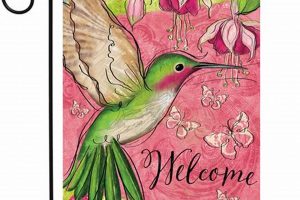
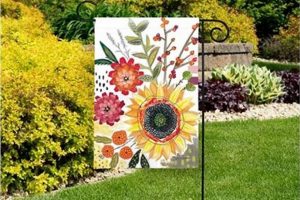
Customized decorative banners designed for outdoor display in gardens are created using a heat-transfer process. This process utilizes special inks that, when heated, convert to a gas and infuse directly into the fabric of the banner, resulting in vibrant, durable, and weather-resistant imagery. These personalized ornaments offer a unique way to express individuality or commemorate special occasions within a landscape setting.
The enduring appeal of these personalized decorations stems from their ability to add a personal touch to outdoor spaces. They provide a readily customizable medium for seasonal greetings, expressions of personal interests, or even business promotions. Their popularity has grown as individuals seek ways to enhance their curb appeal and create welcoming environments. The development of durable, weather-resistant materials has further contributed to their increased adoption for both residential and commercial landscaping.
The following sections will delve into the specific materials, processes, and design considerations involved in producing these customized outdoor decorations. It will also address factors impacting longevity and offer guidance on selecting appropriate designs and images for optimal visual impact.
Essential Considerations for Durable Outdoor Decorations
Achieving optimal results with heat-transferred garden banners requires attention to several key factors. The following tips outline best practices for material selection, design preparation, and production techniques to ensure a long-lasting and visually appealing product.
Tip 1: Fabric Selection: Utilize polyester or polyester-blend fabrics specifically designed for heat transfer. These materials provide the necessary structure for the banner and optimal ink adhesion, leading to superior image quality and durability. Avoid natural fibers, which may not accept the ink as effectively and are more susceptible to fading and weather damage.
Tip 2: Ink Quality is paramount: Employ only sublimation inks formulated for outdoor use. These inks contain UV inhibitors that resist fading from prolonged sun exposure. Inferior inks will result in premature degradation of the image, significantly shortening the banner’s lifespan.
Tip 3: Image Resolution: Ensure all designs are created at a high resolution (at least 300 DPI) to prevent pixelation and blurring during the transfer process. Low-resolution images will appear distorted and unprofessional when enlarged to the banner’s dimensions.
Tip 4: Color Management: Calibrate printing equipment and utilize color profiles to ensure accurate color reproduction. Variations in color can significantly alter the intended design, resulting in dissatisfaction. A test print on a small piece of the chosen fabric is highly recommended.
Tip 5: Pressing Parameters: Adhere strictly to the recommended temperature, pressure, and dwell time specified by the ink and fabric manufacturers. Deviations from these parameters can lead to incomplete ink transfer, scorching, or image distortion.
Tip 6: Post-Press Cooling: Allow the banner to cool completely after pressing before handling or folding. Premature handling can cause the transferred image to smudge or blur, compromising its integrity.
Tip 7: Edge Reinforcement: Consider hemming or reinforcing the edges of the banner to prevent fraying, particularly in windy conditions. This simple step significantly extends the banner’s lifespan and maintains its aesthetic appeal.
By adhering to these considerations, manufacturers and hobbyists alike can produce vibrant, durable outdoor decorations that withstand the elements and maintain their visual appeal for an extended period.
The subsequent section will explore creative design ideas and marketing strategies for those interested in commercializing these personalized outdoor decorations.
1. Polyester fabric choice
The selection of polyester fabric is intrinsically linked to the successful creation and longevity of these outdoor decorations. As the receptive medium for the sublimation process, the fabric’s properties directly influence image quality, durability, and resistance to environmental factors. The synthetic nature of polyester allows for superior ink absorption compared to natural fibers, enabling vibrant, high-resolution image transfers. Furthermore, polyester’s inherent resistance to shrinking, stretching, and mildew ensures the banner maintains its structural integrity and aesthetic appeal over prolonged outdoor use. For instance, a banner constructed from cotton would likely fade rapidly and become susceptible to mold in humid climates, rendering it unusable within a short period.
The denier (thread thickness) and weave of the polyester fabric further contribute to the overall performance. A higher denier generally indicates a more durable and weather-resistant material. Tightly woven fabrics offer greater resistance to wind and tearing. Specific polyester blends designed for sublimation printing often incorporate UV inhibitors to enhance fade resistance. Many manufacturers offer materials engineered specifically for this purpose, clearly showcasing the direct correlation between material science and the final product’s quality. Using an inappropriate polyester can lead to an uneven transfer, resulting in blurry or faded imagery. The appropriate fabric can withstand prolonged exposure to sunlight, rain, and wind without significant degradation.
In summary, the fabric selected serves as a foundational element in the creation of durable and visually appealing outdoor decorations. The correct choice of polyester fabric, optimized for sublimation printing and outdoor exposure, is essential for achieving a high-quality, long-lasting product. Therefore, careful consideration of fabric characteristics constitutes a critical step in the production process and, consequently, a primary factor in consumer satisfaction.
2. UV-resistant ink selection

The selection of ultraviolet (UV)-resistant inks is paramount for the enduring quality and visual appeal of heat-transferred garden dcor. Exposure to sunlight poses a significant threat to the longevity of these outdoor items, necessitating inks formulated to resist fading and degradation caused by UV radiation.
- Chemical Composition and Stability
UV-resistant inks contain specialized pigments and additives designed to absorb or reflect UV radiation. These components prevent the breakdown of color molecules, maintaining the vibrancy and accuracy of the transferred image over time. For instance, inks lacking such properties will exhibit noticeable fading within weeks of outdoor exposure, particularly with bright colors like red and yellow.
- Impact on Color Fidelity
The effectiveness of UV resistance directly correlates with the long-term color fidelity of the finished product. Substandard inks may initially produce acceptable results, but their inability to withstand UV exposure will lead to color shifting and a diminished aesthetic. A professionally produced banner using UV-resistant inks will retain its original color profile significantly longer than one printed with conventional dyes.
- Suitability for Outdoor Applications
Inks specifically designed for outdoor applications undergo rigorous testing to ensure their resilience to environmental factors, including UV radiation, moisture, and temperature fluctuations. Certifications from reputable organizations validate the manufacturer’s claims regarding UV resistance, providing assurance of product quality. Failure to use certified inks can result in premature product failure, rendering the banner aesthetically unappealing and commercially unviable.
- Cost-Benefit Analysis
While UV-resistant inks may represent a higher initial cost compared to standard inks, the extended lifespan and maintained visual quality offer a significant long-term value proposition. The reduced need for replacements and the preservation of brand image justify the investment in these specialized formulations. Conversely, the use of cheaper, non-UV-resistant inks can lead to increased customer dissatisfaction and higher overall costs due to frequent reprinting or replacements.
The relationship between UV-resistant ink selection and the long-term viability of these decorative items is undeniable. Utilizing inks engineered to withstand solar radiation is not merely a matter of aesthetics; it is a fundamental requirement for ensuring product durability, maintaining customer satisfaction, and achieving a positive return on investment in the creation and distribution of heat-transferred garden dcor.
3. High-resolution image quality
High-resolution image quality serves as a critical determinant in the aesthetic appeal and overall success of heat-transferred garden banners. The clarity and detail of the transferred image directly impact consumer perception and the ability to effectively convey intended messages or designs.
- Sharpness and Detail Reproduction
A high-resolution image ensures sharpness and accurate reproduction of intricate details during the sublimation process. Insufficient resolution results in pixelation and blurring, diminishing the visual impact of the design. For example, a low-resolution photograph of a floral arrangement will appear indistinct and unprofessional when transferred to a banner, whereas a high-resolution counterpart will exhibit crisp lines and vibrant colors, enhancing its aesthetic value.
- Scalability and Enlargement
High-resolution images allow for scalability and enlargement without significant loss of quality. Garden banners, often displayed at a distance, require images that maintain clarity even when viewed from afar. A low-resolution image may appear acceptable on a computer screen but will degrade considerably when enlarged to the banner’s dimensions, rendering the design ineffective.
- Color Accuracy and Fidelity
Image resolution influences color accuracy and fidelity during the sublimation process. Higher resolution allows for a greater range of color information to be captured and transferred, resulting in more vibrant and nuanced colors. Low-resolution images may exhibit color banding or inaccuracies, compromising the intended visual effect.
- Professionalism and Perceived Value
The perceived value and professionalism of a heat-transferred garden banner are directly linked to the quality of the image. A high-resolution image conveys attention to detail and a commitment to quality, enhancing consumer confidence and willingness to purchase. Conversely, a poorly resolved image suggests a lack of professionalism and can detract from the banner’s overall appeal.
The implications of image resolution extend beyond mere aesthetics. In commercial applications, a well-defined, high-resolution image contributes to brand recognition and effective marketing. In personal use, a clear and vibrant image enhances the emotional impact of the design, transforming a simple garden banner into a cherished and visually appealing addition to the outdoor space. Therefore, prioritizing image resolution is essential for maximizing the effectiveness and longevity of heat-transferred garden decorations.
4. Color profile management

Color profile management plays a critical role in achieving accurate and predictable color reproduction in heat-transferred garden banners. Sublimation, a process that transforms solid ink into a gaseous state for transfer onto fabric, is inherently susceptible to color variations due to differences in printing equipment, ink formulations, and fabric characteristics. Without effective color management, the colors displayed on a design monitor are unlikely to match the final printed output, leading to customer dissatisfaction and wasted resources. The establishment of a robust color management system provides a standardized workflow that minimizes color discrepancies and ensures consistent results. For instance, a vibrant landscape design with subtle color gradients will lose its intended impact if the blues shift toward cyan or the greens appear muddy during the transfer process, which is a common issue in the absence of accurate color profiling.
The practical application of color profile management involves several key steps. Initially, the printing device is calibrated to ensure it operates within defined parameters. Subsequently, a color profile is generated for the specific combination of printer, ink, and fabric being used. This profile acts as a translation key, mapping the color space of the design software to the color capabilities of the printing system. During the printing process, the design software utilizes this profile to adjust color values, compensating for any inherent color biases in the printer or ink. The selection of an appropriate color profile is crucial; utilizing a generic profile or one designed for a different fabric type will invariably lead to inaccurate color reproduction. Consider a scenario where a specific pantone color is required on a banner. Without a color management system, the final print may only approximate the correct shade and may be inconsistent from one batch to another.
In conclusion, effective color profile management is not merely a technical consideration; it is a fundamental requirement for producing high-quality, visually appealing heat-transferred garden decorations. By implementing a standardized workflow that incorporates accurate printer calibration, custom color profile generation, and consistent color management practices, manufacturers and hobbyists can minimize color discrepancies, ensure customer satisfaction, and maximize the return on investment in sublimation printing. The challenges associated with color management are often outweighed by the significant benefits in terms of reduced waste, improved product quality, and enhanced brand reputation.
5. Precise heat press settings

Precise heat press settings are critically linked to the successful production of heat-transferred garden flags. These settings, encompassing temperature, pressure, and dwell time, directly influence the sublimation process, determining the vibrancy, durability, and overall quality of the transferred image. Insufficient temperature may result in incomplete ink vaporization and a faded, poorly adhered image. Excessive temperature, conversely, can scorch the fabric or cause color distortion. Similarly, inadequate pressure can lead to uneven ink transfer, while excessive pressure may damage the fabric or press components. Inaccurate dwell time, either too short or too long, can compromise the sublimation process, leading to unsatisfactory results. For instance, if the heat press temperature is set too low, the colors on the flag will appear muted and lack vibrancy, making the flag visually unappealing and potentially unsellable.
The practical significance of understanding and adhering to precise heat press settings extends beyond mere aesthetics. Correct settings ensure the sublimation ink properly bonds with the polyester fabric, creating a durable and weather-resistant product. Flags produced with suboptimal settings are prone to fading, cracking, or peeling, significantly reducing their lifespan and diminishing their value to the consumer. Consider a scenario where a company produces a large batch of garden flags with inconsistent pressure settings: some flags may exhibit excellent image quality and durability, while others show signs of premature wear, leading to customer complaints and potentially damaging the company’s reputation. Furthermore, precise control over these parameters enables consistent color reproduction across multiple production runs, ensuring brand consistency and minimizing waste.
In conclusion, achieving optimal results in heat-transferred garden flags hinges upon the meticulous management of heat press settings. This aspect is not merely a technical detail but a foundational element in ensuring product quality, durability, and customer satisfaction. Overcoming the challenges associated with identifying and maintaining accurate settings requires careful experimentation, thorough documentation, and a commitment to continuous improvement in the production process. By prioritizing precise heat press settings, manufacturers and hobbyists alike can produce heat-transferred garden flags that withstand the elements and retain their visual appeal for extended periods.
6. Post-press cooling process

The post-press cooling process is an indispensable step in the creation of heat-transferred garden flags, directly impacting image fidelity and material stability. Immediately following the application of heat and pressure during sublimation, the fabric remains at an elevated temperature, rendering the transferred image susceptible to smudging or distortion if handled prematurely. Allowing for a controlled cooling period ensures that the sublimated ink fully sets and bonds with the polyester fibers. An abrupt temperature change can induce thermal shock, potentially leading to cracking or uneven adhesion of the image. For example, stacking freshly pressed flags without adequate cooling can trap heat, causing the ink to bleed and compromising the sharpness of the design. The cooling process allows the polymeric structure of the ink and fabric to stabilize, fixing the image in place and enhancing its resistance to abrasion and environmental factors.
Practical applications of a proper cooling process extend to both small-scale and large-scale production environments. In small-batch operations, laying flags flat on a clean surface to air-cool provides a simple yet effective method. Large-scale manufacturers often employ specialized cooling tables or racks to expedite the process and maintain consistent results. Regardless of the method, ensuring adequate ventilation and preventing direct contact between freshly pressed flags are crucial. The duration of the cooling period varies depending on the fabric thickness, ink type, and ambient temperature, but typically ranges from several minutes to an hour. Failure to implement a sufficient cooling period can necessitate rework, increase production costs, and ultimately impact product quality. Specific examples of its impact include edge bleeding in complex designs, and fading in the case of flags left on top of each other.
In summary, the post-press cooling process is a critical, often overlooked, component in the production of durable and visually appealing garden flags. This step facilitates image stabilization, prevents material damage, and ensures consistent results across production runs. While simple in concept, the implementation of a controlled cooling process presents a practical challenge that requires careful attention to detail and a thorough understanding of the materials involved. The successful integration of this step into the production workflow ultimately contributes to enhanced product quality, reduced waste, and increased customer satisfaction.
7. Edge reinforcement method

The edge reinforcement method is a crucial factor in the longevity and visual integrity of heat-transferred garden flags. The exposed edges of these flags are particularly vulnerable to fraying, tearing, and unraveling, especially when subjected to outdoor environmental conditions such as wind, rain, and prolonged sun exposure. Implementing effective edge reinforcement techniques mitigates these risks, ensuring that the flags maintain their structural integrity and aesthetic appeal over an extended period.
- Hemming Techniques
Hemming involves folding the fabric edge over and securing it with stitching, creating a reinforced border. This method prevents fraying by enclosing the raw edge within the hem. The durability of the hem depends on the stitch type, thread quality, and the number of stitches per inch. For example, a double-folded hem with a lockstitch offers superior protection against unraveling compared to a single-folded hem with a simpler stitch. The choice of hemming technique directly impacts the flag’s ability to withstand wind and other environmental stresses.
- Binding with Fabric or Tape
Binding entails encasing the flag’s edge with a strip of fabric or tape, typically made of polyester or a similar durable material. This technique provides a robust and visually appealing finish while protecting the edge from abrasion and tearing. The binding material is often chosen to complement the flag’s design, adding a decorative element while enhancing its structural integrity. An example of this would be bias tape applied around the edges that adds reinforcement and a different color aspect to the flag.
- Overlocking or Serging
Overlocking, also known as serging, uses a specialized sewing machine to encase the edge of the fabric with thread, preventing fraying. This method creates a clean, professional finish and is particularly effective for preventing unraveling in knit or woven fabrics. The overlock stitch interlocks multiple threads to create a secure and durable edge, which is well-suited for outdoor applications where the flag is subject to constant movement and friction.
- Reinforced Corners
The corners of garden flags are particularly susceptible to stress and tearing. Reinforcing these areas with additional stitching, fabric patches, or metal grommets significantly enhances the flag’s durability. Corner reinforcement distributes stress and prevents tears from propagating along the edges. For example, adding a small triangular patch of fabric to each corner before hemming provides extra support and resistance to tearing, particularly in high-wind environments.
The selected edge reinforcement method represents a critical decision in the manufacturing process, balancing cost, aesthetics, and durability. Proper edge reinforcement ensures the flag maintains its shape, prevents fraying, and enhances its overall resistance to environmental stresses. Through the correct use of stitching patterns, additional materials, and corner reinforcements the flag can stand up to common weather conditions.
Frequently Asked Questions
The following addresses common inquiries regarding the production, durability, and maintenance of heat-transferred garden flags. This information is intended to provide clarity on aspects influencing their performance and longevity.
Question 1: What types of fabrics are suitable for sublimation on garden flags?
Polyester or high-polyester blend fabrics are optimal. These synthetic materials possess the necessary properties for accepting sublimation inks, resulting in vibrant and durable image transfers. Natural fibers such as cotton are generally unsuitable due to their poor ink retention and susceptibility to fading.
Question 2: How can fading be prevented on sublimation garden flags?
The selection of UV-resistant sublimation inks is essential for minimizing fading caused by prolonged sun exposure. These inks contain additives that block or absorb UV radiation, protecting the transferred image from degradation. Additionally, fabric selection plays a role; tightly woven polyester fabrics offer enhanced resistance to fading compared to looser weaves.
Question 3: What image resolution is recommended for sublimation garden flags?
A minimum resolution of 300 dots per inch (DPI) is recommended to ensure sharp and detailed image reproduction. Low-resolution images will appear pixelated or blurry when enlarged to the size of a garden flag, diminishing its visual appeal.
Question 4: What is the appropriate temperature and dwell time for heat pressing sublimation garden flags?
Optimal heat press settings vary depending on the specific ink, fabric, and equipment being used. However, a general guideline is a temperature range of 380-400 degrees Fahrenheit and a dwell time of 60-75 seconds. Adhering to the manufacturer’s recommendations for both ink and fabric is crucial to avoid scorching or incomplete ink transfer.
Question 5: How should sublimation garden flags be cleaned?
Hand washing with mild detergent and cold water is the recommended cleaning method. Harsh chemicals, bleach, or machine washing can damage the transferred image and compromise the integrity of the fabric. Air drying is preferable to machine drying.
Question 6: What factors contribute to the overall durability of sublimation garden flags?
Durability is influenced by multiple factors, including fabric quality, ink type, heat press settings, edge reinforcement, and environmental conditions. The use of high-quality materials and proper production techniques are essential for maximizing the lifespan of heat-transferred garden flags.
Understanding these aspects will assist in the production and maintenance of long-lasting, visually appealing outdoor decorations.
The next section will explore innovative design ideas and marketing strategies for sublimation garden flags.
Conclusion
This exploration of sublimation garden flags has highlighted the critical factors governing their successful creation and enduring quality. Emphasis has been placed on material selection, process control, and design considerations, underscoring the interconnectedness of these elements in achieving a desirable final product. Understanding the nuances of fabric, ink, heat transfer, and edge reinforcement is paramount.
As customization trends continue to evolve, the demand for personalized outdoor dcor will likely persist. Adherence to established best practices in production, coupled with an ongoing commitment to innovation, will position manufacturers and artisans to effectively meet market demands and deliver high-quality sublimation garden flags that withstand the elements and enhance outdoor spaces.