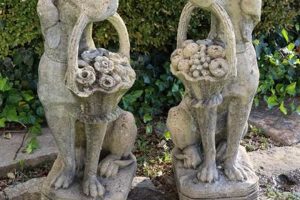
Sculptural art pieces and decorative accents fashioned from rock materials designed for outdoor landscape settings. These items, ranging from figurative representations to abstract forms, are typically durable and weather-resistant, adding aesthetic appeal to gardens and exterior spaces.
The inclusion of these decorative items enhances the visual interest and character of outdoor environments. Their longevity and resistance to the elements provide lasting beauty and can contribute to a sense of tranquility and permanence. Historically, such embellishments have been used to signify status, commemorate events, and express personal taste.
The following sections will explore various styles, materials, considerations for placement, and maintenance techniques relevant to selecting and preserving these landscape features.
Selection and Placement Guidance
The following guidelines are designed to aid in informed decisions regarding the integration of durable, rock-based embellishments within outdoor environments.
Tip 1: Assess Environmental Compatibility. Prior to acquisition, evaluate the specific climate and environmental conditions of the intended location. Porous stone may be susceptible to damage from freeze-thaw cycles in colder regions. Consider the material’s resilience against weathering and erosion.
Tip 2: Determine Scale and Proportion. Select items that are appropriately sized relative to the surrounding landscape. Overly large pieces may overwhelm smaller gardens, while diminutive objects may be lost in expansive settings. Maintain a sense of visual balance.
Tip 3: Establish a Cohesive Aesthetic. Choose pieces that complement the existing architectural style and planting scheme. A classical statue may be incongruous within a minimalist, modern garden. Aim for harmony and visual consistency.
Tip 4: Plan for Proper Foundation and Support. Ensure that each piece is securely positioned on a stable and level foundation. This prevents tipping, sinking, or shifting, particularly with heavier objects. Concrete pads or buried gravel beds can provide adequate support.
Tip 5: Consider Sun Exposure and Shading. Observe how sunlight interacts with the intended location throughout the day. Intense sun exposure can accelerate weathering or cause discoloration. Strategically placed trees or shrubs can provide shade and protect sensitive materials.
Tip 6: Implement Regular Cleaning Protocols. Establish a routine for removing dirt, moss, and algae. Gentle brushing with a soft-bristled brush and mild soap solution is generally sufficient. Avoid harsh chemicals or abrasive cleaners that may damage the stone surface.
Tip 7: Protect Against Vandalism and Theft. In areas prone to vandalism or theft, consider anchoring pieces to the ground or using security devices. Strategically placed lighting can also deter unwanted activity.
Adhering to these guidelines will help ensure the enduring beauty and structural integrity of chosen embellishments, enhancing the overall aesthetic appeal of the outdoor space.
The final section will summarize the benefits and reiterate the importance of careful consideration when incorporating rock-based decor into garden designs.
1. Material Durability

Material durability is a critical factor in the selection of stone garden statues and ornaments. The inherent properties of the stone dictate its resistance to weathering, erosion, and physical damage, directly influencing the lifespan and aesthetic appeal of the piece. Statues and ornaments exposed to harsh climates, including freeze-thaw cycles, high humidity, or intense sunlight, require materials with exceptional durability to prevent cracking, spalling, or discoloration. For example, marble, while aesthetically pleasing, is more susceptible to acid rain and weathering than granite, which boasts superior resistance to environmental factors. Consequently, a granite statue will likely retain its structural integrity and surface finish for a longer period compared to a marble counterpart in similar outdoor conditions.
The choice of durable materials extends beyond aesthetics; it represents a practical investment in long-term value. Consider the economic implications of replacing deteriorating statues versus the initial cost of acquiring pieces crafted from durable materials like basalt or slate. Furthermore, the sustainability aspect is noteworthy. Durable materials reduce the need for frequent replacements, minimizing resource consumption and waste generation. Maintenance requirements are also directly affected. More durable stones require less frequent cleaning and specialized treatments, reducing ongoing expenses and labor.
In conclusion, material durability is not merely a desirable attribute; it is an essential prerequisite for stone garden statues and ornaments intended for long-term outdoor display. It affects not only their visual appeal but also their structural integrity, economic value, and environmental impact. Selecting appropriately durable materials ensures both lasting beauty and responsible stewardship of resources.
2. Sculptural Style

Sculptural style significantly determines the aesthetic impact and contextual relevance of stone garden statues and ornaments within a designed landscape. The chosen style dictates the form, detailing, and thematic expression of the piece, influencing its visual harmony or contrast with the surrounding environment. A classical style, characterized by idealized human forms and adherence to established proportions, evokes a sense of formality and tradition. Conversely, an abstract or modern style, often defined by geometric shapes and non-representational forms, introduces a contemporary sensibility. The conscious selection of sculptural style is therefore pivotal in shaping the overall atmosphere and conveying the intended message of the garden space. For example, placing a Neoclassical statue within a Japanese garden would create visual dissonance, disrupting the intended sense of tranquility and naturalism.
The stylistic attributes of stone garden adornments extend beyond mere aesthetics; they reflect cultural and historical contexts. A Gothic-style gargoyle, for example, not only embodies specific architectural features but also alludes to the religious and societal values of the medieval period. Similarly, a minimalist sculpture crafted from polished granite echoes the principles of modernism, emphasizing simplicity and functionality. The deliberate deployment of such stylistic elements allows for the creation of gardens that are not only visually appealing but also intellectually engaging, inviting contemplation and fostering a deeper understanding of art and history. Consider the intentional use of Art Deco-inspired sculptures in urban gardens, reflecting the architectural heritage of the city and creating a cohesive visual narrative.
In summary, sculptural style is an indispensable component of stone garden statues and ornaments, profoundly shaping their aesthetic impact, cultural relevance, and contextual harmony. Careful consideration of style is crucial for achieving a visually cohesive and intellectually stimulating garden environment. Challenges arise in balancing personal preferences with the overall design intent of the space, requiring a nuanced understanding of art history, landscape architecture, and the inherent properties of stone materials. Ultimately, the successful integration of sculptural style enhances the garden’s aesthetic value and enriches the experience for visitors and residents alike.
3. Scale Appropriateness

Scale appropriateness is a critical determinant in the effective integration of stone garden statues and ornaments within outdoor spaces. Discrepancies between the size of the ornamental piece and its surroundings can diminish the aesthetic value of both the object and the landscape, leading to visual disharmony. The selection process, therefore, necessitates careful consideration of spatial dimensions, architectural features, and the overall design intent of the garden.
The effects of inappropriate scale can manifest in several ways. An oversized statue in a small garden can overwhelm the space, creating a sense of clutter and restricting movement. Conversely, a diminutive ornament placed in a vast lawn may become visually insignificant, failing to draw attention or contribute to the overall aesthetic. Successful integration requires a proportional relationship between the ornament and its environment, enhancing rather than detracting from the visual experience. A large-scale, abstract sculpture might be well-suited for a spacious, contemporary garden, while a smaller, more intricately detailed statue would be more appropriate for a smaller, more traditional setting. Consider, for example, the placement of a monumental Buddha statue in a compact urban garden, where its size would likely disrupt the intended tranquility. Conversely, a small, delicate fairy figurine might be lost in a sprawling estate garden, its details unseen and its impact negligible.
In summary, scale appropriateness is not merely a cosmetic concern but a fundamental design principle that dictates the success or failure of incorporating stone garden statues and ornaments. Overcoming the challenge of selecting appropriately scaled pieces requires a keen understanding of spatial relationships, architectural styles, and the desired aesthetic effect. Failure to consider scale can result in visual disharmony, detracting from the beauty of both the ornament and the surrounding landscape. The ultimate goal is to achieve a balanced and cohesive design that enhances the overall visual experience.
4. Placement Harmony

The strategic positioning of rock-based garden embellishments, a concept referred to as Placement Harmony, directly influences their visual impact and integration within the landscape. This consideration extends beyond mere physical positioning, encompassing the interplay of light, shadow, surrounding vegetation, and architectural elements.
- Spatial Context
Spatial context refers to the relationship between the statue or ornament and the surrounding open space. For example, a large statue placed in a confined space may appear overwhelming, disrupting the visual balance. Conversely, a small ornament in a vast open area might be overlooked and ineffective. Careful consideration of the surrounding dimensions is crucial. For example, a reflecting pool strategically positioned to mirror a sculpture creates depth and visual interest.
- Focal Points and Sightlines
Placement can leverage existing garden features to create focal points and guide sightlines. Placing a statue at the end of a pathway or within a flowerbed immediately draws attention. Sightlines should be considered to maximize visual impact from various vantage points. A well-placed statue can serve as a visual anchor, directing the viewer’s gaze and enhancing the overall composition of the garden. For example, a strategically positioned sundial creates a natural focal point.
- Integration with Vegetation
The interplay between stone elements and plant life significantly impacts the overall aesthetic. Placement should consider the textures, colors, and forms of surrounding vegetation. Juxtaposing a smooth, polished statue against rough, textured foliage creates visual contrast. Conversely, matching the color palette of the stone with the surrounding plants promotes harmony. The careful selection of plants can either highlight or soften the edges of the ornament. A climbing vine carefully trained to grow on a statue introduces a sense of natural integration.
- Light and Shadow Dynamics
Orientation relative to sunlight affects how the statue or ornament is perceived throughout the day. Consider the direction of sunlight and the resulting shadows it casts. A statue placed facing east will be illuminated by morning light, creating a different visual effect than one facing west. The interplay of light and shadow can emphasize certain features and add depth to the design. Backlighting a statue can create a dramatic silhouette, while dappled sunlight filtering through trees can add a sense of mystery and intrigue.
The aforementioned aspects of Placement Harmony, when meticulously considered, contribute to the creation of visually compelling and harmonious outdoor environments incorporating rock-based decorative pieces. The objective is not simply to position an object, but to integrate it seamlessly into the existing landscape, enhancing the overall aesthetic appeal and creating a cohesive design.
5. Weather Resistance
Weather resistance is a fundamental attribute dictating the longevity and visual integrity of stone garden statues and ornaments. The interaction of environmental elementsprecipitation, temperature fluctuations, ultraviolet radiation, and atmospheric pollutantsexerts continuous stress on the material composition of these objects. Failure to account for weather resistance results in deterioration manifested as cracking, discoloration, erosion, and structural weakening. For instance, sandstone, a porous material, exhibits a susceptibility to freeze-thaw cycles, leading to disintegration in colder climates. Similarly, marble, composed primarily of calcium carbonate, is vulnerable to acid rain, which causes surface etching and loss of detail. The selection of inherently weather-resistant materials, such as granite or basalt, mitigates these detrimental effects, ensuring prolonged aesthetic appeal and structural stability.
The practical implications of understanding weather resistance extend to maintenance strategies. Appropriate protective coatings and periodic cleaning protocols can significantly prolong the lifespan of stone ornaments. Sealants applied to porous stones reduce water absorption, thereby minimizing the risk of freeze-thaw damage. Regular removal of organic matter, such as moss and lichen, prevents the accumulation of moisture and the associated degradation. Furthermore, strategic placement within the garden environmentconsidering sun exposure, drainage patterns, and proximity to vegetationcan minimize the impact of weather-related stresses. For example, positioning a delicate statue under the canopy of a tree shields it from direct sunlight and heavy rainfall, thereby extending its longevity.
In summary, weather resistance is an indispensable consideration in the selection, placement, and maintenance of stone garden statues and ornaments. The consequences of neglecting this attribute range from aesthetic degradation to structural failure. By prioritizing materials with inherent weather resistance and implementing appropriate protective measures, the enduring beauty and artistic value of these landscape features can be preserved, ensuring their enjoyment for generations.
6. Maintenance Requirements

The longevity and aesthetic appeal of stone garden statues and ornaments are directly correlated with adherence to appropriate maintenance protocols. Neglecting these requirements precipitates a range of detrimental effects, including surface degradation, structural compromise, and the obscuring of intricate details. The specific maintenance needs vary depending on the type of stone, the prevailing environmental conditions, and the statue’s or ornament’s exposure to biological growth. For example, statues crafted from porous stones like sandstone require more frequent cleaning to prevent the absorption of moisture and subsequent freeze-thaw damage in colder climates. Similarly, ornamentation situated in shaded, damp areas is more susceptible to the proliferation of algae, lichen, and moss, necessitating regular removal to preserve the stone’s integrity and visual clarity. Without appropriate upkeep, the inherent beauty and value of these landscape elements diminish significantly.
The practical implementation of maintenance strategies involves several key steps. Routine cleaning, using soft-bristled brushes and mild, pH-neutral detergents, effectively removes surface dirt and grime without damaging the stone. The application of protective sealants, specifically formulated for the stone type, minimizes water absorption and retards the growth of biological organisms. Moreover, periodic inspections allow for the early detection of cracks, chips, or other structural issues, enabling timely repairs that prevent further deterioration. Consider the instance of a marble statue exposed to acid rain; without regular cleaning and the application of a protective coating, the delicate surface details will gradually erode, diminishing its aesthetic value. In contrast, a granite statue, though more durable, still benefits from routine maintenance to prevent the accumulation of unsightly staining and biological growth.
In conclusion, maintenance requirements are not an ancillary consideration but an integral component of owning and preserving stone garden statues and ornaments. Failure to address these needs inevitably leads to accelerated deterioration and diminished aesthetic appeal. Prioritizing preventative maintenance, including routine cleaning, protective treatments, and periodic inspections, ensures the long-term beauty and structural integrity of these valuable landscape features. The effort invested in diligent maintenance translates directly into preserving the artistic and historical significance of these embellishments for future generations.
7. Historical Significance

The historical significance of stone garden statues and ornaments lies in their capacity to reflect evolving aesthetic sensibilities, societal values, and technological advancements across diverse cultures and time periods. These objects, more than mere decorations, serve as tangible links to the past, embodying the artistic traditions, religious beliefs, and social hierarchies of their creators and patrons.
- Reflections of Cultural Ideals
Stone statuary often embodies the prevailing cultural ideals of beauty, strength, or piety. Ancient Greek gardens, for instance, frequently featured sculptures of gods and goddesses, reflecting the importance of mythology and the pursuit of ideal human forms. Similarly, the presence of guardian lions in traditional Chinese gardens symbolized protection and status, reflecting the hierarchical structure of imperial society.
- Markers of Social Status and Wealth
Throughout history, the acquisition and display of elaborate stone garden ornaments have served as indicators of social status and wealth. The elaborate fountains and statuary in Renaissance Italian gardens, such as those at Villa d’Este, demonstrated the patronage and power of noble families. Similarly, the presence of monumental sculptures in ancient Egyptian temple gardens reflected the pharaoh’s divine authority and access to resources.
- Epitomes of Technological Advancement
The techniques used to quarry, carve, and transport stone statues reflect the technological capabilities of a given era. The construction of the colossal Moai statues on Easter Island, for example, required sophisticated engineering skills and a highly organized social structure. The intricate detailing found in Gothic-era stone carvings testifies to the mastery of stone carving techniques during the Middle Ages.
- Preservers of Commemorative Narratives
Stone monuments and memorial statues serve as enduring reminders of significant historical events or figures. The placement of obelisks in ancient Egyptian gardens commemorated the reign of pharaohs, while Victorian-era memorial statues in public gardens honored prominent citizens and celebrated national achievements. These objects act as tangible links to the past, fostering a sense of collective memory and cultural identity.
In conclusion, the historical significance embedded within stone garden statues and ornaments extends beyond their aesthetic appeal. These objects provide valuable insights into past societies, reflecting their cultural values, social structures, technological capabilities, and commemorative practices. Their enduring presence in gardens around the world serves as a testament to the enduring power of art and the human desire to connect with the past.
Frequently Asked Questions
The subsequent questions and answers address common inquiries regarding the selection, care, and preservation of outdoor rock-based decorative pieces. The information provided is intended to offer clarity and guidance for informed decision-making.
Question 1: What stone types are most suitable for outdoor statues in regions experiencing freeze-thaw cycles?
Dense, non-porous stones such as granite, basalt, and certain types of slate exhibit superior resistance to freeze-thaw damage. Porous stones like sandstone and some limestones are more susceptible to water absorption and subsequent cracking during freezing conditions.
Question 2: How does one effectively remove lichen and moss from stone garden ornaments without causing damage?
A soft-bristled brush, combined with a mild solution of water and pH-neutral detergent, is recommended for removing biological growth. Avoid using harsh chemicals or abrasive cleaners, as these can etch or discolor the stone surface. Regular cleaning prevents the accumulation of these organisms.
Question 3: What factors should influence the size and scale of a statue relative to the garden?
The overall dimensions of the garden, the height of surrounding vegetation, and the architectural style of nearby structures should inform the size and scale of a statue. Oversized pieces can overwhelm small spaces, while diminutive ornaments may be lost in larger gardens.
Question 4: How can one protect stone ornaments from vandalism or theft?
Anchoring statues to a concrete base, utilizing security cables, and installing motion-activated lighting can deter vandalism and theft. Strategically placed surveillance cameras can also provide a deterrent effect. Consultation with security professionals is advisable in high-risk areas.
Question 5: What are the long-term effects of acid rain on marble statues, and how can these be mitigated?
Acid rain, containing sulfuric and nitric acids, reacts with the calcium carbonate in marble, leading to surface erosion and loss of detail. Applying protective coatings specifically designed for marble can help shield the stone from acid rain. Regular cleaning to remove acidic pollutants is also recommended.
Question 6: How frequently should stone garden ornaments be cleaned and sealed?
Cleaning frequency depends on environmental conditions and the stone type, but generally, cleaning should occur at least annually. Sealing frequency varies based on the sealant used and the porosity of the stone, but reapplication every two to three years is often recommended. Consult product specifications for optimal sealant usage.
These answers offer foundational guidance for the responsible selection and upkeep of rock-based landscape decor. Proper care and maintenance are critical for preserving the beauty and longevity of these features.
The following section will provide insight into the economic and environmental considerations associated with stone garden statues and ornaments.
Conclusion
This exploration has illuminated the multifaceted considerations surrounding stone garden statues and ornaments. From material selection and stylistic coherence to placement harmony, weather resistance, maintenance demands, and historical context, each element contributes significantly to the enduring value and aesthetic impact of these landscape features. Proper attention to these factors ensures the preservation of both artistic integrity and structural longevity.
The informed integration of these decorative elements requires a thoughtful approach, balancing aesthetic desires with practical realities. Continued diligence in maintenance and a commitment to selecting appropriate materials will safeguard these objects for future appreciation, enhancing the enduring beauty of outdoor spaces and preserving a tangible connection to artistic and cultural heritage.