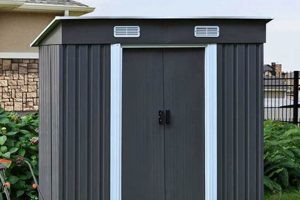
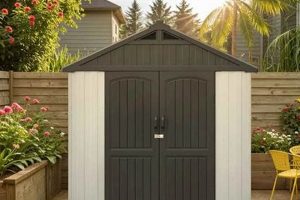
The dimensions of prefabricated outdoor storage units generally fall into established categories. These categories offer consumers a range of options, typically measured in feet, that accommodate varying spatial requirements and storage needs. For example, a smaller residence might utilize a unit measuring 6×8 feet, while a property with extensive landscaping equipment could necessitate a 10×12 or even a 12×16-foot structure.
Adherence to common dimensional classifications streamlines manufacturing, reduces material waste, and simplifies the purchasing process. This standardization allows consumers to readily compare different models and brands, facilitates efficient transport and installation, and often lowers overall costs. Historically, these common sizes emerged as a practical response to material limitations and construction efficiencies, becoming established through widespread adoption and industry consensus.
Understanding these conventional measurements is crucial before embarking on a shed purchase. Factors such as available yard space, intended use, and local building codes must be carefully considered. Therefore, further discussion will explore the considerations involved in selecting an appropriately sized storage building for individual needs, including assessing storage requirements, navigating regulatory constraints, and preparing the installation site.
Selecting the Right Dimensions for Outdoor Storage
Choosing an appropriately sized outdoor storage structure requires careful consideration. These guidelines offer practical advice for informed decision-making.
Tip 1: Assess Storage Needs: Before evaluating available options, conduct a thorough inventory of items intended for storage. Categorize items by size and frequency of use to determine the minimum required interior space. Consider future storage needs to avoid undersizing the structure.
Tip 2: Measure Available Space: Accurately measure the designated installation area, accounting for setbacks required by local zoning regulations. Ensure sufficient clearance around the structure for access and maintenance. Oversized structures may encroach on property lines or impede access to utilities.
Tip 3: Research Local Regulations: Contact local building departments to ascertain applicable zoning ordinances and permitting requirements. Size restrictions, setback requirements, and material specifications may influence the selection process. Failure to comply with regulations can result in fines or removal orders.
Tip 4: Consider Door Dimensions: Evaluate the dimensions of the door opening in relation to the largest items requiring storage. Narrow door openings may restrict access and complicate the storage of bulky equipment or furniture. Opt for wider or double doors to facilitate the movement of large objects.
Tip 5: Account for Vertical Space: Assess the interior height of the structure to accommodate tall items or shelving systems. Insufficient vertical space can limit storage capacity and restrict the efficient organization of stored items. Consider models with higher walls or vaulted ceilings to maximize usable space.
Tip 6: Evaluate Foundation Requirements: Determine the necessary foundation type based on soil conditions and local climate. Uneven or unstable foundations can compromise the structural integrity of the building. Consult with a professional contractor to ensure proper foundation installation.
Tip 7: Consider Pre-fabricated Options: Explore readily available pre-fabricated options, which typically adhere to common dimensional classifications, streamlining the purchasing process. Pre-fabricated options can also be more cost effective and quicker to install than custom-built structures.
Prioritizing these factors will ensure the selection of an appropriately sized and compliant structure that meets specific storage needs and adheres to local regulations. A well-planned purchase will minimize future complications and maximize the utility of the storage building.
The subsequent sections will address foundation options and construction materials, providing a comprehensive guide to building outdoor storage.
1. Width

Width, as a primary dimension, significantly influences the utility and practicality of a storage structure. It dictates the usable horizontal space, affecting maneuverability within the structure and the capacity to accommodate specific items.
- Optimal Item Arrangement
Width directly affects the ability to efficiently organize tools, equipment, and other stored items. An insufficient width can lead to overcrowding and difficulty in accessing stored materials. For instance, a narrow structure may require stacking items against walls, obstructing access to those at the rear. Adequate width permits the creation of aisles and designated storage zones, optimizing accessibility.
- Impact on Maneuverability
The interior width determines the ease of movement within the structure. Confined spaces restrict the ability to maneuver large objects, potentially damaging items during storage or retrieval. Sufficient width allows for the smooth transport of wheelbarrows, lawnmowers, and other equipment, minimizing the risk of collisions and promoting safety.
- Door Placement and Accessibility
Width influences the strategic placement of doors and their subsequent impact on accessibility. Narrow structures may necessitate door placement on the shorter side, limiting the width of the entryway. This can restrict the passage of bulky items. Conversely, adequate width allows for wider door openings or multiple access points, enhancing the ease of loading and unloading.
- Adaptability to Site Constraints
Available space on a property often dictates the maximum permissible width of a storage building. Site limitations may necessitate compromises between desired storage capacity and physical dimensions. Careful consideration of the available area is crucial to ensure compliance with zoning regulations and prevent encroachment on property lines.
The selection of an appropriate width, therefore, requires a thorough assessment of storage needs, anticipated use, and site-specific constraints. Balancing these factors ensures the chosen structure effectively serves its intended purpose while conforming to spatial limitations.
2. Depth

Depth, in the context of storage structures, represents the measurement from the front to the rear of the building. This dimension significantly contributes to the overall storage capacity and influences the arrangement of stored items within prefabricated outdoor units.
- Maximizing Usable Floor Space
Depth directly correlates with the amount of usable floor space available. A greater depth allows for the creation of longer storage rows, accommodating more items or larger equipment. For example, a structure with a shallow depth might only accommodate one row of shelving, while a deeper structure can support multiple rows, effectively increasing storage density. This is particularly relevant when storing long items such as lumber or kayaks.
- Impact on Aisle Width and Accessibility
The depth of a storage structure impacts the width of internal aisles. Insufficient depth, coupled with bulky storage items, can result in narrow or non-existent aisles, impeding access to stored materials. A well-planned depth allows for comfortable aisles, facilitating the easy retrieval and storage of items without disrupting the overall organization. Minimum aisle widths should be considered to allow for comfortable movement and equipment maneuvering.
- Efficient Organization and Categorization
Adequate depth enables the separation and categorization of stored items. Different areas can be designated for specific purposes, such as gardening tools, seasonal decorations, or automotive supplies. This compartmentalization enhances organization and reduces the likelihood of clutter. Shallower structures may necessitate a more general approach to storage, potentially leading to disorganization and difficulty in locating specific items.
- Adaptation to Storage Needs and Item Size
The optimal depth is contingent upon the size and quantity of items to be stored. For individuals primarily storing small tools and gardening supplies, a shallow structure may suffice. However, those with larger equipment, such as lawn tractors or snow blowers, will require greater depth to accommodate these items comfortably. Careful consideration of the dimensions of anticipated storage items is essential for selecting an appropriate depth.
The selection of an appropriate depth requires a comprehensive understanding of storage requirements, available space, and desired organizational methods. Balancing these factors ensures the chosen structure effectively meets individual needs and maximizes storage efficiency within specified dimensional parameters.
3. Height

Vertical dimension, an often-overlooked aspect of prefabricated outdoor storage structures, profoundly impacts usability and storage potential. Selecting an appropriate height is critical for maximizing storage capacity and ensuring comfortable access. Considerations extend beyond mere storage volume, influencing factors such as shelving options and ease of movement within the structure.
- Maximizing Vertical Storage Space
Height directly influences the capacity for vertical storage. Taller structures permit the installation of shelving units or the suspension of items from the ceiling, increasing the overall storage density. For instance, a taller structure allows for multi-tiered shelving, effectively doubling or tripling the usable storage area compared to a shorter structure with similar footprint. Limited vertical space restricts the use of such organizational strategies, leading to less efficient storage.
- Accommodation of Tall Items
Sufficient height is essential for storing tall items such as ladders, rakes, shovels, and other gardening tools. Structures with low ceilings necessitate the horizontal storage of these items, consuming valuable floor space and potentially obstructing access. Adequate height allows for the vertical arrangement of these items, freeing up floor space and improving organization. Inadequate height restricts storage options and may require the disassembly or modification of tall items to fit within the structure.
- Impact on Internal Accessibility and Comfort
Ceiling height influences the ease of movement and overall comfort within the structure. Low ceilings can create a sense of confinement, particularly for taller individuals. Adequate height allows for comfortable standing and maneuvering, reducing the risk of bumping one’s head or feeling claustrophobic. This is particularly important for structures used for extended periods or as workshops. Structures intended for frequent use should prioritize internal comfort alongside storage capacity.
- Influence on Aesthetic Appeal
Height contributes significantly to the overall aesthetic appearance. Proportionate structures tend to be more visually appealing than those with disproportionate dimensions. A structure that is excessively wide or deep relative to its height may appear squat and unattractive. Selecting appropriate dimensions, including height, ensures the structure complements the surrounding landscape and architectural style. Moreover, taller structures can create the illusion of greater space and prominence.
Therefore, evaluating the height of outdoor storage structures is not merely a matter of volume but rather a comprehensive consideration of storage strategies, user comfort, and aesthetic integration. These elements work in tandem to influence the suitability of outdoor storage structure for its intended use.
4. Doorway Dimensions
Doorway dimensions are intrinsically linked to the utility of standardized outdoor storage structures. These measurements dictate the type and size of objects that can be easily stored within. Standardized structure dimensions are rendered practically useless if the doorway restricts the passage of common items such as lawnmowers, wheelbarrows, or even storage containers. For example, a garden structure with an 8×10 foot footprint becomes significantly less valuable if its 30-inch wide doorway prohibits the storage of a standard 36-inch lawn tractor. Therefore, doorway dimensions must be considered a critical component of standard structure design, influencing overall functionality and user satisfaction.
The relationship between doorway dimensions and standardization involves finding a balance between structural integrity, manufacturing costs, and practical accessibility. Larger doorways often require reinforced structural elements to maintain stability, potentially increasing material costs. Conversely, overly narrow doorways diminish the utility of the structure. Standardized doorway dimensions typically represent a compromise, accommodating a wide range of commonly stored items while maintaining structural soundness and controlling production expenses. Examining a range of commercially available storage options reveals consistent doorway widths designed to accommodate typical garden equipment and household items.
Ultimately, the practical significance of understanding this dimensional relationship lies in informed consumer decision-making. Recognizing that a standard structure size does not automatically guarantee the ability to store specific items empowers consumers to critically evaluate their storage needs and select structures with appropriate doorway dimensions. Ignoring this relationship can lead to the purchase of a structure that is fundamentally unsuitable for its intended purpose, resulting in wasted resources and unmet storage needs. Careful attention to doorway dimensions is therefore paramount for ensuring the effective utilization of standardized outdoor storage structures.
5. Roof Pitch

Roof pitch, defined as the angle of a roof relative to the horizontal plane, directly correlates with the overall structural integrity, weather resistance, and interior space utilization of a standardized outdoor storage unit. While exterior footprint dimensions define ground-level space, roof pitch determines the available volume within the upper reaches of the structure. A steeper roof pitch, for instance, increases the vertical storage capacity and enhances snow shedding capabilities. However, it can also increase the overall height, potentially affecting zoning compliance and material costs. Shallower roof pitches, conversely, minimize height but may compromise weather protection and storage volume.
The selection of a roof pitch involves balancing aesthetic considerations with practical functionality. A higher pitch can offer an appealing, more traditional aesthetic, while a lower pitch offers a more modern, understated appearance. Consider the architectural style of surrounding structures. Regardless of aesthetic choice, the roof pitch impacts drainage efficiency, which is critical. In areas with heavy rainfall or snowfall, a steeper pitch mitigates water accumulation and reduces the risk of structural damage. Furthermore, the interior volume created by a steeper roof pitch can facilitate the storage of tall or bulky items and improve ventilation, reducing moisture buildup. A practical example of the correlation between roof pitch and functionality can be observed in colder climates, where roofs with a steeper pitch are common to prevent excessive snow accumulation, which could lead to roof collapse. Conversely, in drier climates, a shallower pitch may suffice, reducing material costs and wind resistance.
Effective roof pitch design also addresses challenges related to material usage, construction costs, and zoning regulations. Steeper roof pitches require more materials, increasing construction costs and potentially necessitating more robust framing. Shallower roof pitches reduce material requirements but may compromise structural integrity under heavy loads. Zoning regulations often dictate maximum building heights, which can limit the allowable roof pitch. Understanding these factors is critical when choosing an outdoor storage unit. A well-considered roof pitch ensures structural durability, efficient weather protection, optimal storage volume, and compliance with regulatory requirements.
Frequently Asked Questions
This section addresses common inquiries regarding dimensional classifications in prefabricated outdoor storage structures, providing clarity and guidance for prospective purchasers.
Question 1: What constitutes a “standard” size for a garden structure?
The term “standard” in this context refers to common, readily available dimensions frequently offered by manufacturers. These dimensions, typically expressed in feet (e.g., 8×10, 10×12, 12×16), represent industry norms and facilitate streamlined manufacturing and distribution.
Question 2: Are dimensions consistent across all manufacturers?
While dimensions generally adhere to established classifications, minor variations may exist between manufacturers. It is advisable to consult product specifications directly to confirm exact measurements before purchase. Variations can arise due to differences in construction methods or material thicknesses.
Question 3: How does roof pitch affect internal storage capacity?
Roof pitch directly influences the available vertical space within the structure. Steeper roof pitches increase the headroom, facilitating the storage of taller items and improving overall ventilation. Shallower roof pitches offer less vertical space but may comply with height restrictions imposed by local zoning regulations.
Question 4: Do dimensional classifications include external or internal measurements?
Dimensional classifications typically refer to external measurements, representing the overall footprint of the structure. Internal dimensions are invariably smaller due to the thickness of walls and other structural components. Consult product specifications to determine the exact internal dimensions.
Question 5: What factors should influence the choice of a specific dimension?
Factors influencing dimensional choices include available yard space, intended storage use, local zoning regulations, and budget constraints. Conducting a thorough assessment of storage needs and site limitations is crucial for selecting an appropriate size.
Question 6: Are custom-sized structures readily available?
While “standard” sizes are prevalent, custom-sized structures can be manufactured. However, custom options often incur higher costs and longer lead times compared to prefabricated options. Assess whether the benefits of a custom size justify the increased expense and delivery timeframe.
In summary, understanding these dimensional classifications is crucial for making an informed purchase decision. Careful consideration of individual storage needs and site constraints will ensure the selection of an appropriately sized and functional outdoor storage structure.
The subsequent section will address different types of construction materials, providing a comprehensive guide to building durable and long-lasting outdoor storage.
Concluding Remarks on Standard Garden Shed Sizes
This article has methodically examined the importance of established dimensional parameters in prefabricated outdoor storage. The discussion encompassed critical aspects, including width, depth, height, doorway dimensions, and roof pitch, highlighting their individual and collective influence on functionality and utility. A comprehensive understanding of these elements enables informed decision-making, ensuring the selection of a storage solution that appropriately addresses specific needs and spatial constraints.
The selection of an outdoor storage structure represents a significant investment. Therefore, careful consideration of dimensional standards and the factors outlined in this analysis is paramount. Prioritizing diligent planning and informed evaluation will maximize the long-term value and utility of the chosen structure, ensuring it effectively serves its intended purpose for years to come. Further research into material options and construction techniques is strongly advised prior to purchase.