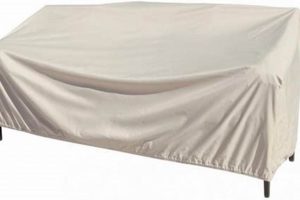
The application of aerosolized pigments to outdoor ferrous or non-ferrous seating and related structures offers a method for aesthetic enhancement and protective coating. This process typically involves surface preparation, primer application, followed by coats of the desired color, resulting in a renewed appearance and increased resistance to environmental factors such as rust and corrosion. For instance, a weathered wrought iron bench can be restored to its original luster, or modernized with a contemporary color scheme.
Employing this technique provides a cost-effective alternative to replacement, extending the lifespan of existing pieces. Historically, this type of refinishing was limited to brush-applied paints, which were time-consuming and often resulted in uneven coverage. The advent of aerosol technology streamlined the process, offering a smoother finish and greater accessibility for both professionals and homeowners. Moreover, appropriate coating application contributes to mitigating weathering effects, thereby preserving structural integrity and minimizing long-term maintenance expenses.
The following sections will detail best practices for material selection, surface preparation, application techniques, safety precautions, and troubleshooting common issues encountered during the refinishing process. Considerations for optimal environmental conditions and long-term maintenance strategies will also be addressed.
Refinishing Metal Outdoor Seating
The successful refurbishment of metal patio furnishings via aerosolized paint requires adherence to specific guidelines to ensure optimal results and longevity of the finish.
Tip 1: Surface Preparation is Paramount: Thoroughly remove existing rust, scale, and loose paint using a wire brush, sandpaper, or a chemical stripper. Degrease the surface with a suitable solvent to ensure proper paint adhesion.
Tip 2: Primer Application is Crucial: Apply a thin, even coat of a metal-specific primer to provide a corrosion-resistant base and enhance topcoat adhesion. Allow the primer to dry completely according to the manufacturer’s instructions.
Tip 3: Select Appropriate Paint Formulation: Choose a paint specifically formulated for metal surfaces and outdoor use. Options include enamel, acrylic, and epoxy paints, each offering varying degrees of durability and weather resistance.
Tip 4: Employ Proper Spraying Technique: Maintain a consistent distance (typically 6-10 inches) between the spray can nozzle and the surface. Use smooth, overlapping strokes to achieve uniform coverage and minimize runs or drips.
Tip 5: Apply Multiple Thin Coats: Applying several thin coats of paint is preferable to one thick coat. This minimizes the risk of runs, ensures thorough coverage, and allows each layer to dry properly, resulting in a more durable finish.
Tip 6: Environmental Conditions Matter: Avoid painting in direct sunlight, high humidity, or windy conditions. Ideal conditions involve moderate temperatures and low humidity to facilitate proper paint drying and adhesion.
Tip 7: Post-Application Curing: Allow the freshly painted pieces to cure fully for the recommended duration before placing them back in service. This allows the paint to harden and develop its maximum durability and resistance to scratching and chipping.
Adherence to these principles will contribute significantly to the longevity and aesthetic appeal of metal furnishings revitalized through aerosolized paint application. Proper preparation, material selection, and application techniques are fundamental for a durable and visually appealing result.
The subsequent section will address common problems encountered during the process and their respective solutions.
1. Surface Preparation Adequacy

The successful application of aerosolized coatings to metallic outdoor furniture hinges significantly on the adequacy of surface preparation. This preliminary step directly influences the adhesion, longevity, and overall aesthetic quality of the final finish. Inadequate surface preparation acts as a primary cause of coating failure, manifesting as peeling, blistering, and premature corrosion. For example, if rust is not completely removed from a wrought iron chair before coating, the corrosion process will continue beneath the new layer, eventually compromising its integrity and causing the paint to detach.
Surface preparation for metal outdoor seating typically involves the removal of existing paint, rust, mill scale, and any other contaminants that may impede paint adhesion. Methods employed include mechanical abrasion (e.g., wire brushing, sanding, abrasive blasting), chemical stripping, and degreasing. The selection of the appropriate method depends on the type of metal, the nature and extent of the existing coating, and the desired level of surface profile. Failure to properly degrease a surface contaminated with oils or lubricants, for instance, will result in poor paint adhesion, regardless of the quality of the paint used.
In conclusion, surface preparation is not merely a preliminary step, but rather a critical determinant of the final outcome of refinishing metal outdoor furniture. The challenges associated with inadequate preparation, such as reduced coating lifespan and compromised aesthetic appeal, underscore the importance of meticulous attention to detail during this stage. This element is inextricably linked to the overall success of aerosolized coating application for garden furniture.
2. Primer Compatibility

The successful refinishing of metal outdoor furniture using aerosolized paint is inextricably linked to the concept of primer compatibility. Primer, a preparatory coating, serves as an interface between the bare metal substrate and the topcoat, influencing adhesion, corrosion resistance, and overall longevity of the finished surface. Incompatibility between the primer and the chosen topcoat for ferrous or non-ferrous garden furniture undermines the protective and aesthetic objectives of the refinishing project. A primer not designed for use with a specific paint chemistry may result in inadequate bonding, leading to peeling, cracking, or blistering of the final coating. This is particularly relevant in outdoor environments where exposure to ultraviolet radiation, moisture, and temperature fluctuations accelerate coating degradation.
Primer selection must consider both the type of metal and the intended topcoat. For instance, applying an acrylic lacquer primer beneath an alkyd enamel topcoat on aluminum patio seating is ill-advised due to the differing properties of each. The enamel may not properly adhere to the acrylic, leading to premature failure. Similarly, when refinishing wrought iron benches, a zinc-rich primer is often preferred to provide enhanced corrosion protection, especially if the topcoat is not inherently rust-inhibitive. The choice of primer directly impacts the finished piece’s ability to withstand the rigors of outdoor exposure and maintain its aesthetic appeal over time.
In summation, the application of aerosolized paint to metal garden furniture necessitates a thorough understanding of primer compatibility. Proper selection and application of a compatible primer system represent a fundamental aspect of achieving a durable, long-lasting, and visually appealing finish. Overlooking this critical step increases the likelihood of coating failure, resulting in increased maintenance costs and a reduced lifespan for the refurbished furniture.
3. Paint Formulation Suitability

The longevity and aesthetic quality of refinished metal outdoor furniture are intrinsically linked to the selection of a paint formulation specifically designed for such applications. The outdoor environment presents a unique set of challenges that necessitate careful consideration of paint properties and composition.
- Corrosion Resistance
Metal furniture is susceptible to corrosion from moisture, humidity, and salt exposure. A suitable paint formulation incorporates rust inhibitors and provides a barrier against water penetration. For example, using a direct-to-metal (DTM) paint on wrought iron seating can prevent rust formation, whereas a standard interior paint would quickly degrade.
- UV Resistance
Prolonged exposure to ultraviolet radiation causes paint to fade, chalk, and become brittle. Paint formulations with UV absorbers or stabilizers mitigate these effects. Acrylic latex paints, often modified with UV-resistant additives, are frequently used on aluminum furniture to maintain color integrity.
- Adhesion and Flexibility
Metal surfaces expand and contract with temperature changes, requiring a paint that can flex without cracking or peeling. Paints with high adhesion properties, such as epoxy or polyurethane coatings, offer superior durability and resist chipping, especially on furniture with intricate designs or joints.
- Weathering Properties
Outdoor furniture is exposed to rain, snow, and extreme temperature fluctuations. Paints formulated for exterior use are designed to withstand these conditions without blistering, cracking, or losing their color. A marine-grade paint, for instance, provides exceptional weathering resistance in coastal environments but may be unnecessarily robust for inland applications.
Choosing the appropriate paint formulation is not merely a matter of aesthetics but a critical investment in the durability and long-term maintenance of metal outdoor furniture. Selecting an unsuitable paint inevitably leads to premature failure, necessitating costly repairs or replacement. A judicious selection process, considering the specific environmental factors and the properties of the metal substrate, is paramount for a successful refinishing project.
4. Application Technique Precision

The effective restoration and preservation of metal outdoor furnishings using aerosolized coatings are directly dependent on the precision of the application technique. Variations in technique significantly impact the finish quality, durability, and overall aesthetic appeal of the refurbished items. Therefore, a meticulous approach is necessary to achieve optimal results.
- Distance and Angle Maintenance
Maintaining a consistent distance and perpendicular angle between the spray nozzle and the furniture surface is crucial for uniform paint distribution. Varying the distance results in uneven coating thickness, leading to potential runs, drips, or dry spray. For example, holding the can too close results in excessive paint buildup, while holding it too far away produces a textured, uneven finish due to the paint drying before it reaches the surface.
- Overlapping Strokes
Employing a consistent overlapping stroke pattern ensures full and even coverage. Failure to overlap sufficiently leaves gaps and thin spots, compromising the protective barrier against corrosion. A recommended overlap of approximately 50% is typically advised to ensure complete coverage without excessive buildup.
- Paint Flow Rate Control
Proper control of the paint flow rate, achieved through consistent nozzle pressure and movement speed, is critical for preventing runs and ensuring a smooth finish. Moving too slowly results in excessive paint application, while moving too quickly leads to insufficient coverage. Mastering the appropriate flow rate is essential, especially when refinishing intricate designs or detailed metalwork.
- Environmental Awareness
Awareness of environmental conditions, such as temperature, humidity, and wind, is essential for adjusting the application technique. High humidity can affect paint drying time and adhesion, while wind can cause overspray and uneven application. Painting on a calm, moderately warm day yields the best results.
In summation, the successful implementation of aerosolized coatings on metal garden furniture relies heavily on precise application techniques. Consistent distance, overlapping strokes, controlled flow rate, and environmental awareness collectively contribute to a durable, aesthetically pleasing, and long-lasting finish. Any deviation from these principles compromises the integrity and appearance of the restored furniture, necessitating careful attention to detail throughout the application process.
5. Environmental Condition Optimization

The optimization of environmental conditions is paramount to achieving a durable and aesthetically pleasing finish when applying aerosolized coatings to metal garden furniture. Environmental factors such as temperature, humidity, and wind speed directly influence paint viscosity, drying time, adhesion, and the potential for surface contamination. Failure to control these elements leads to compromised coating integrity and reduced lifespan.
- Temperature Influence
Temperature affects the viscosity of the paint, influencing its flow and leveling properties. Low temperatures increase viscosity, leading to uneven application and poor adhesion. Conversely, high temperatures decrease viscosity, increasing the risk of runs and drips. For example, attempting to spray paint metal furniture on a day with temperatures below 50F (10C) often results in a rough, textured finish due to inadequate paint flow. Manufacturers typically specify an optimal temperature range for application, generally between 60F (15C) and 85F (29C), to ensure proper atomization and film formation.
- Humidity Effects
High humidity levels impede paint drying and curing processes, increasing the likelihood of moisture entrapment within the coating. This can lead to blistering, peeling, and premature corrosion of the underlying metal. For instance, applying paint to a metal chair on a humid day, with relative humidity exceeding 70%, slows down the evaporation of solvents and creates a milky or cloudy appearance in the finish. Maintaining relative humidity below 60% is generally recommended to facilitate proper drying and crosslinking of the paint film.
- Wind Velocity Considerations
Wind speed affects the spray pattern and can cause overspray, leading to uneven coating thickness and contamination of surrounding areas. Excessive wind also accelerates the drying process, potentially causing the paint to dry before it adheres properly to the metal surface, resulting in a grainy finish. Refinishing metal furniture on a windy day can result in paint particles being blown away before they reach the surface, leading to a speckled and uneven coating. Ideally, painting should occur in a sheltered area or on a day with minimal wind to ensure consistent and controlled application.
- Surface Temperature Alignment
It’s easy to neglect that the furniture surface temp might be very different than air temperature. It’s critical to ensure that the metal surface being painted is within the paint manufacturer’s recommended range. Direct sunlight can heat the metal far beyond the air temperature, making it too hot for proper adhesion. If the surface is too cold, the paint will not flow and adhere correctly. Best practice to to test the surface temp with a thermometer before starting.
Optimizing these environmental conditions is not merely a matter of convenience but a critical component of achieving a durable and aesthetically pleasing finish when applying aerosolized coatings to metal garden furniture. Control over temperature, humidity, and wind speed minimizes the risk of common painting defects and ensures the long-term protection and visual appeal of the refurbished pieces. Consistent attention to detail, including monitoring environmental conditions, is essential for successful project outcomes.
Frequently Asked Questions
This section addresses common inquiries regarding the application of aerosolized paint to metal garden furniture, providing detailed explanations and best practices for achieving durable and aesthetically pleasing results.
Question 1: Is surface preparation truly necessary when refinishing metal garden furniture?
Complete removal of rust, loose paint, and contaminants is critical for proper paint adhesion. Neglecting surface preparation leads to premature coating failure and reduced lifespan.
Question 2: What type of primer is best suited for metal garden furniture?
A metal-specific primer, ideally one with rust-inhibiting properties, provides the optimal base for aerosolized paint application. Ensure compatibility with the chosen topcoat.
Question 3: Can any aerosolized paint be used on metal garden furniture?
No. Select a paint formulation specifically designed for outdoor metal surfaces, offering resistance to corrosion, UV radiation, and temperature fluctuations.
Question 4: How many coats of paint are required for metal garden furniture?
Multiple thin coats are preferable to a single thick coat. Thin coats promote even coverage, minimize runs, and allow for proper drying and curing.
Question 5: What environmental conditions are optimal for refinishing metal garden furniture?
Moderate temperatures (60-85F), low humidity (below 60%), and minimal wind are ideal for aerosolized paint application. Avoid direct sunlight and extreme temperatures.
Question 6: How long should refinished metal garden furniture cure before use?
Allow the paint to cure fully according to the manufacturer’s instructions, typically 24-72 hours. This ensures maximum hardness and resistance to scratching and chipping.
These FAQs highlight the importance of meticulous preparation, appropriate material selection, and adherence to best practices for a successful refinishing project. Proper execution extends the lifespan and enhances the aesthetic appeal of metal garden furniture.
The following section will provide guidance on troubleshooting common issues encountered during the refinishing process.
Concluding Remarks on Refinishing Metal Garden Furniture
This exploration has illuminated the multifaceted process of refinishing metal garden furniture utilizing aerosolized paint. The key determinants of success have been identified as meticulous surface preparation, primer compatibility, appropriate paint formulation selection, precise application techniques, and optimization of environmental conditions. Adherence to these principles significantly enhances the durability, corrosion resistance, and aesthetic appeal of the restored pieces. Conversely, neglecting these critical aspects invariably leads to premature coating failure and diminished longevity.
The informed and diligent application of these guidelines offers a pathway to extend the service life of metal outdoor furniture, thereby minimizing waste and maximizing the value of existing resources. Continued adherence to best practices in surface preparation and coating application remains crucial for sustained performance and visual integrity of refinished metal garden furniture exposed to weathering over prolonged periods. A commitment to thoroughness and informed decision-making assures a lasting transformation.

![Protect & Extend: Garden Furniture Feet Protectors [Buy Now] | The Ultimate Gardening Guide: Grow a Thriving Garden Year-Round](https://MyGardenPatch.com/wp-content/uploads/2025/07/th-3169-300x200.jpg "Protect & Extend: Garden Furniture Feet Protectors [Buy Now] The Ultimate Gardening Guide: Grow a Thriving Garden Year-Round")