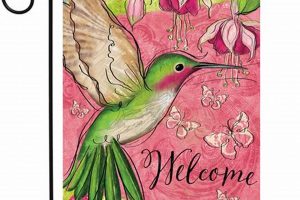
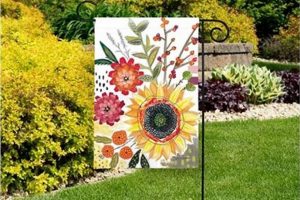
These decorative banners, specifically designed for outdoor display, celebrate various times of the year. Often constructed of durable, weather-resistant materials such as polyester or nylon, they are typically hung on a small pole or stand placed within a yard or flowerbed. An example might include depictions of pumpkins and autumn leaves during the fall or patriotic motifs around national holidays.
The significance of these ornaments lies in their ability to quickly and easily enhance a property’s aesthetic appeal. They offer a simple method for expressing personal style and commemorating specific events without requiring permanent alterations to the landscape. Historically, similar forms of outdoor banners have been used for centuries to signify allegiance, mark celebrations, or provide wayfinding.
The following sections will delve into the selection criteria for optimal outdoor display, including considerations for material durability, design appeal, and proper installation techniques. Furthermore, maintenance strategies to prolong the lifespan of such decorations will be addressed.
Tips for Displaying Seasonal Garden Flags
Optimizing the visual impact and longevity of these decorative banners requires careful consideration of several factors. The following tips provide guidance on selecting, installing, and maintaining them to ensure lasting seasonal appeal.
Tip 1: Material Selection for Longevity: Opt for flags constructed from weather-resistant materials such as spun polyester or nylon. These materials withstand prolonged exposure to sunlight, rain, and wind, minimizing fading and tearing.
Tip 2: Pole and Mounting Hardware Assessment: Ensure the flag pole and mounting hardware are appropriately sized and sturdy enough to support the flag, especially during inclement weather. A flimsy pole can lead to damage or detachment.
Tip 3: Placement Relative to Environmental Factors: Position the flag away from obstructions such as trees or bushes that could cause abrasion or entanglement. This prevents premature wear and tear and maintains optimal visibility.
Tip 4: Sun Exposure Mitigation: While durable materials resist fading, prolonged direct sunlight exposure will eventually degrade colors. Consider rotating flags periodically or choosing locations with partial shade to extend their vibrancy.
Tip 5: Cleaning Protocols for Maintenance: Regularly clean the flag with mild soap and water to remove dirt and debris. This prevents staining and maintains the flag’s aesthetic appeal. Avoid harsh chemicals or abrasive cleaners.
Tip 6: Storage Practices During Off-Seasons: When not in use, store clean and dry flags in a cool, dark, and dry place, preferably in a container that protects them from pests and moisture. Proper storage prolongs their lifespan and prevents damage.
Tip 7: Design Considerations for Visual Impact: Select designs that complement the surrounding landscape and reflect the desired seasonal theme. Overly complex or cluttered designs may detract from their overall visual appeal.
Following these tips will maximize the decorative value and durability of seasonal garden flags, ensuring that they continue to enhance the outdoor environment for many seasons to come.
The subsequent sections will further elaborate on specific design themes and installation techniques to consider when choosing and displaying these decorative items.
1. Material Durability

The longevity and visual appeal of seasonal garden flags are intrinsically linked to the durability of the materials used in their construction. A flag constructed from substandard materials will exhibit premature fading, tearing, and overall degradation, negating its intended decorative purpose. This degradation stems from exposure to ultraviolet radiation, precipitation, wind, and temperature fluctuations inherent to outdoor environments. For instance, a flag made of thin, non-UV-resistant cotton will quickly fade and become brittle when exposed to direct sunlight, whereas a flag made of durable, weather-resistant polyester will maintain its color and structural integrity for a significantly longer period.
The selection of robust materials, therefore, represents a critical decision in maximizing the return on investment associated with seasonal garden flags. Materials such as spun polyester and nylon offer enhanced resistance to fading, abrasion, and moisture absorption. These materials are specifically engineered to withstand the rigors of outdoor use, providing a more sustainable and aesthetically pleasing display throughout the intended season. Furthermore, the use of durable materials minimizes the environmental impact associated with frequent replacement of inferior flags.
In conclusion, the material composition of seasonal garden flags directly impacts their service life and visual effectiveness. Investing in flags constructed from durable, weather-resistant materials is essential for ensuring a long-lasting and aesthetically pleasing outdoor display. The long-term benefits, including reduced replacement costs and minimized environmental impact, outweigh the initial expense of selecting higher-quality materials.
2. Weather Resistance

Weather resistance is a critical attribute for seasonal garden flags, determining their ability to withstand environmental elements and maintain aesthetic appeal throughout their intended display period. The degree to which a flag resists degradation from sun, rain, wind, and temperature fluctuations directly influences its longevity and visual effectiveness.
- Ultraviolet (UV) Radiation Stability
Prolonged exposure to solar UV radiation causes fading and weakening of flag materials. Fabrics treated with UV inhibitors resist this degradation, preserving color vibrancy and structural integrity. Flags lacking this protection exhibit premature fading, especially in intense sunlight conditions. For instance, a flag with a UV-resistant coating will maintain its color fidelity far longer than one without, regardless of the design intricacy.
- Water Repellency and Moisture Resistance
The ability to repel water and resist moisture absorption prevents mildew growth, staining, and material warping. Flags treated with water-repellent coatings dry faster, reducing the risk of damage during rainfall. Conversely, materials that readily absorb water become heavier, increasing stress on the pole and potentially leading to tears or detachment. Consider the difference between a nylon flag with a water-resistant treatment, which sheds water effectively, and a cotton flag that becomes saturated and prone to mildew.
- Wind Resistance and Durability
High winds exert significant stress on flags, leading to tearing at seams or along edges. Reinforced stitching, durable fabrics like spun polyester, and strategically placed grommets enhance a flag’s ability to withstand wind forces. A poorly constructed flag will fray and tear quickly in windy conditions, while a well-designed flag will remain intact, even during gusts. Flags constructed with ripstop weaving demonstrate exceptional resistance to tearing.
- Temperature Fluctuation Tolerance
Exposure to extreme temperature variations can cause materials to become brittle or lose their shape. Fabrics that maintain their flexibility and tensile strength across a wide temperature range are better suited for outdoor use. Flags intended for year-round display must withstand both summer heat and winter cold without significant degradation. A flag designed for temperate climates might not hold up well in areas with extreme temperature swings.
These facets of weather resistance collectively determine the suitability of seasonal garden flags for outdoor use. Selecting flags with appropriate weather-resistant properties ensures they remain visually appealing and structurally sound throughout their intended season, maximizing their decorative impact and providing value for the investment.
3. Design Aesthetics

Design aesthetics play a pivotal role in determining the effectiveness of seasonal garden flags as decorative elements. The visual appeal of these flags directly influences their capacity to enhance a property’s curb appeal and contribute to the overall ambiance of the outdoor environment. Careful consideration of design elements is essential for maximizing the impact of these seasonal decorations.
- Color Palette and Theme Consistency
The selection of colors and thematic elements should align with the specific season or holiday being celebrated. For example, autumnal themes typically incorporate warm tones such as reds, oranges, and yellows, while winter themes may feature cooler hues like blues, silvers, and whites. Inconsistencies in color palette or theme can detract from the overall visual harmony and diminish the flag’s impact. A flag with vibrant spring colors displayed during autumn would be aesthetically incongruous.
- Imagery and Symbolism Clarity
The images and symbols used on the flag should be readily identifiable and relevant to the intended seasonal theme. Ambiguous or poorly rendered imagery can confuse viewers and reduce the flag’s communicative power. A clearly depicted image of a pumpkin on a fall-themed flag is far more effective than an abstract, unrecognizable shape meant to represent the same object. The symbolism used should be easily understood and culturally relevant.
- Typography and Legibility
If the flag includes text, the typography must be legible from a reasonable distance. Font choices should be appropriate for the overall design style and the message being conveyed. Overly ornate or complex fonts can hinder readability and diminish the flag’s visual impact. A simple, sans-serif font is often preferable for maximizing legibility, especially on flags displayed at a distance.
- Proportion and Balance
The arrangement of design elements within the flag’s composition should be balanced and proportional. Overcrowding the flag with too many elements can create a cluttered and visually unappealing effect. Conversely, leaving too much empty space can make the design appear incomplete or lacking in visual interest. A well-balanced design creates a harmonious and visually pleasing composition.
The integration of these design aesthetic principles is essential for ensuring that seasonal garden flags effectively enhance the visual appeal of their surroundings. By carefully considering color palettes, imagery clarity, typography, and proportional balance, individuals can select flags that contribute positively to the overall aesthetic of their outdoor spaces.
4. Pole Stability
Pole stability is a fundamental, yet often overlooked, component directly affecting the functionality and aesthetic presentation of seasonal garden flags. The pole serves as the primary support structure for the flag; its stability directly influences the flag’s visibility and its ability to withstand environmental forces. Insufficient pole stability can lead to a range of adverse effects, from a simple lack of visual appeal due to a sagging or tilted flag, to more significant issues such as pole breakage or complete toppling, especially under windy conditions. For example, a poorly anchored pole in a region prone to high winds may repeatedly fall, requiring frequent re-establishment and potentially damaging the flag itself.
The practical significance of understanding pole stability extends beyond mere aesthetics. A stable pole ensures the flag remains visible and legible, allowing its message or design to be effectively communicated. Furthermore, the selection of an appropriate pole material and anchoring method can significantly impact the longevity of both the pole and the flag. Wooden poles, while aesthetically pleasing, may be susceptible to rot and weathering, requiring regular maintenance or replacement. Metal poles, conversely, offer greater durability but may require grounding in areas prone to lightning strikes. The choice of anchoring method, whether through ground stakes, weighted bases, or permanent mounting, should be carefully considered based on the prevailing environmental conditions and the size of the flag.
In conclusion, pole stability is not merely a secondary consideration but an integral factor in the effective deployment of seasonal garden flags. A stable pole ensures the flag remains visually appealing, legible, and resistant to environmental damage. Proper pole selection and anchoring are crucial for maximizing the lifespan of both the pole and the flag, as well as ensuring the intended message is effectively conveyed. Understanding and addressing pole stability challenges is paramount for achieving a successful and sustainable display of seasonal garden flags.
5. Placement Strategy
Effective placement of seasonal garden flags transcends mere aesthetics, directly influencing visibility, impact, and longevity. The chosen location determines the flag’s exposure to environmental factors, such as sunlight and wind, thereby affecting the rate of material degradation. A flag positioned in constant direct sunlight will experience accelerated fading, reducing its visual appeal and functional lifespan. Conversely, a location shielded from direct sunlight but exposed to excessive wind may lead to increased stress on the flag and pole, potentially causing tearing or structural damage. For example, installing a flag near a frequently used doorway may result in increased wear and tear due to accidental contact, while placing it in a low-traffic area maximizes its lifespan.
Furthermore, placement strategy impacts the visual communication of the flag’s message. A flag positioned behind dense foliage or obscured by other landscape elements will be less effective in conveying its intended seasonal greeting or decorative theme. The optimal location provides unobstructed visibility from various vantage points, ensuring that the flag’s design and colors are readily discernible. Considerations such as viewing distance, background contrast, and the surrounding landscape architecture should inform placement decisions. A flag depicting a patriotic motif, for instance, should be positioned prominently during national holidays to maximize its symbolic impact within the community.
In summation, the strategic placement of these decorations is a critical determinant of their overall effectiveness. Thoughtful consideration of environmental factors, visibility, and intended message are essential for maximizing both the aesthetic and functional value of seasonal garden flags. Implementing a well-defined placement strategy ensures that these decorations serve their intended purpose: enhancing the outdoor environment and conveying a desired seasonal theme with optimal impact and longevity.
6. Maintenance Practices

Maintenance practices are integral to the longevity and continued aesthetic appeal of seasonal garden flags. Without consistent and appropriate maintenance, these decorative items are susceptible to premature degradation, diminishing their visual impact and necessitating frequent replacement. The effects of environmental exposure, including ultraviolet radiation, precipitation, and airborne pollutants, accumulate over time, causing fading, staining, and material weakening. For instance, a flag left unattended throughout a rainy season may develop mildew or mold, compromising its structural integrity and aesthetic appearance. Regular cleaning and timely repairs are thus essential to mitigating these detrimental effects and maximizing the lifespan of such decorative items. The value of investing in a high-quality flag is significantly diminished if appropriate maintenance is neglected.
Effective maintenance encompasses several key activities. Routine cleaning, using mild detergents and water, removes accumulated dirt and debris, preventing staining and preserving the fabric’s vibrancy. Periodic inspection allows for the early detection of minor damage, such as frayed edges or loose stitching, which can then be promptly addressed before escalating into more significant structural problems. Protective measures, such as applying UV protectant sprays, can help mitigate the harmful effects of sunlight exposure. Storage practices during off-seasons are also crucial; flags should be cleaned, dried thoroughly, and stored in a cool, dry place to prevent mold growth and pest infestation. Consider the difference between two identical flags: one meticulously maintained through regular cleaning and protective treatments, and the other left exposed to the elements without any maintenance. The former will undoubtedly retain its visual appeal and structural integrity for a considerably longer period.
In conclusion, the implementation of diligent maintenance practices is not merely an ancillary consideration but a fundamental requirement for preserving the value and extending the lifespan of seasonal garden flags. Regular cleaning, timely repairs, protective treatments, and proper storage are all essential components of a comprehensive maintenance strategy. Neglecting these practices can lead to premature degradation, diminishing the flag’s aesthetic appeal and necessitating costly replacements. The proactive approach to maintenance ensures that seasonal garden flags continue to enhance the outdoor environment for multiple seasons.
7. Storage Solutions

The relationship between storage solutions and seasonal garden flags is one of preservation and longevity. Without appropriate storage strategies, the lifespan and visual appeal of these decorative items are significantly compromised. Improper storage accelerates material degradation due to factors such as moisture, pests, and physical damage, rendering flags unusable for subsequent seasons. Consider the consequence of storing damp flags in a poorly ventilated space; mold and mildew proliferate, leading to irreversible staining and weakening of the fabric. Similarly, leaving flags exposed to direct sunlight or extreme temperatures during off-seasons causes fading and brittleness. Therefore, effective storage solutions are not merely an afterthought but an integral component of maintaining the value and usability of seasonal garden flags.
Practical application of effective storage solutions involves several key steps. First, flags should be thoroughly cleaned and dried before storage to remove dirt, debris, and moisture that contribute to material degradation. Second, flags should be stored in airtight containers or bags to protect them from pests and environmental elements. Acid-free tissue paper can be used to prevent creasing and to provide an additional layer of protection. Third, storage containers should be placed in a cool, dry, and dark environment. Basements and attics, often subject to temperature fluctuations and humidity, are generally unsuitable storage locations. A closet or storage room provides a more stable environment. For example, storing flags in a vacuum-sealed bag within a climate-controlled closet effectively minimizes exposure to damaging elements.
In summary, the implementation of proper storage solutions represents a critical investment in the longevity and aesthetic preservation of seasonal garden flags. Neglecting this aspect leads to premature degradation and unnecessary replacement costs. By adhering to established best practices, including cleaning, airtight containment, and climate-controlled storage, individuals can significantly extend the lifespan and maintain the visual appeal of their seasonal garden flags, ensuring their continued contribution to outdoor aesthetics for years to come.
Frequently Asked Questions
The following addresses common inquiries concerning the selection, usage, and maintenance of seasonal garden flags. These responses aim to provide clarity and guidance based on industry best practices.
Question 1: What materials offer the best weather resistance for seasonal garden flags?
Spun polyester and nylon provide superior weather resistance compared to cotton or other natural fibers. These synthetic materials exhibit greater durability against UV radiation, moisture, and wind, extending the flag’s lifespan.
Question 2: How often should seasonal garden flags be cleaned?
Cleaning frequency depends on environmental conditions. In areas with high levels of pollution or frequent rainfall, cleaning every 1-2 months is recommended. In less demanding environments, cleaning every 3-4 months may suffice. Visual inspection for dirt and stains should inform cleaning schedules.
Question 3: What is the proper method for storing seasonal garden flags during the off-season?
Flags should be thoroughly cleaned and dried before storage. They should then be placed in airtight containers or bags, preferably with acid-free tissue paper to prevent creasing. These containers should be stored in a cool, dry, and dark environment.
Question 4: How can fading of seasonal garden flags be prevented?
Selecting flags made from UV-resistant materials is the first line of defense. Additionally, positioning flags in locations with partial shade and applying UV protectant sprays can help mitigate fading caused by sunlight exposure.
Question 5: What pole type provides the best stability for seasonal garden flags?
Metal poles, particularly those made of steel or aluminum, generally offer greater stability compared to wooden or plastic poles. The pole’s diameter and the depth to which it is anchored also contribute significantly to its stability.
Question 6: How does placement impact the longevity of seasonal garden flags?
Placing flags in locations with minimal exposure to direct sunlight and excessive wind reduces stress on the material and extends its lifespan. Avoiding placement near abrasive surfaces, such as trees or bushes, also minimizes wear and tear.
The primary takeaway is that material selection, maintenance, storage, and placement are all interdependent factors influencing the lifespan and visual appeal of these decorative items.
The subsequent sections will explore design trends and future innovations within the seasonal garden flag market.
Conclusion
This exploration of seasonal garden flags has underscored the multifaceted considerations essential for their effective deployment and sustained visual impact. Durability, weather resistance, design aesthetics, pole stability, strategic placement, diligent maintenance, and appropriate storage all contribute to the overall value and longevity of these decorative items. Each of these elements warrants careful attention to maximize the return on investment and ensure the continued aesthetic contribution of these flags to the outdoor environment.
As consumers and retailers alike navigate the selection and utilization of seasonal garden flags, a comprehensive understanding of these factors is paramount. By prioritizing quality materials, implementing proactive maintenance strategies, and embracing informed placement decisions, the enduring beauty and communicative potential of these seasonal embellishments can be fully realized. The continued evolution of material science and design innovation promises further enhancements in the performance and aesthetic appeal of seasonal garden flags, solidifying their role as significant contributors to outdoor decor.