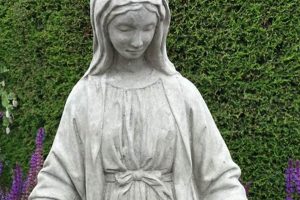
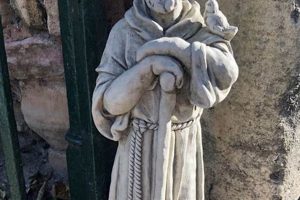
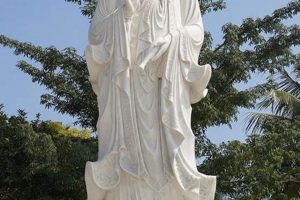
Figurative representations of holy individuals, intended for outdoor display, often serve as focal points within cultivated landscapes. These objects, crafted from durable materials capable of withstanding environmental conditions, provide a tangible connection to religious or spiritual beliefs. A concrete rendering of Saint Francis, positioned amidst flowering plants, exemplifies such an object.
The presence of such depictions can foster a sense of peace and contemplation in outdoor spaces. Beyond aesthetic appeal, they offer reminders of faith and moral guidance. Historically, these artistic expressions have been utilized in various cultures to delineate sacred areas and encourage reflection on virtuous behavior. The choice of which figure to display often reflects personal devotion or a desire to embody specific virtues associated with the depicted individual.
Understanding the diverse materials used in construction, the proper placement considerations for enhanced visual impact, and the cultural significance associated with various figures are crucial factors to consider. The following sections will delve into these aspects to provide a comprehensive overview of incorporating these objects into garden design.
Enhancing Outdoor Spaces with Religious Sculpture
Selecting and positioning religious sculpture for outdoor display requires careful planning. Durability, aesthetic integration, and respect for the subject matter are paramount.
Tip 1: Material Selection for Longevity: Choose materials that withstand the elements. Concrete, resin, and certain metals are preferable to less durable options like plaster or untreated wood. Consider the climate; in freezing temperatures, porous materials can crack due to water expansion.
Tip 2: Appropriate Scale and Proportion: Ensure that the size of the sculpture is in harmony with the surrounding landscape. A towering figure might overwhelm a small garden, while a diminutive piece could be lost in a larger setting. Visualize the sculpture in situ before purchasing.
Tip 3: Thoughtful Placement for Visual Impact: Locate the figure in a position that complements the garden’s design and allows for easy viewing. A focal point at the end of a path, or nestled among plants, can enhance its presence. Consider sightlines from various vantage points.
Tip 4: Emphasize Symbolic Connections: Select a figure whose attributes align with the garden’s purpose. For example, Saint Francis, patron saint of animals and the environment, is well-suited for a garden promoting biodiversity or sustainability.
Tip 5: Secure Mounting for Stability: Prevent accidental falls or theft by securing the sculpture to a solid base. This is particularly important for larger pieces or those placed in areas prone to high winds or foot traffic. Consider professional installation for heavy or intricate figures.
Tip 6: Maintenance and Cleaning Procedures: Regular cleaning will preserve the sculpture’s appearance. Use gentle methods appropriate for the material. Avoid harsh chemicals that could damage the surface. Periodic sealing can protect against weathering.
Adherence to these guidelines will contribute to the creation of a reverent and visually appealing outdoor sanctuary. Proper planning ensures the sculpture remains a source of inspiration and contemplation for years to come.
The concluding section will explore the broader impact of integrating such objects within various design styles.
1. Material Durability

Material durability represents a foundational concern when selecting religious sculpture for outdoor display. The prolonged exposure to environmental elements necessitates careful consideration of a material’s ability to withstand degradation, ensuring the longevity and preservation of the artistic and spiritual representation.
- Resistance to Environmental Degradation
Materials used in outdoor religious statuary must resist damage from moisture, temperature fluctuations, ultraviolet radiation, and potential chemical exposure from fertilizers or pollutants. Concrete, for instance, can withstand freeze-thaw cycles, while bronze develops a protective patina over time, preventing corrosion. Failure to select resistant materials results in cracking, fading, or structural compromise, diminishing the aesthetic and symbolic value of the piece.
- Structural Integrity Under Stress
The chosen material must maintain its structural integrity against physical stress, including wind loads, accidental impacts, and potential vandalism. High-density materials like cast stone or reinforced polymers offer increased resistance to breakage or deformation compared to more brittle materials. Proper reinforcement and anchoring are critical to ensuring stability and preventing damage, especially in areas prone to severe weather.
- Maintenance Requirements and Life Cycle Cost
Material choice significantly impacts the long-term maintenance requirements and associated costs. While some materials like granite require minimal upkeep, others, such as painted wood, demand frequent refinishing to prevent deterioration. Considering the life cycle cost, including initial investment, maintenance, and potential repair or replacement expenses, is essential for making informed decisions and maximizing the value of the religious statue.
- Aesthetic Longevity
Beyond physical durability, the chosen material should maintain its aesthetic appeal over time. Some materials fade or discolor with prolonged exposure to sunlight, while others may develop undesirable stains or patinas. Selecting materials that retain their color, texture, and overall appearance ensures the statue continues to inspire reverence and spiritual connection for generations. For instance, certain types of treated resin can resist UV damage and maintain their original coloration for extended periods.
These facets of material durability directly influence the longevity and continued relevance of religious statues in garden settings. Careful selection of materials ensures these representations withstand the test of time, serving as enduring symbols of faith and contemplation within the landscape.
2. Scale Appropriateness

The selection of appropriate scale is critical for effectively integrating figurative representations of holy individuals into garden landscapes. Disproportionate sizing undermines both the aesthetic harmony and the intended spiritual impact. A statue too large can overwhelm the surrounding environment, creating a sense of imbalance and imposing on the natural elements. Conversely, an undersized statue may become visually insignificant, failing to serve as a focal point or elicit the desired sense of reverence. The effect of inappropriate scale is a diminished ability to create a peaceful and contemplative space.
Consider, for example, a modest suburban garden measuring 20 feet by 30 feet. A life-size statue of Saint Francis, approximately 4 feet tall, might be well-suited to this space. Its presence provides a focal point without dominating the area. However, a statue exceeding 8 feet in height would likely disrupt the garden’s proportions, creating an unsettling visual imbalance. Conversely, a statue smaller than 1 foot would likely be lost amongst the foliage, failing to command attention or evoke the intended spiritual atmosphere. Successful integration requires careful measurement of the available space, consideration of surrounding elements, and a clear understanding of the desired visual impact.
Ultimately, understanding scale appropriateness is paramount to realizing the full potential of religious sculpture in garden design. It requires thoughtful consideration of spatial relationships, visual balance, and the intended emotional response. By selecting statuary that complements the landscape’s dimensions and proportions, individuals can cultivate serene and spiritually enriching outdoor environments. Ignoring this principle results in aesthetic dissonance and a failure to create a truly meaningful and impactful garden space.
3. Placement Significance

Strategic positioning profoundly influences the effectiveness of religious sculpture within garden settings. Placement extends beyond mere aesthetics; it dictates how the statue interacts with its environment and communicates its intended message.
- Directional Orientation and Symbolic Alignment
The cardinal direction the figure faces can enhance its symbolic resonance. For instance, facing a figure eastward, toward the rising sun, may symbolize new beginnings or spiritual enlightenment. Aligning a statue of Saint Francis with an area dedicated to animal shelter can amplify themes of compassion and stewardship. Misalignment can dilute the intended message or create unintended symbolic dissonance.
- Integration with Existing Garden Features
The statue’s location relative to existing paths, water features, or plant groupings profoundly impacts its visibility and accessibility. Positioning a statue at the terminus of a path creates a focal point that draws the eye and encourages contemplation. Placing it near a fountain can connect the figure to themes of purification or renewal. Thoughtless placement can obscure the statue’s presence or disrupt the flow of the garden’s design.
- Consideration of Light and Shadow
The interplay of light and shadow can dramatically alter the statue’s appearance and emotional impact throughout the day. Positioning the figure to receive direct sunlight during specific hours can highlight certain features or create dramatic contrasts. Conversely, placing it in perpetual shade may evoke a sense of mystery or introspection. Neglecting the effects of light can result in the statue appearing washed out or obscured at certain times.
- Framing and Contextualization
The elements surrounding the statueplants, structures, or even open spaceserve as a frame that contextualizes its presence. Enclosing a statue with flowering shrubs can create a sense of intimacy and reverence. Placing it against a backdrop of natural stone can emphasize its connection to the earth. Inadequate framing can leave the statue feeling isolated or out of place.
Ultimately, the significance of placement resides in its capacity to amplify the statue’s symbolic power and integrate it seamlessly into the garden’s narrative. Thoughtful positioning transforms the sculpture from a mere object into a meaningful element that enhances the overall spiritual and aesthetic experience of the outdoor space.
4. Religious Symbolism

Religious symbolism constitutes an integral layer of meaning within representations of holy individuals positioned in garden settings. These symbols, inherent in the statue’s form, attributes, and context, convey specific theological concepts and spiritual values, enriching the contemplative experience of the space. The presence of these symbols transforms the garden into a visual catechism, prompting reflection on faith and moral principles.
- Attributes of Sainthood
Each saint is traditionally associated with specific emblems that denote their life, martyrdom, or patronage. Saint Peter, for example, is frequently depicted with keys, representing his role as the gatekeeper of Heaven. Saint Francis often appears with animals, reflecting his connection to nature and his advocacy for all creatures. The deliberate inclusion of these attributes on religious statuary serves as immediate identifiers, communicating the figure’s identity and the virtues they embody. Their accuracy and artistic execution are vital to preserving the integrity of the intended message.
- Iconographic Representation
Iconography, the visual language of religious art, dictates the standardized depiction of holy figures. Color palettes, poses, and associated objects are carefully chosen to convey specific meanings. The blue mantle traditionally worn by the Virgin Mary, for instance, symbolizes her purity and association with the heavens. Adherence to established iconographic conventions ensures that the statue conforms to recognized religious traditions and resonates with viewers familiar with these visual cues. Deviation from these conventions can lead to misinterpretation or diminish the statue’s spiritual authority.
- Symbolic Materials and Craftsmanship
The materials used in crafting the statue, and the manner in which they are worked, can also carry symbolic weight. Bronze, for instance, is often associated with strength and permanence, while marble may evoke notions of purity and transcendence. The skill and artistry displayed in the statue’s creation can be seen as an act of devotion, reflecting the value placed on the figure being represented. High-quality craftsmanship, therefore, contributes to the statue’s overall impact and its ability to inspire reverence.
- Contextual Placement and Garden Design
The placement of the statue within the garden environment adds another layer of symbolism. A statue of Saint Anthony, patron saint of lost items, positioned near a winding path might symbolize the search for spiritual direction. A statue of Saint Joseph, patron saint of families, placed near a seating area could evoke feelings of domestic peace and familial harmony. The deliberate integration of the statue into the garden’s overall design enhances its symbolic resonance and transforms the space into a cohesive expression of faith.
These multifaceted aspects of religious symbolism converge to elevate religious statuary within the garden from mere decoration to potent instruments of spiritual communication. The careful selection and placement of these figures, informed by an understanding of their symbolic significance, allows for the creation of outdoor spaces that foster contemplation, devotion, and a deeper connection to the divine.
5. Weather Resistance

Outdoor religious statuary necessitates materials and construction techniques engineered to withstand environmental stressors. The capacity to endure prolonged exposure to varying weather conditions directly impacts the longevity and aesthetic integrity of these devotional objects. Selection criteria must prioritize resistance to degradation caused by moisture, temperature fluctuations, ultraviolet radiation, and wind.
- Material Porosity and Freeze-Thaw Cycles
Porous materials, such as untreated concrete or certain types of sandstone, absorb moisture. In regions experiencing freezing temperatures, this absorbed water expands upon freezing, exerting internal pressure that can lead to cracking and structural failure. Statues crafted from low-porosity materials, or those treated with water-repellent sealants, exhibit greater resilience to freeze-thaw damage. Examples include high-density cast stone, fiberglass-reinforced polymers, and properly sealed bronze castings. The implications of inadequate freeze-thaw resistance range from minor surface damage to catastrophic structural collapse, necessitating costly repairs or replacement.
- UV Radiation and Color Fading
Prolonged exposure to ultraviolet (UV) radiation from sunlight can cause fading and discoloration in certain materials, particularly paints, dyes, and some plastics. Statues constructed with UV-resistant pigments and coatings maintain their original coloration for a longer period. Materials like bronze and certain types of natural stone are inherently resistant to UV degradation. The consequences of UV-induced fading include a loss of aesthetic appeal and a diminished sense of reverence associated with the statue.
- Wind Load and Structural Stability
Statues located in exposed areas are subject to wind loads, which can exert significant force, particularly on taller or top-heavy figures. Proper anchoring to a stable base is crucial for preventing tipping or toppling. The statue’s design should also minimize wind resistance. Internal reinforcement, such as steel armatures within cast concrete structures, enhances structural stability. Failure to account for wind load can result in damage to the statue, injury to individuals, or property damage.
- Moisture and Corrosion
Persistent exposure to moisture, whether from rain, snow, or humidity, can lead to corrosion in metallic statues and promote the growth of mold and mildew on porous surfaces. Protective coatings, such as sealants and waxes, can mitigate these effects. Materials like stainless steel and certain grades of bronze exhibit inherent corrosion resistance. Regular cleaning and maintenance are essential for preventing moisture-related damage. Unchecked corrosion and microbial growth can detract from the statue’s appearance, accelerate its deterioration, and pose potential health hazards.
These interconnected facets of weather resistance underscore its critical importance in the selection and maintenance of religious statuary intended for outdoor display. Prioritizing weather-resistant materials and construction techniques ensures the longevity, aesthetic integrity, and continued spiritual significance of these objects within garden environments. Neglecting these considerations leads to premature degradation and compromises the intended purpose of these devotional representations.
6. Artistic Representation

Artistic representation forms the core means through which religious figures manifest within the physical realm of a garden. The aesthetic choices inherent in the design and execution of these statues directly influence their ability to evoke reverence, convey symbolic meaning, and harmonize with their surroundings. The selection of artistic style, level of detail, and overall aesthetic quality impacts the perceived spiritual value and the statue’s effectiveness as a devotional object.
- Stylistic Interpretation and Historical Context
Artistic style dictates the statue’s visual character and its connection to specific historical periods or cultural traditions. A statue rendered in the Romanesque style, characterized by its solid forms and simplified features, evokes a sense of antiquity and permanence. Conversely, a Baroque statue, with its dynamic poses and elaborate drapery, conveys a sense of drama and emotional intensity. The choice of artistic style should align with the overall design of the garden and the intended spiritual atmosphere. Anachronistic or stylistically incongruent representations can detract from the aesthetic coherence of the space.
- Level of Detail and Expressiveness
The degree of detail incorporated into the statue’s features and garments contributes to its realism and expressiveness. Highly detailed statues, with intricate facial expressions and meticulously rendered folds in their robes, convey a sense of individual personality and emotional depth. More stylized representations, with simplified features and abstracted forms, emphasize the symbolic or archetypal qualities of the figure. The appropriate level of detail depends on the desired effect and the scale of the statue. Excessive detail can overwhelm smaller gardens, while insufficient detail can render larger statues impersonal.
- Materiality and Surface Treatment
The chosen material and its surface treatment significantly influence the statue’s visual texture and its interaction with light. Bronze, with its warm tones and reflective surface, evokes a sense of richness and prestige. Marble, with its smooth, cool surface and translucent quality, conveys a sense of purity and transcendence. The surface treatment, whether polished, patinated, or left in its natural state, affects the statue’s overall appearance and its resistance to weathering. The careful selection of materials and surface treatments enhances the statue’s aesthetic appeal and its ability to harmonize with the surrounding garden environment.
- Composition and Pose
The statue’s overall composition, including its pose, gesture, and the arrangement of its limbs, communicates specific narratives and symbolic meanings. A figure with outstretched arms may symbolize welcome or blessing, while a figure kneeling in prayer conveys humility and devotion. The composition should be balanced and visually engaging, drawing the viewer’s eye and guiding their attention to key details. Awkward or unnatural poses can detract from the statue’s aesthetic appeal and undermine its spiritual message.
These facets of artistic representation collectively determine the effectiveness of religious statuary in garden settings. Thoughtful consideration of artistic style, level of detail, materiality, and composition ensures that the statue serves not only as a visual element but also as a compelling symbol of faith, inspiring contemplation and enhancing the spiritual atmosphere of the outdoor space. Neglecting the artistic aspects of these representations diminishes their ability to resonate with viewers and fully realize their intended purpose.
7. Garden Harmony
The successful integration of religious statuary within outdoor environments necessitates a careful consideration of overall aesthetic cohesion. Garden harmony, in this context, refers to the seamless blending of the statue with the landscape’s existing elements, creating a unified and visually pleasing composition. Achieving this requires thoughtful attention to various facets of design, ensuring that the statue enhances, rather than disrupts, the natural beauty of the garden.
- Spatial Balance and Proportion
Spatial balance dictates the equitable distribution of visual weight throughout the garden, preventing any single element from overwhelming the composition. The statue’s size must be proportionate to the surrounding plants, structures, and open spaces. A towering statue in a small garden creates a sense of imbalance, while a diminutive statue in a vast landscape becomes visually insignificant. Achieving spatial harmony requires careful measurement, planning, and an understanding of visual perspective. For instance, placing a mid-sized statue of Saint Francis in a garden bed of comparable scale, surrounded by flowering plants of varying heights, can create a balanced and visually engaging focal point.
- Color Palette and Material Consistency
The statue’s color and material should complement the existing palette of the garden. Harsh contrasts can disrupt the visual flow, while harmonious color schemes promote a sense of tranquility. A stone statue blends seamlessly into a rock garden, while a bronze statue adds a touch of warmth and sophistication to a green landscape. Maintaining material consistency, by using similar types of stone or wood throughout the garden, enhances the overall sense of unity. The strategic use of color and material can either emphasize or subtly integrate the statue into the garden’s existing aesthetic.
- Textural Variation and Contrast
Textural variation adds depth and visual interest to the garden, preventing monotony and highlighting specific elements. The smooth surface of a marble statue contrasts effectively with the rough texture of natural stone or the feathery foliage of ornamental grasses. Juxtaposing the statue with plants of varying textures creates a dynamic visual interplay that enhances its presence. Strategic use of textural contrast draws the eye and emphasizes the statue as a focal point within the garden.
- Thematic Coherence and Symbolic Integration
The statue’s theme and symbolism should align with the overall concept of the garden. A statue of Saint Francis, patron saint of animals and nature, is a natural fit for a wildlife-friendly garden or a space dedicated to environmental conservation. A statue of the Virgin Mary might be placed in a rose garden, symbolizing her purity and grace. Thematic coherence strengthens the garden’s narrative and reinforces its intended message, creating a more meaningful and impactful experience for visitors.
These facets of garden harmony underscore the importance of a holistic approach to integrating religious statuary within outdoor spaces. By carefully considering spatial balance, color palette, textural variation, and thematic coherence, individuals can create gardens that are not only visually appealing but also deeply resonant with spiritual meaning. Successful garden harmony transforms the statue from a mere object into an integral element of a cohesive and inspiring landscape, fostering contemplation and a deeper connection to the natural world.
Frequently Asked Questions
This section addresses common inquiries concerning the integration of religious statuary into garden environments, providing concise and informative answers to facilitate informed decision-making.
Question 1: What materials are best suited for outdoor saint statues to ensure longevity?
Materials exhibiting high resistance to environmental degradation are optimal. Concrete, particularly reinforced concrete, stands as a durable and cost-effective choice. Bronze, while more expensive, offers exceptional longevity and develops a desirable patina over time. Certain resin composites formulated for outdoor use provide a lightweight and weather-resistant alternative. The selection should align with budgetary constraints and the desired aesthetic.
Question 2: How does one properly secure a saint statue in the garden to prevent tipping or theft?
Securing the statue requires a stable foundation and appropriate anchoring methods. For smaller statues, a concrete paver or buried platform can provide a solid base. Larger statues necessitate a more robust foundation, potentially involving a poured concrete footing extending below the frost line. Anchoring can be achieved using epoxy or mechanical fasteners, ensuring the statue is firmly affixed to the base. Consider professional installation for heavy or complex installations.
Question 3: What are the key considerations when selecting a saint statue to align with a specific garden style (e.g., cottage garden, Zen garden)?
The statue’s artistic style and symbolic attributes must complement the garden’s overall aesthetic. A rustic stone statue of Saint Francis aligns well with a cottage garden’s informal and nature-focused design. A minimalist representation of a meditating Buddha is more appropriate for a Zen garden’s emphasis on tranquility and contemplation. Cultural sensitivity and thematic consistency are crucial for achieving harmonious integration.
Question 4: How does one clean and maintain a saint statue to preserve its appearance and prevent damage?
Cleaning methods vary depending on the statue’s material. For concrete statues, a gentle scrub with a soft brush and mild detergent is typically sufficient. Bronze statues may require specialized cleaning solutions to remove oxidation and maintain their patina. Avoid harsh chemicals or abrasive cleaners, which can damage the statue’s surface. Regular inspection and prompt treatment of any signs of deterioration are essential for preserving the statue’s appearance.
Question 5: What is the significance of placing a specific saint statue in a particular location within the garden?
Placement should consider both aesthetic and symbolic factors. A statue of Saint Anthony, patron saint of lost items, might be placed near a meandering path to symbolize the search for spiritual direction. A statue of Saint Joseph, patron saint of families, could be positioned near a seating area to evoke a sense of domestic tranquility. Strategic placement enhances the statue’s symbolic resonance and integrates it into the garden’s narrative.
Question 6: Are there any ethical considerations regarding the display of saint statues in a garden setting?
Respect for the religious significance of the statue is paramount. Avoid placing the statue in a location that is irreverent or disrespectful. Ensure the statue is well-maintained and free from damage. Consider the potential impact on neighbors or passersby, particularly in communities with diverse religious beliefs. The primary objective should be to create a space that fosters contemplation and reverence.
In summary, careful consideration of material selection, installation techniques, stylistic alignment, maintenance practices, symbolic placement, and ethical considerations ensures the successful and meaningful integration of saint statues into garden environments.
The subsequent article section explores case studies of successful garden designs incorporating religious statuary.
Saint Statues for the Garden
This exploration has illuminated the multifaceted considerations inherent in integrating figurative representations of holy individuals into outdoor environments. From the crucial selection of durable materials capable of withstanding environmental stressors to the nuanced understanding of scale, placement, and religious symbolism, each element contributes to the creation of a meaningful and aesthetically harmonious space. The interplay between artistic representation and garden design, coupled with diligent maintenance practices, ensures the enduring presence and spiritual resonance of these objects.
Ultimately, the decision to incorporate “saint statues for the garden” reflects a desire to cultivate outdoor spaces that foster contemplation, devotion, and a deeper connection to faith. Thoughtful implementation, guided by the principles outlined herein, transforms the garden into a sanctuary, a testament to enduring values, and a source of inspiration for generations to come. Further research and personalized application of these guidelines are encouraged to fully realize the transformative potential of this integration.