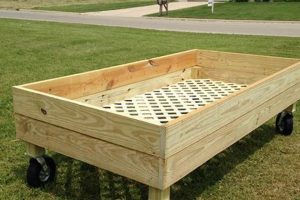
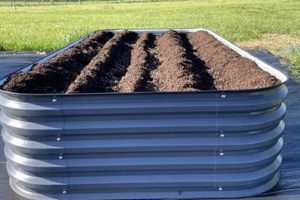
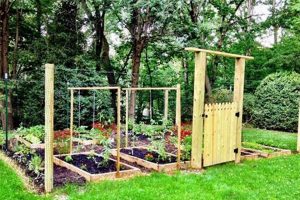
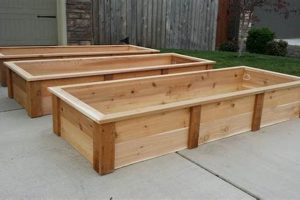
A circular, elevated planting bed enhances accessibility and visual appeal in horticultural settings. This construction method involves creating a contained growing space above ground level, typically using materials such as wood, stone, or metal to form the perimeter. The resulting structure is then filled with soil or a suitable growing medium, providing an optimized environment for various plants.
Elevated beds offer several advantages, including improved drainage, better soil control, and reduced back strain for gardeners. The circular shape maximizes surface area for planting within a confined space, potentially leading to higher yields. Historically, similar structures have been employed in diverse cultures to cultivate food crops in challenging environments or to create ornamental displays.
The subsequent sections will examine specific design considerations for elevated, circular planting areas, appropriate plant selections, and maintenance techniques to ensure long-term success. Furthermore, the impact of material choices on both aesthetics and longevity will be addressed, providing a comprehensive guide to constructing and managing such a garden feature.
Constructing and Maintaining Circular Elevated Planting Beds
The following section outlines crucial considerations for successfully establishing and maintaining circular, elevated planting areas, ensuring optimal plant growth and longevity of the structure.
Tip 1: Soil Composition. Prioritize a well-draining soil mix. Amend existing garden soil with compost, peat moss, and perlite to improve drainage and aeration within the confined space.
Tip 2: Material Selection. Choose rot-resistant materials for construction. Untreated wood will degrade rapidly. Consider cedar, redwood, or composite lumber for increased durability. Stone or metal are alternative options offering differing aesthetic and functional characteristics.
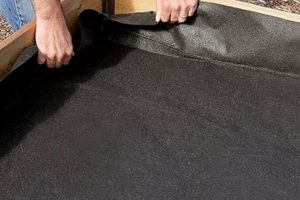
Tip 3: Drainage Implementation. Ensure adequate drainage beneath the structure. A layer of gravel or coarse sand at the base prevents waterlogging and root rot.
Tip 4: Height Determination. Select a height appropriate for the intended plants and the user’s physical capabilities. Higher beds reduce bending but may require additional structural support. Generally, a height of 18-24 inches is a versatile starting point.
Tip 5: Sun Exposure Analysis. Evaluate sunlight patterns before site selection. Orient the bed to maximize or minimize sun exposure based on the chosen plants’ light requirements.
Tip 6: Watering Strategies. Implement efficient watering methods. Drip irrigation or soaker hoses deliver water directly to the roots, minimizing water waste and fungal diseases.
Tip 7: Pest and Weed Control. Implement preventative measures against pests and weeds. Use physical barriers like netting or row covers to exclude pests. Regularly remove weeds manually to prevent competition for resources.
Adhering to these guidelines promotes a healthy growing environment and extends the lifespan of the circular, elevated structure. Careful planning and execution are essential for a successful horticultural outcome.
The subsequent section will explore various plant choices suitable for elevated, circular gardens, considering factors such as growth habit, sunlight requirements, and aesthetic considerations.
1. Shape maximizes space
The geometrical configuration of an elevated, circular planting bed directly influences the efficiency of spatial utilization. This correlation holds particular relevance in constrained environments, such as urban gardens or small patios, where optimizing growing area is paramount.
- Circumference to Area Ratio
A circle inherently possesses the greatest area for a given perimeter compared to other planar shapes. In the context of an elevated planting bed, this characteristic translates to a larger surface area for planting relative to the amount of material required to construct the perimeter. This efficiency allows for a higher density of plants within a contained space.
- Accessibility from All Sides
The circular form affords uniform accessibility from all points around the perimeter. This facilitates ease of planting, weeding, and harvesting, maximizing usability of the available space. Linear structures, in contrast, often present access challenges to plants located further from the edge.
- Visual Integration within the Landscape
A circular configuration tends to blend harmoniously into various landscape designs, whether formal or informal. This aesthetic integration can enhance the perceived spaciousness of an area, particularly when contrasted with the angularity of rectangular structures, which can create visual boundaries.
- Efficient Irrigation and Drainage
The circular shape promotes more even distribution of water and drainage throughout the planting bed. This reduces the incidence of dry spots or waterlogged areas, contributing to more uniform plant growth across the entire surface. The geometry facilitates optimized water flow and penetration, which is critical to maintaining optimal soil conditions throughout the structure.
The inherent spatial efficiency, accessibility, visual integration, and facilitation of irrigation inherent in a circular planting design offer significant advantages. These factors contribute to a more productive and aesthetically pleasing utilization of space when constructing an elevated gardening feature. The benefits underscore the value of geometric design in maximizing the utility and aesthetics of such horticultural installations.
2. Drainage prevents waterlogging

The relationship between effective drainage and the prevention of waterlogging is fundamental to the success of any horticultural endeavor, particularly concerning elevated, circular planting beds. Optimal drainage is essential for maintaining soil health, promoting vigorous root growth, and preventing the onset of diseases that thrive in overly saturated conditions. Within the confines of a constructed bed, drainage considerations become even more critical due to the controlled environment and potential for water accumulation.
- Soil Composition and Permeability
The composition of the soil directly impacts its drainage capacity. Elevated beds often utilize amended soils, which must be formulated to ensure adequate permeability. The inclusion of materials like perlite, vermiculite, or coarse sand enhances the soil’s ability to drain excess water, preventing the saturation that leads to anaerobic conditions. Conversely, soils with high clay content impede drainage, increasing the risk of waterlogging. In such cases, amendment is necessary to improve soil structure and hydraulic conductivity.
- Base Layer and Outlet Provision
The base of the elevated bed requires careful consideration to facilitate water outflow. A layer of gravel or crushed stone at the bottom of the structure creates a drainage reservoir, allowing water to collect and gradually dissipate. Furthermore, providing drainage outlets or weep holes in the base or sides of the bed ensures that excess water can escape. The absence of such provisions can lead to water accumulating within the bed, saturating the soil and compromising plant health.
- Slope and Grading
While circular beds inherently lack a directional slope, internal grading of the soil can influence drainage patterns. Creating a slightly elevated center promotes runoff towards the perimeter, facilitating the dispersion of excess water. This is particularly relevant in situations where the bed is located in an area prone to heavy rainfall or irrigation. Conversely, a depression in the center could lead to water pooling and localized waterlogging issues.
- Plant Selection and Water Requirements
The choice of plant species directly impacts drainage requirements. Certain plants are more tolerant of saturated conditions than others. Selecting species that thrive in well-drained soil is crucial for preventing waterlogging-related issues. Furthermore, understanding the water requirements of the selected plants allows for appropriate irrigation practices, minimizing the risk of overwatering and subsequent saturation of the growing medium. Complementary planting strategies, incorporating plants with differing water needs, contribute to optimal drainage management.
The synergy between soil composition, base layer construction, internal grading, and plant selection fundamentally determines the drainage efficiency of an elevated, circular planting bed. Addressing these factors proactively mitigates the risk of waterlogging, fostering a healthy growing environment conducive to robust plant development. Neglecting drainage considerations often leads to reduced yields, increased susceptibility to disease, and premature plant decline, highlighting the critical importance of drainage management in constructed horticultural systems.
3. Materials ensure durability

The longevity and structural integrity of a circular elevated planting bed are directly contingent upon the materials employed in its construction. The elevated nature of these gardens exposes them to a range of environmental stressors, including moisture, temperature fluctuations, and, in some regions, freeze-thaw cycles. Consequently, the selection of durable materials is not merely an aesthetic consideration but a fundamental requirement for ensuring the garden’s long-term viability. The cause-and-effect relationship is clear: inadequate material selection results in premature degradation, while robust materials contribute to a longer lifespan. For instance, untreated wood will succumb to rot within a few seasons, whereas naturally decay-resistant wood such as cedar or redwood, or non-organic alternatives like composite lumber, concrete blocks, or galvanized steel, will significantly extend the structure’s lifespan.
The importance of durable materials is further amplified by the practicalities of garden maintenance. A decaying structure becomes a hazard, potentially collapsing and damaging plants. Moreover, the cost of repeated repairs or replacements outweighs the initial investment in more durable options. Consider a garden built with pressure-treated lumber: While initially more expensive than untreated wood, its resistance to decay and insect infestation results in significantly reduced maintenance costs and a prolonged functional lifespan. Similarly, a stone or concrete structure offers exceptional durability, albeit at a higher initial cost, and may require less frequent maintenance. The choice between these materials depends on budgetary constraints, aesthetic preferences, and the specific environmental conditions of the location.
In conclusion, material selection is a crucial determinant of the overall durability and longevity of circular elevated planting beds. Prioritizing durable materials, while potentially entailing a higher upfront investment, offers significant long-term benefits by minimizing maintenance costs, preventing structural failure, and ensuring the continued functionality of the garden. Understanding this connection is essential for any individual or organization undertaking the construction of such a gardening feature. The informed selection of robust materials is therefore a cornerstone of sustainable and practical garden design.
4. Accessibility eases maintenance
The design and construction of a circular raised garden fundamentally influence the ease with which maintenance tasks can be performed. Elevated structures, by definition, reduce the need for bending and kneeling, thereby lessening physical strain on the gardener. This reduction in physical exertion translates directly into more frequent and thorough maintenance, contributing to the overall health and productivity of the garden. A circular form further enhances accessibility by providing unimpeded access to all plants from any point around the perimeter. This geometric advantage minimizes the need to reach over or step into the garden bed, reducing soil compaction and potential damage to plants.
Effective maintenance includes weeding, watering, pest control, and harvesting. An elevated and circular design simplifies these tasks. Weeding, for instance, becomes less arduous due to the raised height, reducing back strain. Watering is facilitated by easy access to all areas of the garden, enabling targeted irrigation and minimizing water waste. Pest control measures can be implemented more efficiently, as all plants are readily accessible for inspection and treatment. Harvesting is also simplified, allowing for easy collection of produce without damaging neighboring plants or compacting the soil. For instance, a senior citizen or someone with limited mobility might find tending to a ground-level garden challenging; however, an elevated circular bed brings the garden to a more comfortable working height, fostering continued engagement with horticultural activities.
In summary, the principles of accessible design, when applied to circular raised gardens, directly correlate with simplified maintenance practices. The elevated structure minimizes physical strain, while the circular form provides comprehensive accessibility. This synergy results in a garden that is not only aesthetically pleasing but also practically manageable, promoting long-term engagement and horticultural success. Overlooking accessibility considerations can lead to neglected maintenance, diminished yields, and a decreased appreciation for the gardening experience, underscoring the importance of integrating accessibility into the design and construction of these horticultural features.
5. Soil supports plant growth

The fundamental principle of plant cultivation is that soil provides the necessary physical support, nutrients, and water essential for growth. In the context of a circular raised garden, this principle is amplified. The controlled environment within the raised structure necessitates careful management of the soil composition to optimize plant health. The soil acts as an anchor for root systems, providing stability and preventing plants from toppling. It also functions as a reservoir, storing water and making it available to plants as needed. Further, the soil is the primary source of essential nutrients, such as nitrogen, phosphorus, and potassium, which are vital for plant development. Without adequate soil quality, plants in a raised garden, regardless of its shape or design, will struggle to thrive. For example, filling a raised bed with compacted clay soil will impede root growth and drainage, leading to stunted plants and potential root rot. Conversely, using a well-draining, nutrient-rich soil mix will promote vigorous growth and abundant yields.
The circular shape of the raised garden influences the distribution of these benefits. A circular form allows for uniform soil depth and distribution, ensuring that all plants within the bed have equal access to nutrients and water. This is particularly important when growing a diverse range of plants with varying needs. The soil in a raised garden also benefits from improved drainage and aeration. The elevated structure prevents soil compaction and allows excess water to drain away, reducing the risk of waterlogging and root disease. Improved aeration promotes healthy root growth and enhances nutrient uptake. For instance, consider a tomato plant in a raised bed with well-drained soil; the plant will develop a strong root system, readily absorb nutrients, and produce abundant fruit, whereas a tomato plant in poorly drained soil will exhibit stunted growth and be more susceptible to disease. Furthermore, amending the soil with organic matter, such as compost or manure, improves its fertility and water-holding capacity, providing a sustained release of nutrients over time.
In summary, the connection between soil and plant growth is paramount in circular raised gardens. The controlled environment and inherent design characteristics of the raised bed emphasize the importance of carefully managing soil composition and properties. By providing adequate physical support, nutrients, and water, the soil enables plants to thrive and reach their full potential. Ignoring soil health will negate the benefits of the raised bed design, leading to poor plant growth and reduced yields. Therefore, prioritizing soil quality is essential for achieving successful horticultural outcomes in circular raised gardens.
6. Sunlight optimizes growth

Sunlight, as the primary energy source for photosynthesis, fundamentally dictates the growth potential of plants. Within a circular raised garden, optimizing sunlight exposure is a critical factor influencing plant health and productivity. The circular design, in particular, presents both advantages and challenges regarding sunlight utilization. The even distribution of plants around the circumference allows for theoretically equitable access to sunlight; however, shading effects from taller plants or surrounding structures can negate this advantage. The cause-and-effect relationship is clear: inadequate sunlight exposure leads to reduced photosynthetic activity, resulting in stunted growth, decreased yields, and increased susceptibility to diseases. For instance, a tomato plant shaded by a neighboring sunflower will exhibit significantly lower fruit production than one receiving full sunlight. The importance of sunlight optimization as a component of a circular raised garden cannot be overstated; it directly impacts the garden’s capacity to fulfill its intended purpose.
Effective sunlight management in a circular raised garden necessitates careful planning and plant selection. Taller plants should ideally be positioned in the center to minimize shading of shorter plants along the perimeter. The garden’s orientation relative to the sun’s path is also crucial; a south-facing location in the Northern Hemisphere generally provides maximum sunlight exposure. Furthermore, the use of reflective materials, such as white paint or metallic surfaces, can help to redirect sunlight to shaded areas. Practical applications of this understanding include crop rotation strategies that consider seasonal sunlight patterns and the strategic placement of trellises or other structures to support vining plants without obstructing sunlight to other species. In the case of leafy greens, inadequate sunlight causes them to bolt, or prematurely flower, making the leaves bitter and unpalatable, which renders them unusable.
In conclusion, sunlight is an indispensable resource for plant growth, and its optimization is paramount in circular raised gardens. The design’s potential for equitable sunlight distribution must be actively managed to mitigate shading effects and maximize photosynthetic activity. Understanding the practical significance of sunlight optimization, combined with strategic planning and plant selection, is essential for achieving a productive and sustainable gardening outcome. Challenges such as limited space and seasonal variations in sunlight availability require ongoing monitoring and adaptive management strategies. Failing to prioritize sunlight management undermines the intended benefits of a raised garden.
7. Aesthetics enhances landscape

The integration of aesthetic considerations into landscape design extends beyond mere visual appeal; it significantly influences the perceived value and functionality of outdoor spaces. In the context of circular raised gardens, aesthetic enhancements can transform a utilitarian feature into a focal point, enriching the overall landscape experience. The following points explore the multifaceted relationship between aesthetics and landscape within the framework of these specialized garden structures.
- Material Selection and Visual Harmony
The materials used in the construction of a circular raised garden directly impact its aesthetic integration with the surrounding landscape. Natural materials, such as stone or wood, often blend seamlessly with existing garden features, creating a sense of visual harmony. Conversely, the use of contrasting materials, such as metal or brightly colored plastics, can create a bold visual statement. The choice of materials should align with the overall design aesthetic of the landscape to ensure a cohesive and visually pleasing result. The use of reclaimed materials contributes an element of sustainability while adding unique visual texture.
- Plant Selection and Color Palette
The plants cultivated within a circular raised garden contribute significantly to its aesthetic value. The selection of plants based on their color, texture, and form can create a visually dynamic and appealing display. A well-planned color palette, incorporating complementary or contrasting hues, can enhance the garden’s visual impact. The strategic placement of plants with varying heights and textures adds depth and dimension to the garden design. Incorporating native plants further enhances the ecological value and connects the garden to the surrounding environment.
- Form and Spatial Arrangement
The circular form itself offers inherent aesthetic advantages. Its smooth, flowing lines contrast with the angularity of many architectural elements, creating a visually softening effect. The spatial arrangement of multiple circular raised gardens can further enhance the landscape design. Grouping gardens in clusters or arranging them along pathways creates a sense of order and visual interest. Consider the garden at the Getty Villa in Malibu which uses circular forms to great effect. The placement and proportion of gardens relative to their surroundings are critical components.
- Integration of Decorative Elements
The addition of decorative elements, such as sculptures, water features, or lighting, can further enhance the aesthetic appeal of a circular raised garden. These elements add visual interest and personality to the garden space. Carefully selected decorations complement the plant life and the overall design aesthetic. For example, a small fountain or birdbath can attract wildlife and add a soothing auditory element. Lighting strategically highlights the gardens features after dark. However, decorative elements should be incorporated judiciously to avoid overwhelming the garden’s natural beauty.
These facets demonstrate that the aesthetic design elements are not merely superficial additions, but intrinsic components that directly influence the overall impact and functionality of a circular raised garden within a landscape. Considering material selection, plant selection, form, spatial arrangement, and decorative elements as integral aspects leads to a well-integrated and visually harmonious garden that enhances the entire landscape. In essence, a well-designed round raised garden goes beyond utility, actively contributing to the aesthetic character of its setting.
Frequently Asked Questions
The following questions address common inquiries regarding the construction, maintenance, and utilization of circular, elevated planting beds. This information aims to provide clarity and guidance for those considering or currently managing such garden structures.
Question 1: What are the primary benefits of a circular raised garden compared to rectangular designs?
Circular configurations maximize planting surface area relative to perimeter material, offer uniform access to all plants, and often integrate more seamlessly into diverse landscape aesthetics. Rectangular beds, while offering ease of construction, may not provide the same level of spatial efficiency or accessibility.
Question 2: What material is most suitable for constructing the perimeter of a circular elevated planting bed?
The optimal material depends on budget, aesthetic preferences, and environmental conditions. Rot-resistant wood species like cedar or redwood, composite lumber, stone, or metal are viable options. Untreated wood is generally unsuitable due to its susceptibility to decay.
Question 3: How does the height of the raised bed impact its usability?
The height influences accessibility and physical strain during maintenance. Higher beds reduce bending but may require additional structural support. A height of 18-24 inches is a versatile starting point for many users and plant types.
Question 4: What considerations are essential for ensuring proper drainage in a circular elevated garden?
A well-draining soil mix, a base layer of gravel or coarse sand, and drainage outlets or weep holes are crucial. These features prevent waterlogging and promote healthy root growth.
Question 5: What plant types thrive in circular raised gardens?
A wide variety of plants can thrive, but factors such as sunlight exposure, water requirements, and growth habits must be considered. Vegetables, herbs, flowers, and even small shrubs can be successfully cultivated in these environments.
Question 6: How can pest and weed control be effectively managed in a circular raised garden?
Physical barriers like netting or row covers can exclude pests. Regular manual weeding is essential. Consider companion planting to deter pests naturally. Using appropriate organic pesticides is advisable as a preventive measure.
These answers address fundamental aspects of circular raised garden design and maintenance. Careful consideration of these factors is essential for achieving successful and sustainable horticultural outcomes.
The subsequent section will explore advanced techniques for optimizing plant growth within circular elevated planting beds, including soil amendments, fertilization strategies, and integrated pest management practices.
Conclusion
The preceding discussion has examined the multifaceted attributes of the round raised garden. Aspects from structural design and material selection to soil management, plant choice, and aesthetic integration have been considered. The analysis underscores the inherent potential for these features to enhance horticultural productivity and landscape design. Successful implementation necessitates a thorough understanding of environmental factors, resource management, and the interdependencies between design elements.
Further research and practical application will refine best practices for constructing and maintaining round raised gardens. By carefully considering the principles outlined herein, individuals and organizations can harness the advantages of this gardening method to create sustainable, productive, and aesthetically pleasing outdoor spaces. The continued adoption of informed strategies is essential for maximizing the benefits and mitigating potential challenges associated with round raised garden construction and management.