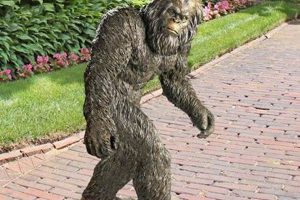
Durable decorative art pieces designed for outdoor display are commonly constructed from synthetic polymers. These objects replicate various forms, ranging from human figures and animals to abstract designs, and are intended for placement within landscaped environments.
The appeal of these durable outdoor ornaments lies in their weather resistance, relative affordability, and ease of replication. Their composition allows for intricate detailing and a variety of finishes, offering a practical alternative to traditional materials such as stone or bronze. Historically, the use of such materials broadened access to decorative garden features.
The subsequent sections will delve into the manufacturing processes, available styles, maintenance considerations, and the potential impact these features can have on garden aesthetics. Considerations regarding environmental impact and responsible disposal will also be addressed.
Resin Statues
Optimizing the lifespan and aesthetic appeal of garden adornments manufactured from synthetic resins requires adherence to specific maintenance and placement strategies. The following guidelines offer practical advice for ensuring the enduring beauty of these decorative elements.
Tip 1: Strategic Placement: Avoid direct and prolonged exposure to intense sunlight. Ultraviolet radiation can degrade the polymer structure, leading to discoloration and structural weakening. Partial shade or placement amidst foliage can mitigate this effect.
Tip 2: Regular Cleaning Protocol: Implement a routine cleaning schedule using mild soap and water. Avoid abrasive cleaners or high-pressure washing, which can scratch the surface and compromise the finish. Soft cloths or brushes are recommended.
Tip 3: Winter Protection Measures: In regions experiencing freezing temperatures, consider moving smaller statuary indoors or covering larger pieces with protective tarpaulins. This prevents water from accumulating within crevices, which can expand upon freezing and cause cracking.
Tip 4: Addressing Minor Damage: Small chips or cracks can be repaired using epoxy resin specifically designed for polymer materials. Ensure the repair compound is color-matched to the original finish for a seamless restoration.
Tip 5: Securing Against Displacement: For areas prone to high winds, anchor the statuary to the ground using stakes or adhesive pads designed for outdoor use. This prevents accidental toppling and potential damage.
Tip 6: Seasonal Inspection: Conduct a thorough inspection at the beginning of each planting season to identify any signs of wear, damage, or discoloration. Early detection allows for timely intervention and prevents further deterioration.
By implementing these maintenance practices, the aesthetic value and longevity of these garden decorations can be significantly extended. This proactive approach ensures sustained visual appeal and minimizes the need for frequent replacements.
The subsequent sections will explore the environmental considerations associated with their production and disposal, as well as strategies for selecting pieces that complement existing garden designs.
1. Material Durability

The intrinsic longevity of an adornment fabricated from synthetic resin dictates its suitability for prolonged outdoor exposure. A statue placed within a garden setting undergoes continuous environmental stresses, including ultraviolet radiation, temperature fluctuations, and moisture exposure. The inherent resistance of the resin material to these factors directly determines the items lifespan and aesthetic integrity. For instance, a statue manufactured from a low-grade resin prone to UV degradation will exhibit fading, cracking, and structural weakening within a relatively short period, necessitating replacement. Conversely, a statue crafted from a high-quality, UV-stabilized resin will maintain its color, form, and structural integrity for an extended period, representing a more cost-effective and sustainable option.
The correlation between material durability and long-term value is particularly evident in areas with harsh climates. Consider the impact of freeze-thaw cycles on porous materials. Water absorbed into the material expands upon freezing, creating internal stresses that lead to cracking and disintegration. Resin formulations designed to minimize water absorption mitigate this risk, ensuring the statues resilience in cold weather conditions. Furthermore, the materials resistance to chemical degradation from acid rain or fertilizers used in the garden is a critical factor in maintaining its surface finish and structural integrity.
In conclusion, the careful selection of a resin material engineered for superior outdoor performance is paramount. The durability of the synthetic resin directly impacts the overall value and longevity of the statue. Prioritizing durable materials is essential for achieving a cost-effective and aesthetically pleasing addition to any landscaped environment. This decision influences not only the immediate visual impact but also the long-term sustainability and environmental footprint of the garden adornment.
2. Design Versatility
The adaptability in form and style afforded by synthetic resin materials is a primary determinant of their widespread application in garden ornamentation. Design versatility allows for a greater range of aesthetic choices and facilitates the seamless integration of statuary within diverse landscaping schemes.
- Replication of Traditional Materials
Resin formulations can be engineered to mimic the appearance and texture of conventional sculpting materials, such as marble, bronze, or terracotta. This capability allows for the creation of cost-effective reproductions of classical sculptures or the emulation of rustic, weathered patinas, broadening accessibility to a range of artistic styles without incurring the expense associated with authentic materials.
- Intricate Detailing and Complex Forms
The molding process inherent in resin production enables the creation of intricate details and complex three-dimensional forms that may be challenging or cost-prohibitive to achieve with traditional carving or casting methods. This capability facilitates the production of highly detailed figures, ornate decorative elements, and abstract sculptures, expanding the artistic possibilities for garden design.
- Customization and Personalization
Resin materials lend themselves to customization, allowing for the incorporation of specific design elements, finishes, or color palettes tailored to individual preferences or the existing aesthetic of a garden space. This adaptability enables the creation of unique, personalized garden features that reflect the owner’s style and enhance the overall harmony of the landscape.
- Adaptability to Diverse Styles
Resin statues can be manufactured to complement a wide spectrum of garden design styles, ranging from formal English gardens and Japanese Zen gardens to contemporary minimalist landscapes. Whether the desired aesthetic is classical elegance, rustic charm, or modern abstraction, resin materials provide the flexibility to create statuary that seamlessly integrates with the intended design theme.
The capacity to replicate traditional aesthetics, facilitate intricate detailing, accommodate customization, and adapt to diverse styles underscores the significance of design versatility in the realm of synthetic resin statuary. This flexibility empowers garden designers and homeowners alike to create visually compelling and harmonious outdoor spaces that reflect individual tastes and enhance the overall aesthetic experience. The breadth of design possibilities offered by resin ensures its continued relevance as a material of choice for garden ornamentation.
3. Weather Resistance
The longevity and aesthetic integrity of any outdoor adornment, particularly those fabricated from synthetic resin and intended for placement within a garden environment, are directly contingent upon its ability to withstand prevailing meteorological conditions. Weather resistance, in this context, encompasses a complex interplay of factors, including resistance to ultraviolet radiation, temperature fluctuations, moisture intrusion, and physical impact from wind or precipitation. Statuary exposed to prolonged sunlight will exhibit fading and discoloration if the resin formulation lacks adequate UV stabilizers. Repeated cycles of freezing and thawing can induce cracking and structural damage as entrapped moisture expands. Furthermore, wind-driven debris or hailstones can cause surface abrasions and impact fractures, compromising the overall appearance and structural soundness of the artwork. The selection of resin materials engineered to withstand these specific environmental stressors is, therefore, paramount in ensuring the enduring beauty and functionality of outdoor garden embellishments.
Resin statues installed in coastal regions, for instance, face additional challenges related to salt-laden air. The corrosive nature of salt can accelerate the degradation of certain resin formulations, leading to surface pitting and weakening of the material. Similarly, in arid climates characterized by extreme temperature variations, the expansion and contraction of the resin can induce stress fractures over time. Consequently, manufacturers often employ specialized additives and coatings to enhance the weather resistance of their products, tailored to the specific environmental conditions of the intended application. These protective measures may include the incorporation of UV absorbers, moisture barriers, and impact-resistant polymers to mitigate the detrimental effects of prolonged exposure to the elements. The effectiveness of these measures directly translates into the lifespan and visual appeal of the statuary, making weather resistance a critical factor in the overall value proposition.
In summary, the successful integration of resin statuary within a garden setting hinges upon a thorough understanding of the local climate and the inherent weather resistance properties of the chosen materials. Neglecting this critical consideration can result in premature degradation, necessitating costly repairs or replacements. By prioritizing weather resistance, consumers can ensure that their outdoor investments retain their aesthetic appeal and structural integrity for years to come. Future advancements in resin technology are anticipated to further enhance weather resistance capabilities, expanding the range of viable applications and reducing the environmental impact associated with frequent replacements.
4. Cost Effectiveness

The economic feasibility of integrating synthetic resin statuary into garden landscapes is a pivotal consideration for consumers. The cost-effectiveness of these items is not solely defined by the initial purchase price but encompasses a broader spectrum of factors influencing long-term value and overall budgetary impact.
- Initial Acquisition Cost
Resin statues generally present a lower initial acquisition cost compared to counterparts crafted from traditional materials such as bronze, marble, or carved stone. This affordability renders decorative garden features accessible to a wider range of consumers. The reduced material and fabrication expenses associated with resin contribute directly to this advantage.
- Reduced Maintenance Expenses
The maintenance requirements of resin statuary are typically less demanding and less costly than those of statues constructed from other materials. Resin exhibits inherent resistance to weathering, minimizing the need for specialized cleaning agents or protective coatings. Furthermore, the material’s resistance to cracking and chipping reduces the likelihood of costly repairs.
- Extended Lifespan and Durability
While the initial cost is lower, a critical aspect of cost-effectiveness lies in the statue’s lifespan. High-quality resin formulations offer substantial durability, resisting degradation from UV radiation, moisture, and temperature fluctuations. This extended lifespan translates to a reduced frequency of replacement, contributing to long-term cost savings. The investment in a durable resin statue minimizes the need for recurring expenditures on replacements.
- Transportation and Installation Savings
Resin statues often possess a lower weight compared to those crafted from stone or metal. This lighter weight facilitates easier transportation and installation, resulting in potential savings on shipping costs and professional installation fees. The ease of handling resin pieces also reduces the risk of damage during transport and placement, further minimizing potential expenses.
The cumulative effect of lower initial costs, reduced maintenance expenses, extended lifespan, and savings on transportation and installation collectively establishes the cost-effectiveness of synthetic resin statuary as a compelling economic advantage for garden enthusiasts. The careful consideration of these factors enables informed purchasing decisions that maximize long-term value and minimize overall expenditure on decorative garden features. The economic benefits, coupled with aesthetic considerations, contribute to the widespread adoption of resin statuary in diverse landscaping projects.
5. Aesthetic Enhancement

The integration of synthetic resin statuary within a landscaped environment directly influences its aesthetic appeal. Such additions, when appropriately selected and positioned, serve as focal points, augment existing design elements, and contribute to the overall visual harmony of the space. The specific nature of this enhancement is contingent upon several factors, including the style of the statue, its scale relative to the surrounding landscape, and its placement in relation to other features such as plantings, pathways, and water elements. A well-chosen statue can transform a mundane garden into a visually engaging and aesthetically pleasing outdoor space.
The cause-and-effect relationship is evident: the presence of a strategically placed resin statue elicits a specific visual response, drawing the eye and establishing a sense of intentional design. For instance, a classical-style statue positioned at the end of a formal garden path can create a sense of grandeur and sophistication. Conversely, a whimsical, abstract piece nestled amongst foliage can introduce an element of surprise and visual interest. The importance of aesthetic enhancement as a component of this practice lies in its ability to elevate the overall experience of the garden, providing visual pleasure and fostering a connection with nature. Real-life examples abound in public gardens and private residences, where carefully selected statuary enhances the beauty and tranquility of the surrounding landscape. The understanding of this connection allows for the purposeful creation of visually captivating outdoor spaces.
The practical significance of this understanding extends to the realm of landscape design and property value. A well-designed garden with thoughtfully integrated statuary can increase the perceived value of a property and enhance its marketability. Moreover, the strategic use of visual elements can influence the way in which individuals interact with and experience the garden space, promoting relaxation, contemplation, and a sense of well-being. While challenges exist in selecting pieces that harmonize with the existing environment and avoiding the pitfall of excessive ornamentation, the potential for aesthetic enhancement remains a powerful driver in the utilization of resin statuary within garden design. This aligns with the broader theme of creating aesthetically pleasing and functional outdoor spaces that enrich the lives of those who inhabit them.
Frequently Asked Questions
The following section addresses common inquiries and clarifies potential misconceptions regarding synthetic resin statuary intended for outdoor garden applications.
Question 1: What is the expected lifespan of a resin statue placed in a garden setting?
The lifespan of a synthetic resin statue in an outdoor environment is contingent upon several factors, including the quality of the resin, the presence of UV stabilizers, and the severity of the climate. High-quality resin statues can typically last for several years, while lower-quality items may exhibit signs of degradation within a shorter timeframe.
Question 2: Are synthetic resin statues susceptible to damage from freezing temperatures?
Resin statues can be vulnerable to damage from freezing temperatures, particularly if water penetrates internal crevices. The expansion of freezing water can cause cracking and structural weakening. Covering the statues during winter months or storing them indoors can mitigate this risk.
Question 3: How should a resin statue be cleaned to maintain its appearance?
Resin statues should be cleaned regularly using mild soap and water. A soft cloth or brush is recommended to avoid scratching the surface. Abrasive cleaners and high-pressure washing should be avoided, as they can damage the finish.
Question 4: Can the color of a resin statue fade over time when exposed to sunlight?
Prolonged exposure to direct sunlight can cause the color of a resin statue to fade, particularly if the resin formulation lacks adequate UV protection. Placing the statue in a shaded area or applying a UV-resistant sealant can help to preserve its color.
Question 5: Is it possible to repair minor damage to a resin statue?
Minor chips or cracks in a resin statue can often be repaired using epoxy resin specifically designed for polymer materials. Ensure the repair compound is color-matched to the original finish for a seamless restoration. Professional repair services may be required for more extensive damage.
Question 6: Are synthetic resin statues environmentally friendly?
The environmental impact of synthetic resin statues is a subject of ongoing debate. While resin is a synthetic material derived from petroleum, manufacturers are increasingly exploring the use of recycled or bio-based resin formulations. Proper disposal methods are essential to minimize environmental harm.
In summary, the longevity and aesthetic appeal of resin statuary is significantly influenced by material quality, environmental conditions, and proactive maintenance. Careful consideration of these factors is crucial for ensuring a satisfactory and enduring garden embellishment.
The subsequent sections will delve into the stylistic considerations and placement strategies for optimizing the integration of these decorative elements within diverse garden designs.
Conclusion
The preceding exploration of resin statues garden illuminated various facets of their integration within outdoor spaces. Key aspects included material durability, design versatility, weather resistance, cost-effectiveness, and aesthetic enhancement. Each element contributes to the overall value proposition, influencing both the initial investment and long-term satisfaction derived from these decorative features. Furthermore, the discussion addressed practical considerations such as maintenance protocols, repair strategies, and environmental implications.
The decision to incorporate resin statues garden into a landscape design necessitates a balanced evaluation of the aforementioned factors. Informed selection and conscientious stewardship will ensure the enduring beauty and responsible utilization of these decorative elements. Continued advancements in resin technology and sustainable manufacturing practices hold the potential to further enhance the value and minimize the environmental impact associated with resin statues garden.