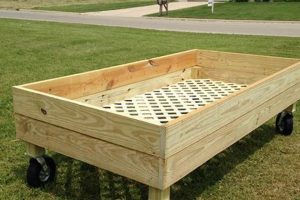
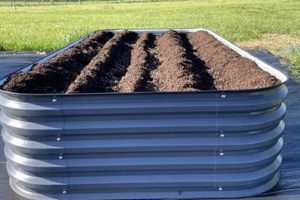
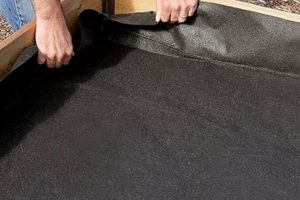
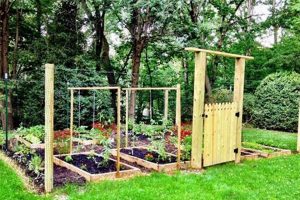
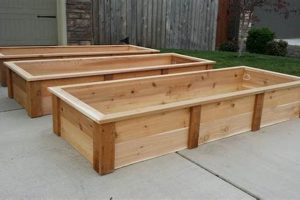
A containment material, frequently composed of polyethylene or similar polymers, is often employed within elevated planting structures to create a barrier. This barrier serves to separate the soil from the frame of the raised bed. For example, a gardener might install a thick sheet of this material in a wooden raised bed to prevent moisture from prematurely decaying the wood.
The implementation of such barriers offers multiple advantages, including extending the lifespan of the raised bed structure by mitigating water damage and preventing soil erosion. Historically, various materials like clay or tar were used for similar purposes; modern polymers offer improved durability and ease of installation. This measure contributes to efficient water management within the garden, conserving resources and potentially reducing the frequency of watering.
Subsequent sections will address the selection criteria for appropriate containment materials, proper installation techniques, and considerations for environmental impact and sustainability. Further discussion will explore alternative barrier options and best practices for maintaining the integrity of the containment over time.
Optimizing Usage of Raised Garden Bed Containment Materials
The following tips detail best practices for selecting and utilizing containment materials in elevated garden beds to maximize longevity and plant health.
Tip 1: Material Selection: Evaluate the thickness and durability. Thicker, UV-resistant polyethylene is preferable for extended outdoor use. Consider liners specifically manufactured for gardening applications, ensuring they are food-grade and free of harmful chemicals.
Tip 2: Precise Measurement: Accurate measurements of the raised bed’s interior dimensions are crucial before cutting the material. Add extra material (approximately 6-12 inches on each side) to facilitate secure fastening and overlap.
Tip 3: Secure Fastening: Secure the liner to the raised bed frame using staples, tacks, or specialized clips designed for this purpose. Ensure fasteners are rust-resistant to prevent corrosion and potential soil contamination.
Tip 4: Drainage Considerations: For optimal drainage, consider incorporating drainage holes. However, exercise caution to prevent soil erosion. Placement should be carefully considered based on soil type and watering practices.
Tip 5: Soil Compatibility: Ensure the chosen material is chemically inert and will not react adversely with the soil or fertilizers used. Research compatibility to avoid phytotoxicity or nutrient imbalances.
Tip 6: Protection from Sharp Objects: Prior to installing the containment material, remove any sharp objects or debris from the interior of the raised bed to prevent punctures and tears. Consider adding a layer of geotextile fabric underneath as added protection.
Tip 7: Minimize Sunlight Exposure: When possible, minimize direct sunlight exposure to the upper edges of the liner. Extended UV exposure can degrade the material over time, reducing its lifespan.
Adhering to these recommendations can significantly improve the performance and extend the lifespan of raised garden beds, promoting healthier plant growth and reducing maintenance requirements.
The following sections will address alternative gardening methods, including container gardening, and sustainable gardening practices to further improve plant health and reduce environmental impact.
1. Containment

Containment, in the context of elevated gardening beds, directly relates to the effectiveness of a barrier material, often polymeric, in retaining soil and moisture within the defined structure. The integrity of this containment directly influences the health of the root system, the efficiency of water usage, and the longevity of the raised bed itself.
- Prevention of Soil Erosion
Effective containment prevents the gradual loss of soil through drainage holes or gaps in the bed’s structure. Soil erosion depletes essential nutrients required for plant growth and can destabilize the raised bed’s foundation. A properly installed liner forms a continuous barrier, minimizing this risk.
- Moisture Retention Enhancement
Containment materials, particularly those with low permeability, aid in retaining moisture within the soil profile. This reduces the frequency of watering and conserves water resources. The type of material and its proper installation ensures minimal water loss through seepage, promoting a more consistent soil moisture level.
- Protection of Bed Structure
The barrier isolates the soil from the physical structure of the raised bed. This isolation mitigates moisture-induced decay in wooden beds and prevents corrosion in metal beds. By preventing direct contact between soil and the frame, the lifespan of the raised bed is significantly extended.
- Weed and Pest Control
Containment helps in limiting the intrusion of weeds and soil-borne pests from the surrounding ground. While not a complete barrier, a liner creates a physical obstacle that can reduce the spread of unwanted plants and organisms into the cultivated area.
These facets of containment underscore the importance of carefully selecting and installing appropriate materials in raised gardens. Poorly chosen or installed materials compromise these benefits, leading to reduced plant health, increased maintenance, and a shorter lifespan for the raised garden itself. The selection of the containment material, therefore, becomes a crucial design element for successful elevated gardening.
2. Durability

The correlation between durability and polymeric barriers used in elevated gardening is critical to the long-term functionality and cost-effectiveness of the gardening structure. The material’s ability to withstand environmental stressors, physical abrasion, and chemical exposure directly dictates its service life and the frequency of replacement. Insufficient durability leads to premature degradation, compromising soil containment and exposing the raised bed structure to moisture and potential decay. For example, thin, low-grade polyethylene will likely tear or puncture easily, especially when exposed to sharp rocks or root systems, leading to soil loss and reduced water retention. Conversely, thicker, reinforced polymers, while initially more expensive, provide a more robust barrier, extending the lifespan of the raised bed and minimizing the need for frequent repairs or replacements.
The practical significance of selecting durable polymeric barriers extends beyond cost savings. Maintaining consistent soil conditions is vital for optimal plant growth, and a compromised barrier can lead to nutrient leaching and uneven moisture distribution, negatively impacting yields and plant health. Furthermore, degradation can release microplastics into the soil, potentially contaminating the growing environment. Therefore, considerations for durability must extend to chemical stability and resistance to degradation by soil microorganisms and ultraviolet radiation. A lack of UV resistance, for example, will cause even a thick polymeric material to become brittle and crack over time, regardless of its initial strength.
In summary, prioritizing durability in the selection of polymeric barriers for raised gardens offers multiple benefits. It ensures long-term structural integrity, supports optimal plant health, minimizes environmental impact from plastic degradation, and reduces the overall lifecycle cost of the gardening system. While initial investment may be higher for more durable materials, the extended service life and reduced maintenance demands make it a worthwhile consideration for any serious gardener or agricultural professional.
3. Food-Grade

The designation “food-grade” for a polymeric barrier used within a raised garden denotes that the material complies with specific safety standards regarding chemical leaching and migration. When employed as a liner within a raised bed intended for cultivating edible plants, it is essential to verify that the plastic material used does not release harmful substances into the soil. These substances, if present, could be absorbed by the plants and subsequently ingested by consumers.
The importance of utilizing food-grade polymeric liners is underscored by the potential for non-food-grade plastics to contain additives such as phthalates, BPA (bisphenol A), or heavy metals. These chemicals, which may be present to enhance flexibility, durability, or color, can leach into the soil over time, especially when exposed to sunlight, moisture, and fluctuating temperatures. An example illustrates this point: Recycled plastics, while seemingly an environmentally friendly option, may not be food-grade and could contain unknown contaminants, posing a risk to the safety of the food crop. Choosing a liner specifically manufactured and certified as food-grade ensures that rigorous testing has been conducted to confirm its suitability for contact with food-growing environments. One real world situation of this effect is in agricultural facilities that have to follow food safety standards.
In summary, the selection of a food-grade plastic liner is a critical consideration for anyone cultivating edible plants in raised gardens. This decision directly impacts the safety of the produce and the health of consumers. The challenge lies in verifying the authenticity and reliability of food-grade certifications, as not all products marketed as such meet the required standards. Therefore, meticulous research and the selection of reputable suppliers are paramount. Ignoring this aspect can have serious implications for food safety and public health.
4. Waterproofing

Waterproofing, in the context of utilizing a containment barrier within elevated gardening beds, refers to the barrier’s ability to prevent the passage of water between the soil and the surrounding environment. This attribute is paramount in preserving the structural integrity of the raised bed and optimizing water management within the garden.
- Prevention of Structural Degradation
Waterproofing safeguards the raised bed structure from moisture damage. Wooden frames, if exposed to constant moisture, are susceptible to rot and decay. Metal frames may corrode. An effective waterproof polymeric liner inhibits water from contacting the frame, thereby extending its lifespan. Example: Untreated wooden beds in wet climates can deteriorate rapidly without waterproofing.
- Optimized Water Retention
A waterproof barrier reduces water loss from the soil, leading to more efficient water utilization and potentially decreasing watering frequency. This is particularly important in arid climates or during periods of drought. Ineffective barriers cause significant water seepage, reducing the water available to the plants. Example: Using a non-waterproof liner would result in water drainage, requiring more frequent irrigation.
- Control of Nutrient Leaching
Waterproofing minimizes the leaching of essential nutrients from the soil. Excess water flow through the soil can carry away valuable nutrients, reducing soil fertility and potentially contaminating surrounding areas. A waterproof barrier helps retain nutrients within the soil profile, promoting healthier plant growth. Example: Lack of proper waterproofing could cause expensive fertilizers to leach from the soil before the plants can use them.
- Maintenance of Soil Moisture Consistency
Waterproofing aids in maintaining consistent soil moisture levels. Fluctuations in soil moisture can stress plants and hinder their growth. A waterproof barrier helps create a more stable soil environment, promoting healthier root development. Example: Inconsistent watering due to lack of waterproofing can lead to root rot or stunted growth in water-sensitive plants.
The preceding discussion illustrates that waterproofing is a critical attribute of polymeric liners used in elevated gardens. Its presence directly influences the structural integrity of the raised bed, the efficiency of water usage, the retention of nutrients, and the consistency of soil moisture levels, all of which are vital for successful plant cultivation.
5. UV-Resistance
Ultraviolet (UV) radiation from sunlight represents a significant degradation factor for polymeric liners used in elevated garden structures. The ability of these liners to withstand prolonged exposure to UV radiation directly impacts their longevity and performance in containing soil and moisture.
- Polymer Breakdown and Embrittlement
UV radiation causes chain scission and crosslinking in many polymers, leading to embrittlement and cracking. This process reduces the material’s tensile strength and flexibility, making it prone to tearing and failure. For example, a polyethylene liner without UV stabilizers will become brittle and crack within a few years under direct sunlight, compromising its containment function.
- Loss of Mechanical Properties
Prolonged UV exposure can significantly degrade the mechanical properties of the liner, such as its tear resistance and puncture resistance. This increases the risk of damage from root penetration, sharp objects in the soil, or physical stress. An unstabilized liner may lose up to 50% of its initial tensile strength within a single growing season in a sunny location.
- Chemical Additive Degradation
Many polymeric liners contain chemical additives, such as plasticizers and stabilizers, to enhance their performance. UV radiation can accelerate the degradation of these additives, reducing their effectiveness and potentially releasing them into the soil. For example, UV exposure can degrade plasticizers, making the liner more rigid and prone to cracking.
- Color Fading and Aesthetic Impact
UV radiation can cause color fading and discoloration in polymeric liners, affecting their aesthetic appearance. While this does not directly impact the functional performance of the liner, it can detract from the overall appearance of the garden. Darker-colored liners tend to absorb more heat, potentially impacting soil temperature and plant growth.
The selection of a UV-resistant polymeric liner is therefore crucial for ensuring the long-term performance and durability of raised garden beds. Liners formulated with UV stabilizers, such as hindered amine light stabilizers (HALS), offer significantly improved resistance to UV degradation, extending their lifespan and reducing the need for frequent replacement. This consideration is particularly important in regions with high levels of solar radiation.
Frequently Asked Questions
The following addresses common inquiries regarding polymeric containment barriers used in raised gardens, providing clarity on key considerations.
Question 1: What is the expected lifespan of a polymeric containment barrier in a raised garden?
The lifespan of such materials is contingent upon several factors, including material composition, thickness, UV exposure, and soil conditions. Higher-quality, UV-stabilized polymers can last for five to ten years, while thinner, non-stabilized options may only last one to two seasons.
Question 2: Can any type of plastic be used as a containment barrier in a raised garden?
No. Only food-grade plastics should be used when cultivating edible plants. Non-food-grade plastics may leach harmful chemicals into the soil, contaminating the produce. Plastics designed for construction or industrial applications are generally unsuitable.
Question 3: How should a polymeric containment barrier be installed in a raised garden?
The barrier should be measured and cut to fit the interior dimensions of the raised bed, allowing for overlap along the top edges. The material should be secured to the frame using staples, tacks, or specialized clips. Ensure the material is taut to prevent sagging and water accumulation.
Question 4: Is drainage necessary when using a polymeric containment barrier?
Drainage is generally recommended, particularly in areas with heavy rainfall or poorly draining soil. Small drainage holes can be strategically placed at the bottom of the liner to prevent waterlogging. However, the placement and size of the holes must be carefully considered to prevent soil erosion.
Question 5: How does UV exposure affect polymeric containment barriers?
Prolonged UV exposure can cause polymer degradation, leading to embrittlement, cracking, and reduced lifespan. UV-stabilized polymers are designed to resist these effects. Consider using a UV-resistant material or shading the edges of the liner to minimize UV exposure.
Question 6: Are there environmentally friendly alternatives to traditional polymeric containment barriers?
Yes, alternatives include natural rubber liners, geotextile fabrics, and even clay. While these options may offer improved environmental profiles, they may also have limitations in terms of durability or waterproofing. Research is essential before selecting an alternative material.
Careful consideration of these factors will ensure the selection and implementation of a suitable containment barrier for raised garden beds, promoting optimal plant health and structural longevity.
The following section will delve into advanced techniques for soil management in elevated gardens, further enhancing plant productivity and sustainability.
Conclusion
The preceding discussion has comprehensively addressed the multifaceted considerations surrounding containment materials in elevated gardening, particularly focusing on polymeric liners. Key aspects such as material composition, durability, food-grade certification, waterproofing capabilities, and resistance to ultraviolet degradation have been examined. The proper selection and implementation of these barriers are critical for maintaining the structural integrity of raised garden beds, optimizing water management, and ensuring the safety of cultivated produce.
As urban gardening and sustainable agricultural practices gain increased prominence, the judicious application of appropriate containment methodologies becomes ever more essential. Continued research and development in the field of eco-friendly and durable materials are warranted to further enhance the sustainability and efficiency of elevated gardening systems. Further examination should focus on bio-degradable alternative and their long-term effectiveness compared to current polymeric options. The responsible use of resources and the safeguarding of environmental health remain paramount considerations in all gardening endeavors.