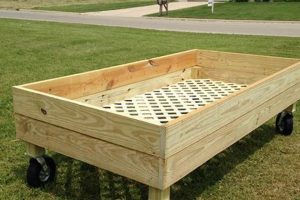
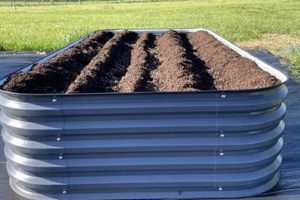
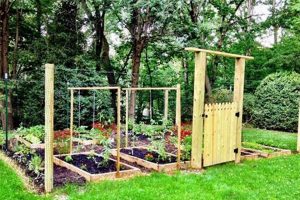
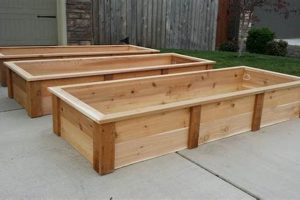
Supporting structures designed to elevate garden beds are commonly employed in horticultural settings. These frameworks provide a stable base upon which to construct and maintain a raised planting area. For example, a metal corner piece affixed to wooden planks can establish a robust raised garden bed.
Elevation of garden beds offers several advantages, including improved drainage, accessibility for individuals with mobility limitations, and protection from certain soilborne pests. Historically, the construction of raised beds has been undertaken using diverse materials, with contemporary designs often incorporating durable and weather-resistant options.
This discussion will examine the considerations involved in selecting appropriate materials, the different structural designs available, and the practical application of these support systems in diverse gardening environments. The focus will be on factors influencing the longevity, stability, and aesthetic integration of these elevated garden solutions.
Selection and Installation Guidance for Elevated Garden Bed Supports
The subsequent recommendations provide practical insights into the selection and proper installation of frameworks designed to elevate garden beds, promoting structural integrity and longevity.
Tip 1: Material Selection. Prioritize durable, weather-resistant materials such as powder-coated steel or pressure-treated lumber. Consideration should be given to the specific environmental conditions of the garden to mitigate corrosion or degradation over time.
Tip 2: Load Capacity Assessment. Accurately estimate the total weight the framework will bear, including soil, plants, and water. Select supports with a safety margin exceeding the calculated load to ensure stability.
Tip 3: Precise Installation. Employ accurate measurements and leveling techniques during installation. Deviation from level can compromise structural integrity and aesthetic appearance.
Tip 4: Secure Fastening. Utilize appropriate fasteners, such as galvanized screws or bolts, to ensure robust connections between the framework components and the bed walls. Regular inspection and tightening are recommended.
Tip 5: Ground Anchoring. For elevated beds exceeding a certain height or located in exposed areas, consider anchoring the framework to the ground to prevent tipping or displacement during adverse weather conditions. This may involve concrete footings or ground stakes.
Tip 6: Drainage Accommodation. Ensure that the design incorporates adequate drainage mechanisms to prevent water accumulation within the bed structure. This can be achieved through the strategic placement of drainage holes or the inclusion of a gravel layer at the bottom of the bed.
Tip 7: Compatibility with Bed Material. Select components compatible with the material used for the bed walls (e.g., wood, composite, metal). Consider the potential for galvanic corrosion when dissimilar metals are in contact.
Proper selection and installation of elevated garden bed supports are crucial for ensuring the long-term functionality, stability, and aesthetic appeal of the garden feature. Adherence to these guidelines will minimize the risk of structural failure and maximize the return on investment.
The following sections will explore specific design considerations and maintenance protocols for elevated garden beds.
1. Material Durability

Material durability is a paramount consideration in the selection of components for supporting elevated garden beds. The environmental conditions to which these structures are exposed necessitate materials capable of withstanding moisture, temperature fluctuations, and potential physical stresses. Failure to prioritize durable materials can result in premature degradation and compromised structural integrity.
- Resistance to Moisture and Corrosion
Garden environments are inherently damp, exposing metal components to the risk of corrosion. Galvanized steel or powder-coated finishes are employed to mitigate this risk, providing a protective barrier against oxidation. Similarly, wood used in these applications must be pressure-treated to resist rot and decay caused by prolonged exposure to moisture. The absence of such protection can lead to structural weakening and eventual failure.
- Impact of Temperature Fluctuations
Materials used for support systems experience cyclical expansion and contraction due to temperature variations. The extent of this thermal expansion and contraction can influence the longevity of fasteners and the overall stability of the structure. Materials with low thermal expansion coefficients, or those specifically designed to accommodate temperature fluctuations, are preferred to prevent stress-induced failures.
- Resistance to Physical Stress and Load-Bearing Capacity
The framework is subjected to static loads from the soil and plants within the raised bed, as well as dynamic loads from wind or other external forces. The material must possess sufficient compressive and tensile strength to withstand these forces without deformation or fracture. The appropriate load-bearing capacity should be calculated based on the anticipated weight of the filled bed, with a safety margin incorporated to account for unforeseen stresses.
- Lifespan and Maintenance Requirements
The selection of durable materials directly impacts the lifespan of the support structure and the associated maintenance requirements. Materials requiring frequent repainting, sealing, or replacement increase the long-term cost of ownership and detract from the practicality of the elevated garden bed. Opting for materials with inherent resistance to degradation minimizes maintenance interventions and extends the functional lifespan of the structure.
In summation, the material composition of the support components plays a pivotal role in the sustained performance and longevity of elevated garden beds. Proper material selection ensures that the structure maintains its integrity, resists environmental degradation, and provides a stable platform for horticultural activities over an extended period.
2. Load-Bearing Capacity

Load-bearing capacity is a critical engineering consideration in the design and implementation of elevated garden bed support systems. These systems, commonly employing metal corner brackets or similar structures, must withstand the combined weight of the soil, plants, water, and the container itself. Insufficient load-bearing capacity can lead to structural failure, potentially causing damage to the garden and posing a safety hazard.
- Material Strength and Yield Point
The inherent strength of the materials used in the supports directly dictates the maximum weight they can bear before deformation or failure. Steel, for instance, exhibits a higher yield point than wood, allowing for a greater load capacity for a given cross-sectional area. Exceeding the material’s yield point results in permanent deformation, compromising the structural integrity of the system. For example, using thin-gauge steel for a large raised bed filled with dense soil will likely result in bending and eventual collapse.
- Design and Geometry of Support Structures
The geometric configuration of the supports significantly influences load distribution and overall stability. Triangular bracing, gussets, and reinforced corners enhance the load-bearing capacity by distributing weight more evenly. For instance, a simple 90-degree angle corner support will be far less stable under load than a corner support with an added diagonal brace. Finite element analysis can be used to optimize the design and geometry of the supports for maximum load-bearing efficiency.
- Fastener Strength and Connection Integrity
The strength of the fasteners used to connect the support components is as crucial as the material strength of the supports themselves. Weak or improperly installed fasteners can become the point of failure, even if the supports are capable of withstanding the load. The type and size of screws, bolts, or welds must be carefully selected to ensure they can handle the shear and tensile forces generated by the weight of the raised bed. For example, using wood screws in a metal support system will inevitably lead to failure due to the screws stripping out under load.
- Soil Density and Moisture Content
The density and moisture content of the soil within the raised bed can significantly impact the total weight exerted on the support structure. Denser soils, such as clay, exert more pressure than lighter soils, such as sandy loam. Furthermore, soil becomes significantly heavier when saturated with water. Accurate estimation of soil density and potential moisture content is crucial for calculating the required load-bearing capacity of the supports. Overlooking these factors can lead to underestimation of the load and subsequent structural failure.
In conclusion, load-bearing capacity is a multifaceted attribute directly tied to the structural integrity of elevated garden bed support systems. The material strength, geometric design, fastener strength, and soil characteristics must be carefully considered to ensure the supports can safely bear the weight of the raised bed. Proper engineering analysis and adherence to established safety standards are essential for preventing structural failure and ensuring the long-term stability of elevated gardens.
3. Installation Stability
Installation stability represents a core performance parameter for frameworks designed to elevate garden beds. The degree to which these support structures maintain their intended position and orientation following installation directly impacts the functionality and longevity of the raised garden bed. Adequate stability mitigates risks associated with tipping, shifting, or collapse, thereby safeguarding both the plants and the surrounding environment.
- Ground Surface Preparation
The underlying ground surface directly affects the stability of the installed supports. Uneven or unstable ground can cause the supports to shift over time, compromising the levelness and structural integrity of the raised bed. Proper ground preparation, including leveling, compaction, and the possible addition of a stable base material such as gravel, is crucial. For instance, placing supports directly on soft soil without adequate preparation will likely result in settling and misalignment, particularly after rainfall or irrigation. The presence of a stable base ensures uniform load distribution and minimizes the potential for movement.
- Secure Fastening Mechanisms
The method of fastening the supports to the raised bed walls is a primary determinant of installation stability. Weak or improperly installed fasteners can lead to separation between the supports and the bed, ultimately compromising the overall structure. Galvanized screws, bolts, or specialized connectors designed for outdoor use are typically employed. The selection of appropriate fasteners should consider the materials used in both the supports and the bed walls to prevent corrosion or galvanic reactions. For example, using standard steel screws with pressure-treated lumber can lead to accelerated corrosion of the fasteners, weakening the connection over time.
- Weight Distribution and Load Management
The manner in which the weight of the soil, plants, and water is distributed across the support system directly influences stability. Uneven loading can create stress points and increase the risk of tipping or collapse. Supports should be positioned and designed to evenly distribute the weight across the entire structure. Large raised beds may require additional internal supports to prevent bowing or bulging of the walls. For instance, a rectangular raised bed with supports only at the corners is more susceptible to bowing under the weight of the soil than one with additional supports along the sides. Careful consideration of weight distribution is essential for maintaining long-term stability.
- Environmental Factors and Anchoring Techniques
Exposure to environmental factors, such as wind and soil erosion, can destabilize raised garden bed supports. High winds can exert significant force on the structure, particularly if the bed is located in an exposed area. Anchoring the supports to the ground, using stakes or concrete footings, can mitigate this risk. In areas prone to soil erosion, measures to protect the soil around the supports, such as mulching or the installation of erosion control barriers, are necessary to prevent undermining of the supports. The selection of appropriate anchoring techniques depends on the soil type, wind exposure, and size of the raised bed.
In summary, achieving reliable installation stability of elevated garden bed support structures necessitates a comprehensive approach that considers ground preparation, fastening mechanisms, weight distribution, and environmental factors. Neglecting any of these aspects can compromise the structural integrity of the raised bed and undermine its long-term functionality. Attention to these details ensures a stable and durable foundation for gardening activities.
4. Corrosion Resistance
Corrosion represents a primary threat to the structural integrity of elevated garden bed support systems. These components, frequently fabricated from metallic materials, are continuously exposed to moisture, soil chemicals, and atmospheric pollutants, all of which accelerate corrosive processes. The selection of materials and protective coatings with adequate corrosion resistance is, therefore, critical to ensuring the longevity and stability of raised garden beds. Failure to address corrosion can lead to structural weakening, eventual failure of the supports, and potential contamination of the surrounding soil with corrosion byproducts. For example, untreated steel brackets, when in contact with moist soil, will rapidly oxidize, forming rust that weakens the metal and compromises its load-bearing capacity.
Various strategies are employed to enhance the corrosion resistance of elevated garden bed support systems. Galvanization, involving the application of a zinc coating to steel, provides a sacrificial barrier that protects the underlying metal from corrosion. Powder coating, an alternative method, involves applying a durable polymer coating that acts as a physical barrier against corrosive agents. The selection of specific corrosion-resistant materials, such as aluminum or stainless steel, eliminates the risk of rust formation altogether, albeit often at a higher initial cost. The choice between these methods depends on factors such as budget constraints, environmental conditions, and desired lifespan of the raised garden bed. Using stainless steel brackets in coastal environments demonstrates the value of prioritizing corrosion resistance where salt spray is prevalent, as galvanized steel may still corrode at a faster rate under these conditions.
In conclusion, prioritizing corrosion resistance in the design and selection of materials for elevated garden bed support systems is essential for ensuring their structural integrity and extending their service life. Implementing appropriate protective measures, such as galvanization, powder coating, or the use of corrosion-resistant alloys, can significantly reduce the risk of failure and minimize maintenance requirements. Addressing corrosion proactively is a key component of responsible garden design and contributes to the sustainable use of resources. However, even with robust protective measures, periodic inspection and maintenance are recommended to identify and address any localized corrosion before it can compromise the overall stability of the structure.
5. Design Aesthetics

The visual characteristics of elevated garden bed support structures influence the overall aesthetic integration of these horticultural elements within a landscape. The selection of appropriate materials, finishes, and forms contributes to the perceived harmony between the raised garden bed and its surrounding environment.
- Material Palette and Finish Compatibility
The choice of materials for the supports and their corresponding finishes dictates their visual compatibility with the broader garden design. Utilizing materials that complement existing hardscape elements, such as stone walls or paved pathways, establishes visual coherence. For example, employing powder-coated steel brackets in a neutral color palette can provide a contemporary aesthetic, while using naturally weathered wood can integrate a more rustic design. The selected finish should not only be visually appealing but also durable, maintaining its appearance over time and resisting weathering effects.
- Form and Structural Detailing
The shape and structural design of the components contribute significantly to the overall aesthetic impact. Simple, minimalist forms often blend seamlessly into diverse garden settings, while more elaborate designs can serve as focal points. The visibility of structural elements, such as fasteners and bracing, can either enhance or detract from the visual appeal. Concealed fasteners and streamlined designs contribute to a cleaner, more refined aesthetic. The incorporation of decorative elements, such as curved supports or ornamental details, can further enhance the visual interest of the raised garden bed.
- Scale and Proportion
The size and proportions of the brackets must be carefully considered in relation to the overall dimensions of the raised bed and the surrounding landscape. Supports that are disproportionately large can overwhelm the visual space, while supports that are too small may appear insignificant or inadequate. Achieving a balanced scale and proportion is essential for creating a visually pleasing and harmonious design. For instance, using slender metal supports for a large, elevated bed can create a sense of lightness and airiness, while using bulky wooden supports for a small bed can create a more grounded and substantial presence.
- Integration with Planting Design
The design of the supports should complement the planting scheme of the raised garden bed. Allowing plants to cascade over the edges of the bed can soften the visual impact of the supports and create a more naturalistic appearance. The color and texture of the plants can be chosen to harmonize with the materials and finishes of the supports. For example, using climbing plants to cover the supports can create a verdant backdrop for flowering plants, while selecting plants with contrasting foliage can create visual interest. The integration of the supports with the planting design enhances the overall aesthetic cohesion of the raised garden bed.
These facets collectively underscore the importance of considering the visual characteristics of the support structure in the context of the broader garden design. A thoughtful approach to material selection, form, scale, and planting integration enhances the aesthetic appeal of these elevated planting areas, allowing them to blend seamlessly into their surroundings or to serve as focal points within the landscape.
Frequently Asked Questions
This section addresses common inquiries regarding the selection, installation, and maintenance of structural components designed to elevate garden beds.
Question 1: What factors determine the appropriate load-bearing capacity for components supporting elevated garden beds?
The load-bearing capacity should be calculated based on the saturated weight of the soil, the mature weight of the plants, and the weight of the bed container. A safety factor exceeding 25% is recommended to accommodate unforeseen loads, such as snow accumulation or temporary external forces.
Question 2: How does the choice of material impact the long-term structural integrity of these support systems?
The material’s resistance to corrosion, decay, and physical stress directly affects the lifespan of the supports. Pressure-treated lumber, galvanized steel, or powder-coated metal are preferred due to their inherent durability in outdoor environments. Non-treated materials are prone to degradation and potential structural failure.
Question 3: What measures should be taken to ensure installation stability, particularly on uneven terrain?
Proper ground preparation, including leveling and compaction, is essential. The utilization of adjustable support feet or shims can compensate for minor surface irregularities. Anchoring the support structure to the ground with stakes or concrete footings is recommended for enhanced stability on sloping or unstable terrain.
Question 4: How can galvanic corrosion be prevented when using dissimilar metals in these systems?
Galvanic corrosion occurs when dissimilar metals are in contact in the presence of an electrolyte (e.g., moisture). Using compatible metals or employing insulating barriers, such as plastic washers, between dissimilar metals can mitigate this risk. Regular inspection and cleaning are also recommended.
Question 5: What are the recommended maintenance protocols for preserving the structural integrity of these systems?
Periodic inspection for signs of corrosion, decay, or structural damage is crucial. Fasteners should be tightened regularly to prevent loosening. Protective coatings, such as paint or sealant, should be reapplied as needed to maintain their protective properties. Remove any debris accumulating around the base of the structure.
Question 6: Are there specific design considerations for areas prone to high winds or seismic activity?
In areas susceptible to high winds, the structure should be anchored securely to the ground to resist overturning. The use of windbreaks or strategically placed landscaping can also reduce wind forces. In seismically active regions, the design should incorporate flexible connections to allow for movement without causing structural failure.
The preceding questions and answers provide a foundation for understanding the crucial aspects of elevated garden bed support systems. Adherence to these guidelines will contribute to the longevity, stability, and safety of these garden features.
The following section will provide a comparative analysis of different support system types and their suitability for various gardening applications.
Conclusion
The preceding examination has delineated the critical factors influencing the selection, installation, and maintenance of raised garden brackets. The analysis has highlighted the importance of material durability, load-bearing capacity, installation stability, corrosion resistance, and design aesthetics in ensuring the long-term functionality and visual integration of these support systems within diverse horticultural settings.
Recognizing the multifaceted nature of structural requirements for elevated garden beds, prudent consideration must be given to site-specific environmental conditions and anticipated loading parameters. Continued adherence to established best practices in material selection and installation techniques will promote the longevity and safety of raised garden structures, thereby enhancing the sustainability and productivity of gardening endeavors.