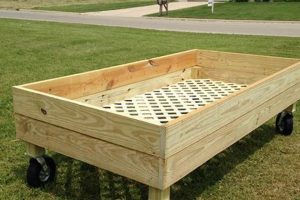
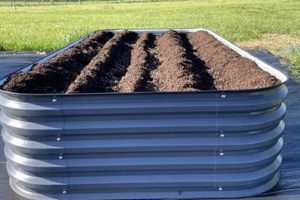
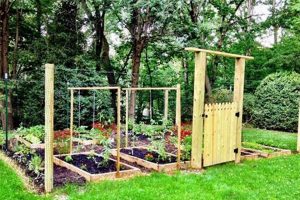
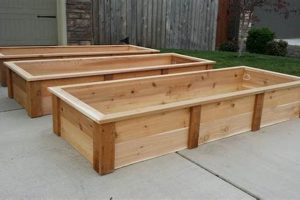
A method of irrigation designed for elevated planting structures, it delivers water efficiently and directly to the root zone of plants. These systems typically consist of a network of tubing and sprinkler heads, strategically positioned within the confines of the bed to ensure uniform water distribution. For instance, small, adjustable spray nozzles can be employed to cater to diverse plant hydration needs across the surface area.
The application of targeted irrigation offers significant advantages, including water conservation, reduced weed growth, and minimized risk of foliar diseases. By delivering water precisely where it is needed, resources are used optimally, lessening overall water consumption. Furthermore, by keeping foliage drier, the likelihood of fungal infections and other moisture-related ailments diminishes. Historically, these methods have evolved from rudimentary manual watering techniques to sophisticated, automated solutions.
Understanding the components of effective watering solutions and installation techniques is crucial for optimizing the growth and health of plants within these structures. The subsequent sections will delve into specific considerations for design, installation, and maintenance of such a system.
Essential Considerations for Automated Elevated Garden Watering
Optimizing watering practices in elevated garden structures is essential for plant health and resource conservation. Employing specific strategies ensures efficient water delivery and minimizes potential issues.
Tip 1: Water Pressure Regulation. Implement a pressure regulator to maintain consistent water flow, preventing damage to the irrigation system and ensuring even distribution across all sprinkler heads. Excess water pressure can cause leaks or sprinkler malfunction, while insufficient pressure results in inadequate coverage.
Tip 2: Nozzle Selection Based on Plant Needs. Choose appropriate sprinkler heads based on the specific water requirements of the plants. Drip emitters are suitable for plants needing slow, consistent watering, while micro-sprayers are appropriate for broader coverage. Consider adjustable nozzles to control the spray pattern and water volume.
Tip 3: Proper Placement of Sprinkler Heads. Strategically position sprinkler heads to maximize coverage and minimize overspray onto surrounding areas. Overlap spray patterns slightly to ensure uniform watering and prevent dry spots. Consider the mature size of plants when determining placement.
Tip 4: Use of a Timer or Controller. Install a timer or controller to automate watering schedules. This ensures consistent irrigation even in the absence of manual intervention, preventing under-watering or over-watering. Program the timer based on plant water needs, soil type, and weather conditions.
Tip 5: Filtration. Incorporate a filter into the system to prevent clogging of sprinkler heads. This is particularly important when using well water or water sources with high mineral content. Regularly inspect and clean the filter to maintain optimal system performance.
Tip 6: Consider Wind Conditions. Account for prevailing wind conditions when designing and adjusting the system. Wind can distort spray patterns, leading to uneven watering. Adjust sprinkler heads or implement windbreaks to compensate for wind effects.
Adherence to these considerations maximizes the effectiveness of watering solutions for elevated garden structures. Consistent and appropriate application of these techniques contributes to healthier plants and more efficient resource utilization.
The subsequent section will provide a detailed guide to the design and installation process.
1. Water Pressure Regulation

Water pressure regulation is a critical factor in the operational effectiveness and longevity of elevated garden irrigation. Excessive pressure can cause components to fail, leading to leaks, uneven water distribution, and premature system degradation. Conversely, insufficient pressure results in inadequate coverage, leading to dry spots and potentially stunted plant growth. For instance, a system designed for 30 PSI but receiving 60 PSI from the municipal water supply will experience accelerated wear on fittings and may result in sprinkler heads spraying excessively, wasting water and potentially damaging delicate plants.
The integration of a pressure regulator ensures consistent and appropriate water delivery, regardless of fluctuations in the source pressure. This is particularly relevant in areas with inconsistent water supplies or where multiple households share a single supply line. Proper regulation extends the lifespan of the watering system, reduces maintenance requirements, and optimizes water usage, contributing to both economic and environmental benefits. The absence of pressure regulation frequently results in increased water bills, the need for frequent repairs, and suboptimal plant health, negating the intended advantages of the system.
In summary, maintaining proper water pressure through regulation is not merely an ancillary consideration, but a fundamental prerequisite for achieving the intended benefits of efficient irrigation within elevated gardens. Failure to address this aspect can lead to a cascade of negative consequences, diminishing the overall effectiveness and sustainability of the gardening endeavor.
2. Nozzle Selection

The selection of appropriate nozzles is a crucial determinant of the efficiency and effectiveness of a watering system for elevated gardens. The correct choice significantly impacts water distribution, plant health, and overall resource utilization.
- Spray Pattern and Coverage
Different nozzle types offer varying spray patterns (e.g., full circle, half circle, quarter circle) and coverage areas. Selecting a nozzle that matches the shape and size of the raised bed ensures uniform water distribution, preventing dry spots or over-watering. For instance, a rectangular bed may benefit from adjustable pattern nozzles that can be configured to match its dimensions, while a circular bed might use a full-circle nozzle.
- Water Flow Rate and Precipitation Rate
Nozzles are characterized by their flow rate (gallons per minute or GPM) and precipitation rate (inches per hour). Matching these parameters to the specific water requirements of the plants is critical. High-water-demanding plants may require nozzles with higher flow rates, whereas drought-tolerant species may thrive with lower flow rates. Furthermore, the precipitation rate should be adjusted to avoid runoff or soil erosion in the raised bed.
- Nozzle Type and Application
Various nozzle types, such as spray nozzles, rotary nozzles, and bubblers, cater to different irrigation needs. Spray nozzles provide a fine mist, suitable for delicate seedlings or plants with shallow root systems. Rotary nozzles offer larger droplets and wider coverage, ideal for established plants. Bubblers deliver water directly to the base of the plant, conserving water and minimizing foliar diseases. The choice depends on the plant species and desired irrigation strategy.
- Adjustability and Customization
Adjustable nozzles offer the flexibility to fine-tune the spray pattern and flow rate, allowing for customization based on changing environmental conditions or plant growth. This is particularly useful in raised beds with varying plant types or microclimates. For example, an adjustable nozzle can be set to a lower flow rate during cooler months or focused on specific areas that receive more sunlight.
These facets of nozzle selection underscore the critical role it plays in optimizing the performance of watering solutions in elevated gardens. By carefully considering spray patterns, flow rates, nozzle types, and adjustability, users can tailor the irrigation system to meet the specific needs of their plants, maximizing water efficiency and promoting healthy growth within the confined space of the raised bed.
3. Head Placement

Strategic placement of sprinkler heads is paramount to maximizing the efficiency and effectiveness of watering systems within elevated garden structures. Correct positioning directly influences water distribution, minimizes waste, and supports optimal plant health. Inadequate placement can lead to uneven watering, promoting disease and hindering growth.
- Coverage Uniformity
The primary objective of head placement is to achieve uniform water distribution across the entire growing area. This requires overlapping spray patterns to compensate for variations in pressure and wind conditions. Inadequate overlap results in dry spots, while excessive overlap leads to water wastage and potential fungal issues. For example, a square elevated bed might require four corner-mounted sprinkler heads with quarter-circle spray patterns that slightly overlap to ensure even coverage.
- Plant-Specific Needs
Different plant species have varying water requirements. Head placement should account for these needs, ensuring that water is delivered precisely where it is needed most. Plants with higher water demands should be positioned closer to sprinkler heads or served by nozzles with higher flow rates. Conversely, drought-tolerant plants can be placed further away or receive water from lower-flow nozzles. Grouping plants with similar water needs simplifies head placement and optimizes water use.
- Obstruction Mitigation
Physical obstructions within the elevated garden, such as trellises or mature plants, can interfere with spray patterns. Head placement must consider these obstructions to ensure that water reaches all areas of the bed. This may involve using riser extensions to elevate sprinkler heads above obstructions or strategically positioning heads to avoid spray interference. Regular pruning of plants can also help maintain unobstructed spray patterns.
- Minimizing Overspray
Overspray onto non-growing areas, such as walkways or building surfaces, is a common source of water wastage. Head placement should be carefully planned to minimize overspray while still achieving adequate coverage within the bed. This may involve using adjustable nozzles that can be directed precisely or installing physical barriers to contain the spray pattern. Thoughtful planning can significantly reduce water consumption and prevent unwanted wetting of surrounding areas.
In conclusion, the effective integration of head placement within a watering system for elevated gardens necessitates a comprehensive understanding of coverage uniformity, plant-specific needs, obstruction mitigation, and overspray minimization. By meticulously addressing these considerations, users can optimize water usage, promote healthy plant growth, and maximize the overall efficiency and sustainability of their elevated gardening endeavors. It is not just about placing sprinklers; it’s about engineering a targeted watering solution.
4. Timer Automation

Timer automation serves as a pivotal component within the sphere of elevated garden irrigation, directly influencing water conservation and plant health. The integration of automated timers into watering systems allows for precise control over irrigation schedules, fostering consistent moisture levels conducive to optimal plant growth. The absence of automated scheduling often results in inconsistent watering practices, leading to either waterlogging or drought stress, both of which negatively impact plant vitality. For example, a programmable timer can be set to deliver water in the early morning hours, minimizing evaporative losses associated with daytime watering and promoting efficient water absorption by plant roots.
The practical application of timer automation extends beyond mere convenience; it provides a means to tailor irrigation to the specific needs of various plant species within the elevated garden. Different plants exhibit varying water requirements based on factors such as species, growth stage, and environmental conditions. An automated system allows for the creation of customized watering schedules that cater to these diverse needs, promoting healthy growth across the entire elevated garden ecosystem. Furthermore, automated timers often include features such as rain sensors or soil moisture sensors, which dynamically adjust irrigation schedules based on real-time environmental conditions, preventing overwatering during periods of rainfall or high soil moisture content. Real-world applications exemplify this benefit, in that greenhouses frequently employ timers to balance environmental variables.
In conclusion, timer automation is an essential element in creating efficient and sustainable watering systems for elevated gardens. It helps to deliver consistent results and conserves water. By incorporating automated timers and appropriate sensor technologies, users can optimize water use, promote healthy plant growth, and reduce the labor and attention needed to maintain thriving elevated gardens. In short, the implementation of timer automation offers a strategic advantage in fostering productive elevated garden environments.
5. Filtration Needs

The effective operation and longevity of a watering system for elevated gardens are directly contingent upon the implementation of adequate filtration measures. Particulates present in the water source, such as sediment, algae, and mineral deposits, represent a significant threat to the system’s functionality. These contaminants accumulate within the narrow passages of sprinkler heads and drip emitters, leading to clogs that impede water flow and compromise the uniformity of water distribution. For instance, well water, often utilized for irrigation, frequently contains higher concentrations of sediment and dissolved minerals compared to municipal water supplies, thus necessitating a robust filtration system. The absence of effective filtration results in diminished irrigation efficiency, requiring more frequent maintenance and replacement of components, thereby increasing operational costs and diminishing the overall effectiveness of the garden.
Practical applications of filtration range from simple inline filters to more sophisticated multi-stage filtration systems. An inline filter, positioned between the water source and the watering system, captures larger debris before it reaches the sprinkler heads. In situations involving heavily contaminated water, a multi-stage system incorporating sediment filters, carbon filters, and potentially even UV sterilization may be warranted. Regular maintenance, including periodic cleaning or replacement of filter cartridges, is essential to ensure the continued effectiveness of the filtration system. Failure to maintain the filter leads to a gradual reduction in water flow and increased clogging of the sprinkler heads, negating the benefits of the watering system. A properly maintained filtration system ensures consistent water flow, minimizes maintenance requirements, and extends the lifespan of the watering system, thereby optimizing the efficiency and effectiveness of elevated gardening efforts.
In summation, the integration of appropriate filtration mechanisms represents a non-negotiable requirement for achieving the desired performance and sustainability of a watering solution. Overlooking this critical aspect can lead to a cascade of negative consequences, including compromised plant health, increased water wastage, and escalated maintenance costs. The proactive implementation of a well-designed and diligently maintained filtration system constitutes a fundamental best practice in the management of watering solutions within elevated garden environments.
Frequently Asked Questions About Elevated Garden Watering Solutions
This section addresses common inquiries regarding watering solutions specifically designed for elevated garden structures, providing clarity on essential aspects and dispelling potential misconceptions.
Question 1: What are the primary benefits of employing a watering system in elevated gardens?
A watering system delivers water directly to plant roots, minimizing water wastage through evaporation and runoff. It also reduces the incidence of foliar diseases by keeping plant leaves dry, while simultaneously curbing weed growth by delivering water only to the intended plants.
Question 2: How does one determine the appropriate type of sprinkler head for a given elevated garden?
The selection hinges on factors such as bed size, plant type, and water pressure. Drip emitters are suitable for slow, targeted watering, while micro-sprayers offer broader coverage. Adjustable nozzles provide versatility for varying plant needs and irregular bed shapes.
Question 3: Why is water pressure regulation crucial for watering solutions in elevated structures?
Consistent water pressure prevents damage to the watering system components, ensuring uniform water distribution. Excessive pressure leads to leaks and uneven spraying, while insufficient pressure results in inadequate coverage and dry spots.
Question 4: How often should the watering schedule be adjusted for an automated system?
Watering schedules require adjustment based on environmental conditions, such as rainfall and temperature, and plant growth stages. Regular monitoring of soil moisture levels and plant health indicators guides appropriate modifications to the schedule.
Question 5: What measures should be taken to prevent clogging of sprinkler heads in elevated garden watering systems?
Implementing a filtration system is essential to remove sediment and debris from the water source. Regular cleaning or replacement of filter cartridges ensures the sustained performance of the sprinkler heads and the overall system.
Question 6: How does one ensure uniform water distribution across the entirety of an elevated garden bed?
Strategic placement of sprinkler heads, with overlapping spray patterns, is crucial for achieving even coverage. Consider any obstructions within the bed and adjust head placement accordingly to avoid dry spots or overspray.
Properly designed and maintained watering solutions yield numerous benefits, including reduced water consumption, enhanced plant health, and minimized labor requirements.
The succeeding section provides guidance on troubleshooting common issues encountered with such a system.
Conclusion
The preceding analysis has explored the multifaceted considerations surrounding the implementation and maintenance of a raised garden bed sprinkler system. Key aspects, including water pressure regulation, nozzle selection, strategic head placement, timer automation, and the crucial role of filtration, have been discussed at length. A comprehensive understanding of these elements is paramount to achieving optimal irrigation efficiency and maximizing plant health within elevated gardening environments.
Ultimately, the responsible and informed application of a raised garden bed sprinkler system represents a commitment to resource conservation, sustainable gardening practices, and the cultivation of thriving plant life. Continued vigilance in monitoring system performance and adapting irrigation strategies to evolving environmental conditions will ensure the long-term success of elevated gardening endeavors.