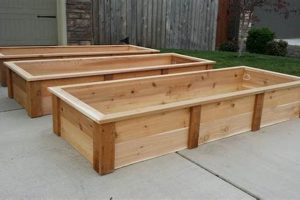
Structures elevating the planting surface above the existing ground level, situated on an inclined plane, present unique horticultural and engineering considerations. This method of gardening modifies the landscape to create usable growing space where the terrain is uneven or possesses drainage challenges.
Implementing this gardening technique enhances accessibility, improves soil control, and mitigates erosion on inclines. Historically, terraced agriculture serves as a large-scale example of similar principles, optimizing land use and water management on hillsides for crop production.
The following discussion will explore specific construction techniques, suitable plant selections, and strategies for irrigation and stabilization, all vital for successful cultivation in an elevated garden environment on sloping land.
Construction & Cultivation Guidance
Effective establishment demands careful planning and execution. Adherence to the following guidelines maximizes yield and longevity.
Tip 1: Site Assessment is Paramount. Evaluate the degree of the incline, sun exposure duration, and existing soil composition before commencing construction. This informs material selection and stabilization methods.
Tip 2: Terracing for Stability. On steep inclines, consider a terraced design. This breaks the slope into manageable levels, reducing erosion potential and simplifying construction.
Tip 3: Material Selection Impacts Longevity. Opt for durable, weather-resistant materials such as treated lumber, concrete blocks, or naturally rot-resistant woods like cedar or redwood. Consider the aesthetic impact as well.
Tip 4: Drainage Management is Critical. Incorporate drainage features such as gravel layers or weep holes to prevent waterlogging, which can damage plant roots and destabilize the structure.
Tip 5: Soil Amendment for Optimal Growth. Amend native soil with compost, peat moss, or other organic matter to improve drainage, aeration, and nutrient content. Perform a soil test to determine specific needs.
Tip 6: Plant Selection Based on Inclination. Select plants with extensive root systems to aid in soil stabilization. Consider drought-tolerant species if water access is limited due to the location.
Tip 7: Irrigation System Design. Implement a drip irrigation system for efficient water delivery, minimizing water waste and preventing soil erosion from excessive surface runoff.
Careful consideration of these points will yield a functional and aesthetically pleasing feature, maximizing the productive potential of previously unusable terrain.
The subsequent sections will address plant selection strategies and ongoing maintenance procedures crucial for sustained success.
1. Erosion Control

Erosion control is paramount to the success and longevity of elevated gardening structures built on sloping ground. The force of gravity, combined with rainfall and runoff, accelerates soil displacement on inclines, potentially undermining the structure’s foundation and depleting the planting medium. Effective erosion control strategies are therefore integral to maintaining the stability and productivity of the garden.
- Terracing and Retaining Walls
Terracing involves creating a series of level platforms along the slope, effectively reducing the incline’s overall steepness. Retaining walls, constructed from materials such as stone, concrete, or treated lumber, support the soil behind them, preventing downslope movement. These structural interventions physically impede erosion by minimizing the direct impact of water flow and gravity on the soil.
- Vegetative Cover and Root Systems
Planting ground cover and selecting plants with extensive root systems provide natural erosion control. The foliage intercepts rainfall, reducing its erosive force, while the roots bind the soil particles together, increasing their resistance to displacement. Utilizing a diverse mix of plants with varying root depths enhances this effect.
- Surface Mulching and Organic Matter Incorporation
Applying a layer of mulch, such as wood chips, straw, or shredded bark, to the soil surface protects it from direct rainfall impact and reduces evaporation, maintaining soil moisture. Incorporating organic matter, such as compost or well-rotted manure, improves soil structure, increasing its ability to absorb water and resist erosion.
- Drainage Management and Water Diversion
Implementing effective drainage systems, such as French drains or swales, redirects excess water away from the garden structure. Diversion techniques, such as contouring the land to create shallow channels, further minimize surface runoff, preventing the saturation and subsequent erosion of the soil.
Employing these erosion control methods is essential for preserving the investment in materials and labor required to construct an elevated garden on a slope. Neglecting these strategies will likely result in soil loss, structural instability, and ultimately, reduced productivity or failure of the garden project.
2. Water Management

The effective control and distribution of water are crucial to the functionality and long-term viability of elevated gardens situated on sloped terrains. The inherent challenge lies in the uneven distribution of moisture due to gravity, leading to potential issues of excessive runoff in some areas and inadequate hydration in others. Without proper water management strategies, these gardens are susceptible to soil erosion, nutrient leaching, and ultimately, diminished plant health and productivity. For instance, excessive rainfall on a steep slope lacking adequate drainage can rapidly saturate the soil, causing root rot and washing away essential nutrients. Conversely, areas at the top of the slope may experience drought conditions due to rapid water drainage.
Successful water management necessitates a multi-faceted approach. First, site selection should consider natural drainage patterns to minimize water accumulation near the elevated bed’s foundation. Second, the incorporation of drainage layers within the raised structure allows for the efficient removal of excess water, preventing waterlogging and promoting healthy root development. This can be achieved through the strategic placement of gravel or drainage fabrics. Furthermore, the implementation of targeted irrigation systems, such as drip irrigation or soaker hoses, delivers water directly to plant roots, reducing water waste and ensuring consistent moisture levels. Finally, mulching significantly reduces evaporation, conserving soil moisture and mitigating the impact of fluctuating weather conditions.
In conclusion, the integration of well-designed water management systems is not merely an adjunct to, but an integral component of, successful elevated gardening on slopes. It addresses the inherent imbalances created by gravity and topography, safeguarding against erosion, promoting efficient resource utilization, and ensuring the sustained health and productivity of the garden. A failure to adequately address water management will inevitably lead to reduced yields and potential structural damage, underscoring its critical importance in the overall design and maintenance of these gardens.
3. Structural Stability
The inherent nature of an elevated garden bed positioned on an incline introduces significant structural demands. The forces of gravity acting on the soil, water, and materials comprising the structure exert constant pressure, potentially leading to deformation, collapse, or gradual deterioration. Consequently, structural stability is not merely a desirable attribute but a fundamental prerequisite for the long-term viability and safety of such a gardening endeavor. The selection of materials, construction techniques, and reinforcement strategies directly correlate to the structure’s ability to withstand these forces and maintain its integrity over time. A failure in structural integrity can result in soil loss, plant damage, and potential hazard to individuals in the vicinity.
Consider, for instance, a retaining wall constructed from untreated lumber on a steep slope. Without proper reinforcement and drainage, the wood will eventually rot, and the pressure from the saturated soil behind it will cause the wall to bulge or collapse. Conversely, a well-engineered retaining wall made from concrete blocks, incorporating drainage weep holes and a solid foundation, can withstand significant forces and provide a stable growing environment for many years. Similarly, the design must account for freeze-thaw cycles in colder climates, which can expand and contract the soil, placing additional stress on the structure. Adequate drainage and the use of frost-resistant materials are crucial in these regions. The presence of deep-rooted plants can also contribute to structural integrity by binding the soil within and around the elevated bed.
In summary, the successful implementation of a raised garden on a slope necessitates a comprehensive understanding of structural engineering principles. The selection of appropriate materials, meticulous construction, and the incorporation of drainage and reinforcement features are essential to ensure the structure’s stability and longevity. Compromising on these aspects can lead to costly repairs, environmental damage, and potential safety hazards, highlighting the critical importance of prioritizing structural stability in the design and construction phases.
4. Sunlight Exposure

The orientation of an elevated gardening structure on sloping terrain directly influences the amount and duration of sunlight it receives, consequently dictating the suitability of the site for various plant species. Sunlight, the primary energy source for photosynthesis, impacts plant growth, flowering, and fruit production. The degree of the slope, its compass direction, and any surrounding obstructions such as trees or buildings determine the amount of direct and indirect sunlight available throughout the day and across seasons. A south-facing slope in the northern hemisphere, for example, generally receives the most sunlight, while a north-facing slope receives the least. This disparity necessitates careful plant selection based on individual light requirements.
Consider a scenario where a gardener constructs an elevated bed on a north-facing slope shaded by mature trees. Without careful consideration, sun-loving vegetables like tomatoes or peppers would likely struggle to thrive, resulting in stunted growth and poor yields. Conversely, shade-tolerant plants like lettuce or spinach might flourish in the same environment. In situations with limited sunlight, employing strategies such as painting surrounding surfaces white to reflect light or using supplemental grow lights can mitigate the effects of shading. The strategic placement of taller plants at the northern edge of the garden bed can also provide beneficial shade to more delicate, sun-sensitive species.
In conclusion, understanding the interplay between sunlight exposure and the microclimate created by a “raised garden bed on slope” is critical for optimizing plant health and maximizing productivity. A thorough assessment of site-specific light conditions, coupled with informed plant selection and strategic management techniques, are essential for creating a successful and sustainable gardening environment on sloping terrain. Neglecting sunlight considerations can lead to suboptimal plant growth and wasted resources, emphasizing the practical significance of this understanding.
5. Accessibility
Construction of elevated planting areas on inclined planes directly addresses accessibility limitations imposed by traditional ground-level gardening. Uneven terrain can present significant challenges for individuals with mobility impairments, seniors, or those with physical limitations, making gardening an impractical or even impossible activity. Elevated structures mitigate these issues by raising the planting surface to a more convenient height, reducing the need for bending, stooping, or kneeling. This modification promotes inclusivity and expands the potential for a wider range of individuals to engage in horticultural pursuits. The design and construction of these structures must, however, specifically consider accessibility standards to ensure optimal functionality.
Effective design considerations include the height and width of the structure, the surrounding pathway materials, and the proximity to other garden features. For example, raised beds intended for wheelchair users necessitate a lower planting height, wider pathways, and sufficient turning radius to facilitate maneuvering. Raised beds can include design, such as incorporating integrated seating or utilizing materials that provide tactile cues for visually impaired gardeners. Neglecting these factors can inadvertently create new barriers, rendering the garden inaccessible despite the initial intent. Real-world examples of successful accessible elevated gardens incorporate these principles, demonstrating the practical benefits of thoughtful design.
In conclusion, prioritized accessibility transforms elevated gardening on slopes from a purely aesthetic or space-saving technique into a means of promoting inclusivity and well-being. Careful planning and adherence to accessibility guidelines are essential to ensure that these gardens truly serve their intended purpose: to provide accessible and enjoyable gardening experiences for all individuals, regardless of their physical abilities. The impact of accessible design extends beyond individual users, fostering a more inclusive and equitable approach to community gardening and outdoor recreation.
6. Soil Retention
The capacity to maintain the growing medium within defined boundaries is a critical factor in the successful establishment and sustained productivity of an elevated planting area situated on an inclined plane. Gravity and precipitation combine to exert relentless forces tending to displace soil downslope, thereby compromising the integrity and functionality of the garden structure. Effective soil retention strategies are, therefore, integral to the design and maintenance of such systems.
- Structural Containment
Physical barriers, such as retaining walls constructed from timber, concrete, or stone, provide the primary means of preventing soil loss. The design and construction of these walls must account for the lateral pressure exerted by the soil mass, especially when saturated with water. Adequate drainage is essential to mitigate hydrostatic pressure. For instance, a retaining wall lacking proper drainage may bulge or fail under the weight of saturated soil following heavy rainfall.
- Soil Amendment and Compaction
The inherent properties of the soil itself influence its susceptibility to erosion. Incorporating organic matter, such as compost or peat moss, improves soil structure, enhancing its water-holding capacity and resistance to displacement. Compaction, achieved through tamping or rolling, increases soil density and reduces pore space, thereby minimizing erosion potential. However, excessive compaction can impede root growth, necessitating a balance between stability and aeration.
- Vegetative Stabilization
Plant roots serve as natural anchors, binding soil particles together and enhancing its resistance to erosion. Selecting plant species with extensive root systems is a strategic approach to soil retention. Groundcovers, grasses, and certain shrubs are particularly effective in this regard. The roots physically interlock with the soil matrix, providing stability and preventing downslope movement.
- Surface Protection and Mulching
Covering the soil surface with mulch, such as wood chips, straw, or gravel, provides a protective barrier against the erosive forces of rainfall and wind. Mulch reduces soil temperature fluctuations, conserves moisture, and suppresses weed growth. The selection of mulch material should consider its longevity, aesthetic appeal, and potential impact on soil pH. For example, pine straw can acidify the soil, which may benefit certain plant species but harm others.
These distinct but interrelated facets underscore the importance of a holistic approach to soil retention within the context of an elevated planting structure on an incline. Effective management requires a combination of physical containment, soil modification, vegetative stabilization, and surface protection to ensure the sustained productivity and structural integrity of the garden.
Frequently Asked Questions
This section addresses common inquiries regarding the design, construction, and maintenance of elevated planting structures on inclined terrains.
Question 1: What is the primary advantage of constructing an elevated garden bed on a slope?
The primary advantage lies in creating a usable growing space on otherwise unsuitable terrain. It also enhances accessibility, improves drainage control, and mitigates soil erosion.
Question 2: What materials are most suitable for constructing a retaining wall for a raised garden bed on a slope?
Durable, weather-resistant materials such as treated lumber, concrete blocks, or naturally rot-resistant woods (e.g., cedar or redwood) are generally recommended.
Question 3: How can erosion be effectively controlled on an elevated garden bed situated on a slope?
Erosion control can be achieved through terracing, retaining walls, vegetative cover (ground cover and plants with extensive root systems), surface mulching, and drainage management techniques.
Question 4: What type of irrigation system is recommended for elevated planting structures on inclines?
A drip irrigation system is generally preferred due to its efficiency in delivering water directly to plant roots, minimizing water waste and soil erosion.
Question 5: How does the orientation of an elevated garden bed on a slope impact plant selection?
The orientation influences the amount and duration of sunlight exposure. South-facing slopes receive the most sunlight, while north-facing slopes receive the least, necessitating plant selection based on individual light requirements.
Question 6: What design considerations should be taken into account to ensure accessibility for individuals with mobility impairments?
Design considerations include the height and width of the structure, surrounding pathway materials, proximity to other garden features, and provision of sufficient turning radius for wheelchairs.
Understanding these fundamental aspects is crucial for ensuring the successful establishment and sustained productivity of elevated planting structures on sloping terrains.
The subsequent sections will delve into specific plant recommendations tailored for elevated gardening on inclines.
Conclusion
The preceding analysis has detailed the multifaceted considerations essential for the successful implementation of a “raised garden bed on slope.” From structural engineering to horticultural practices, the convergence of these disciplines is critical for achieving a functional, aesthetically pleasing, and sustainable gardening solution. Effective erosion control, meticulous water management, and robust structural design are not merely ancillary concerns but fundamental prerequisites. Equally vital are considerations of sunlight exposure, accessibility, and soil retention strategies, each playing a decisive role in optimizing plant health and overall garden productivity.
The integration of these principles will enable cultivators to transform challenging terrains into productive and accessible green spaces. Further research and innovation in materials science and horticultural techniques promise to enhance the efficiency and sustainability of “raised garden bed on slope” applications, fostering a more resilient and environmentally conscious approach to land management. Continuous improvement and adaptation will be essential to fully realize the potential of this gardening method in diverse environmental conditions.