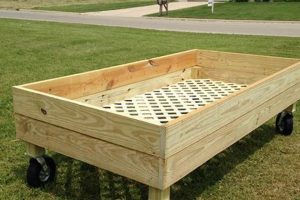
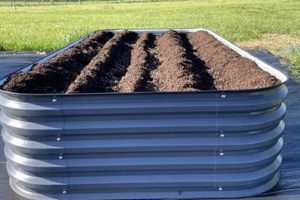
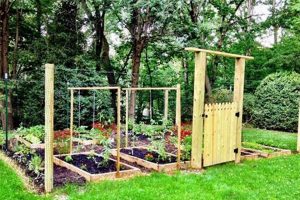
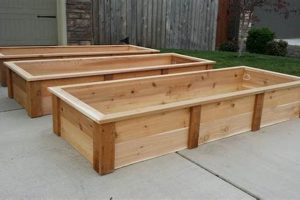
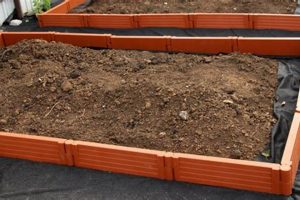
Substances used to separate the soil within a raised garden bed from the frame are often categorized by their composition and permeability. These barriers are designed to prevent soil erosion, inhibit weed growth, and, depending on the material chosen, manage moisture levels within the planting area. Examples include polyethylene sheeting, landscape fabric, and even natural options like untreated wood or cardboard.
The incorporation of a suitable barrier offers several advantages. It extends the lifespan of the raised bed frame by minimizing direct contact with consistently moist soil. Certain options can aid in water retention, reducing the frequency of irrigation. Furthermore, some choices provide a measure of root control, preventing invasive species from entering the bed. Historically, the practice of lining garden beds has evolved from using readily available natural resources to engineered solutions designed for longevity and specific performance characteristics.
A comprehensive exploration of these barriers should consider factors such as durability, environmental impact, cost-effectiveness, and ease of installation. Subsequent discussion will delve into specific types, outlining their respective strengths and weaknesses to facilitate informed decision-making for gardeners.
Guidance on Selection and Use
Optimal utilization requires careful consideration of several factors. The following guidance will assist in making informed choices and implementing effective strategies.
Tip 1: Choose Based on Durability Needs: Select based on anticipated lifespan and environmental exposure. For prolonged use, consider thicker, more robust options resistant to tearing and degradation.
Tip 2: Prioritize Non-Toxic Options: Opt for materials certified as safe for contact with edible plants. Avoid those containing harmful chemicals that may leach into the soil.
Tip 3: Consider Permeability Requirements: Determine if water retention or drainage is paramount. Landscape fabric allows drainage, while polyethylene sheeting provides a more waterproof barrier.
Tip 4: Ensure Proper Installation: Securely fasten using staples or tacks to the frame. Overlap seams to prevent soil seepage. Trim excess material to maintain a neat appearance.
Tip 5: Inspect Regularly for Damage: Periodically assess the material for tears, punctures, or signs of degradation. Promptly repair or replace damaged sections to maintain effectiveness.
Tip 6: Utilize Natural Alternatives Where Appropriate: Untreated wood or cardboard can serve as biodegradable options for short-term use. Be aware that these materials will decompose over time and require replacement.
Tip 7: Evaluate Cost-Effectiveness: Balance initial cost with long-term durability and performance. A more expensive, longer-lasting option may prove more economical in the long run.
Adhering to these guidelines will maximize the benefits. Careful selection and proper implementation contribute significantly to the health of the garden and the longevity of the raised bed.
The subsequent sections will address common challenges and explore advanced techniques for optimizing soil management in raised garden beds.
1. Durability

The longevity of a raised garden bed is significantly impacted by the durability of its underlying barrier. The primary function of this component is to isolate the soil from the surrounding environment, preventing erosion, inhibiting weed intrusion, and managing moisture levels. When a material lacks sufficient resilience, it is susceptible to degradation from factors such as soil microorganisms, ultraviolet radiation, and physical stress caused by soil expansion and contraction. The consequence of premature failure is a compromised barrier, necessitating costly and disruptive repairs or replacement of the entire bed system. For example, a thin polyethylene sheet might quickly tear under the weight of the soil, leading to soil loss and weed infestation, whereas a more robust, woven geotextile fabric would withstand these stresses for a substantially longer period.
Selecting a material appropriate for the intended lifespan of the raised bed is critical. For short-term gardening projects, such as a single growing season, a less durable, biodegradable option may suffice. However, for permanent or long-term installations, materials engineered for greater resistance to environmental degradation are essential. Considerations should include the thickness and composition of the material, its resistance to tearing and puncture, and its documented performance in similar applications. A practical example is the use of EPDM rubber, known for its exceptional resistance to UV degradation and chemical exposure, in lining permanent raised beds. This upfront investment typically yields significant long-term cost savings by minimizing the need for frequent replacements.
In summary, the durability directly correlates with the long-term viability of a raised garden bed. Investing in a durable material from the outset mitigates the risk of premature failure, reduces maintenance requirements, and ensures the sustained functionality of the gardening structure. A thorough evaluation of material properties and intended use is essential to ensure an informed selection, providing an extended service life and improved gardening experience. The importance is in the material, this part makes longevity to raised garden bed as barrier.
2. Permeability

The permeability of a raised garden bed influences soil moisture content and overall plant health. Materials used dictate the rate at which water moves into or out of the soil profile. Impermeable selections, such as thick polyethylene sheeting, effectively block water flow, leading to waterlogged conditions if drainage is insufficient. This excess moisture can foster anaerobic conditions detrimental to root development and increase the risk of root rot. Conversely, highly permeable options, like loosely woven landscape fabric, allow for rapid drainage, potentially resulting in excessively dry soil and the need for more frequent irrigation. The selection should consider plant species and local climate conditions to balance water retention and drainage effectively.
The effects of varying levels of permeability are observable in practice. A raised bed constructed with an impermeable barrier in a region with high rainfall is prone to water accumulation, necessitating the incorporation of drainage holes to mitigate waterlogging. Failure to address this can lead to nutrient leaching and reduced plant productivity. Conversely, a similar bed in an arid climate might benefit from a less permeable liner to conserve water and minimize irrigation requirements. Understanding the relationship between the material and its impact on water flow allows gardeners to tailor the environment to suit specific plant needs. For instance, herbs like rosemary and lavender, which prefer drier conditions, benefit from well-draining options, while moisture-loving plants like lettuce and spinach thrive in beds with moderate water retention.
The interplay between permeability and plant health underscores the importance of informed selection. Choosing inappropriate materials can create an environment that hinders root development, increases disease susceptibility, and ultimately reduces yields. Careful assessment of soil composition, plant water requirements, and local climatic conditions is essential in selecting a suitable liner. By understanding the practical implications of permeability, gardeners can optimize the growing environment and cultivate thriving plants within raised beds. The material plays an important role in managing moisture and it is the component related to permeability to help raised garden to have a healthier conditions.
3. Toxicity
The toxicity of compounds within a raised garden bed can significantly impact plant health and the safety of edible crops. Certain may leach harmful chemicals into the soil, which can then be absorbed by plants. This poses a risk to human health if contaminated produce is consumed. Selecting materials that are certified food-safe or are demonstrably inert is crucial for mitigating this risk. For instance, the use of recycled plastics that have not been tested for leachability or those containing phthalates is inadvisable due to the potential for contamination. Therefore, toxicity is a vital consideration when selecting a barrier as a component of a raised garden bed.
Several real-world examples illustrate the significance of this concern. Instances have been documented where the use of treated lumber, containing preservatives like chromated copper arsenate (CCA), resulted in arsenic contamination of nearby soil and plants. Similarly, some vinyl products can release volatile organic compounds (VOCs) that can accumulate in the soil and air, potentially affecting both plant growth and human health. Conversely, materials such as high-density polyethylene (HDPE), when certified as food-grade, present a minimal risk of leaching and are often preferred for this reason. Understanding the chemical composition and potential for leaching is essential for making informed decisions.
In summary, mitigating the risk of toxicity is paramount in raised garden bed construction. Choosing materials with known safety profiles, avoiding those with potentially harmful additives, and employing natural or certified food-safe options are essential practices. Prioritizing non-toxic materials not only safeguards human health but also promotes a healthy soil environment conducive to plant growth. The avoidance of toxic components is a fundamental aspect of sustainable and responsible gardening practices.
4. Cost

The selection of a particular substance for use within a raised garden bed necessitates a careful analysis of the associated expenses. The initial purchase price represents only one facet of the overall financial burden. A comprehensive assessment must also consider the material’s lifespan, potential maintenance requirements, and any indirect costs related to installation or replacement. Inexpensive options may present an attractive upfront cost, but frequently exhibit limited durability, resulting in more frequent replacements and a higher long-term expenditure. The inverse is also true; premium materials, while initially more costly, may offer superior longevity and reduced maintenance, ultimately proving more economical over time.
Practical examples illustrate this principle. Low-grade polyethylene sheeting, often marketed as a budget-friendly alternative, is prone to tearing and degradation from ultraviolet radiation. The need for frequent replacement generates recurring material costs and increased labor expenses. Conversely, a more robust material, such as EPDM rubber or a high-quality geotextile fabric, can withstand weathering and physical stresses for an extended period. The initial investment is higher, but the reduced frequency of replacement and the minimization of associated labor costs can result in significant long-term savings. Furthermore, the selection of a particular substance may indirectly influence other costs. For instance, a well-draining substance may reduce the need for amendments to improve soil drainage, further contributing to cost savings.
In summation, a holistic understanding of cost, encompassing both upfront expenses and long-term implications, is essential for making informed purchasing decisions. The selection of the optimal materials represents a balance between budgetary constraints and the desire for durability, functionality, and sustainability. Prioritizing short-term savings without considering long-term costs may result in a false economy, while a strategic investment in durable, high-quality options can ultimately prove more financially prudent. The balance between upfront and long-term costs should be central to the decision-making process.
5. Installation
The successful deployment of the chosen barrier is inextricably linked to its overall effectiveness within a raised garden bed. Improper installation can negate the benefits of even the highest-quality components, leading to premature failure and compromised performance. The process directly impacts the material’s ability to prevent soil erosion, manage moisture levels, and inhibit weed growth. Therefore, correct implementation is a critical aspect of its functionality. For example, if landscape fabric is not properly secured to the bed frame, soil can seep underneath, creating a pathway for weeds to germinate and negating its intended purpose. This highlights the cause-and-effect relationship between installation technique and performance.
Specific techniques vary depending on the type of material used. Polyethylene sheeting, for instance, requires careful cutting and overlapping to ensure a watertight seal, often necessitating the use of durable staples or sealant. Landscape fabric, while more forgiving in terms of sealing, needs to be securely anchored to prevent shifting and tearing. Natural materials like untreated wood or cardboard require specific placement to maximize their effectiveness and minimize their rate of decomposition. Furthermore, considering the environment, for instance, in a windy location may cause installer to use heavy duty staple to secure properly. These practical considerations underscore the need for installers to adhere to manufacturer guidelines and employ appropriate tools and techniques.
Ultimately, proper installation is not merely a perfunctory step, but an integral component of the overall system. Neglecting this aspect can lead to a cascade of problems, undermining the investment in materials and compromising the health of the garden. By prioritizing meticulous installation practices, gardeners can maximize the lifespan of their beds, minimize maintenance requirements, and ensure the long-term success of their gardening endeavors. A properly installed barrier provides sustained protection and support for a thriving garden environment.
6. Decomposition

Decomposition, or the breakdown of organic matter, possesses a direct and significant impact on the longevity and functionality of certain substances used. When natural materials, such as untreated wood or cardboard, are selected as a division, the rate at which they decompose directly affects their ability to perform their intended function. Faster decomposition leads to a shorter lifespan, requiring more frequent replacement. This breakdown releases organic compounds into the soil, which can be beneficial but also may alter soil pH or nutrient balance. The selection process must account for the anticipated rate of decomposition and its potential effects on the growing environment. A practical example is the use of cardboard as a weed barrier; while effective initially, it will degrade over time, necessitating reapplication or replacement to maintain its effectiveness.
The selection has implications for both short-term and long-term gardening practices. In short-term applications, the decomposition of the material can contribute to soil enrichment as it breaks down, providing nutrients for plants. However, this same process reduces the structural integrity of the division over time, requiring proactive monitoring and maintenance. In long-term gardening, the selection of a material resistant to decomposition becomes crucial for minimizing the need for frequent replacements and reducing overall maintenance efforts. Examples of decomposition-resistant components include durable plastics or geotextiles, which offer extended service life but do not contribute organic matter to the soil as they degrade.
In summary, understanding the relationship between decomposition and is essential for making informed decisions about which to use. The rate of decomposition influences the longevity, maintenance requirements, and overall impact of the barrier on the growing environment. By carefully considering the material’s decomposition properties, gardeners can optimize the lifespan of their raised beds and promote a healthy and sustainable gardening ecosystem. Ignoring this aspect can lead to unexpected maintenance challenges and a compromised growing environment, undermining the long-term success of the raised bed system.
7. Sustainability

The principle of sustainability, encompassing environmental, economic, and social considerations, is increasingly relevant to gardening practices. Choices regarding “raised garden bed liner material” directly impact the ecological footprint and long-term viability of gardening endeavors. The selection of sustainable options minimizes environmental harm, promotes resource conservation, and supports ethical sourcing and production.
- Material Source and Lifecycle
The origin and subsequent life cycle of materials significantly influence their sustainability. Sourcing options from recycled content reduces demand for virgin resources and minimizes waste. For example, using recycled plastic for lining beds diverts material from landfills, reducing environmental impact. Conversely, materials derived from unsustainable forestry practices contribute to deforestation and habitat loss. Assessing the entire lifecycle, from extraction to disposal, is crucial for informed decision-making.
- Biodegradability and Compostability
The ability of a material to naturally decompose and return to the environment is a key aspect of sustainability. Biodegradable choices, such as natural fibers or untreated wood, minimize long-term waste accumulation. These substances break down over time, enriching the soil and reducing the need for synthetic fertilizers. However, the decomposition process should not release harmful chemicals into the environment. Ensuring materials are truly compostable and non-toxic is essential.
- Chemical Composition and Leachability
The chemical makeup and potential for harmful substances to leach into the soil are critical sustainability concerns. Selecting options free from persistent toxins safeguards soil health and prevents contamination of edible crops. Materials like treated lumber, containing preservatives, may leach chemicals into the soil over time. Prioritizing non-toxic choices, such as food-grade plastics or natural materials, protects the environment and promotes food safety.
- Durability and Longevity
The extended lifespan of a material reduces the need for frequent replacement, minimizing resource consumption and waste generation. Selecting robust and durable options, designed to withstand environmental stressors, promotes sustainability by extending the service life of the raised bed. While biodegradable substances offer environmental benefits, their shorter lifespan may necessitate more frequent replacement, impacting overall sustainability. Balancing biodegradability with durability is crucial.
Integrating sustainability principles into the selection promotes environmentally responsible gardening practices. By considering material sources, biodegradability, chemical composition, and durability, gardeners can minimize their ecological footprint and create thriving, sustainable growing environments. Embracing sustainable materials choices aligns with a broader commitment to environmental stewardship and responsible resource management.
Frequently Asked Questions
This section addresses common inquiries regarding the selection and utilization, providing concise and authoritative answers.
Question 1: What are the primary functions?
The primary functions involve preventing soil erosion, inhibiting weed growth, and managing moisture levels within the raised garden bed.
Question 2: Are all suitable for organic gardening practices?
No, not all options are suitable. Materials containing harmful chemicals or those not certified as food-safe should be avoided in organic gardening to prevent soil contamination.
Question 3: How does permeability affect plant growth?
Permeability influences soil moisture content. Materials that are too impermeable can lead to waterlogging, while highly permeable options may result in excessively dry soil conditions.
Question 4: What factors should be considered when assessing durability?
Factors to consider include the material’s resistance to tearing, puncture, ultraviolet radiation, and degradation from soil microorganisms.
Question 5: What are some sustainable alternatives?
Sustainable alternatives include recycled plastics, natural fibers, and untreated wood, provided they are sourced responsibly and do not contain harmful chemicals.
Question 6: Is professional installation always necessary?
Professional installation is not always required, but proper installation is critical. Adhering to manufacturer guidelines and employing appropriate tools and techniques is essential for ensuring effective performance.
In summary, careful consideration of function, compatibility with organic practices, permeability, durability, sustainability, and proper installation is essential for optimizing the benefits.
The following section will explore advanced techniques for managing soil health and fertility in raised garden beds.
Conclusion
The foregoing analysis has comprehensively examined the selection and utilization. Key considerations encompass durability, permeability, toxicity, cost, installation requirements, decomposition rates, and sustainability. Each factor exerts a demonstrable influence on the performance and longevity of raised garden beds.
In light of these considerations, informed decision-making is paramount. Prioritizing materials that align with specific gardening needs and environmental concerns ensures optimal outcomes. Continued research and innovation in this domain will undoubtedly yield further advancements in sustainable and effective solutions for raised garden bed construction.