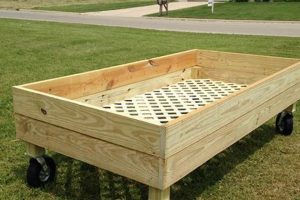
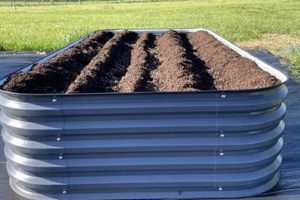
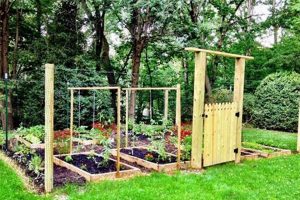
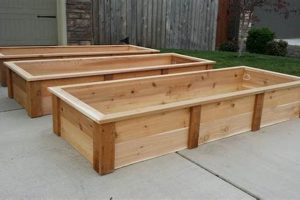
These components are structural elements designed to connect the corners of a raised garden bed. Typically manufactured from metal or durable plastic, they provide a secure and stable framework for containing soil and plants. An example includes a set of four powder-coated steel pieces used to join wooden planks, forming a rectangular planting area.
The implementation of these connecting pieces offers several advantages, including simplified assembly and enhanced structural integrity compared to traditional methods. Historically, constructing raised beds involved complex joinery or less durable fasteners. Modern designs offer a faster, more reliable solution, reducing construction time and increasing the lifespan of the garden bed. This simplifies gardening, especially in areas with poor soil conditions or limited space.
The following sections will examine the different types available, their specific applications, and factors influencing their selection for various garden bed projects. Further discussion will address installation techniques, maintenance considerations, and optimal material choices to ensure long-term performance.
Essential Guidance for Raised Garden Bed Construction
This section provides critical advice for maximizing the effectiveness and longevity of raised garden beds through the correct utilization of connecting components.
Tip 1: Material Selection: Prioritize galvanized steel or powder-coated metal for increased corrosion resistance, particularly in humid environments. Consider the gauge of the metal; thicker gauges provide superior strength and stability for larger beds.
Tip 2: Secure Fastening: Employ appropriate screws or bolts designed for outdoor use to ensure a firm connection between the components and the bed’s side panels. Pre-drilling pilot holes can prevent wood splitting during assembly.
Tip 3: Corner Reinforcement: For beds exceeding four feet in length, consider internal bracing in conjunction with corner supports to prevent bowing or deformation caused by soil pressure. Metal straps or additional vertical supports may be necessary.
Tip 4: Proper Alignment: Ensure accurate alignment during assembly to achieve a square or rectangular shape. Misaligned beds can compromise structural integrity and aesthetic appeal. Use a level and measuring tape to verify dimensions.
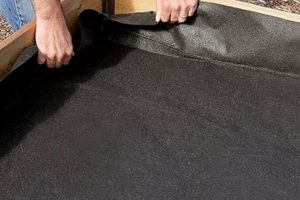
Tip 5: Drainage Considerations: Maintain adequate drainage beneath the raised bed to prevent water accumulation and potential component degradation. Consider using a layer of gravel or landscape fabric beneath the bed to promote proper water flow.
Tip 6: Load Distribution: Distribute the weight of the soil evenly within the bed to minimize stress on individual joints. Avoid concentrating heavy materials, such as rocks or large root balls, near the corners.
By adhering to these guidelines, the structural integrity and operational lifespan of raised garden beds can be significantly extended. Proper implementation contributes to a more stable and productive growing environment.
The subsequent segments of this article will delve into specific product reviews and provide further insights into advanced construction techniques.
1. Material Durability

Material durability is a critical determinant in the overall lifespan and performance of connecting components. The composition of the material directly influences its resistance to environmental factors such as moisture, soil acidity, and physical stress, thereby impacting the long-term structural integrity of the raised garden bed. For instance, brackets constructed from untreated steel are susceptible to rust and corrosion, leading to premature failure and potential collapse of the bed. Conversely, galvanized steel or powder-coated aluminum offers enhanced protection, extending the usable life of the structure and minimizing maintenance requirements. The selection of durable materials is, therefore, not merely a matter of aesthetics but a fundamental engineering consideration.
The choice of material also influences the component’s capacity to withstand the forces exerted by the soil and plant matter within the raised bed. Materials lacking sufficient tensile strength may deform or fracture under load, compromising the stability of the entire structure. Consider a scenario where a raised bed is filled with dense, water-saturated soil; the resulting lateral pressure places significant stress on the corner joints. If the brackets are constructed from a low-grade plastic, they may crack or warp over time, leading to soil displacement and potential damage to the plants. Employing heavy-gauge steel brackets, on the other hand, provides a robust and resilient framework capable of withstanding substantial pressure.
In summary, material durability represents a primary factor in the effectiveness of connecting components. Selecting appropriate materials based on anticipated environmental conditions and load-bearing requirements is essential for ensuring the longevity and structural integrity of raised garden beds. Neglecting this aspect can lead to costly repairs, potential crop damage, and a reduced lifespan for the entire gardening system. Subsequent sections will address specific material properties and their suitability for various applications.
2. Corner Stability

Corner stability in raised garden beds is directly dependent on the design and quality of the connecting components used. These components, typically metal or durable plastic, bear the brunt of the outward force exerted by the soil and any contained moisture. Insufficient corner stability results in bulging walls, potential structural failure, and soil loss, negatively impacting plant growth and overall garden aesthetics. For instance, a bed constructed with lightweight plastic pieces may exhibit significant deformation under the weight of saturated soil, whereas a bed utilizing robust steel units maintains its form and integrity.
The effectiveness of these connecting components in ensuring corner stability depends on several factors, including the material’s tensile strength, the design of the connection points, and the method of attachment to the bed walls. A bracket with a wide surface area and multiple points of attachment distributes the load more effectively, minimizing stress on individual fasteners. Similarly, a design that incorporates interlocking features or reinforcement ribs enhances the bracket’s resistance to bending and twisting forces. Consider a raised bed with poorly designed corner pieces: the walls may separate over time due to the constant pressure, leading to a collapse. This necessitates costly repairs and the loss of valuable growing medium.
Achieving optimal corner stability is therefore paramount for the successful construction and maintenance of raised garden beds. By selecting appropriate connecting components designed to withstand the anticipated loads and environmental conditions, one can ensure a stable and long-lasting growing environment. A compromised corner not only detracts from the bed’s appearance but also undermines its functionality and the gardener’s investment. Proper implementation contributes to a resilient and productive garden space.
3. Ease of Assembly

Ease of assembly is a primary consideration when selecting raised garden bed connection solutions. Simplified construction processes reduce labor time, minimize the need for specialized tools, and decrease the likelihood of errors during installation. This aspect directly impacts the accessibility of raised bed gardening for individuals with varying skill levels and physical capabilities.
- Component Design Simplicity
The design complexity of the bracket directly influences assembly ease. Brackets with minimal parts and intuitive connection mechanisms streamline the construction process. For example, brackets with pre-drilled holes and standardized screw sizes enable rapid and accurate assembly without requiring precise measurements or specialized tools. Conversely, complex designs with numerous small parts and intricate connections increase assembly time and the potential for errors.
- Tool Requirements
The range and type of tools required for assembly significantly affect its convenience. Brackets requiring only basic tools, such as a screwdriver or wrench, facilitate quicker and simpler construction. Systems necessitating specialized tools, such as power drills or saws, increase the complexity and time required for assembly. Furthermore, specialized tools may not be readily available to all users, potentially limiting accessibility.
- Instruction Clarity
Comprehensive and clearly written instructions are essential for seamless assembly. Instructions with detailed diagrams, step-by-step guidance, and explicit warnings minimize the risk of errors and ensure proper component alignment. Conversely, vague or incomplete instructions can lead to confusion, incorrect assembly, and compromised structural integrity. Well-documented instructions are particularly important for novice users.
- Weight and Handling
The weight and size of the brackets impact the ease of handling and installation. Lightweight brackets simplify transportation and positioning, reducing physical strain during assembly. Bulky or heavy brackets require additional physical effort and may necessitate assistance from multiple individuals. Ergonomic design considerations, such as integrated handles or rounded edges, can further enhance ease of handling.
In summary, ease of assembly is a critical attribute that contributes to the overall user experience and accessibility of raised garden bed systems. By prioritizing brackets with simple designs, minimal tool requirements, clear instructions, and manageable weight, constructors can significantly reduce assembly time and effort, enabling a more efficient and enjoyable gardening experience. The overall goal is to select components that facilitate a straightforward and trouble-free construction process, thereby promoting wider adoption of raised bed gardening techniques.
4. Weight Capacity

Weight capacity is a critical performance parameter for raised garden bed connecting components. It determines the maximum load these connectors can safely support, directly impacting the structural integrity and longevity of the raised bed system. Exceeding the rated weight capacity can lead to component failure, resulting in deformation, collapse, and potential loss of growing medium and plants.
- Material Strength and Load Bearing
The material composition of the connectors directly dictates their weight-bearing capabilities. High-strength materials such as galvanized steel or reinforced polymers offer superior load resistance compared to weaker materials like untreated wood or thin plastics. For example, a corner connector fabricated from heavy-gauge steel is capable of withstanding significantly greater loads than a similar connector made from low-density polyethylene. This disparity directly influences the overall weight capacity of the raised bed.
- Connector Design and Geometry
The geometrical design of a connector plays a crucial role in its ability to distribute and manage applied loads. Connectors with reinforced ribs, gussets, or interlocking features exhibit enhanced structural rigidity and can support higher weights. Consider a corner connector with a triangular gusset welded at its intersection; this design effectively strengthens the joint and prevents deformation under heavy loads. Conversely, a simple, unreinforced connector is more prone to bending and failure under similar conditions.
- Fastener Type and Attachment Method
The type and quality of fasteners used to secure the connectors to the raised bed walls influence the overall weight capacity. High-strength screws or bolts, properly tightened, provide a secure and reliable connection, allowing the connectors to effectively transfer loads to the bed walls. Conversely, improperly sized or loosely fastened screws can compromise the integrity of the joint, leading to premature failure. The use of appropriate washers and locknuts can further enhance the stability and weight-bearing capacity of the connection.
- Soil Density and Moisture Content
The density and moisture content of the soil within the raised bed contribute significantly to the overall load that the connectors must support. Dense, water-saturated soil exerts greater lateral pressure on the bed walls and connectors compared to dry, well-drained soil. Therefore, when selecting connectors, it is crucial to consider the type of soil to be used and its potential weight when fully saturated. Using high quality material can help to maintain weight capacity of the raised garden bed brackets.
In conclusion, the weight capacity of connecting components is a function of material strength, design, fastener selection, and the anticipated soil conditions. Proper consideration of these factors is essential for ensuring the structural integrity and long-term performance of raised garden beds. Selecting connectors with an appropriate weight capacity rating, based on the intended application and expected loads, is crucial for preventing costly repairs and ensuring a safe and productive gardening environment.
5. Corrosion Resistance

Corrosion resistance is a critical attribute of components used in raised garden beds due to their constant exposure to moisture, soil, and potentially corrosive fertilizers. The degradation of metal connectors through corrosion compromises the structural integrity of the raised bed, leading to premature failure. The interaction between soil moisture, dissolved salts, and atmospheric oxygen creates an electrochemical environment conducive to oxidation, the primary mechanism of corrosion in many metals. Consequently, raised garden bed brackets must possess inherent or applied protective properties to withstand these conditions.
The selection of materials significantly impacts corrosion resistance. Galvanized steel, for example, provides a sacrificial zinc coating that corrodes preferentially, protecting the underlying steel. Stainless steel alloys offer inherent corrosion resistance due to their chromium content, which forms a passive oxide layer. Powder coating creates a barrier between the metal and the environment, inhibiting corrosive processes. Without adequate protection, brackets made from untreated steel can rapidly rust, weakening the structure and potentially contaminating the soil with iron oxides. A practical example includes a comparison between two raised beds: one constructed with galvanized steel connecting pieces and the other with untreated steel. After one year, the untreated steel components exhibit significant rust, while the galvanized steel retains its structural integrity. This demonstrates the direct correlation between material choice and longevity in corrosive environments.
Ensuring adequate corrosion resistance in connecting components is paramount for the long-term viability of raised garden beds. Regular inspection and maintenance, including cleaning and application of protective coatings, can further extend the lifespan of the components. By selecting materials and applying protective measures, the risk of corrosion-related failure is minimized, ensuring a stable and productive growing environment. The practical significance of this understanding lies in its ability to prevent costly repairs and replacements, ultimately contributing to the sustainability of the gardening system.
Frequently Asked Questions
The following addresses common inquiries concerning the selection, installation, and maintenance of structural support systems for raised garden beds.
Question 1: What factors determine the appropriate material for a raised garden bed connecting component?
Material selection is governed by durability, corrosion resistance, and load-bearing capacity. Galvanized steel or powder-coated metal is recommended for enhanced longevity in outdoor environments. The gauge, or thickness, of the metal should be commensurate with the size and weight of the garden bed.
Question 2: How does connecting component design influence the stability of a raised garden bed?
A robust design incorporates features such as gussets, reinforced corners, and multiple points of attachment to distribute the load effectively. Interlocking designs or those with integrated bracing offer superior resistance to bending and twisting forces, ensuring structural integrity.
Question 3: What considerations are pertinent during the assembly of structural connections?
Proper alignment is essential for achieving a square or rectangular shape. Pilot holes should be pre-drilled to prevent wood splitting during fastener installation. Appropriate screws or bolts designed for outdoor use should be selected to ensure a secure and stable connection.
Question 4: How can the lifespan of metal components be extended?
Regular cleaning to remove debris and soil buildup is recommended. The application of rust-inhibiting paint or coatings can provide additional protection against corrosion. Damaged or corroded components should be replaced promptly to prevent further structural degradation.
Question 5: Are plastic connecting components a viable alternative to metal?
Durable, UV-resistant plastics offer a lightweight and corrosion-resistant alternative. However, their load-bearing capacity is generally lower than that of metal components. The suitability of plastic connections depends on the size and weight of the raised garden bed, as well as environmental conditions.
Question 6: What maintenance procedures are necessary to ensure the long-term stability of raised garden beds?
Periodic inspection of the structural connections is crucial for identifying signs of wear or corrosion. Soil should be evenly distributed within the bed to minimize stress on individual joints. Drainage should be maintained to prevent water accumulation and potential component degradation.
Effective structural support is critical for maximizing the lifespan and functionality of raised garden beds. Understanding the key factors influencing component selection, assembly, and maintenance ensures a stable and productive growing environment.
The following segments will delve into specific product reviews and provide further insights into advanced construction techniques.
Raised Garden Bed Brackets
This exploration has elucidated the critical role raised garden bed brackets play in the construction and longevity of elevated gardening structures. The importance of material selection, design considerations, and proper installation techniques has been underscored. Factors such as corrosion resistance, load-bearing capacity, and ease of assembly are paramount in guaranteeing a stable and functional raised bed system.
The informed selection and diligent maintenance of these connecting elements are vital for cultivating a successful and sustainable gardening environment. Investing in quality connecting components is an investment in the long-term structural integrity and productivity of the garden itself, meriting careful consideration from any serious horticulturalist.