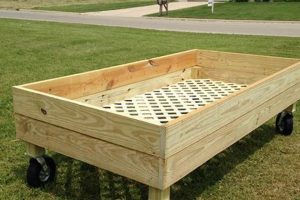
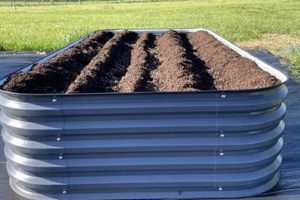
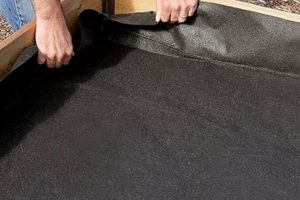
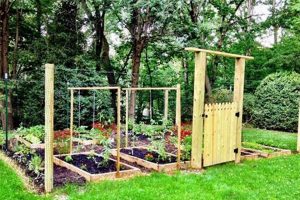
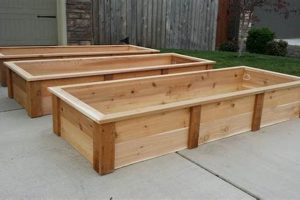
A structure combining elevated planting containers with overhead support elements creates an environment conducive to vertical plant growth. This system typically involves a framed enclosure filled with soil, with the addition of an arched framework designed to support climbing plants. Examples include vegetable varieties like pole beans or cucumbers, and flowering vines such as clematis or morning glories, trained to grow upward along the provided support.
The integration of these elements offers several advantages, including improved accessibility for gardeners, enhanced soil drainage, and a defined growing space that can deter certain pests. Historically, elevated gardens have been used in various forms to optimize growing conditions and manage land use. The addition of a climbing structure maximizes spatial efficiency, allowing for increased yields in a limited area and contributing to aesthetically pleasing garden designs.
The subsequent sections will delve into the practical considerations for constructing such a system, including material selection, design principles, plant suitability, and maintenance strategies, providing a guide for those interested in incorporating this technique into their gardening practices.
Construction and Utilization Tips
Optimizing the functionality and longevity of this garden structure requires careful planning and execution. The following tips provide guidance on various aspects of its construction and ongoing use.
Tip 1: Material Selection: Prioritize weather-resistant materials for the frame and support structure. Untreated wood is susceptible to rot and insect damage. Cedar, redwood, or pressure-treated lumber offer increased durability. Metal options, such as powder-coated steel, provide structural strength and resistance to corrosion.
Tip 2: Structural Integrity: Ensure the raised bed frame is adequately reinforced to withstand the weight of the soil and the mature plants. Corner bracing and internal supports are crucial. The arched trellis should be securely anchored to the bed frame to prevent collapse under wind or heavy foliage.
Tip 3: Soil Composition: Employ a well-draining soil mix specifically formulated for raised beds. Heavy clay soils can compact and impede root growth. A blend of topsoil, compost, and peat moss or coco coir provides adequate drainage and nutrient retention.
Tip 4: Plant Selection: Choose plant varieties appropriate for vertical growth and the available sunlight. Consider the mature size and weight of the plants to ensure the structure can provide adequate support. Regularly prune plants to maintain manageable size and prevent overcrowding.
Tip 5: Watering and Fertilization: Monitor soil moisture levels regularly, as raised beds tend to dry out faster than in-ground gardens. Implement a consistent watering schedule. Apply fertilizer according to the specific needs of the selected plants, following manufacturer’s instructions to avoid over-fertilization.
Tip 6: Pest and Disease Management: Implement preventative measures to minimize pest infestations and disease outbreaks. Inspect plants regularly for signs of pests or disease. Utilize organic pest control methods when possible, such as insecticidal soap or neem oil.
Tip 7: Orientation and Sunlight: Consider the sun’s path when positioning the structure. Orient the arch trellis to maximize sunlight exposure for optimal plant growth. Be mindful of shadows cast by nearby structures that could limit sunlight.
Adhering to these recommendations promotes the successful integration of this gardening element, facilitating efficient space utilization and increased yields. Careful planning is paramount.
The succeeding sections will cover different designs and ideas, and conclusion.
1. Vertical Plant Support

Vertical plant support is an integral component of a raised garden bed arch trellis system. It facilitates the upward growth of plants, maximizing space utilization and improving overall garden health. This connection is more than aesthetic; it is a functional necessity for certain plant species and a strategic advantage for any gardener seeking to optimize yields within a defined area.
- Structural Load Capacity
The arch trellis must be engineered to withstand the mature weight of the supported plants. Inadequate structural integrity can lead to collapse, damaging both the trellis and the plants. For instance, a trellis intended for lightweight vines like morning glories requires less robust construction than one designed to support heavy crops such as pumpkins or squash. Understanding the load requirements is critical during the design and material selection process.
- Plant Accessibility for Maintenance
The design of the vertical support must consider accessibility for essential maintenance tasks. Pruning, harvesting, and pest control require unobstructed access to the plants. A densely woven trellis might offer excellent support, but it could also hinder access, making it difficult to manage plant growth and health. The spacing and configuration of the trellis elements should facilitate these activities.
- Optimizing Sunlight Exposure
Vertical support structures influence the amount of sunlight reaching different parts of the plant. A well-designed trellis will allow for even light distribution, promoting uniform growth and fruit production. Conversely, a poorly designed trellis could shade lower portions of the plant, reducing yields. Careful consideration of plant orientation and trellis geometry is necessary to optimize sunlight exposure.
- Facilitating Air Circulation
Vertical plant support improves air circulation around the plants, reducing the risk of fungal diseases. Plants trained to grow vertically are less prone to issues like powdery mildew and blight because their foliage dries more quickly. This is particularly important in humid climates where stagnant air can create favorable conditions for disease development. Proper air circulation also promotes better pollination and fruit set.
The relationship between vertical plant support and raised garden bed arch trellises is symbiotic. The trellis provides the framework for vertical growth, and in return, the supported plants enhance the aesthetic appeal and productivity of the raised garden bed. This integration maximizes space, improves plant health, and ultimately contributes to a more efficient and rewarding gardening experience.
2. Spatial Optimization

Spatial optimization, in the context of gardening, pertains to maximizing the utilization of available growing area. The implementation of a structure that combines elevated planting beds with an arched trellis system represents a targeted approach to achieving this efficiency.
- Vertical Growth Maximization
The primary benefit of integrating a trellis with a raised bed is the ability to cultivate vertically. This allows for the growth of climbing plants, such as beans, peas, or cucumbers, that would otherwise require significantly more ground space. By directing growth upward, the effective growing area is increased without expanding the physical footprint of the garden.
- Enhanced Sunlight Exposure
Strategic spatial arrangement can optimize sunlight capture. When plants are trained to grow vertically, foliage is distributed in a manner that minimizes shading of adjacent plants. This is particularly advantageous in smaller gardens where sunlight penetration may be limited by surrounding structures or vegetation.
- Efficient Resource Allocation
Spatial optimization influences the efficient allocation of resources like water and nutrients. With a clearly defined growing space in the raised bed and vertical growth supported by the trellis, targeted delivery of these resources becomes more manageable. This reduces waste and ensures that plants receive the necessary inputs for optimal growth.
- Increased Plant Density
The use of a combined raised bed and arch trellis allows for a higher density of plants compared to traditional row gardening. Plants that sprawl horizontally can be trained to grow upward, freeing up ground space for other crops. This is especially beneficial in urban settings or areas with limited land availability.
The incorporation of an arch trellis with a raised bed exemplifies practical application of spatial optimization within a horticultural context. This combined structure not only expands the potential yield from a given area but also promotes efficient resource management and improved growing conditions for various plant species.
3. Structural Material Durability

Structural material durability is a paramount consideration in the construction of a system incorporating elevated planting containers with overhead support. The longevity and stability of such a system are directly contingent upon the materials selected, their resistance to environmental degradation, and their capacity to withstand imposed loads.
- Resistance to Environmental Degradation
Materials exposed to outdoor conditions are susceptible to various forms of degradation, including rot, corrosion, and UV damage. For raised garden bed frames, untreated wood is prone to decay, necessitating the use of rot-resistant species like cedar or redwood, or pressure-treated lumber. For the arched trellis component, metal materials require protective coatings to prevent corrosion, while plastics must be UV-stabilized to prevent embrittlement and cracking. Example: A steel trellis without powder coating in a humid climate will exhibit rust within a short timeframe.
- Load-Bearing Capacity
The structural components must possess sufficient strength to support the weight of the soil within the raised bed and the mass of the plants growing on the trellis. This includes both static loads (the weight of the soil and plants) and dynamic loads (wind pressure, snow accumulation). Inadequate load-bearing capacity can lead to structural failure, resulting in damage to the plants and potential safety hazards. A framework made of thin-walled aluminum tubing might buckle under the load of mature climbing squash.
- Resistance to Pests and Organisms
Certain materials are vulnerable to damage from insects, rodents, and other organisms. Wooden components, in particular, can be susceptible to termite infestation or rodent gnawing. The selection of pest-resistant materials or the application of protective treatments is essential for maintaining the structural integrity of the system. Using untreated pine for a bed frame invites termite damage and structural compromise.
- Maintenance Requirements
The choice of materials influences the level of maintenance required to ensure the long-term durability of the system. Materials with low maintenance requirements, such as composite lumber or powder-coated steel, reduce the need for frequent repairs or replacements. Materials requiring regular maintenance, such as painted wood, must be inspected and treated periodically to prevent deterioration. Example: A painted wooden frame requires yearly inspection and repainting to prevent rot.
The selection of appropriate materials based on durability considerations is crucial for ensuring the functionality, safety, and extended lifespan of the combined system. Compromising on material quality can lead to premature failure, increased maintenance costs, and potential hazards within the garden environment.
4. Sunlight Exposure

Sunlight exposure represents a critical environmental factor influencing the productivity and health of plants grown within a combined elevated planting bed and overhead support structure. Optimizing sunlight interception is essential for maximizing photosynthetic activity and subsequent crop yield.
- Orientation and Shadow Management
The orientation of the raised garden bed arch trellis relative to the sun’s path directly affects the amount of sunlight received by plants. A north-south orientation generally maximizes sunlight exposure throughout the day, particularly for east-facing plants in the morning and west-facing plants in the afternoon. Shadow management involves considering the potential for shading from nearby structures or trees, and adjusting the garden’s position accordingly. For instance, locating the structure on the south side of a building in the northern hemisphere can minimize winter shading.
- Trellis Design and Light Penetration
The design of the arched trellis influences the amount of light that penetrates to the lower foliage of the plants. A dense trellis structure can create excessive shading, reducing photosynthetic efficiency in lower leaves. An open trellis design, with wider spacing between support elements, allows for greater light penetration and more uniform growth. For climbing plants with dense foliage, regular pruning may be necessary to improve light penetration and air circulation.
- Plant Selection and Light Requirements
Different plant species have varying sunlight requirements. Selecting plants appropriate for the amount of sunlight available in the garden is essential for optimal growth. Sun-loving plants, such as tomatoes and peppers, require at least six hours of direct sunlight per day, while shade-tolerant plants, such as lettuce and spinach, can thrive in areas with less direct sunlight. Careful plant selection ensures that all species receive adequate light exposure.
- Seasonal Adjustments and Reflective Surfaces
Sunlight angles change throughout the year, affecting the amount of light received by the garden. In winter, when the sun is lower in the sky, the garden may receive less direct sunlight. Utilizing reflective surfaces, such as white walls or reflective mulch, can help to increase light intensity and duration. Moving container plants within the raised bed can also optimize sunlight exposure during different seasons. The position of trellised plants relative to available sunlight during winter months warrants re-evaluation to prevent diminished growth.
These considerations underscore the importance of proactive management of sunlight exposure in the context of this type of gardening. Modifying garden orientation, adjusting trellis designs, choosing appropriate plant species, and implementing seasonal strategies enhance growth.
5. Accessibility
The characteristic of ease of approach, reach, and use is critically important in the design and implementation of raised garden bed arch trellis systems. Considerations regarding accessibility directly influence the usability of the garden, particularly for individuals with physical limitations or mobility constraints.
- Reduced Bending and Strain
Elevated planting beds inherently minimize the need for bending and kneeling, alleviating physical strain on the back, knees, and hips. This is particularly beneficial for elderly individuals, those with arthritis, or individuals with other mobility impairments. The addition of an arch trellis further enhances accessibility by bringing the plants and produce closer to the gardener, reducing the need to reach or stretch. For example, an individual using a wheelchair can more easily tend to plants growing on a trellis attached to a raised bed than those planted at ground level.
- Optimized Working Height
The height of the raised bed can be customized to accommodate the specific needs of the gardener. Raising the bed to a comfortable working height reduces the need for stooping, which can be particularly challenging for individuals with back pain. The trellis can also be designed to position plants at an accessible height, facilitating tasks such as pruning, watering, and harvesting. Customizing the bed and trellis height ensures a comfortable and ergonomic gardening experience.
- Clear Pathways and Maneuvering Space
Adequate space surrounding the raised garden bed and arch trellis is essential for accessibility, particularly for individuals using wheelchairs or walkers. Clear pathways and maneuvering space allow for easy navigation and prevent obstacles that could impede access to the garden. The width of the pathways should be sufficient to accommodate mobility devices, and the surface should be firm and stable. Consider the turning radius of a wheelchair when designing pathways around the garden structure.
- Adaptive Tools and Techniques
The use of adaptive tools and techniques can further enhance accessibility for gardeners with physical limitations. Long-handled tools, ergonomic grips, and specialized watering devices can make gardening tasks easier and more comfortable. Adaptive gardening techniques, such as container gardening within the raised bed, can also be employed to further optimize accessibility. These tools and techniques can compensate for physical limitations and promote a more inclusive gardening experience.
These considerations highlight the importance of incorporating accessibility principles into the design and construction of raised garden bed arch trellis systems. Creating a garden that is easy to approach, reach, and use ensures that more individuals can enjoy the benefits of gardening, regardless of their physical abilities.
Frequently Asked Questions About Raised Garden Bed Arch Trellises
The following addresses common inquiries regarding construction, utilization, and maintenance of raised garden bed arch trellis systems.
Question 1: What are the primary benefits of incorporating an arched trellis into a raised garden bed?
The primary benefits include increased vertical growing space, improved air circulation, enhanced sunlight exposure, and reduced bending or stooping during gardening tasks.
Question 2: What materials are most suitable for constructing a durable raised garden bed arch trellis?
Durable materials include rot-resistant wood (cedar, redwood), pressure-treated lumber, powder-coated steel, and UV-resistant plastics. Material choice should reflect climate and plant load considerations.
Question 3: How should a raised garden bed arch trellis be oriented to maximize sunlight exposure?
Generally, a north-south orientation maximizes sunlight exposure. Local factors, such as surrounding structures, may necessitate adjustments.
Question 4: What types of plants are best suited for growing on a raised garden bed arch trellis?
Suitable plants include climbing vegetables (beans, peas, cucumbers), flowering vines (clematis, morning glories), and trailing fruits (certain melons, smaller pumpkins).
Question 5: What maintenance is required to ensure the longevity of a raised garden bed arch trellis?
Maintenance includes regular inspection for damage, pest control, pruning to manage plant growth, and periodic refinishing or replacement of deteriorated materials.
Question 6: How can the accessibility of a raised garden bed arch trellis be improved for individuals with mobility limitations?
Accessibility can be improved by adjusting the height of the raised bed, ensuring clear pathways, utilizing adaptive gardening tools, and selecting plant varieties that require minimal reaching or bending.
Addressing these frequent inquiries contributes to a better understanding and more successful implementation of these integrated gardening structures.
The subsequent article sections explore design ideas, specific plant recommendations, and advanced techniques for managing these gardens.
Conclusion
This exposition has detailed fundamental aspects of raised garden bed arch trellis systems, encompassing construction materials, spatial optimization, sunlight considerations, and accessibility enhancements. The integration of elevated growing spaces with vertical support structures presents a comprehensive approach to efficient and sustainable gardening practices. These systems offer tangible benefits for both small-scale urban gardens and larger cultivated areas.
The successful implementation of raised garden bed arch trellis solutions requires diligent planning and informed decision-making. The principles outlined herein provide a foundation for constructing durable and productive gardening environments. Further exploration and application of these techniques promise continued advancement in the practice of horticulture and increased accessibility for gardeners of all capabilities.