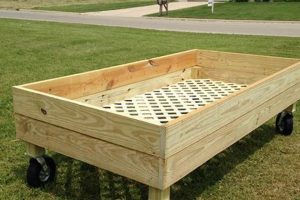
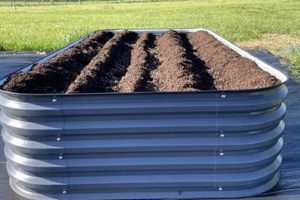
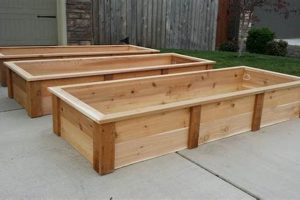
A contained planting structure, elevated above ground level, designed for cultivating tomato plants, is the focus. It represents a controlled environment where soil composition, drainage, and accessibility can be optimized for the specific needs of the crop. Such a structure facilitates intensive gardening within a defined area.
This method of cultivation offers several advantages. It provides enhanced soil control, leading to improved nutrient availability and water management. The elevated structure eases physical strain on the gardener, reducing the need for bending and kneeling. Historically, this technique has been employed in regions with poor native soil or limited space, demonstrating its adaptability and efficiency.
The subsequent discussion will delve into the construction techniques, suitable soil mixtures, variety selection, pest management strategies, and watering protocols relevant to the successful implementation of this horticultural practice.
Cultivation Techniques for Enhanced Tomato Yields
Optimizing production within a defined growing area requires adherence to specific methodologies. The following guidelines are designed to promote vigorous plant health and abundant fruit production.
Tip 1: Select Appropriate Dimensions. The structure’s width should not exceed four feet to allow easy access to all plants. A depth of at least twelve inches is necessary to accommodate root systems. Length is determined by available space and plant density.
Tip 2: Implement a Well-Draining Soil Mix. A combination of topsoil, compost, and peat moss or coconut coir provides necessary nutrients and aeration. Avoid heavy clay soils, as they impede drainage and root development.
Tip 3: Choose Determinate Varieties for Compact Growth. Determinate tomato varieties, which exhibit a bush-like growth habit and produce fruit over a shorter period, are well-suited for confined spaces. Indeterminate varieties require substantial support and may overcrowd the structure.
Tip 4: Provide Adequate Support Structures. Even determinate varieties benefit from staking or caging. Install supports early in the growing season to prevent damage to developing plants. Secure stems loosely to allow for natural movement.
Tip 5: Practice Consistent Watering Techniques. Maintain consistent soil moisture to prevent blossom end rot. Water deeply and infrequently, targeting the root zone. Avoid overhead watering to minimize fungal diseases.
Tip 6: Incorporate Crop Rotation Strategies. Rotate tomato plants annually to prevent soilborne diseases and nutrient depletion. Follow tomatoes with legumes or other nitrogen-fixing crops to replenish soil fertility.
Tip 7: Monitor for Pests and Diseases. Regularly inspect plants for signs of pests, such as aphids or tomato hornworms, and diseases, such as early blight or Septoria leaf spot. Implement appropriate control measures, including organic insecticides or fungicides, as needed.
Adherence to these recommendations fosters a thriving environment, leading to increased yields and improved fruit quality. The subsequent sections will address advanced techniques for maximizing productivity.
The concluding portion of this document will synthesize the preceding information, providing a comprehensive overview of best practices.
1. Drainage

Effective drainage is a critical determinant of success in a tomato garden. The elevated nature of these structures, while offering advantages in soil control and accessibility, necessitates a heightened awareness of water management. Poor drainage leads to waterlogged conditions, depriving roots of essential oxygen. This anaerobic environment encourages the proliferation of root-rot pathogens, such as Phytophthora and Pythium, ultimately compromising plant health and productivity. A practical example illustrates this point: a structure constructed with compacted soil and lacking drainage outlets will invariably exhibit stunted growth and increased susceptibility to disease compared to one employing a well-draining soil mix and adequate drainage provisions.
The selection of appropriate soil media is intrinsically linked to drainage performance. Incorporating materials like perlite, vermiculite, or coarse sand into the soil mix enhances porosity, facilitating the downward movement of excess water. Similarly, ensuring the presence of drainage holes or a gravel layer at the bottom of the structure allows for the efficient removal of standing water. In regions with heavy rainfall, the implementation of a sloped base further assists in directing water away from the root zone. Failure to address drainage issues can manifest as yellowing foliage, reduced fruit set, and ultimately, plant death. The practical significance of understanding drainage principles cannot be overstated, as it directly impacts the long-term viability of the system and the economic yield of the crop.
In summary, adequate drainage is paramount. Neglecting this aspect undermines the advantages of the system, leading to unfavorable conditions for tomato growth and increased vulnerability to disease. Recognizing the causal relationship between drainage and plant health is essential for effective cultivation. Therefore, a proactive approach to water management, encompassing appropriate soil selection, drainage provision, and vigilant monitoring, is crucial for sustained success.
2. Sunlight Exposure
Sunlight exposure represents a critical variable influencing the productivity of a tomato garden. Tomato plants, as sun-loving species, necessitate a substantial amount of direct sunlight, typically ranging from six to eight hours per day, for optimal photosynthetic activity. Insufficient light negatively affects fruit production, resulting in reduced yields and diminished fruit quality. The confined nature of the garden necessitates strategic placement to maximize sunlight capture. For example, if the structure is situated in a location shaded by trees or buildings, plant growth will be noticeably stunted compared to a structure positioned in full sun. The strategic orientation of the structure, aligning it along an east-west axis, optimizes sunlight interception throughout the day.
The intensity and duration of sunlight directly impact the processes of photosynthesis, carbohydrate production, and subsequent fruit development. Insufficient sunlight leads to elongated stems, sparse foliage, and pale coloration, indicative of etiolation. Moreover, shaded conditions promote the development of fungal diseases due to increased humidity and reduced air circulation. In contrast, adequate sunlight exposure fosters robust growth, strengthens the plant’s defense mechanisms, and enhances the accumulation of sugars and other compounds that contribute to fruit flavor and nutritional value. Practical application of this understanding involves careful site selection, pruning techniques to improve light penetration within the plant canopy, and supplemental lighting in regions with limited natural sunlight.
In summary, sunlight exposure is an indispensable element. Optimizing sunlight availability is critical for realizing the full potential of the system. Failure to address this factor diminishes plant vigor, reduces fruit production, and increases susceptibility to disease. Strategic placement, thoughtful pruning, and supplemental lighting collectively contribute to a thriving environment, fostering high-quality fruit production.
3. Soil Composition

Soil composition within a contained planting structure is a primary determinant of successful tomato cultivation. The artificial environment necessitates a tailored soil mix optimized for drainage, nutrient availability, and root support, differing significantly from native soil conditions.
- Nutrient Availability
The soil mix must provide essential macronutrients (nitrogen, phosphorus, potassium) and micronutrients (iron, manganese, zinc) for optimal plant growth. A blend of compost, aged manure, and slow-release fertilizers ensures a steady supply of these nutrients. Insufficient nutrient levels result in stunted growth, yellowing foliage, and reduced fruit production, directly impacting yield and quality.
- Drainage Characteristics
Proper drainage prevents waterlogging and root rot, critical concerns in a contained environment. A soil mix comprising components like perlite, vermiculite, and coarse sand enhances porosity and aeration. Inadequate drainage leads to anaerobic conditions, fostering the growth of harmful pathogens and inhibiting root function.
- pH Level
Tomatoes thrive in a slightly acidic to neutral soil pH, typically ranging from 6.0 to 7.0. Soil pH affects nutrient availability; extreme acidity or alkalinity hinders the uptake of essential minerals. Regular soil testing and amendments with lime or sulfur maintain the optimal pH range, ensuring efficient nutrient absorption and robust plant growth.
- Organic Matter Content
The inclusion of organic matter, such as compost or peat moss, improves soil structure, water retention, and nutrient availability. Organic matter supports beneficial microbial activity, enhancing nutrient cycling and disease suppression. Low organic matter content results in poor water retention, nutrient deficiencies, and increased susceptibility to pests and diseases.
The interplay of these factors within the structure directly influences plant health and fruit production. Careful consideration of soil composition, including nutrient availability, drainage characteristics, pH level, and organic matter content, is essential for achieving successful tomato cultivation in this specialized environment. The tailored soil mix compensates for the limitations of native soil, promoting vigorous growth and abundant yields.
4. Variety Selection

The deliberate selection of tomato varieties significantly influences the success of cultivation within a system. The confined space and controlled environment necessitate careful consideration of plant size, growth habit, disease resistance, and fruit characteristics.
- Determinate vs. Indeterminate Growth Habits
Determinate tomato varieties exhibit a bush-like growth pattern, reaching a defined size and producing fruit over a concentrated period. Indeterminate varieties, conversely, continue to grow and produce fruit throughout the season. The limited space generally favors determinate varieties, preventing overcrowding and facilitating management. Indeterminate varieties, if chosen, necessitate substantial support structures and rigorous pruning.
- Disease Resistance
Selecting varieties with inherent resistance to common tomato diseases, such as Fusarium wilt, Verticillium wilt, and early blight, minimizes the need for chemical interventions. Disease-resistant varieties contribute to a healthier garden ecosystem and reduce the risk of crop loss. Consult seed catalogs and university extension resources for information on specific resistance traits.
- Fruit Size and Type
The choice of fruit size and type (e.g., cherry, plum, slicing) depends on personal preference and intended use. Smaller-fruited varieties often mature earlier and produce higher yields in a limited space. Consider the suitability of different fruit types for specific culinary applications.
- Climate Adaptability
Selecting varieties adapted to the local climate ensures optimal growth and fruit production. Factors such as temperature, humidity, and growing season length influence variety performance. Consult local gardening resources for recommendations on suitable tomato varieties for the region.
The careful consideration of these factors facilitates effective management of the structure and maximizes fruit production. Proper variety selection directly enhances the efficiency and productivity of the system, contributing to a successful gardening experience.
5. Pest management
The controlled environment of a system presents both advantages and disadvantages concerning pest management. The elevation reduces access for soilborne pests, such as cutworms, compared to in-ground gardening. However, the concentrated planting can create conditions conducive to rapid pest infestations if preventive measures are not implemented. For example, aphid populations can escalate quickly in a dense tomato canopy, leading to stunted growth and reduced fruit production. Early detection and intervention are crucial.
Effective pest management in this setup involves a multi-faceted approach. Physical barriers, such as row covers or netting, prevent insect access. Regular inspection of plants allows for early identification of pests, enabling timely application of control measures. Biological controls, including the introduction of beneficial insects like ladybugs or lacewings, offer a sustainable approach to pest suppression. Horticultural practices, such as proper spacing and pruning, promote air circulation, reducing humidity and minimizing fungal diseases that attract certain pests. An integrated pest management (IPM) strategy, combining these methods, ensures effective long-term pest control while minimizing reliance on chemical interventions.
In summary, pest management is a critical component of successful tomato cultivation. Vigilance, proactive measures, and an integrated approach are essential for preventing and controlling pest infestations. The application of IPM principles safeguards plant health, maximizes fruit yield, and contributes to a sustainable gardening practice.
6. Support Structure
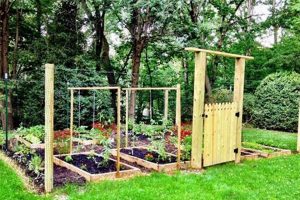
The use of a structure necessitates careful consideration of support systems for the tomato plants. Unlike sprawling field cultivation, the confined area encourages vertical growth, placing a premium on adequate support to prevent stem breakage, fruit rot, and compromised air circulation. Insufficient support leads to plants collapsing under their own weight, increasing disease susceptibility due to fruit contact with the soil. For example, indeterminate tomato varieties, if unsupported, will quickly overgrow the space, hindering access for harvesting and pest management. Consequently, implementation of proper support systems constitutes an indispensable element of the environment.
Several support options exist, each with specific advantages and disadvantages. Staking involves driving individual stakes into the soil near each plant, providing vertical support as the plant grows. Caging utilizes wire or plastic cages surrounding each plant, offering comprehensive support as the plant expands. Trellising employs a system of wires or netting stretched between posts, allowing for the training of plants along a vertical plane. The selection of a particular support method depends on tomato variety, space constraints, and gardener preference. For determinate varieties, smaller cages or stakes may suffice, while indeterminate varieties require more robust caging or trellising systems. Regular pruning and tying of stems to the support structure ensure even weight distribution and prevent overloading.
In conclusion, the use of a support structure is integral to maximizing yield and minimizing disease. Neglecting this aspect leads to reduced productivity and increased maintenance. Careful planning, appropriate support selection, and consistent maintenance are essential for ensuring the long-term health and productivity of the tomato crop within the system. The symbiotic relationship between the system and support systems ultimately determines the success of this gardening method.
Frequently Asked Questions
The following section addresses common inquiries regarding the establishment and maintenance of tomato plants within contained, elevated planting structures. These questions aim to provide practical guidance for optimizing plant health and fruit production.
Question 1: What are the optimal dimensions for the structure?
The width should not exceed four feet, facilitating accessibility. The depth should be at least twelve inches to accommodate root systems. Length is contingent on available space and plant density, balanced to prevent overcrowding.
Question 2: What soil composition is most suitable?
A well-draining mix comprising topsoil, compost, and peat moss or coconut coir provides essential nutrients and aeration. Heavy clay soils should be avoided due to their impediment of drainage and root development.
Question 3: Are specific tomato varieties better suited for this method?
Determinate tomato varieties, exhibiting a compact, bush-like growth habit, are generally preferred due to space constraints. Indeterminate varieties necessitate substantial support and rigorous pruning.
Question 4: How often should the plants be watered?
Maintain consistent soil moisture, watering deeply and infrequently. Target the root zone, avoiding overhead watering to minimize fungal diseases and blossom end rot.
Question 5: What measures can be taken to prevent common pests and diseases?
Regularly inspect plants for pests and diseases. Implement appropriate control measures, including organic insecticides or fungicides, as needed. Crop rotation and proper sanitation practices minimize the risk of soilborne pathogens.
Question 6: Is fertilization necessary, and if so, what type?
Fertilization is essential for sustained growth and fruit production. Incorporate slow-release fertilizers at planting and supplement with liquid fertilizers as needed. Monitor soil nutrient levels and adjust fertilization accordingly.
The preceding responses offer fundamental guidance for successful tomato cultivation. Adherence to these recommendations promotes plant health and maximizes yield potential.
The subsequent section will delve into advanced techniques for enhancing productivity and addressing specific challenges encountered in this specialized gardening method.
Cultivating Tomatoes in Elevated Structures
The exploration of the “raised bed tomato garden” underscores its multifaceted nature. Soil composition, drainage dynamics, variety selection, pest management, and support structures have been identified as critical determinants of success. A comprehensive understanding of these elements, coupled with diligent implementation of best practices, is essential for maximizing yield and minimizing potential challenges.
The cultivation of tomatoes in these structures, therefore, represents a commitment to controlled horticultural practice. Future endeavors in this area should prioritize sustainable methods and the integration of innovative technologies to further optimize resource utilization and enhance overall productivity. The long-term viability of this method hinges on a commitment to continuous improvement and adaptation to evolving environmental conditions.