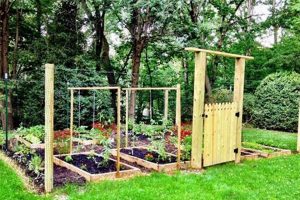
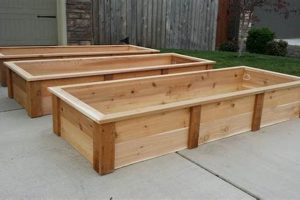
Structures designed to support climbing plants within the confines of an elevated planting area offer a dual advantage. They maximize vertical space for produce and ornamentals, creating a visually appealing garden feature. For example, a frame constructed from wood or metal can support vining vegetables like cucumbers or flowering plants such as climbing roses, both increasing yield and enhancing aesthetics.
The integration of vertical supports in elevated gardens presents numerous advantages. These include improved air circulation, which minimizes fungal diseases; easier harvesting due to plant accessibility; and optimized sunlight exposure for all parts of the plant. Historically, these supportive elements have been used in various forms across different cultures to intensify cultivation in limited spaces and to protect crops from ground-borne pests.
This article will further examine construction materials, design considerations, suitable plant varieties, and best practices for integrating these structures into the overall garden plan. Detailed guidance is provided to ensure optimal performance and longevity of the support system within the raised bed environment.
Practical Guidance
The following outlines crucial points to consider when incorporating vertical supports into elevated planting areas to enhance functionality and plant health.
Tip 1: Material Selection: Choose weather-resistant materials like cedar, redwood, or powder-coated steel to withstand outdoor conditions and extend the structure’s lifespan. Untreated wood will degrade more rapidly, requiring more frequent replacement.
Tip 2: Structural Integrity: Ensure the support is firmly anchored to the raised bed frame or directly into the ground beneath the bed, especially for heavy-yielding plants such as pumpkins or melons. Adequate bracing is essential to prevent collapse under the weight of mature plants.
Tip 3: Plant Compatibility: Select plants with appropriate growth habits for vertical structures. Consider the mature size and weight of the plant, and choose a support system capable of handling the load. Avoid overly aggressive vines that may strangle other plants.
Tip 4: Orientation and Sunlight: Position the supports to maximize sunlight exposure for all plants. A north-south orientation is generally preferred to ensure even light distribution throughout the day. Consider shading effects on neighboring plants.
Tip 5: Maintenance Practices: Regularly inspect the structure for signs of damage, such as rot or corrosion. Promptly repair or replace any damaged components to maintain structural integrity and prevent plant injury. Clean the support structure annually to remove accumulated debris and pests.
Tip 6: Proper Plant Training: Gently guide plant growth onto the support system to encourage upward growth and prevent sprawling. Use soft ties or clips to secure vines without constricting stems.
Adhering to these guidelines will promote a robust and productive vertical gardening system within elevated planting areas, maximizing space utilization and enhancing horticultural success.
The article will conclude with a summary of design principles and a resource directory for further exploration of related topics.
1. Stability

Structural integrity is a foundational requirement for vertical support systems used in elevated planting areas. Without a stable base and secure construction, the potential for collapse compromises plant health, gardening efforts, and safety. Stability affects the long-term viability of the system and its ability to support mature, heavy plants.
- Anchoring to the Raised Bed
The manner in which the support is attached to the raised bed structure is critical. Secure connections using bolts, screws, or brackets must resist the combined forces of wind, plant weight, and soil moisture. Insufficient anchoring can lead to tilting or detachment, particularly during storms or as plants reach full size.
- Material Strength and Load Capacity
The chosen materials must possess adequate strength to bear the anticipated load. Wood, metal, or composite materials should be selected based on their load-bearing capabilities and resistance to environmental degradation. Overloading the support structure can result in structural failure and plant damage.
- Bracing and Reinforcement
Additional bracing, such as diagonal supports or crossbars, enhances stability by distributing weight and resisting lateral forces. These reinforcements are particularly important for taller or wider support structures. Proper bracing minimizes the risk of swaying or toppling.
- Ground Penetration (If Applicable)
If the support structure extends into the ground beneath the raised bed, the depth and method of ground penetration directly impact stability. Adequate depth and proper anchoring in the soil are essential, especially in areas prone to high winds or unstable soil conditions. Consider the potential for frost heave in colder climates.
The aforementioned elements are interrelated, contributing collectively to the overall stability of the vertical support system. Adequate attention to these details from the design phase through construction ensures that the system will reliably support plant growth and withstand environmental stressors, optimizing the benefits of vertical gardening in raised bed environments. Failure to prioritize stability can result in costly repairs, plant loss, and potential safety hazards.
2. Material Durability

The longevity and structural integrity of a vertical support system within an elevated planting area are directly contingent upon the inherent durability of the materials employed in its construction. The constant exposure to environmental stressorsincluding moisture, sunlight, temperature fluctuations, and potential contact with soil organismsnecessitates careful material selection to ensure long-term performance. For instance, untreated wood, while initially cost-effective, is susceptible to rot and insect infestation, leading to premature failure of the structure. Conversely, materials like cedar or redwood, possessing natural resistance to decay, extend the lifespan of the support, reducing the need for frequent repairs or replacements. Powder-coated steel, though offering superior strength, requires careful coating to prevent corrosion in the presence of moisture and soil acidity.
The choice of material influences not only the structural stability but also the aesthetic appeal and environmental impact of the elevated garden. Durable materials minimize waste associated with frequent replacements and reduce the need for chemical treatments to combat decay or pest infestations. Consider a scenario where a metal support structure, improperly treated, leaches rust into the surrounding soil, potentially affecting plant health and contaminating the growing medium. Selecting materials specifically designed for outdoor use, and employing proper sealing or protective coatings, mitigates these risks. Further, the use of recycled or sustainably sourced materials contributes to environmentally responsible gardening practices.
In summary, material durability is a non-negotiable aspect of vertical support systems. Careful consideration of environmental factors, material properties, and long-term maintenance requirements is paramount to achieving a stable, functional, and aesthetically pleasing structure. Neglecting material durability can lead to structural failures, increased maintenance costs, and negative environmental consequences, underscoring the need for informed material selection in the design and construction phases.
3. Plant Support

The effectiveness of a structure designed for vertical cultivation within an elevated planting area is directly predicated on its capacity to provide adequate assistance to plants. Plant support, in this context, represents a critical functional element that facilitates healthy growth, optimizes resource utilization, and enhances overall productivity. The absence of adequate support can lead to stunted growth, increased vulnerability to pests and diseases, and reduced yields.
The link between structural design and plant support is exemplified by the utilization of a trellis for vining crops such as tomatoes or cucumbers. A well-constructed trellis distributes the weight of the mature plant evenly, preventing stem breakage and allowing for optimal sunlight exposure. Conversely, a poorly designed or inadequately reinforced structure can collapse under the weight of the plants, resulting in significant crop loss. The selection of appropriate materials, the spacing of support elements, and the method of attachment to the raised bed all contribute to the overall effectiveness of plant support. The integration of vertical support enables proper air circulation, reducing humidity and inhibiting fungal diseases such as powdery mildew. Furthermore, it facilitates easier harvesting and pruning, minimizing plant stress and optimizing resource allocation.
In conclusion, plant support is not merely an ancillary feature but rather an essential component of the system. A robust, well-designed system that effectively supports plant growth is integral to maximizing the benefits of vertical gardening within a raised bed. Overlooking this critical relationship can compromise the long-term success and sustainability of the gardening endeavor. The consideration of plant-specific needs, material selection, and structural design are paramount to ensuring optimal performance and yield.
4. Sunlight Access

Optimal sunlight exposure is a fundamental requirement for plant growth, and its efficient management is critical in the context of vertically oriented cultivation systems in elevated planting areas. The design and placement of these supportive structures directly influence the quantity and quality of light reaching plants, thereby impacting photosynthetic efficiency, overall health, and yield.
- Orientation and Positioning
The compass direction of the supportive structure and raised bed significantly affects sunlight interception. An east-west orientation maximizes morning and afternoon sun exposure, while a north-south orientation ensures more uniform light distribution throughout the day. However, the presence of surrounding structures, such as buildings or trees, may necessitate adjustments to optimize sunlight capture. Shadow analysis tools can aid in determining the most favorable placement.
- Trellis Design and Spacing
The density of the trellis material and the spacing between vertical and horizontal elements determine the degree to which sunlight is attenuated. Dense structures create significant shading, potentially hindering the growth of lower leaves and adjacent plants. Open designs, utilizing wider spacing or lighter materials, allow for greater light penetration, promoting more uniform growth and maximizing photosynthetic activity. The specific requirements of the plants being grown should inform the design choices.
- Plant Training and Pruning
The manner in which plants are trained and pruned on the supportive structure directly impacts sunlight exposure. Overcrowding leads to self-shading, reducing photosynthetic efficiency and increasing the risk of disease. Selective pruning to remove excess foliage and strategic training to distribute leaves evenly across the structure can optimize light interception and promote robust growth. This requires ongoing monitoring and adjustment throughout the growing season.
- Reflective Surfaces and Supplemental Lighting
In situations where natural sunlight is limited, the use of reflective surfaces or supplemental lighting can enhance light exposure. White or reflective mulches can bounce sunlight onto lower leaves, while strategically positioned artificial lights can provide additional illumination during periods of low light intensity. The effectiveness of these techniques depends on the specific spectral requirements of the plants being grown and the intensity and duration of supplemental light.
The interplay between orientation, structural design, plant training, and supplemental strategies determines the effectiveness of sunlight management. Failure to optimize light exposure can significantly reduce plant growth and yield. Therefore, careful consideration of these factors is crucial to maximizing the benefits of vertical gardening within an elevated planting environment. Strategic utilization of supportive structures to enhance sunlight capture represents a critical element of successful cultivation.
5. Air Circulation

Adequate ventilation is a crucial element for maintaining plant health and optimizing yields when integrating vertical support structures within elevated planting areas. The design and implementation of these systems directly influence airflow around plants, affecting disease susceptibility, nutrient uptake, and overall growth vigor.
- Reduced Humidity and Disease Prevention
Vertical gardening, if improperly managed, can lead to dense foliage and stagnant air, increasing humidity levels within the plant canopy. Elevated humidity fosters fungal diseases, such as powdery mildew and blight, which thrive in moist environments. Vertical supports, by promoting air movement, reduce humidity and create an unfavorable environment for pathogens. For example, wider spacing between plants and the strategic pruning of leaves help to maintain optimal airflow, minimizing disease incidence.
- Enhanced Pollination
Air circulation facilitates pollination, particularly for wind-pollinated plants. Increased airflow aids in the dispersal of pollen, promoting fertilization and subsequent fruit development. Enclosed or sheltered areas may impede pollen transfer, resulting in reduced fruit set. The open structure of many vertical supports allows for unrestricted airflow, enhancing pollination efficiency. This is particularly beneficial for crops such as cucumbers and squash that rely on insect pollination, as good ventilation also attracts pollinators.
- Temperature Regulation
Airflow contributes to temperature regulation within the plant canopy. Stagnant air can trap heat, leading to elevated temperatures that stress plants, particularly during hot weather. Moving air dissipates heat, preventing overheating and maintaining optimal temperatures for photosynthesis and growth. Vertical structures that allow for air movement help to prevent temperature extremes, promoting consistent growth throughout the season. Consider that a well-ventilated system can mitigate the risk of heat stress during summer months, ensuring robust plant development.
- Nutrient Uptake and Transpiration
Transpiration, the process by which plants lose water vapor through their leaves, is influenced by air movement. Adequate airflow promotes transpiration, which in turn facilitates the uptake of nutrients from the soil. Stagnant air impedes transpiration, potentially limiting nutrient availability and hindering growth. Proper ventilation supports healthy transpiration rates, ensuring that plants receive the necessary nutrients for optimal development. The strategic placement of vertical supports, coupled with proper plant spacing, maximizes air movement and supports efficient nutrient uptake.
These facets underscore the vital role of adequate ventilation. Effective integration of vertical supports within elevated planting areas necessitates careful attention to structural design, plant spacing, and pruning practices to maximize airflow and promote plant health. Ultimately, proper ventilation results in healthier, more productive plants and a more successful gardening endeavor. Conversely, neglecting air circulation can lead to disease outbreaks, reduced yields, and increased maintenance requirements.
6. Pest Management
Effective pest management is crucial within the context of elevated planting areas incorporating vertical support systems. The unique environment created by these structures can either exacerbate or mitigate pest pressures, necessitating careful consideration of pest control strategies.
- Improved Visibility and Access for Inspection
Vertical support systems elevate plants, enhancing visibility and accessibility for routine inspection. This allows for early detection of pest infestations, enabling prompt intervention before populations escalate. For example, aphids or spider mites are more readily identified on climbing beans supported by a structure than on sprawling plants at ground level. Early detection minimizes the need for broad-spectrum treatments.
- Enhanced Air Circulation and Reduced Humidity
The open structure of a trellis or similar support promotes air circulation around plants, reducing humidity levels within the canopy. Many fungal diseases and certain pests, such as snails and slugs, thrive in humid environments. Improved airflow creates a less favorable habitat, naturally suppressing these pests. For instance, a well-ventilated system diminishes the likelihood of powdery mildew on cucurbits, thereby reducing the attractiveness of these plants to specific sap-sucking insects.
- Facilitation of Biological Control
Vertical structures can be designed to support the introduction and establishment of beneficial insects or other biological control agents. By providing suitable habitat or shelter, these structures encourage the presence of natural predators that prey on pests. For example, a trellis can be modified to include small nesting boxes for lacewings or ladybugs, promoting their colonization of the garden. These beneficial insects then help to control populations of aphids, whiteflies, and other common pests.
- Physical Barriers and Exclusion Techniques
The framework of a vertical support system can be adapted to incorporate physical barriers or exclusion techniques to prevent pest access. Netting or row covers can be easily attached to the structure to protect plants from flying insects or larger pests, such as birds or rabbits. This creates a physical barrier that prevents pests from reaching the plants, minimizing damage and reducing the need for chemical interventions. For instance, netting can be used to protect ripening berries from bird predation.
The integration of effective pest management practices is paramount for maximizing the benefits of elevated planting areas with vertical supports. By enhancing visibility, improving air circulation, facilitating biological control, and enabling physical barriers, these systems contribute to a more sustainable and productive garden. The synergy between structural design and pest control strategies is essential for long-term success.
7. Space Maximization
The inherent limitation of surface area in residential gardening necessitates strategies to optimize resource utilization. Elevated planting areas, when coupled with vertical supports, present a viable solution to intensify cultivation and enhance yield within a confined footprint. The integration of a support structure transforms a two-dimensional planting bed into a three-dimensional growing environment, effectively expanding the available space for plant growth.
- Vertical Expansion of Growing Area
Structures leverage vertical space, allowing plants to ascend rather than spread horizontally. This is particularly relevant for vining crops like cucumbers, squash, and indeterminate tomatoes, which would otherwise require considerable ground area. By guiding growth upward, significantly more plants can be accommodated within the same footprint as a traditional, unsupported planting bed. For instance, a single raised bed might support six tomato plants trained on a trellis, whereas only two or three plants could be accommodated without vertical supports.
- Optimized Sunlight Exposure
Vertical support systems, when strategically positioned, enhance sunlight capture. By elevating plants and spreading foliage across a vertical plane, the shading effects of adjacent plants are minimized. This ensures more uniform sunlight exposure for all parts of the plant, promoting photosynthesis and fruit production. In constrained spaces, where sunlight is a limited resource, this optimized distribution can significantly improve plant vigor and yield. Consider a pole bean variety trained on a frame; the leaves are spread out vertically, maximizing light capture compared to the same plant sprawling on the ground.
- Improved Air Circulation and Reduced Disease
By lifting plants off the ground and increasing airflow around foliage, vertical supports minimize humidity and reduce the risk of fungal diseases. This is particularly beneficial in densely planted areas, where stagnant air can create a conducive environment for pathogens. Improved ventilation also promotes faster drying of leaves after rain or irrigation, further reducing disease pressure. A vertical support system allows air to circulate freely through the plant canopy, which prevents issues like powdery mildew.
- Enhanced Harvest Accessibility and Management
Elevating plants on vertical structures simplifies harvesting and pruning. Fruits and vegetables are more easily accessible, reducing bending and straining. Improved visibility also facilitates early detection of pests or diseases, allowing for timely intervention. The ease of management translates to more efficient utilization of time and resources, maximizing the productivity of the limited space. Harvesting cucumbers becomes simplified and efficient, reducing potential damage to the plant from bending.
These facets collectively demonstrate the potential of elevated planting areas with vertical supports to optimize space utilization in residential gardens. By expanding the growing area vertically, enhancing sunlight exposure, improving air circulation, and facilitating management, these systems enable gardeners to maximize yields and enhance the aesthetic appeal of their limited spaces. The careful selection of plant varieties and structural design are critical to realizing the full benefits of space maximization.
Frequently Asked Questions
The following section addresses common inquiries concerning the integration of structures within raised garden beds, providing clarity on various aspects related to design, implementation, and maintenance.
Question 1: What constitutes the ideal height for a structure intended for use with indeterminate tomato varieties?
Optimal height is dependent upon the specific tomato variety and its growth habit. Indeterminate varieties, characterized by continuous growth, typically require a minimum height of six feet to accommodate their mature size and facilitate efficient harvesting. Structures exceeding eight feet may present challenges in reaching the upper portions of the plant.
Question 2: Which materials offer the greatest longevity in constructing a vertical support system?
Weather-resistant materials are crucial for structural longevity. Cedar and redwood offer natural resistance to decay and insect infestation, providing a durable solution. Powder-coated steel provides significant strength and resistance to corrosion. Untreated wood has a limited lifespan and necessitates frequent replacement.
Question 3: How does structure placement affect plant health and productivity?
Proper placement is essential for maximizing sunlight exposure and air circulation. A north-south orientation generally provides even light distribution throughout the day. Consideration must be given to shading from surrounding structures. Adequate spacing between plants is important for preventing overcrowding and promoting airflow, reducing the risk of fungal diseases.
Question 4: What methods effectively secure a structure to an elevated planting bed to withstand wind and plant weight?
Secure anchoring is paramount for stability. Bolts, screws, or brackets should be utilized to firmly attach the structure to the raised bed frame. For heavier plants, consider extending the structure into the ground beneath the bed to provide additional support. Diagonal bracing provides resistance against lateral forces, enhancing overall stability.
Question 5: How does structure design affect pest management strategies?
An open design facilitates air circulation, reducing humidity and inhibiting certain pest populations. The structure itself can be used to support netting or row covers, providing physical barriers against pests. Improved visibility allows for early detection and targeted intervention, minimizing the need for broad-spectrum treatments.
Question 6: What maintenance practices are required to ensure the continued functionality and safety of the system?
Regular inspection is essential for identifying signs of damage, such as rot or corrosion. Damaged components should be promptly repaired or replaced. Pruning and training plants to prevent overcrowding and maintain airflow is necessary. Cleaning the structure annually removes accumulated debris and pests.
The integration is contingent upon careful planning and ongoing maintenance. The considerations outlined in this section serve to promote sustainable and productive systems.
The subsequent section will provide resources for further research into specific types and techniques.
Conclusion
This exploration has illuminated the multifaceted benefits and considerations surrounding the implementation of a “raised bed garden trellis.” From optimizing space and enhancing sunlight exposure to facilitating pest management and promoting air circulation, the strategic integration of vertical supports within elevated planting areas presents a compelling strategy for maximizing horticultural yield and efficiency. The durability of materials, stability of construction, and thoughtful design are essential determinants of long-term success.
The informed application of these principles empowers gardeners to cultivate thriving, sustainable, and aesthetically pleasing environments. Further investigation into plant-specific requirements and innovative structural designs will undoubtedly yield continued advancements in vertical gardening techniques, shaping the future of small-space cultivation. Ongoing research and practical experimentation remain crucial for realizing the full potential of these systems and addressing the evolving challenges of urban and suburban food production.