



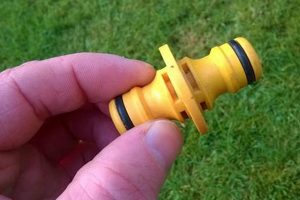
These devices represent a method for rapidly joining and disconnecting sections of garden hose, or attaching a hose to a spigot or watering tool. A typical setup involves a receiver, often permanently affixed to a faucet or hose end, and a corresponding connector that attaches to the other hose or accessory. Mating these two parts creates a secure, leak-resistant connection with minimal effort.
The adoption of these systems provides several advantages. They streamline watering tasks, enabling quick changes between different nozzles, sprinklers, or hose extensions. The ease of use is especially beneficial for individuals with limited dexterity or those seeking to reduce the physical strain associated with traditional threaded connections. Furthermore, the time saved contributes to increased efficiency in garden maintenance. The evolution of these fittings reflects a broader trend towards user-friendly and time-saving solutions in gardening practices.
Understanding the various types, materials, installation procedures, and maintenance practices is crucial for maximizing the lifespan and performance of these garden hose connection systems. The following sections will delve into these aspects, providing a comprehensive overview for effective utilization.
Maximizing the Performance of Rapid Garden Hose Connections
The following recommendations are designed to optimize the utility and longevity of quick connection garden hose systems. Adherence to these guidelines will ensure reliable performance and prevent premature failure.
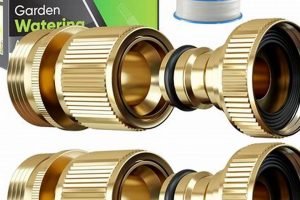
Tip 1: Material Selection: Prioritize fittings constructed from durable materials such as brass or high-impact plastic. Brass offers superior corrosion resistance and withstands higher water pressures, while quality plastics provide a cost-effective alternative for lighter-duty applications.
Tip 2: Proper Installation: Ensure secure attachment to both the hose and the spigot or accessory. Over-tightening can damage the fittings, while insufficient tightening leads to leaks. Follow the manufacturer’s instructions precisely.
Tip 3: Regular Inspection: Routinely examine the connections for signs of wear, cracks, or leaks. Promptly replace any damaged components to prevent further issues and maintain optimal water pressure.
Tip 4: Winterization: Disconnect and drain the system before freezing temperatures arrive. Residual water can expand and damage the fittings, rendering them unusable. Store the components in a frost-free location.
Tip 5: Compatibility Considerations: Verify that the chosen fitting type is compatible with the hose diameter and intended use. Mixing incompatible components can result in leaks or connection failures.
Tip 6: Lubrication: Periodically apply a silicone-based lubricant to the O-rings or seals within the connectors. This will help maintain a watertight seal and prevent the fittings from sticking.
Tip 7: Avoid Over-Extension: Refrain from pulling or yanking on the hose while connected. Excessive force can strain the fittings and weaken the connections over time.
Following these tips will contribute to the extended lifespan and consistent functionality of quick connection garden hose systems. Implementing these practices minimizes the risk of leaks, connection failures, and the need for frequent replacements.
With these guidelines in mind, attention now turns to troubleshooting common issues that may arise during the use of these systems.
1. Compatibility

Compatibility is a paramount consideration when selecting fittings. These systems are manufactured with varying standards, and mismatched components can lead to leaks, insecure connections, and even damage to the fittings themselves. The consequences of incompatibility can range from minor annoyances, such as a persistent drip, to more significant problems, including a complete separation of the hose under pressure. This can result in wasted water, potential damage to surrounding landscaping, and the need for costly repairs or replacements.
The presence of multiple, proprietary connection designs further complicates matters. A fitting from one manufacturer may not interface correctly with a fitting from another. Some systems utilize specific internal diameters or locking mechanisms that are not universally compatible. Consequently, a prospective user must carefully assess the compatibility of new fittings with existing hoses, spigots, and watering accessories. This assessment typically involves checking product specifications, referring to compatibility charts provided by manufacturers, or seeking expert advice from gardening professionals.
In summary, ensuring compatibility is not merely a matter of convenience; it is essential for the safe, efficient, and reliable operation of such systems. Neglecting this aspect can undermine the very benefits these connectors are designed to provide. Therefore, diligent attention to compatibility is crucial for any user seeking to maximize the value and longevity of their garden hose system.
2. Material Durability
Material durability constitutes a critical factor in the performance and lifespan of rapid garden hose connection systems. These components are frequently exposed to harsh environmental conditions, including prolonged sunlight, temperature extremes, and repeated contact with water and soil. Consequently, the materials used in their construction directly influence their resistance to degradation and mechanical failure. Inferior materials may succumb to cracking, brittleness, or corrosion, leading to leaks, reduced water pressure, and eventual system failure. For example, plastic fittings made from low-grade polymers are prone to UV damage, causing them to become brittle and prone to breakage after short periods of outdoor use.
The choice of materials also affects the fitting’s ability to withstand internal water pressure and external physical stress. Brass, for instance, offers superior strength and corrosion resistance compared to plastic alternatives, making it suitable for high-pressure applications and demanding environments. Stainless steel represents another robust option, prized for its durability and resistance to rust. Conversely, while plastic fittings may be more cost-effective, they are generally less capable of withstanding high pressures and are more susceptible to damage from impact or abrasion. Selecting fittings appropriate to the environment and the hose use case is thus of major importance.
In summary, material durability is an indispensable element in the overall quality and reliability of rapid garden hose connection systems. Opting for fittings constructed from durable materials such as brass or high-quality polymers enhances their resistance to environmental degradation, physical stress, and high water pressure. This translates to extended service life, reduced maintenance requiremen
ts, and improved performance, ultimately providing long-term value for the user. Consideration to material selection during the purchase and installation phases is vital to obtaining and maintaining the benefits that quick connection systems offer.
3. Sealing Efficiency

Sealing efficiency is a critical performance parameter for quick connect garden hose systems, directly impacting water conservation, operational costs, and overall user satisfaction. An inadequate seal results in water leakage, reduced water pressure at the nozzle, and potential damage to surrounding areas. The integrity of the seal is paramount in realizing the intended convenience and efficiency benefits of these systems.
- O-Ring Integrity
The O-ring, typically made of rubber or silicone, is a primary component responsible for creating a watertight seal. Degradation of the O-ring due to age, chemical exposure, or physical damage compromises its ability to effectively block water flow. Regular inspection and replacement of worn O-rings are essential maintenance practices. For example, exposure to chlorinated water can accelerate the deterioration of certain rubber compounds, leading to leaks and the need for frequent replacements. This directly affects the overall sealing efficiency.
- Surface Finish of Mating Components
The surface finish of the male and female connectors must be smooth and free of imperfections to ensure a proper seal. Scratches, burrs, or corrosion can create pathways for water to escape. Manufacturers often employ specialized machining techniques to achieve the necessary surface finish. Even microscopic surface defects can disrupt the seal, causing leaks and diminishing sealing efficiency.
- Pressure Rating Compliance
Exceeding the pressure rating of the quick connect system can compromise the seal, leading to leakage or even catastrophic failure. Each fitting is designed to withstand a specific maximum pressure, and exceeding this limit places undue stress on the sealing components. For instance, using a low-pressure fitting with a high-pressure water source can result in immediate leaks and a significant reduction in sealing efficiency.
- Proper Connection Engagement
Complete and secure engagement of the connecting parts is necessary to achieve optimal sealing efficiency. Partial engagement can result in misaligned sealing surfaces and increased leakage. A distinct audible “click” or tactile feedback mechanism is often incorporated into the design to indicate a fully engaged connection. If the components are not fully engaged, sealing efficiency is compromised, and leaks will occur.
These interconnected facets of sealing efficiency underscore the importance of proper selection, installation, and maintenance of rapid garden hose connection systems. Addressing these key areas will maximize water conservation, minimize operational costs, and ensure user satisfaction.
4. Ergonomic Design

Ergonomic design plays a critical role in the usability and accessibility of quick connect garden hose systems. The functionality of these systems relies on the user’s ability to easily and securely connect and disconnect the fittings. Poor ergonomic design can lead to user frustration, physical strain, and even injury, undermining the intended convenience of the system. For example, fittings with small, slippery grips require excessive force to manipulate, particularly for individuals with arthritis or limited hand strength. This can result in discomfort, pain, and an inability to use the system effectively. Therefore, ergonomic considerations are integral to the design of quick connect garden hose systems, affecting both usability and safety.
Effective ergonomic design in these systems addresses several key factors. The size and shape of the grip surfaces should be optimized for comfortable and secure handling. Materials with high friction coefficients, such as rubberized coatings, improve grip even when wet. The force required to engage and disengage the locking mechanism should be minimized to reduce strain on the hands and wrists. Furthermore, the design should accommodate a range of hand sizes and dexterity levels to ensure accessibility for a broad user base. An example of good ergonomic design is a fitting with a large, contoured grip that allows for easy manipulation with minimal force. Conversely, a poorly designed fitting with a small, smooth grip may be difficult to use, especially in wet conditions.
In summary, ergonomic design is not merely an aesthetic consideration; it is a fundamental element that determines the practicality and user-friendliness of quick connect garden hose systems. Prioritizing ergonomic principles in the design and selection of these fittings enhances usability, reduces physical strain, and promotes accessibility for a diverse range of users. Ignoring these considerations can negate the intended benefits of quick connect systems, leading to user dissatisfaction and potential health issues. By focusing on ergonomic excellence, manufacturers can create systems that are both efficient and comfortable to use.
5. Pressure Resistance
Pressure resistance is a critical design parameter for quick connect garden hose systems, reflecting their ability to withstand internal water pressure without leaking, deforming, or failing catastrophically. The pressure rating of a fitting dictates its safe operating limits, and exceeding these limits can lead to hazardous situations and system damage. Understanding the factors influencing pressure resistance is essential for selecting appropriate fittings and ensuring safe and reliable operation.
- Material Composition and Wall Thickness
The material used in the construction of fittings, along with its wall thickness, directly impacts its ability to withstand internal pressure. Brass and stainless steel generally offer higher pressure resistance compared to plastic alternatives. Thicker walls provide greater strength and resistance to deformation under pressure. For example, a brass fitting with a substantial wall thickness can withstand pressures exceeding 100 PSI, whereas a thin-walled plastic fitting may fail at pressures below 50 PSI. In applications involving high water pressure, selecting fittings with robust materials and sufficient wall thickness is essential to ensure safe operation.
- Locking Mechanism Design
The design of the locking mechanism, which secures the connection between the fitting and the hose or accessory, is another factor influencing pressure resistance. A robust locking mechanism ensures that the fitting remains securely connected even under high pressure, preventing accidental disconnections and leaks. For example, a ball-locking mechanism with multiple locking balls distributed around the circumference of the fitting provides a more secure connection compared to a single-point locking mechanism. The design of the locking mechanism must be able to effectively distribute the force exerted by the water pressure to prevent deformation and failure of the connection.
- Seal Design and Material
The seal, typ
ically an O-ring or gasket, is responsible for preventing leaks at the connection point. The design of the seal and the material used in its construction directly influence its ability to maintain a watertight seal under pressure. A well-designed seal with a tight fit and a durable material, such as EPDM rubber, can effectively prevent leaks even under high pressure. The choice of seal material should also consider its compatibility with the water source and any chemicals that may be present. Degradation of the seal material due to chemical exposure can compromise its sealing ability and lead to leaks. - Manufacturing Tolerances and Quality Control
Precise manufacturing tolerances and rigorous quality control procedures are essential for ensuring consistent pressure resistance across all fittings. Variations in dimensions, material properties, and manufacturing processes can lead to inconsistencies in performance and reduce the overall pressure resistance of the system. For example, a fitting with minor imperfections or dimensional deviations may be more susceptible to leaks or failure under pressure. Manufacturers who adhere to strict quality control standards and employ advanced manufacturing techniques can ensure that their fittings meet or exceed the specified pressure ratings.
These interconnected elements highlight the multifaceted nature of pressure resistance in quick connect garden hose systems. Selecting fittings with appropriate pressure ratings, robust materials, secure locking mechanisms, and reliable seals is crucial for ensuring safe and efficient operation. By considering these factors, users can minimize the risk of leaks, prevent damage to their watering systems, and enjoy years of reliable service from their quick connect fittings.
6. Connection Security

Connection security is a fundamental aspect of quick connect garden hose systems, directly influencing their functionality and safety. The primary function of these systems to provide a rapid and reliable means of joining hose sections or attaching accessories is contingent upon the integrity of the connection. If the connection is prone to accidental disengagement, the advantages of quick connect technology are negated, and potential hazards may arise. A compromised connection can lead to unexpected water discharge, causing damage to landscaping, property, or even posing a slip hazard. The reliability of the locking mechanism is, therefore, paramount. A system relying on a flimsy or poorly designed locking mechanism, for example, might disconnect under normal water pressure or when subjected to minimal physical stress, rendering it unsuitable for practical use. A notable example is the use of these systems in commercial landscaping, where frequent hose movement and potential impacts necessitate a high degree of connection security. The cost of downtime and potential damage due to a faulty connection far outweighs the initial savings from a lower-quality system.
The design of the locking mechanism directly impacts connection security. Systems employing multiple locking points, such as ball-locking mechanisms, tend to offer greater resistance to accidental disengagement compared to those relying on a single latch. The materials used in the locking mechanism also play a crucial role. High-strength metals or durable polymers provide greater resistance to wear and tear, ensuring a secure connection over an extended period. Furthermore, the presence of visual or tactile indicators confirming a secure connection provides an additional layer of safety. For instance, a distinct “click” sound or a visible alignment mark can reassure the user that the connection is properly engaged. This is particularly important in situations where the connection is made in a dimly lit area or where the user has limited dexterity.
In summary, connection security is not merely a desirable feature of quick connect garden hose systems but a necessity for their safe and effective operation. The design and materials used in the locking mechanism are critical factors determining the security of the connection. By prioritizing robust locking mechanisms and providing clear indicators of secure engagement, manufacturers can ensure that these systems provide the reliable performance expected by users. Failure to address connection security adequately can undermine the benefits of quick connect technology and expose users to unnecessary risks.
Frequently Asked Questions Regarding Quick Connect Garden Hose Systems
The following section addresses common inquiries and concerns regarding the selection, use, and maintenance of quick connect garden hose systems. These questions are designed to provide clear and concise information to assist users in maximizing the performance and lifespan of their systems.
Question 1: What factors determine the compatibility of a quick connect garden hose fitting?
Compatibility is determined by several factors, including hose diameter, thread type (if applicable), and the specific connection standard employed by the manufacturer. Ensuring that all components adhere to the same standard is crucial for a secure and leak-free connection.
Question 2: Which materials offer the greatest durability for quick connect garden hose fittings?
Brass and stainless steel provide superior durability and corrosion resistance compared to plastic alternatives. Brass is well-suited for high-pressure applications, while stainless steel offers excellent resistance to rust and chemical degradation. High-impact plastics can provide a cost-effective alternative for lower-pressure applications.
Question 3: How frequently should O-rings be replaced in quick connect garden hose systems?
O-rings should be inspected regularly for signs of wear, cracking, or deformation. Replacement frequency depends on usage and environmental conditions, but typically ranges from annually to every few years. Immediate replacement is warranted if leaks are observed at the connection point.
Question 4: What steps can be taken to prevent quick connect garden hose fittings from freezing during winter months?
Disconnect all fittings from hoses and spigots before the onset of freezing temperatures. Thoroughly drain any residual water from the fittings. Store the fittings in a frost-free location, such as a garage or shed.
Question 5: Is it necessary to lubricate quick connect garden hose fittings?
Periodic lubrication with a silicone-based lubricant can help maintain a watertight seal and prevent the fittings from sticking. Apply a small amount of lubricant to the O-rings or sealing surfaces before connecting the fittings.
Question 6: What pressure ratings are typical for quick connect garden hose fittings?
Pressure ratings vary depending on the material and design of the fitting. Common pressure ratings range from 50 PSI to 100 PSI. Consult the manufacturer’s specifications to determine the appropriate pressure rating for the intended application.
The preceding answers offer guidance on maintaining the functionality and longevity of rapid garden hose connections. These practices minimize the risk of leaks and ensure the sustained efficacy of these systems.
With these queries addressed, the following section explores advanced troubleshooting techniques for resolving persistent issues that may arise.
Quick Connect Garden Hose
This exploration has illuminated the essential aspects of quick connect garden hose systems, emphasizing compatibility, mat
erial durability, sealing efficiency, ergonomic design, pressure resistance, and connection security. The proper selection, installation, and maintenance of these systems are crucial for realizing their intended benefits and ensuring reliable performance. Understanding the nuances of each factor enables informed decision-making and maximizes the lifespan of the fittings.
The adoption of quick connect garden hose technology represents a commitment to efficiency and convenience in outdoor maintenance. Continued adherence to best practices, coupled with ongoing innovation in design and materials, will further enhance the utility and longevity of these systems. Users are encouraged to prioritize quality and compatibility to fully capitalize on the advantages offered by quick connect technology, ensuring optimal water conservation and minimizing operational disruptions.
![Best 2 Inch Garden Hose For [X] & Reviews | The Ultimate Gardening Guide: Grow a Thriving Garden Year-Round](https://MyGardenPatch.com/wp-content/uploads/2025/07/th-5631-300x200.jpg "Best 2 Inch Garden Hose For [X] & Reviews The Ultimate Gardening Guide: Grow a Thriving Garden Year-Round")