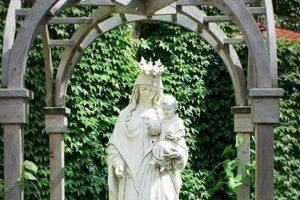
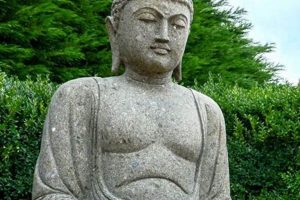
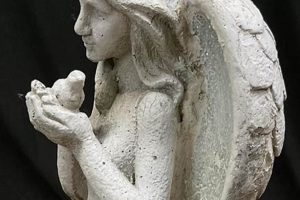
A sculpted representation of Guanyin, the bodhisattva associated with compassion, placed within an outdoor space designed for aesthetic appreciation and contemplation. These figures, often rendered in materials like stone, bronze, or resin, serve as focal points in gardens, offering a visual embodiment of mercy and peace.
The placement of these sculptural pieces provides a sense of tranquility and spiritual grounding. Historically, depictions of the bodhisattva have been incorporated into gardens as symbols of protection and blessings, contributing to the overall harmony and meditative quality of the environment. The presence of this imagery encourages reflection and a connection to the values of empathy and understanding.
This article explores the artistry, cultural significance, and practical considerations involved in selecting and incorporating such a figure into a garden landscape. Discussions will include variations in style and materials, as well as guidelines for placement and maintenance to ensure longevity and enduring beauty.
Installation and Upkeep Guidance
The following guidelines ensure the longevity and spiritual resonance of these sculptural elements within the garden setting. Adherence to these points will enhance both the aesthetic and symbolic value.
Tip 1: Material Selection. Consider the climate. Stone endures well in varied conditions. Bronze offers elegance but requires periodic cleaning to prevent oxidation. Resin offers cost-effectiveness, but its susceptibility to UV degradation necessitates strategic placement in shaded areas.
Tip 2: Foundation Stability. Prior to placement, ensure a level and stable foundation. Uneven surfaces may lead to structural stress and eventual cracking or tilting. A concrete pad or compacted gravel base provides adequate support.
Tip 3: Orientation and Perspective. The direction the figure faces should complement the garden’s design and sightlines. Position it so that it is visible from key viewing points, maximizing its visual impact and enhancing the overall sense of peace.
Tip 4: Environmental Considerations. Proximity to trees and other plants should be carefully considered. Decaying leaves or excessive moisture can lead to staining or erosion of the statue’s surface. Adequate drainage around the base is crucial.
Tip 5: Regular Cleaning Protocol. Periodic cleaning with a soft brush and mild detergent helps remove dirt, algae, and other contaminants. Avoid harsh chemicals or abrasive cleaners, as these can damage the finish.
Tip 6: Winter Protection. In regions with freezing temperatures, consider covering the statue with a protective tarp or blanket to prevent cracking due to ice formation. Moving smaller statues indoors during the winter months is advisable.
Tip 7: Lightning Protection. For larger metallic statues, particularly in areas prone to lightning strikes, consider installing a grounding rod to divert electrical currents and prevent damage.
Proper attention to these details will safeguard the structural integrity and aesthetic appeal for years to come. This sustained care ensures that this representation remains a focal point of beauty and spiritual significance within the garden.
The subsequent sections will explore various artistic interpretations and their cultural origins, providing a deeper understanding of this meaningful symbol.
1. Compassion embodiment

The sculpted figure serves as a tangible representation of karuna, or compassion, a core tenet in Mahayana Buddhism. The visual presence acts as a constant reminder of this virtue. Individuals are encouraged to cultivate empathy and understanding in their daily lives. The aesthetic depiction becomes a point of focus, facilitating introspection and the mindful consideration of actions and their potential impact on others. A garden statue, therefore, isn’t merely a decorative element, but a catalyst for ethical awareness.
The deliberate selection of materials and artistic style reinforces this central theme. Softer materials or flowing robes depict gentleness, while a serene facial expression reinforces the peace it symbolizes. This emphasis on aesthetic cues is important. It fosters emotional connection, strengthening the reminder of compassion. In settings such as healthcare facilities or communal gardens, the presence has been shown to promote a more supportive and understanding environment among patients, visitors, and caregivers.
Recognizing that the sculpture embodies compassion necessitates thoughtful interaction. Maintenance should extend beyond cleaning, and involve acts of mindfulness. Its presence is intended to promote ethical behavior and mutual respect. The garden serves as a training ground for this application. It extends into daily interactions within and outside the garden’s boundaries.
2. Material durability

Material durability is a paramount consideration when selecting a sculptural form for outdoor display. The capacity of the chosen medium to withstand environmental stressors directly impacts the longevity and sustained aesthetic appeal of the installation. Selection demands careful evaluation of climate, exposure, and inherent properties.
- Weather Resistance
Exposure to rain, snow, and fluctuating temperatures can cause degradation over time. Materials such as bronze and certain types of stone possess inherent resistance to moisture and freeze-thaw cycles, mitigating the risk of cracking, erosion, or surface damage. Improper selection can lead to premature deterioration, necessitating costly repairs or replacement.
- UV Stability
Prolonged exposure to ultraviolet radiation from sunlight can cause fading, discoloration, and structural weakening, particularly in synthetic materials such as resin or some plastics. Materials rated for UV resistance, or those treated with UV-protective coatings, offer enhanced durability and maintain visual integrity over extended periods.
- Biological Resistance
The growth of algae, mold, and lichen on the surface can lead to discoloration, staining, and potential structural damage. Materials with naturally antimicrobial properties, or those treated with antifungal coatings, inhibit biological growth and reduce the need for frequent cleaning and maintenance.
- Structural Integrity
The material’s ability to withstand physical stress, including wind loads, impacts, and ground shifting, is essential for ensuring structural stability. High-density materials such as granite or reinforced concrete offer superior strength and resistance to damage from external forces, minimizing the risk of toppling or breakage.
The careful assessment of these factors ensures that the selected material not only complements the artistic design, but also withstands the rigors of the outdoor environment, preserving its spiritual significance and visual appeal for generations to come. The durability of the statue underscores the enduring nature of the virtues that it represents.
3. Placement Significance

The strategic positioning of a representation within a garden environment directly influences its perceived meaning and efficacy. Placement transcends mere aesthetics; it governs the flow of energy, directs contemplative focus, and establishes a visual dialogue between the sculpted form and its surrounding landscape. An inappropriately situated sculpture can diminish its intended impact, while a carefully considered location amplifies its symbolic resonance.
Consider, for example, a figure positioned facing east. This placement draws upon the symbolism of sunrise, representing new beginnings and spiritual awakening. A westward orientation, conversely, may evoke themes of reflection and the acceptance of impermanence. Positioning near a water feature allows for the interplay of elements, invoking purification and emotional clarity. The selection of plants surrounding the statue further contributes to its overall message. Flowering plants can emphasize joy and compassion, while evergreen foliage symbolizes enduring strength and resilience. Furthermore, placement must consider the sightlines from key vantage points within the garden, ensuring the figure is optimally viewed and appreciated.
Ultimately, the placement’s success hinges on a holistic understanding of the sculpture’s inherent symbolism and the garden’s existing design. Careful planning leads to a space that promotes contemplation and serves as a constant reminder of compassion, peace, and inner harmony. The garden transforms from a collection of plants to a sanctuary, fostering a deeper connection with oneself and the surrounding world.
4. Artistic Variations

The depiction of this bodhisattva within garden statuary manifests across a spectrum of artistic styles, each reflecting distinct cultural influences, historical periods, and individual artistic interpretations. These variations are not merely aesthetic choices but profoundly influence the statue’s symbolic communication and spiritual impact. For instance, classical Chinese representations often feature flowing robes, serene facial expressions, and a vase of purifying water, emphasizing compassion and wisdom. Conversely, more contemporary interpretations may incorporate abstract forms, unconventional materials, or emphasize the bodhisattva’s role as a protector, reflecting evolving spiritual perspectives and societal needs. The selection of a particular artistic style directly impacts the emotional and intellectual response of the viewer, influencing their understanding of the bodhisattva’s attributes.
The interplay between artistic style and intended garden setting also demands consideration. A traditional Chinese garden may benefit from a classical representation to maintain stylistic coherence and historical accuracy. In contrast, a modern or eclectic garden design may accommodate a contemporary interpretation, allowing for greater artistic freedom and a more personalized expression of spirituality. Real-life examples, such as the incorporation of minimalist bronze statues in Zen gardens or the placement of ornate stone figures in traditional Chinese courtyards, demonstrate the practical significance of aligning artistic style with the surrounding environment. These choices determine the success in creating a harmonious and spiritually resonant space.
Understanding the diverse artistic variations provides a deeper appreciation for the cultural richness and adaptability inherent within the imagery. While individual preferences vary, recognizing the intended message and historical context associated with different styles is crucial for selecting a figure that resonates personally and enhances the garden’s overall atmosphere. This knowledge mitigates the risk of misinterpretation and ensures the sculptural figure effectively conveys its intended symbolism. The ongoing evolution of artistic styles ensures the continued relevance as a source of inspiration and contemplation for future generations.
5. Spiritual Grounding

The presence of a sculpted figure of Guanyin within a garden setting serves as a conduit for spiritual grounding. This connection arises from the statue acting as a focal point for meditation and contemplation, fostering a sense of inner peace and connection to something larger than oneself. The physical act of tending to the garden and interacting with the statue can reinforce this grounding, creating a tangible link between the individual, the natural world, and the spiritual realm. The statue becomes more than just an object; it becomes a catalyst for a deeper, more meaningful experience.
The effectiveness of this spiritual grounding is amplified by the statue’s inherent symbolism. Guanyin, embodying compassion and mercy, evokes feelings of serenity and encourages reflection on one’s own capacity for empathy. The garden, in turn, provides a tranquil environment conducive to introspection. The combined effect is a space where individuals can disconnect from the stresses of daily life and reconnect with their inner selves. For example, hospitals increasingly incorporate these garden installations to promote healing and reduce anxiety among patients and staff, demonstrating the practical application of this principle. These spaces allow individuals to connect with nature while reminding them of compassion.
Challenges to maintaining spiritual grounding within this context include the encroachment of external distractions, the neglect of the garden space, and the loss of connection to the statue’s symbolic meaning. Consistent engagement with the garden, thoughtful reflection, and a conscious effort to cultivate compassion are essential for preserving this connection. By actively participating in the creation and maintenance of this sacred space, individuals can foster a deeper sense of spiritual grounding and find solace amidst the complexities of modern life.
Frequently Asked Questions Regarding Quan Yin Garden Statues
This section addresses common inquiries and misconceptions surrounding the selection, placement, and maintenance of sculpted figures of Guanyin within garden environments. The following questions aim to provide clarity and guidance for those considering incorporating this element into their outdoor space.
Question 1: What materials are most appropriate for outdoor installation, considering varying climates?
Durable options include natural stone (granite, marble), bronze, and high-quality resin. Stone offers excellent weather resistance in all climates. Bronze provides elegance but requires periodic cleaning to prevent oxidation. Resin is cost-effective but may be susceptible to UV degradation; therefore, shaded placement is recommended. Prioritize materials rated for outdoor use to ensure longevity.
Question 2: How should the statue be oriented within the garden to maximize its spiritual impact?
Orientation depends on the desired symbolism. Eastward facing positions associate with new beginnings and spiritual awakening. Westward orientation evokes themes of reflection and impermanence. Southward facing might connect to warmth and growth. Northward facing might be a protection from harshness or inviting in good fortune, dependent on location and cultural tradition. Consider the interplay of sunlight, shadows, and sightlines when determining placement.
Question 3: What are the best practices for cleaning and maintaining a garden statue?
Regularly clean the statue with a soft brush and mild detergent. Avoid abrasive cleaners or harsh chemicals, which can damage the finish. Remove debris and algae promptly. For bronze, apply a protective wax coating periodically. In freezing climates, consider covering the statue or moving smaller ones indoors during winter months.
Question 4: How can the statue be protected from theft or vandalism?
Consider installing the statue in a well-lit area visible from the main residence or public areas. Secure the statue to a concrete base using epoxy or anchoring bolts. Install a security camera system or motion sensors to deter potential thieves. Consult with local law enforcement for additional security recommendations.
Question 5: What is the significance of the different mudras (hand gestures) depicted in Quan Yin statues?
Different mudras represent distinct aspects of Guanyin’s compassion and teachings. The Abhaya Mudra (raised hand with palm facing outward) symbolizes protection and fearlessness. The Varada Mudra (hand extended downward with palm facing outward) represents generosity and wish fulfillment. Understanding these gestures enhances appreciation for the statue’s symbolic meaning.
Question 6: How does a garden statue of Guanyin contribute to the overall aesthetic and spiritual atmosphere of a garden?
The figure provides a focal point that evokes tranquility, compassion, and spiritual contemplation. Its presence transforms the garden into a sanctuary, promoting relaxation, mindfulness, and a connection with nature. A well-placed statue enhances the garden’s visual appeal while fostering a sense of peace and harmony.
In summary, careful consideration of material durability, orientation, maintenance, security, and symbolic significance is essential for ensuring the long-term beauty and spiritual resonance of a sculpted representation within a garden environment.
The subsequent sections will delve into specific design considerations and artistic interpretations to further guide the selection process.
Conclusion
This article has explored the multifaceted aspects of the figures within garden settings. Key points include material durability, strategic placement, the nuances of artistic variations, and their capacity for spiritual grounding. These elements interweave to define the symbolic weight and aesthetic contribution of these sculptural installations.
The informed integration of such a piece requires a considered understanding of both practical considerations and the deeper cultural significance it represents. Continued appreciation and thoughtful stewardship will ensure its enduring presence as a source of tranquility and contemplation.
![Serene Garden Mary Statue: [Add Detail] for Your Yard | The Ultimate Gardening Guide: Grow a Thriving Garden Year-Round](https://MyGardenPatch.com/wp-content/uploads/2025/07/th-3727-300x200.jpg "Serene Garden Mary Statue: [Add Detail] for Your Yard The Ultimate Gardening Guide: Grow a Thriving Garden Year-Round")