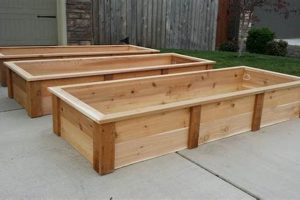
These structures are landscaping elements manufactured off-site using molds to form specific shapes and dimensions from a mixture of cement, aggregates, and other additives. The resulting components are then transported to their final location for assembly, creating an elevated planting area. This contrasts with traditional construction methods that involve on-site mixing and pouring of concrete.
The use of pre-fabricated units offers several advantages, including controlled production environments leading to consistent quality and reduced labor costs at the installation site. Historically, such construction techniques have been employed for various infrastructure projects, but their application in residential gardening provides enhanced durability, design flexibility, and improved accessibility for gardeners, particularly those with mobility limitations.
Subsequent sections will delve into the specific benefits related to design, installation, and long-term maintenance; exploring the advantages offered by this type of gardening structure over alternative materials and construction methods; and considering the various styles and configurations available to suit different aesthetic preferences and site conditions.
Selection and Installation Guidance
The following recommendations aim to provide clear guidance on the selection, preparation, and installation of modular elevated planters to ensure longevity and optimal performance.
Tip 1: Assess Site Conditions. Prior to acquisition, thoroughly evaluate the installation location for levelness, drainage, and sunlight exposure. Uneven ground necessitates leveling to ensure structural stability. Inadequate drainage may require amendments to the soil beneath the structure.
Tip 2: Confirm Dimensional Accuracy. Verify that the specified dimensions of the prefabricated units align with the intended garden layout. Discrepancies can result in installation challenges and compromised aesthetic appeal.
Tip 3: Prepare a Stable Foundation. Establishing a compacted gravel base beneath the structure enhances stability and prevents settling. The depth of the base should be determined by local soil conditions and anticipated load.
Tip 4: Employ Proper Sealing Techniques. Utilize a high-quality sealant between individual components to prevent water infiltration and potential damage from freeze-thaw cycles. Adhere to the manufacturers recommendations for sealant application.
Tip 5: Implement Drainage Solutions. Ensure adequate drainage within the planter by incorporating a layer of gravel or drainage fabric at the base. This mitigates waterlogging and promotes healthy root development.
Tip 6: Select Appropriate Soil Medium. Opt for a soil mix formulated specifically for raised garden applications. This typically involves a blend of topsoil, compost, and other organic matter to provide optimal nutrient retention and drainage characteristics.
Tip 7: Consider Long-Term Maintenance. Periodically inspect the structure for cracks, weathering, or other signs of deterioration. Address any issues promptly to prevent further damage and extend the lifespan of the installation.
Adhering to these guidelines will contribute to a successful installation, enhancing the functionality and longevity of the elevated planting system.
The subsequent sections will explore design considerations and specific applications relevant to various gardening contexts.
1. Durability

The inherent durability of precast concrete is a key characteristic that significantly impacts the longevity and overall value of raised garden beds constructed from this material. Concrete’s resistance to weathering, pest infestation, and physical damage directly translates to a longer lifespan compared to raised beds constructed from wood or plastic. This inherent strength stems from the material’s composition and manufacturing process, where a precisely controlled mixture of cement, aggregates, and additives is cast and cured under optimal conditions, yielding a dense and robust final product. Exposure to freeze-thaw cycles, a common challenge in many climates, poses a significant threat to less durable materials. However, precast concrete’s ability to withstand these cycles without significant degradation ensures structural integrity over extended periods.
The practical implications of this durability are considerable. Gardeners benefit from reduced maintenance requirements, as precast concrete eliminates the need for frequent repairs or replacements associated with decaying wood or brittle plastics. The long-term cost savings are also noteworthy, as the initial investment in precast concrete is often offset by its extended lifespan and minimal upkeep. Furthermore, this resistance to degradation prevents the leaching of potentially harmful chemicals into the surrounding soil, a concern often associated with treated wood products. In agricultural settings, where raised beds are subjected to constant use and varying environmental conditions, the durability of precast concrete is critical for maintaining productivity and minimizing disruptions.
In summary, the durability of precast concrete is a foundational element contributing to the viability of raised garden beds. It offers both practical and economic advantages by ensuring structural integrity, minimizing maintenance, and mitigating potential environmental risks. While proper installation and occasional inspection are still recommended, the inherent resilience of the material provides a robust and reliable solution for creating long-lasting and productive gardening environments. The challenge lies in ensuring consistent quality control during the precasting process to maximize the material’s potential for enduring performance.
2. Design Versatility

The adaptability of precast concrete in raised garden bed construction provides significant aesthetic and functional advantages. This inherent flexibility allows for the creation of customized gardening spaces tailored to specific site conditions and user preferences, moving beyond standardized designs.
- Modular Configuration
Precast components facilitate a modular approach to garden bed construction. This allows for easy assembly and reconfiguration, adapting to evolving gardening needs or changing landscape designs. Gardeners can create beds of varying lengths, widths, and heights, and even combine multiple beds into more complex structures. The consistent dimensions of precast units ensure seamless integration and a professional appearance.
- Shape and Form Customization
Unlike traditional poured concrete, precast methods allow for the production of units in diverse shapes, including curves, angles, and tiered designs. This flexibility enables the creation of aesthetically pleasing and geometrically interesting garden beds that complement existing architectural features or create focal points in the landscape. Molds can be custom-designed to produce unique shapes and textures, adding a personalized touch to the garden.
- Textural and Color Options
Precast concrete can be manufactured with a wide range of surface textures and colors. Pigments can be added to the concrete mix to achieve specific hues, or surface treatments such as staining or sandblasting can be applied to alter the appearance. This versatility allows gardeners to match the garden bed’s aesthetics to their homes, gardens, or personal preferences. The ability to mimic the look of natural stone or other materials further expands design possibilities.
- Integration of Features
Precast units can be designed to incorporate features such as integrated seating, irrigation channels, or lighting conduits. This allows for the creation of functional and aesthetically cohesive garden spaces. The integration of these features during the manufacturing process ensures a seamless and durable result, eliminating the need for separate installations that may compromise the structure’s integrity.
The design versatility offered by precast concrete empowers gardeners to create bespoke raised garden bed systems that meet their specific needs and aesthetic sensibilities. By leveraging the modularity, shape customization, textural options, and integration capabilities of precast components, it is possible to transform ordinary gardening spaces into distinctive and functional landscape elements. This adaptability contributes significantly to the appeal and long-term value of precast concrete raised garden beds.
3. Efficient Assembly
The prefabricated nature of precast concrete components directly contributes to the efficient assembly of raised garden beds. Unlike traditional construction methods requiring on-site mixing and curing of concrete, precast systems utilize components manufactured in a controlled factory environment, ensuring consistent dimensions and quality. This consistency minimizes the need for on-site adjustments and modifications, significantly reducing installation time and labor costs. The modular design, a common feature of precast systems, further simplifies the assembly process, allowing for the rapid connection of individual units to form the desired garden bed configuration.
A practical example of this efficiency can be observed in large-scale community garden projects. Where multiple raised beds are required, the use of precast concrete components allows for the simultaneous assembly of numerous units by a limited workforce. This streamlined process minimizes disruption to the gardening schedule and enables the rapid establishment of a productive growing environment. Conversely, the construction of similar raised beds using traditional methods would necessitate a significantly larger workforce and a more extended timeline, resulting in increased costs and potential delays. The reduced reliance on specialized equipment and skilled labor further enhances the accessibility and cost-effectiveness of precast concrete raised garden bed construction.
In conclusion, the efficient assembly of precast concrete raised garden beds is a direct consequence of their prefabricated and modular design. This efficiency translates into reduced installation time, labor costs, and overall project complexity, making precast systems a practical and economical solution for both residential and commercial gardening applications. While proper site preparation and adherence to manufacturer’s instructions remain crucial for a successful installation, the inherent advantages of precast construction contribute significantly to the ease and speed of the assembly process.
4. Thermal Properties

The thermal behavior of precast concrete is a significant factor influencing the growing environment within raised garden beds constructed from this material. Understanding these properties is crucial for optimizing plant growth and managing soil conditions, particularly in regions with extreme temperature fluctuations.
- Thermal Mass
Concrete possesses a high thermal mass, meaning it can absorb and store significant amounts of heat. During the day, the concrete absorbs solar radiation, moderating soil temperature fluctuations. At night, the stored heat is slowly released, preventing drastic temperature drops that can harm sensitive plants. This effect is more pronounced in thicker precast units. For instance, in arid climates, the thermal mass helps to buffer against extreme daytime heat and maintain a more stable nighttime temperature conducive to root development.
- Heat Conduction
Concrete exhibits moderate heat conductivity. Heat absorbed by the sun is gradually conducted through the material and into the surrounding soil. This conductivity, however, is less efficient than that of metals, preventing rapid temperature spikes within the soil. The thermal conductivity of the concrete can be influenced by factors such as aggregate type and water content. Higher moisture content generally increases thermal conductivity. In temperate climates, this can help to warm the soil in spring, promoting early plant growth.
- Insulating Effect
While not primarily an insulator, precast concrete does provide some degree of insulation to the soil within the raised bed. The thickness and density of the concrete act as a barrier, reducing the rate of heat transfer between the soil and the surrounding environment. This insulating effect is particularly beneficial in winter, helping to protect plant roots from freezing temperatures. Supplementing the concrete with external insulation materials, such as rigid foam boards, can further enhance this effect.
- Color and Albedo
The color of the concrete significantly impacts its thermal properties. Darker colored concrete absorbs more solar radiation, leading to higher surface temperatures and increased heat transfer to the soil. Lighter colored concrete reflects more sunlight, reducing heat absorption and keeping the soil cooler. Albedo, the measure of reflectivity, is a key factor to consider when selecting concrete colors for raised garden beds, particularly in hot climates. Choosing lighter colors can help to mitigate overheating and reduce the need for supplemental cooling measures.
The thermal properties of precast concrete exert a complex influence on the microclimate within raised garden beds. While the thermal mass can moderate temperature swings and the insulating effect can protect against extreme cold, the heat conductivity and color of the concrete must be carefully considered to prevent overheating, particularly in warmer climates. By understanding and managing these thermal characteristics, gardeners can optimize growing conditions and enhance the productivity of their raised beds.
5. Cost Considerations
A comprehensive assessment of expenses is vital when evaluating the suitability of these prefabricated structures for gardening applications. The initial investment represents a significant factor, but a complete analysis necessitates considering long-term operational costs and potential savings compared to alternative materials or construction methods.
- Initial Material and Delivery Costs
The upfront expense encompasses the purchase price of the precast units and associated delivery charges. These costs vary depending on factors such as the size, design complexity, material composition, and distance from the manufacturing facility. More intricate designs, larger sizes, and specialized finishes will invariably increase the initial investment. Shipping costs are directly proportional to distance and weight, necessitating careful planning to minimize transportation expenses. Economies of scale may be realized through bulk purchases, potentially reducing the per-unit cost.
- Installation Expenses
While precast systems generally require less on-site labor than traditional construction, installation still entails costs related to site preparation, equipment rental (if necessary), and labor. Site preparation may involve leveling the ground, establishing a gravel base, and ensuring proper drainage. Depending on the size and complexity of the installation, heavy equipment may be required to move and position the precast units. Labor costs will vary based on the skill level required and prevailing wage rates. Accurate estimation of these expenses is crucial for accurate budget forecasting.
- Long-Term Maintenance and Repair Costs
A primary advantage lies in their minimal maintenance requirements compared to wood or other less durable materials. Concrete’s inherent resistance to rot, pests, and weathering translates into reduced repair costs over time. However, periodic inspections are recommended to identify and address minor cracks or surface damage. Sealing and patching may be required to prevent water infiltration and maintain structural integrity. While these maintenance tasks are generally infrequent and relatively inexpensive, they should be factored into the overall cost analysis.
- Lifecycle Cost Analysis
A thorough lifecycle cost analysis provides a comprehensive comparison of precast systems against alternative options. This analysis considers all relevant costs, including initial investment, installation, maintenance, repair, and eventual replacement or disposal. By projecting these costs over the expected lifespan of the structure, a more accurate picture of the total economic impact emerges. In many cases, the lower maintenance and extended lifespan of precast units can result in significant long-term cost savings, offsetting the higher initial investment compared to less durable alternatives.
Ultimately, the economic viability hinges on a careful evaluation of all relevant cost components, coupled with a realistic assessment of the expected lifespan and performance requirements. Although the initial investment may be higher than some alternatives, the long-term benefits of durability, reduced maintenance, and potential for increased property value can make structures a financially sound choice for many gardening applications.
6. Soil Management

The use of precast concrete for elevated planting structures directly influences soil management practices. Enclosed by concrete walls, the soil environment becomes a defined and relatively isolated system, necessitating specific considerations for optimal plant health. Soil composition, drainage, and nutrient availability are critical factors that gardeners must actively manage within these contained spaces. Unlike in-ground gardens where natural soil processes have a greater influence, raised beds demand a more proactive approach to maintain a balanced and fertile growing medium. Failure to implement appropriate soil management techniques can lead to nutrient deficiencies, waterlogging, or compaction, negatively impacting plant growth and yield.
For example, a common mistake is using native soil directly from the surrounding landscape. Such soil often lacks the necessary drainage and aeration for container gardening, leading to root rot and stunted growth. Instead, a custom soil blend, typically composed of topsoil, compost, and other organic matter, is recommended. The selection of this blend depends on the specific plants being cultivated. Acid-loving plants, such as blueberries, require a different soil composition than vegetables that prefer neutral or slightly alkaline conditions. Furthermore, the controlled environment allows for targeted fertilization strategies, enabling gardeners to precisely deliver the nutrients required for optimal plant development. The concrete structure also helps to prevent soil erosion and minimize weed encroachment, simplifying maintenance and reducing the need for herbicides.
Effective soil management within precast concrete raised garden beds represents a critical component for successful gardening. Understanding the specific needs of the plants, selecting the appropriate soil mix, implementing proper drainage techniques, and adopting a targeted fertilization strategy are essential elements. While the concrete structure provides a defined and contained growing space, it also necessitates a more deliberate and informed approach to soil management compared to traditional in-ground gardening methods. The long-term health and productivity of the garden are directly dependent on the gardener’s ability to effectively manage this critical resource.
7. Environmental Impact

The construction and utilization of these structures present a multifaceted relationship with environmental sustainability. Concrete production, the primary component, is associated with significant carbon dioxide emissions due to the energy-intensive process of cement manufacturing. However, the durability and longevity of the prefabricated units can offset this initial impact by reducing the need for frequent replacements, as is often the case with wood or plastic alternatives. The manufacturing location influences the magnitude of impact; facilities employing sustainable practices, such as utilizing recycled aggregates or carbon capture technologies, contribute to a reduced carbon footprint. The sourcing of raw materials, including aggregates and cement, also plays a critical role; prioritizing locally sourced materials minimizes transportation emissions.
The contribution to urban greening and localized food production is a positive consequence of employing raised beds. These installations facilitate gardening in areas with poor soil quality or limited space, promoting biodiversity and reducing reliance on commercially grown produce transported over long distances. The ability to cultivate food locally reduces carbon emissions associated with transportation and packaging. Additionally, raised beds can contribute to improved stormwater management in urban environments by absorbing rainwater and reducing runoff. However, improper disposal of concrete waste at the end of the structure’s lifespan can negate these benefits. Implementing recycling programs for concrete waste is crucial to minimize environmental impact and promote circular economy principles.
In summary, the environmental impact is a complex equation involving both negative and positive aspects. While the production of concrete contributes to greenhouse gas emissions, the durability, promotion of local food production, and potential for recycling offer offsetting benefits. Minimizing negative impacts requires a focus on sustainable manufacturing practices, responsible sourcing of materials, and effective waste management strategies. A comprehensive lifecycle assessment is essential for accurately evaluating the overall environmental footprint and informing decisions related to material selection and construction methods.
Frequently Asked Questions
The following section addresses common inquiries regarding the utilization of prefabricated elevated planters, providing concise and informative responses to enhance understanding and facilitate informed decision-making.
Question 1: What is the typical lifespan?
Assuming proper installation and minimal maintenance, a well-constructed unit can be expected to last for several decades. The precise lifespan is contingent upon environmental conditions, concrete mix design, and adherence to recommended maintenance practices.
Question 2: Are these planters suitable for all climates?
They are generally suitable for a wide range of climates. However, in regions with severe freeze-thaw cycles, proper sealing and drainage are crucial to prevent cracking and structural damage. The selection of an appropriate concrete mix design, incorporating air-entraining admixtures, is also essential.
Question 3: Can these planters be used for organic gardening?
Indeed, these planters are well-suited for organic gardening. The inert nature of concrete prevents the leaching of harmful chemicals into the soil, providing a safe and controlled environment for organic cultivation. Utilizing certified organic soil mixes and fertilizers is, of course, also necessary.
Question 4: How do structures compare to wooden raised beds in terms of pest resistance?
Concrete offers superior pest resistance compared to wood. Wood is susceptible to termite infestation and decay, requiring regular treatment with potentially harmful chemicals. Concrete, being an inorganic material, is impervious to these pests and requires no such treatment.
Question 5: What is the recommended soil depth for these structures?
The recommended soil depth depends on the plants being cultivated. However, a minimum depth of 12 inches is generally recommended for most vegetables and herbs. Deeper-rooted plants may require a soil depth of 18 inches or more. Adequate drainage is crucial, regardless of soil depth.
Question 6: Are there weight limitations for these planters?
Weight limitations depend on the design and construction of the planter. It is crucial to consult the manufacturer’s specifications to determine the maximum load-bearing capacity. Overloading the planter can compromise its structural integrity and lead to failure. Consider soil saturation and plant weight when estimating the total load.
The durability, versatility, and suitability for organic gardening make them a compelling option for various gardening applications. However, proper planning, installation, and maintenance are essential for maximizing their benefits and ensuring long-term performance.
The subsequent section will provide a detailed summary, synthesizing the key points discussed throughout this exploration.
Conclusion
This exploration has established the multifaceted nature of precast concrete raised garden beds, highlighting their durability, design versatility, efficient assembly, thermal properties, cost considerations, soil management implications, and environmental impact. The analysis demonstrates that these structures offer a compelling alternative to traditional gardening methods, providing a controlled and adaptable environment for cultivating a variety of plants.
However, the successful implementation of precast concrete raised garden beds hinges on informed decision-making and diligent execution. From selecting the appropriate concrete mix and ensuring proper drainage to managing soil composition and addressing potential environmental concerns, careful attention to detail is paramount. As urban populations continue to grow and the demand for locally sourced food increases, precast concrete raised garden beds stand poised to play an increasingly significant role in promoting sustainable and accessible gardening practices.