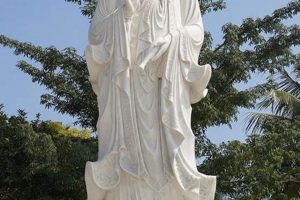
Representations of the Virgin Mary as she appeared to Saint Juan Diego on Tepeyac Hill near Mexico City are frequently found in outdoor settings. These depictions, often crafted from durable materials like resin, concrete, or metal, are designed to withstand the elements and provide a focal point for prayer and reflection in personal gardens or public spaces. The artistic rendering typically includes her iconic features: a serene expression, a flowing robe adorned with stars, and hands clasped in prayer.
Such figures serve as a visual reminder of faith and offer solace to those who seek comfort in Marian devotion. The presence of this imagery connects individuals to a significant religious event and a rich cultural heritage. Historically, the apparition and subsequent miraculous image on Juan Diego’s tilma have played a crucial role in the evangelization of the Americas, fostering a deep sense of identity and belonging among believers.
Understanding the materials used in crafting these outdoor representations, as well as considerations for placement and maintenance, allows for a more informed appreciation of their significance. Furthermore, exploring the artistic interpretations and variations found in different designs provides a deeper understanding of the devotion surrounding this important figure.
Tips for Selecting and Maintaining Outdoor Marian Imagery
Proper selection and care extend the lifespan and preserve the aesthetic appeal of outdoor religious figures. These guidelines facilitate informed decisions regarding placement, materials, and ongoing maintenance.
Tip 1: Material Selection Based on Climate: Consider the local climate when choosing the material. Resin is suitable for moderate climates, while concrete or stone are more resilient in regions with extreme temperatures or frequent precipitation.
Tip 2: Optimal Placement for Longevity: Position the figure in a location that minimizes exposure to direct sunlight and excessive moisture. Partial shade can help prevent fading and reduce the risk of weathering.
Tip 3: Secure Mounting to Prevent Damage: Ensure the base is securely anchored to prevent toppling due to wind or accidental contact. A stable foundation reduces the risk of cracks or breakage.
Tip 4: Regular Cleaning with Gentle Solutions: Clean the surface regularly with a soft cloth and mild soap solution. Avoid harsh chemicals or abrasive cleaners, as these can damage the finish.
Tip 5: Seasonal Protection During Harsh Weather: In areas with severe winters, consider covering the figure or moving it indoors to protect it from ice, snow, and extreme temperature fluctuations.
Tip 6: Periodic Inspection for Cracks or Damage: Regularly inspect the statue for any signs of cracks, chips, or other damage. Early detection allows for timely repairs and prevents further deterioration.
Tip 7: Application of Protective Coatings: Apply a sealant or protective coating specifically designed for outdoor statuary. This helps to shield the surface from UV rays, moisture, and other environmental factors.
Adhering to these guidelines will contribute to the preservation of the chosen figure, ensuring its beauty and symbolic value endure for years to come.
With these tips in mind, proceed to explore the artistic variations and devotional significance associated with such imagery, allowing for a comprehensive understanding of its role in personal and communal spaces.
1. Devotional Symbolism
Devotional Symbolism forms the core significance of outdoor representations of the Virgin of Guadalupe. The statue serves not merely as an aesthetic element within a garden, but as a tangible expression of faith and a focal point for prayer and contemplation. Its enduring presence reflects a deep-seated spiritual connection for many.
- Iconographic Representation of the Apparition
The imagery consistently adheres to the details of the reported apparition. The depiction of the Virgin Mary, as described by Saint Juan Diego, includes her specific clothing, posture, and the surrounding aura of light. This fidelity to the original account reinforces the statue’s role as a direct link to the foundational event of the Guadalupe tradition. For example, the star-adorned mantle and the downcast gaze are essential elements that communicate humility and divine grace.
- Evocative of Prayer and Meditation
The visual presence serves as an invitation to prayer and meditation. The statue’s serene and contemplative expression encourages viewers to enter into a similar state of reflection. Its placement within a garden setting can further enhance this effect, creating a peaceful and conducive environment for spiritual connection. The very act of tending to the statue and its surrounding area can become a form of devotional practice.
- Symbol of Hope and Intercession
Within the context of Catholic and broader Christian belief, the Virgin Mary is often seen as a powerful intercessor. The statue represents a petition for her intervention in times of need. Believers may approach the figure with personal requests or offer prayers for the well-being of others. The presence of the statue can therefore provide a sense of comfort and hope, especially during challenging circumstances. Its symbolic value transcends its physical form, representing faith and spiritual support.
- Reinforcement of Cultural Identity
Particularly within Latin American communities, the Virgin of Guadalupe embodies a strong sense of cultural identity. The statue serves as a visual reminder of shared heritage and traditions. It connects individuals to a broader community of believers and reinforces their sense of belonging. Displaying the statue in a garden or public space can be a way of publicly affirming one’s faith and cultural roots. It fosters a sense of collective identity and spiritual unity.
The various facets of Devotional Symbolism, from its faithful iconographic representation to its reinforcement of cultural identity, highlight the profound significance of the Virgin of Guadalupe figure. Its presence in outdoor settings is not merely ornamental but fundamentally spiritual, serving as a constant reminder of faith, hope, and the enduring power of belief.
2. Material Durability

The selection of appropriate materials is paramount to the long-term preservation and visibility of the Virgin of Guadalupe’s likeness in outdoor settings. This element directly impacts the statue’s ability to withstand environmental stressors and maintain its aesthetic and symbolic value over extended periods.
- Resistance to Environmental Degradation
Outdoor exposure necessitates materials resistant to weathering, UV radiation, and temperature fluctuations. Bronze, for instance, develops a protective patina over time, increasing its resilience. Concrete and certain types of stone offer inherent durability against precipitation and freeze-thaw cycles. Resin, while cost-effective, requires UV-resistant coatings to prevent fading and cracking. The choice of material directly influences the lifespan and maintenance requirements of the statue.
- Structural Integrity and Stability
The chosen material must possess adequate structural integrity to support its own weight and resist potential damage from wind, impact, or vandalism. Solid construction techniques, such as reinforced concrete or thick-walled bronze castings, are essential for larger statues. Lighter materials, such as hollow resin, may require internal supports or anchoring systems to prevent tipping or collapse. Ensuring stability is critical for both the statue’s preservation and public safety.
- Maintenance Requirements and Longevity
Different materials necessitate varying levels of maintenance. Bronze requires occasional cleaning to remove dirt and debris, while concrete may need periodic sealing to prevent water absorption. Resin statues may require re-coating to maintain UV protection. Selecting a material with manageable maintenance demands ensures the statue remains in good condition and continues to serve its intended purpose as a devotional symbol for many years.
- Cost Considerations and Material Trade-offs
Material selection is often influenced by budgetary constraints. While bronze offers superior durability and aesthetic appeal, it is significantly more expensive than resin or concrete. Choosing a more affordable material may necessitate more frequent repairs or eventual replacement. A careful assessment of long-term costs, including maintenance and potential repairs, is crucial in determining the most appropriate material for a specific context and budget.
The interplay between environmental factors, structural demands, maintenance needs, and budgetary realities underscores the importance of informed material selection. A judicious choice ensures the enduring presence of the statue, allowing it to continue serving as a symbol of faith and cultural heritage within the garden or public space for generations to come.
3. Garden Integration
Garden Integration concerns the harmonious placement of the statue within a designed or natural outdoor setting. This integration is not merely about physical presence but encompasses the statue’s visual relationship with surrounding flora, landscaping elements, and overall spatial arrangement. Effective integration enhances the statue’s devotional impact, fostering an environment conducive to contemplation and spiritual reflection. The lack of thoughtful integration can diminish the statue’s prominence, causing it to appear as a disconnected object rather than a meaningful part of the landscape.
Consider a garden designed with native Mexican plants, such as bougainvillea, cacti, and agave, surrounding the statue. The deliberate selection of plants associated with the statue’s cultural origin strengthens the connection between the devotional object and its environment. Furthermore, incorporating elements like a small grotto, a water feature, or carefully placed stones can create a dedicated space for prayer and reflection, further enhancing the sense of integration. In contrast, placing the statue in an area dominated by non-native species or without a clear focal point can dilute its significance and impact. The statue might then be perceived as an afterthought rather than a central element within a cohesive design. This underscores the necessity of planning the garden layout and plant selection with the statue’s presence as a primary consideration.
In summary, successful Garden Integration enhances the statue’s role as a focal point for faith and devotion. Careful planning, plant selection, and the incorporation of complementary design elements are critical to achieving a harmonious and meaningful outdoor space. The challenges lie in balancing aesthetic considerations with the spiritual purpose of the statue, ensuring the overall design supports and amplifies its symbolic significance, thereby creating a sanctuary for contemplation and prayer.
4. Artistic Representation

Artistic Representation dictates how the Virgin of Guadalupe is visually presented in garden statuary, influencing the viewer’s perception and devotional experience. The effectiveness of artistic choices significantly impacts the statue’s ability to convey its intended message of faith and cultural identity. Deviation from established iconographic norms can diminish the statue’s recognizability and spiritual impact, while skilled artistry enhances its symbolic presence. Consider, for example, statues varying from simple, almost folk-art interpretations to highly detailed, classically inspired renderings. The choice of artistic style shapes how the statue resonates with its audience, either reinforcing traditional devotion or offering a contemporary perspective. The artistic quality directly affects the statue’s capacity to inspire reverence and contemplation.
Furthermore, the selection of materials and techniques contributes to the artistic representation. A bronze statue, through its patina and detailed casting, conveys a sense of permanence and grandeur, suitable for prominent displays. Conversely, a resin statue, while more affordable, may lack the same artistic depth and longevity. The use of color, whether subtle or vibrant, further defines the statue’s artistic character, influencing its visual impact and emotional resonance. The artistic interpretation is not merely a stylistic choice but a critical component of the statue’s overall effectiveness. The execution directly influences its ability to inspire devotion and connect with the viewer’s spiritual sensibilities.
In conclusion, Artistic Representation is integral to the Virgin of Guadalupe garden statue, determining its visual identity and symbolic power. Careful consideration of artistic style, material, and technique ensures the statue effectively communicates its intended message of faith and cultural heritage. Overcoming challenges in accurately portraying the revered image requires a commitment to artistic excellence and a deep understanding of the statue’s significance within religious and cultural contexts. The artistic merit of this garden statuary not only enhances outdoor spaces but also reinforces the enduring devotion to the Virgin of Guadalupe.
5. Cultural Significance

The placement of representations of Our Lady of Guadalupe in garden settings signifies more than mere aesthetic preference; it reflects a profound connection to cultural identity, religious belief, and historical narrative, particularly within Latin American communities. The image embodies a synthesis of indigenous and Catholic cultures, stemming from the account of her apparition to Saint Juan Diego in 1531. The statue, therefore, functions as a tangible symbol of cultural heritage, serving as a daily reminder of a pivotal moment in Mexican history and the subsequent evangelization of the Americas. Its presence in a garden, a space often associated with tranquility and personal reflection, underscores the integration of faith into everyday life.
The ongoing veneration manifests in diverse ways. Homeowners often incorporate the statue into their landscape design, creating a private sanctuary for prayer and contemplation. Community gardens may feature the statue as a focal point, fostering a sense of shared identity and collective spirituality. The widespread adoption of this imagery highlights its enduring relevance and ability to resonate across generations. The statue is not merely an object of religious devotion but also a potent symbol of cultural pride and a connection to ancestral roots. This is particularly evident in diaspora communities, where the image serves as a vital link to their cultural heritage.
Understanding the cultural significance is crucial for appreciating the depth of meaning embodied in these representations. The statue’s presence serves as a visual testament to the enduring power of faith, the importance of cultural identity, and the ongoing influence of historical events on contemporary society. Its placement in a garden setting, a space of growth and reflection, amplifies these meanings, creating a powerful symbol of hope and resilience. The image therefore not only beautifies outdoor spaces but also serves as a constant reminder of cultural heritage and religious devotion.
Frequently Asked Questions
The following addresses common inquiries regarding the selection, care, and significance of Our Lady of Guadalupe garden statues. The information is intended to provide clarity and inform responsible ownership.
Question 1: What materials are most suitable for withstanding outdoor elements?
Durable materials such as bronze, concrete, or high-quality resin are recommended. Bronze develops a protective patina, while concrete offers inherent resistance to weather. Resin should possess UV-resistant properties to prevent degradation.
Question 2: How can fading of colors be prevented on a garden statue?
Applying a UV-resistant sealant or protective coating designed for outdoor statuary is advisable. Regular reapplication, as directed by the product manufacturer, helps mitigate color fading caused by sun exposure.
Question 3: What is the recommended method for cleaning a garden statue of Our Lady of Guadalupe?
Gentle cleaning with a soft cloth and mild soap solution is generally sufficient. Abrasive cleaners or harsh chemicals should be avoided, as they can damage the statue’s finish.
Question 4: How should the statue be secured to prevent damage from wind or accidental tipping?
For smaller statues, a secure base or anchoring system is essential. Larger statues should be placed on a stable foundation, potentially using concrete or similar materials, to ensure stability.
Question 5: Does the statue’s placement within the garden hold any significance?
Placement often reflects personal preference; however, many choose locations that promote quiet reflection, such as near a flower garden or a secluded area. Some consider cardinal directions or specific viewpoints within the garden design.
Question 6: How can the statue be protected during winter months in regions with harsh climates?
In regions experiencing freezing temperatures, consider covering the statue with a protective tarp or moving it indoors to prevent damage from ice and snow. This precaution helps extend the statue’s lifespan.
Proper understanding of materials, maintenance, and placement contributes to the enduring beauty and symbolic value of the statue.
The next section will explore related imagery and devotional practices associated with this enduring symbol.
Conclusion
The preceding exploration of Our Lady of Guadalupe garden statue has illuminated its multi-faceted significance. Ranging from the selection of appropriate materials for durability to understanding its devotional symbolism and cultural impact, each aspect contributes to the statue’s enduring presence. Thoughtful integration within the garden, combined with responsible care, ensures the preservation of its artistic representation for years to come.
As a tangible expression of faith and cultural heritage, the continued appreciation and respectful maintenance of Our Lady of Guadalupe garden statue reinforces its value as a symbol of hope, resilience, and cultural identity. The statue’s presence serves as a constant reminder of the enduring power of faith in both personal and communal spaces.