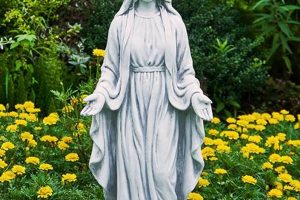
A devotional space featuring a sculpted representation of the Virgin Mary, typically set within a cultivated outdoor area, serves as a focal point for prayer and contemplation. Such areas often incorporate flora, water features, and other artistic elements to create a serene and reverent environment. For example, a homeowner might dedicate a portion of their yard to this purpose, installing a figure of Mary amidst blooming flowers and carefully chosen greenery.
These sanctuaries provide a physical location for individuals to connect with their faith. The presence of the religious iconography, combined with the tranquility of a garden setting, can foster a sense of peace, spiritual reflection, and connection to a higher power. Historically, outdoor religious displays have been prevalent across cultures, offering accessible spaces for communal and individual worship, often reflecting the aesthetic values and resources of the community creating them.
This exploration will delve into the various aspects of creating and maintaining such a devotional space. Topics covered will include considerations for statue selection, plant choices appropriate for specific climates and aesthetics, and design principles for creating a harmonious and meaningful outdoor sanctuary. The purpose is to provide guidance for individuals interested in establishing this kind of inspirational setting.
Establishing a Devotional Garden
The creation of a dedicated devotional space requires careful planning and execution to ensure a respectful and aesthetically pleasing environment. These guidelines provide essential considerations for establishing a location for reflection.
Tip 1: Site Selection. Choose a location that promotes tranquility and minimizes distractions. Consider factors such as sunlight exposure, drainage, and proximity to noise sources. A sheltered area, perhaps near a fence or hedge, can enhance the sense of privacy and contemplation.
Tip 2: Statue Material and Size. Select a statue material that is durable and appropriate for the local climate. Common materials include resin, marble, and cast stone. The size of the statue should be proportionate to the surrounding garden space; a statue that is too large or too small can detract from the overall aesthetic.
Tip 3: Plant Selection and Arrangement. Incorporate plants that are both visually appealing and symbolically meaningful. Plants traditionally associated with the Virgin Mary include lilies, roses, and irises. Consider the mature size of the plants to prevent overcrowding and ensure adequate space for the statue.
Tip 4: Hardscaping Elements. Integrate hardscaping elements such as pathways, benches, and water features to enhance the overall design. A winding path leading to the statue can encourage mindful movement, while a bench provides a place for quiet reflection. A small fountain can introduce soothing sounds and visual interest.
Tip 5: Lighting Design. Implement subtle lighting to illuminate the statue and garden at night. Uplighting can highlight the statue’s form, while path lighting enhances safety and accessibility. Avoid harsh or overly bright lighting that can disrupt the atmosphere of tranquility.
Tip 6: Regular Maintenance. Consistent upkeep is crucial to preserve the beauty and serenity of the devotional area. This includes weeding, pruning, watering, and cleaning the statue as needed. Neglecting maintenance can detract from the spiritual significance of the space.
Tip 7: Symbolic Accents. Integrate subtle symbolic accents, such as rosaries, crosses, or small plaques with scripture, to reinforce the devotional purpose of the garden. These elements should be carefully chosen to complement the overall design and avoid clutter.
By adhering to these guidelines, individuals can establish a respectful, beautiful, and meaningful space for personal reflection and devotion. Careful consideration of each element contributes to an environment conducive to prayer and contemplation.
The following sections will address specific design considerations, explore plant options in greater detail, and provide practical advice for maintaining the long-term beauty and functionality of such devotional settings.
1. Statue Material Durability
The enduring beauty and spiritual significance of a religious sculpture are intrinsically linked to the durability of its constituent materials. In the context of a devotional garden, exposure to the elements necessitates careful consideration of a statue’s resistance to weathering, erosion, and other forms of degradation.
- Weather Resistance
Material selection dictates a statue’s ability to withstand temperature fluctuations, precipitation, and UV radiation. For instance, marble, while possessing aesthetic appeal, is susceptible to acid rain and staining. Bronze, conversely, exhibits superior resistance to corrosion. Proper material choice is paramount in preserving the statues physical integrity over time.
- Structural Integrity
The materials inherent strength influences its ability to resist physical damage. Resin statues, while affordable, may be prone to cracking or shattering under stress. Cast stone, a more robust option, offers greater resistance to impact and structural failure. Selecting a material with adequate structural integrity is crucial for ensuring long-term stability, especially in areas prone to vandalism or extreme weather.
- Maintenance Requirements
Material composition dictates the level of maintenance required to preserve the statue’s appearance. Certain materials may necessitate regular cleaning or sealing to prevent staining or discoloration. For example, unsealed concrete is highly porous and prone to algal growth. Choosing a low-maintenance material reduces the burden of upkeep and contributes to the longevity of the devotional space.
- Climate Suitability
Local climate conditions significantly influence material degradation. In regions with frequent freeze-thaw cycles, porous materials like terracotta are susceptible to cracking. Similarly, in coastal environments, salt spray can accelerate corrosion of certain metals. Selecting a material appropriate for the specific climatic context is essential for minimizing environmental damage and maximizing the statues lifespan.
The selection of durable materials for a central sculptural element within a devotional garden is not merely an aesthetic choice, but a practical necessity. By carefully considering factors such as weather resistance, structural integrity, maintenance requirements, and climate suitability, one ensures the enduring presence of a spiritual symbol within the designed landscape, facilitating ongoing contemplation and devotion for years to come.
2. Garden Spatial Harmony
The effective integration of a sculptural element within a garden setting is predicated on achieving spatial harmony. In the context of a devotional garden featuring a representation, the arrangement of elements around the sculpted figure directly influences the atmosphere of reverence and contemplation. Spatial harmony, therefore, is not merely an aesthetic consideration, but a crucial component for realizing the intended purpose of the religious space. A poorly designed space, where the figure is dwarfed by surrounding vegetation or positioned awkwardly relative to pathways and seating, can detract from the spiritual significance of the statue. Conversely, a well-proportioned space, where sightlines are carefully considered and elements complement each other, enhances the devotional experience.
Consider, for example, the garden at the National Shrine of Our Lady of the Snows in Belleville, Illinois. The layout emphasizes open spaces and unobstructed views of the central statue, fostering a sense of connection and serenity. Conversely, a small urban garden, where the statue is crowded by overgrown plants or overshadowed by surrounding buildings, will struggle to achieve the same level of spiritual impact. Similarly, the arrangement of walking paths and benches plays a crucial role. Pathways should guide visitors naturally toward the statue, while benches should be positioned to offer comfortable vantage points for prayer and reflection. The deliberate use of symmetry, asymmetry, and focal points can all contribute to the overall sense of spatial harmony.
In summary, the achievement of spatial harmony within the garden is essential for creating a conducive environment for prayer and contemplation. It requires careful consideration of the statue’s size and placement, the surrounding vegetation, the layout of pathways and seating, and the overall balance of the design. By prioritizing spatial harmony, those who establish such a sanctuary, can ensure that the garden serves as a true reflection of the intended devotional purpose, and the sculpture is harmonized with a setting of peaceful reflection.
3. Plant Symbolic Significance

The selection of flora within a devotional garden is not merely an aesthetic decision; it is an exercise in imbuing the space with layers of meaning and symbolism. In the context of the presence of a religious sculpture, botanical choices can profoundly enhance the spiritual atmosphere and reinforce themes associated with faith, virtue, and devotion.
- Lilies and Purity
The white lily, Lilium candidum, has long been associated with purity, virginity, and innocence. Its presence in a garden setting dedicated to the Virgin Mary directly evokes these qualities. The flower’s pristine white color and elegant form serve as a visual representation of Mary’s own perceived purity and spiritual perfection. This association is reinforced by centuries of artistic representation, where lilies are frequently depicted alongside Mary.
- Roses and Divine Love
The rose, particularly the red rose, symbolizes love, passion, and sacrifice. In Christian iconography, roses are often linked to Mary as “Mystical Rose,” representing her role as the Queen of Heaven and a vessel of divine love. A rose garden surrounding a statue not only adds beauty but also serves as a constant reminder of the profound love and compassion attributed to Mary. Different colors of roses can add nuanced layers of symbolism, with white roses representing purity and yellow roses representing joy.
- Irises and Sorrow
While less universally associated with Mary than lilies and roses, the iris, particularly the blue iris, has symbolic connections to sorrow and mourning, referencing the sorrows experienced by Mary during the Passion of Christ. Planting irises can serve as a reminder of the suffering endured for the sake of humanity and the profound empathy attributed to Mary. The sword-like leaves of the iris are also said to represent the sorrows that pierced Mary’s heart.
- Herbs and Healing
Certain herbs, such as rosemary and lavender, have traditional associations with healing, protection, and remembrance. Including these herbs in a devotional garden can evoke a sense of well-being and spiritual comfort. Rosemary, in particular, is linked to remembrance and faithfulness, qualities often associated with Mary’s steadfast devotion to God. The fragrance of these herbs can also create a sensory experience that enhances the overall atmosphere of peace and tranquility.
By carefully selecting plants with symbolic significance, individuals can transform a simple garden into a space that is rich in meaning and conducive to spiritual reflection. The visual and olfactory cues provided by these plants serve as constant reminders of the values and virtues associated with the devotional figure, fostering a deeper connection to faith and spirituality. The garden becomes more than just a visual space; it becomes a living tapestry of symbolism, inviting contemplation and reverence.
4. Atmospheric Tranquility

Atmospheric tranquility serves as a cornerstone in the creation of a meaningful space featuring a sculpted figure. This intangible quality, achieved through careful manipulation of environmental factors, directly impacts the ability of individuals to engage in contemplative practices within the garden setting.
- Sound Mitigation
The reduction of auditory distractions plays a vital role in fostering tranquility. Sources of noise, such as traffic, construction, or loud conversations, can disrupt focus and hinder introspection. Strategies for sound mitigation include the implementation of physical barriers, such as hedges or walls, and the incorporation of natural sound masking elements, like flowing water features. The effectiveness of these strategies determines the degree to which the garden environment facilitates quiet contemplation, necessary for spiritual reflection.
- Visual Harmony
The arrangement of visual elements within the garden contributes significantly to its overall sense of tranquility. Cluttered or chaotic designs can induce stress and inhibit relaxation. A well-designed garden emphasizes simplicity, balance, and natural forms. The careful selection of colors, textures, and plant materials creates a cohesive visual experience that promotes a sense of calm and serenity. Visual harmony, therefore, is essential for fostering a tranquil atmosphere conducive to spiritual reflection.
- Sensory Modulation
Beyond sound and sight, the modulation of other sensory stimuli contributes to atmospheric tranquility. The careful selection of fragrant plants, such as lavender or jasmine, can create a soothing olfactory environment. The incorporation of tactile elements, such as smooth stones or soft grasses, can provide opportunities for mindful engagement with the natural world. By thoughtfully addressing all sensory dimensions, it is possible to create a multi-sensory experience that deeply enhances relaxation and spiritual contemplation.
- Microclimate Control
The manipulation of the local microclimate can significantly enhance comfort and tranquility. The provision of shade through trees or structures can mitigate the effects of harsh sunlight, creating a more temperate and inviting environment. The strategic placement of water features can cool the air and increase humidity, promoting a sense of refreshment and well-being. Effective microclimate control ensures that the garden remains a pleasant and inviting space regardless of external weather conditions.
These elements, when thoughtfully integrated, converge to create an atmosphere that supports quiet reflection and fosters a sense of connection with the divine. The degree to which a space is tranquil directly influences its efficacy as a location for spiritual practice, underscoring the importance of prioritizing these considerations in the planning and maintenance of the sacred outdoor sanctuary.
5. Devotional Symbol Integration
The presence of a sculpted figure is frequently the centerpiece of a devotional garden. However, the integration of complementary devotional symbols enhances the spiritual significance and depth of the space. These symbols, carefully selected and arranged, serve to reinforce the themes of faith, devotion, and connection to the divine, thereby enriching the experience of individuals utilizing the garden for prayer and contemplation. Without such integration, the garden risks becoming a mere aesthetic display, lacking the profound spiritual resonance intended.
One effective method of devotional symbol integration is the strategic placement of rosaries. These can be draped over the statue, hung from nearby branches, or incorporated into the design of a small grotto. Another approach involves the inclusion of plaques inscribed with scripture passages or prayers relevant to the Virgin Mary. These plaques offer opportunities for reflection and meditation, guiding visitors toward deeper contemplation. The use of specific plants, beyond general symbolic associations, can also contribute to devotional symbol integration. For example, planting a “Mary Garden,” a collection of plants traditionally associated with Mary, further emphasizes the devotional nature of the space. Churches often feature small rockeries or plaques at the feet of the central statue which encourages individual or group payers.
Devotional symbol integration is therefore not merely an optional addition to a devotional garden; it is a critical component in transforming an ordinary garden into a sacred space that fosters meaningful spiritual connection. Challenges may arise in selecting symbols that are both aesthetically harmonious and spiritually resonant. However, by prioritizing careful planning and thoughtful execution, individuals can create a devotional garden that serves as a powerful expression of faith and devotion and the intended setting. The presence of Mary at a statue is often elevated by these surrounding signs and symbols of devotion, prayers, and faith.
Frequently Asked Questions
This section addresses common inquiries regarding the establishment and maintenance of devotional gardens featuring representations. It aims to provide clear and concise information to individuals seeking to create a meaningful and respectful space for contemplation.
Question 1: What are the primary considerations when selecting a statue material?
Material selection should prioritize durability, weather resistance, and aesthetic appeal. Options such as cast stone, bronze, and high-quality resin offer varying degrees of resistance to environmental factors and should be chosen based on local climate and maintenance capabilities.
Question 2: How can spatial harmony be achieved within a small garden?
Achieving spatial harmony in a limited space requires careful planning of statue placement and plant selection. Prioritize open sightlines, avoid overcrowding, and choose plant varieties that complement the statues size and style. Consider vertical gardening techniques to maximize space utilization.
Question 3: What are some plants with traditional symbolic associations suitable for such a garden?
Plants such as lilies (purity), roses (divine love), and irises (sorrow) hold symbolic significance in Christian tradition. Selecting plants with relevant symbolic associations enhances the devotional atmosphere of the garden.
Question 4: How can atmospheric tranquility be fostered in an urban environment?
Mitigating noise pollution is crucial for fostering tranquility in urban settings. Consider implementing sound barriers, such as hedges or walls, and incorporating water features to mask distracting sounds. Regular maintenance and weeding further contribute to a peaceful atmosphere.
Question 5: What are some practical strategies for integrating devotional symbols?
Devotional symbols can be integrated through the placement of rosaries, the inclusion of inscribed plaques, and the planting of specific flowers associated with the Virgin Mary. These symbols should be incorporated thoughtfully and aesthetically to enhance the spiritual significance of the garden.
Question 6: What level of maintenance is typically required to maintain such a garden?
Maintenance requirements depend on the plant selection and environmental conditions. Regular watering, weeding, pruning, and statue cleaning are essential for preserving the beauty and integrity of the garden. Consider drought-tolerant plants and low-maintenance materials to minimize upkeep.
In summary, establishing and maintaining a meaningful devotional garden requires careful consideration of materials, spatial dynamics, plant selection, atmospheric qualities, and symbolic integration. Prioritizing these factors ensures the creation of a space conducive to prayer and contemplation.
The following article sections will delve into specific case studies and examples of successful gardens, providing further inspiration and practical guidance for individuals seeking to create their own devotional spaces.
Conclusion
This exploration of the devotional space, focusing on the central role of “mother mary statue garden”, has illuminated the multifaceted considerations involved in its creation and maintenance. From material selection and spatial arrangement to plant symbolism and atmospheric tranquility, the article emphasized that each element contributes to the overall spiritual significance of such a sanctuary.
The establishment of a devotional garden is an act of dedication, requiring ongoing commitment to ensure its enduring beauty and meaningfulness. May this information guide individuals in creating a space that fosters personal reflection, deepens spiritual connection, and serves as a testament to unwavering faith. Its continued presence serves as a reminder of serenity.