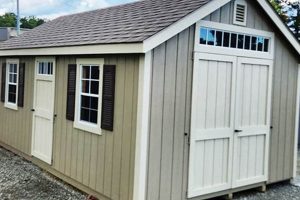
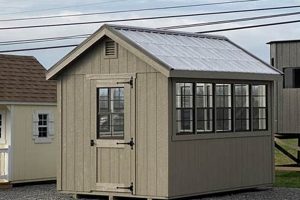
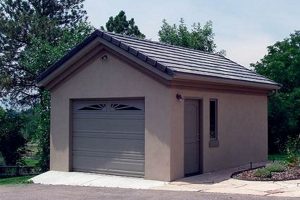
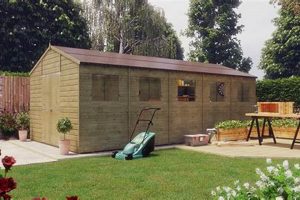
Structures for outdoor storage and workspace, reflecting contemporary architectural trends, emphasize clean lines, functional layouts, and the incorporation of sustainable materials. These constructions move beyond basic utilitarian shelters, becoming integrated elements within the overall landscape design. Examples include sheds featuring minimalist aesthetics, flat roofs, large windows for natural light, and cladding materials like metal, cedar, or composite wood.
These outdoor structures enhance property value by providing organized storage, dedicated workspaces, or even tranquil retreats. Their design principles prioritize efficient use of space, durability, and aesthetic appeal, aligning with broader movements towards sustainable living and maximizing outdoor spaces. Historically, garden sheds served primarily as functional storage, but now they are reimagined as multi-purpose additions to the modern home, contributing to both practicality and visual harmony.
Subsequent sections will examine specific design elements influencing aesthetic and functional outcomes, material choices affecting longevity and environmental impact, and considerations for integrating these structures seamlessly into diverse garden landscapes.
Design Considerations for Contemporary Outdoor Structures
Careful planning ensures the functionality and aesthetic integration of modern outdoor storage and workspace solutions within the existing environment.
Tip 1: Optimize Spatial Arrangement: Analyze site topography and orientation to maximize usable interior volume and minimize environmental impact during construction. This involves considering setbacks, prevailing winds, and solar exposure.
Tip 2: Emphasize Natural Illumination: Incorporate ample glazing, such as skylights or strategically placed windows, to reduce reliance on artificial lighting. Proper orientation minimizes heat gain during peak sunlight hours.
Tip 3: Prioritize Durable Materials: Select cladding and roofing materials resistant to local climate conditions. Consider options like treated lumber, metal siding, or composite materials known for longevity and low maintenance.
Tip 4: Integrate Green Roofing Systems: Explore installing a vegetative roof to enhance insulation, manage stormwater runoff, and create a visually appealing element that blends with the surrounding landscape.
Tip 5: Implement Smart Storage Solutions: Maximize interior organization with custom shelving, vertical storage systems, and adaptable workspaces to accommodate diverse needs efficiently.
Tip 6: Ensure Adequate Ventilation: Proper ventilation is crucial to prevent moisture buildup and maintain a comfortable interior climate. Consider incorporating adjustable vents or passive ventilation strategies.
Tip 7: Plan for Utilities Integration: Determine power and water requirements upfront, designing for concealed wiring and plumbing to maintain a clean aesthetic. Solar power integration enhances self-sufficiency.
Implementing these strategies contributes to a functional, aesthetically pleasing, and sustainable outdoor structure, seamlessly integrating with the overall landscape design.
The following section will delve into case studies showcasing successful implementation of these design principles.
1. Minimalist Aesthetic
The minimalist aesthetic, characterized by simplicity, functionality, and the absence of superfluous ornamentation, is a defining element in contemporary outdoor structure design. Its application reshapes perceptions of utility and space, emphasizing efficiency and visual harmony with surrounding environments.
- Reduced Ornamentation
Minimalism in these structures translates to a stark reduction in decorative features. Ornamentation is absent, replaced by clean lines and unadorned surfaces. This design philosophy reduces visual clutter, allowing the form and function of the structure to take precedence. Examples include smooth, flat cladding without texture or embellishment, devoid of traditional trim or molding.
- Neutral Color Palettes
Color schemes typically adhere to neutral palettes: whites, grays, blacks, and natural wood tones. The restricted palette reduces visual complexity and enables the structure to blend subtly with its surroundings. Bold or vibrant colors are avoided, as they detract from the minimalist intent. The application of muted earth tones to wood or composite cladding exemplifies this characteristic.
- Geometric Simplicity
Structures often adopt simple geometric forms, such as rectangular prisms or cubes, minimizing complex angles or curves. Straight lines and right angles dominate the design, creating a sense of order and stability. A shed composed of a basic box-like structure with a flat or slightly pitched roof is emblematic of this geometric simplicity.
- Functional Integration
Every design element serves a purpose. Features are not added for decoration but rather to enhance functionality. Hardware, such as hinges and latches, is often concealed or integrated seamlessly into the design. This integrated approach ensures every component contributes directly to the structure’s overall utility. The inclusion of concealed fasteners and integrated door handles on storage solutions exemplifies this functional integration.
The implementation of a minimalist aesthetic in modern outdoor structure design shifts the focus toward utility, spatial efficiency, and subtle integration with the environment. By reducing visual noise and emphasizing essential design components, these structures provide efficient, and visually unobtrusive outdoor solutions.
2. Sustainable Materials

The integration of sustainable materials is pivotal in contemporary outdoor storage and workspace design, reflecting a growing emphasis on environmental responsibility. The materials selected directly impact the structure’s environmental footprint, influencing factors such as resource depletion, carbon emissions, and waste generation. Utilizing renewable, recycled, or sustainably sourced materials reduces the negative ecological consequences associated with construction. For example, using reclaimed wood minimizes deforestation, while selecting recycled plastic lumber decreases reliance on virgin plastic production. The choice of materials can also influence the structure’s longevity and energy efficiency, further reducing its long-term environmental impact.
Practical applications of sustainable materials in modern outdoor structures include cladding made from sustainably harvested cedar, roofing systems incorporating recycled asphalt shingles, and structural components using bamboo, a rapidly renewable resource. Insulation materials can also be sourced sustainably, with options like recycled denim or sheep’s wool providing effective thermal performance. Furthermore, selecting locally sourced materials reduces transportation-related emissions, contributing to a lower carbon footprint. The implementation of green building practices, such as rainwater harvesting and solar panel integration, further enhances the sustainability profile of these structures. Careful consideration of material sourcing, manufacturing processes, and lifecycle impacts ensures responsible construction.
In summary, the strategic adoption of sustainable materials in contemporary outdoor structure design is a critical element in promoting environmental stewardship. By prioritizing renewable resources, recycled content, and responsible sourcing, these structures can minimize their ecological impact while providing functional and aesthetically pleasing outdoor spaces. Challenges remain in terms of material availability and cost competitiveness, but the long-term environmental benefits underscore the importance of prioritizing sustainable material choices.
3. Functional layouts
The efficacy of contemporary outdoor structures is predicated upon the integration of functional layouts, a core element of modern garden shed designs. These layouts move beyond simple storage solutions, optimizing space for varied uses, such as potting, tool maintenance, or serving as a small workshop. A well-considered layout directly impacts the usability and efficiency of the structure. The arrangement of internal elements, including workbenches, shelving systems, and access points, dictates the ease with which tasks can be performed. An example would be a potting shed with a dedicated workspace positioned near a large window to maximize natural light, complemented by strategically placed shelving to house tools and supplies, ensuring minimal wasted movement and optimized workflow.
The practical application of functional layouts extends to various design considerations. Access doors should be positioned to facilitate the movement of large items, such as lawnmowers or building materials. Internal zones can be delineated to separate activities, creating distinct areas for storage, projects, and relaxation. Consider a shed with a clearly defined storage area near the entrance for immediate access to gardening tools, while a separate, insulated zone towards the rear serves as a quiet workspace. Height is another essential factor, as optimizing internal vertical space can greatly improve storage capacity. Lofted areas, pull-down ladders, and wall-mounted storage systems are employed to maximize the use of available space.
In conclusion, functional layouts are not simply an aesthetic consideration but an essential component that determines the overall utility and effectiveness of contemporary outdoor structures. Prioritizing efficient space utilization, strategic zoning, and accessible storage solutions maximizes the value of these structures and transforms them into versatile extensions of the modern home. The challenge lies in tailoring the layout to specific user needs and adapting to the constraints of the available space, but successful integration results in a highly functional and enjoyable outdoor environment.
4. Spatial Optimization

Spatial optimization constitutes a crucial component of modern garden shed design, significantly affecting functionality and usability. It’s the careful planning and arrangement of interior space to maximize efficiency, accessibility, and storage capacity within the limited footprint typical of these structures. The effects of effective spatial optimization are immediately apparent in increased storage volume, improved workflow, and enhanced comfort within the shed. Poor spatial design, conversely, leads to wasted space, difficulty accessing stored items, and a cramped, unproductive environment. The principles of spatial optimization in modern garden sheds extend beyond mere storage, catering to various intended uses, such as potting, crafting, or small-scale workshops.
Consider a standard 8×10 foot shed: Without spatial optimization, the interior might become a cluttered repository for gardening tools, lawn equipment, and seasonal items, rendering much of the volume inaccessible. However, through strategic spatial planning, this same shed can transform into an organized workspace. Utilizing vertical storage solutions like shelving units, pegboards for tool organization, and overhead racks for long items allows one to leverage the full height of the structure. Adding a fold-down workbench maximizes work surface while minimizing space consumption when not in use. Clear pathways and designated zones for specific activities, such as potting or repair work, enhance efficiency and minimize disruption. The application of CAD software can further refine these layouts, simulating different scenarios and identifying optimal configurations before construction.
In conclusion, spatial optimization is not merely a desirable feature but an essential element in contemporary garden shed design. It translates directly to increased functionality, improved organization, and enhanced usability. While challenges may arise in tailoring space to specific needs and accommodating diverse storage requirements, the rewards of effective spatial design are significant: a more functional, organized, and enjoyable outdoor space, ultimately extending the livable area of the home. Its principles directly link back to the core design tenets.
5. Natural Illumination

Within contemporary garden shed designs, natural illumination assumes paramount importance, transcending mere aesthetic consideration to become a functional imperative. The presence of ample natural light significantly influences the usability and overall ambiance of the structure. Designs incorporating large windows, skylights, or translucent panels are demonstrably more inviting and conducive to activities requiring visual acuity, such as potting plants, crafting, or performing detailed repair work. Conversely, structures reliant solely on artificial lighting can feel confined and less appealing, potentially increasing energy consumption and creating a less sustainable environment. The integration of natural light sources is therefore not simply a stylistic choice but a critical factor in determining the practical utility and long-term sustainability of a modern garden shed.
The practical application of natural illumination principles is evident in numerous design approaches. North-facing windows, for instance, provide consistent, diffused light, ideal for workspaces where direct sunlight could cause glare or overheating. Skylights, strategically positioned to maximize sunlight penetration, offer a cost-effective method of illuminating interiors without compromising wall space. Translucent roofing panels can diffuse light throughout the entire structure, creating a soft, even illumination suitable for a variety of activities. In the design process, factors such as the orientation of the shed, surrounding vegetation, and the intended use of the space must be carefully considered to optimize natural light intake. Furthermore, the choice of glazing materials impacts both light transmission and thermal performance, necessitating a balance between maximizing natural light and minimizing heat gain or loss.
In conclusion, natural illumination is a cornerstone of modern garden shed design, influencing both functionality and sustainability. Prioritizing natural light sources through thoughtful design and material selection transforms these structures into more inviting, energy-efficient, and practical spaces. While challenges persist in balancing light intake with thermal performance and privacy concerns, the benefits of natural illumination, including enhanced usability, reduced energy consumption, and improved overall ambiance, underscore its vital role in contemporary outdoor structure design.
6. Durable construction
Durable construction is an indispensable element within the realm of contemporary outdoor structure design. It directly impacts the longevity, safety, and overall value of modern garden sheds. Material selection, structural integrity, and adherence to building codes are key determinants of durability. A shed constructed with inferior materials or lacking proper structural support is susceptible to damage from weather events, pests, and general wear, resulting in costly repairs or premature replacement. Therefore, the pursuit of contemporary design aesthetics must be balanced with a commitment to robust construction practices. The incorporation of weather-resistant cladding, pressure-treated lumber for framing, and secure foundation systems are critical examples of durable construction principles in action. Failure to prioritize these elements compromises the structure’s long-term performance and negates the benefits of modern design features.
Real-world examples illustrate the practical significance of durable construction. A shed built in a coastal region with high winds and saltwater exposure necessitates specific design considerations. Employing corrosion-resistant fasteners, wind-resistant roofing materials, and elevated foundations minimizes the risk of damage from storms and prolonged exposure to corrosive elements. Similarly, in regions with heavy snowfall, reinforced roofing structures and durable siding materials mitigate the potential for structural failure due to excessive weight or moisture infiltration. Adhering to local building codes and obtaining necessary permits ensures compliance with safety standards and verifies the structural integrity of the shed. These practical applications underscore the importance of durable construction as a preventative measure against costly repairs and safety hazards.
In summary, durable construction forms the foundation upon which successful contemporary garden sheds are built. Its integration is not merely a functional requirement but a strategic investment in the structure’s long-term performance, safety, and aesthetic appeal. While aesthetic considerations are important, they must never overshadow the fundamental need for robust construction practices and high-quality materials. Prioritizing durability ensures that these outdoor structures provide reliable storage, workspace, and value for years to come. The challenge remains in balancing modern design aesthetics with proven construction techniques to create garden sheds that are both visually appealing and structurally sound.
Frequently Asked Questions
The following addresses common inquiries regarding design, construction, and functionality of modern garden sheds. These responses aim to clarify essential aspects and provide informed guidance.
Question 1: What differentiates a modern garden shed from a traditional shed?
Contemporary designs emphasize minimalist aesthetics, sustainable materials, and efficient spatial layouts, moving beyond basic utilitarian structures. Traditional sheds typically prioritize functionality over design, often employing readily available, less environmentally conscious materials.
Question 2: Are permits required for constructing a modern garden shed?
Permit requirements vary based on location, shed size, and local building codes. Contacting the local municipality’s planning or building department is essential to ensure compliance and avoid potential penalties.
Question 3: What are the most sustainable materials suitable for modern garden sheds?
Sustainable options include reclaimed wood, recycled plastic lumber, sustainably harvested cedar, bamboo, and recycled metal. Material selection should consider environmental impact, durability, and aesthetic compatibility.
Question 4: How can natural light be maximized in a modern garden shed design?
Large windows, skylights, and translucent roofing panels can effectively increase natural light penetration. Orienting windows to capture optimal sunlight while minimizing heat gain is also crucial.
Question 5: What structural considerations are crucial for ensuring the longevity of a modern garden shed?
A solid foundation, pressure-treated lumber for framing, weather-resistant cladding, and proper ventilation are critical structural components. Addressing local climate conditions with appropriate materials and construction techniques is also essential.
Question 6: How can spatial optimization be achieved within a limited garden shed footprint?
Vertical storage solutions, fold-down workbenches, and designated zones for specific activities can maximize space efficiency. Careful planning and consideration of intended uses are crucial for effective spatial organization.
Understanding these factors contributes to informed decision-making during the design and construction process, ensuring a functional, aesthetically pleasing, and sustainable outdoor structure.
The subsequent section will delve into potential future trends in modern garden shed design.
Conclusion
This exploration of modern garden shed designs has highlighted the shift from purely functional storage to aesthetically integrated and environmentally conscious outdoor structures. Key elements, including minimalist aesthetics, sustainable materials, functional layouts, spatial optimization, natural illumination, and durable construction, collectively define this evolution. Adherence to these principles results in structures that enhance property value, promote sustainable living, and provide versatile outdoor spaces.
The principles outlined invite consideration of their integration in upcoming construction or renovation projects. As outdoor living continues to gain prominence, the strategic incorporation of these design tenets promises to enhance both the functional utility and environmental integrity of properties worldwide. The ongoing exploration and refinement of these design principles remains essential to maximizing their potential.