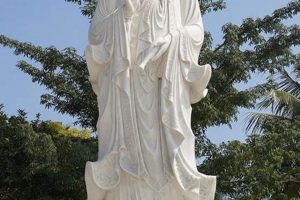
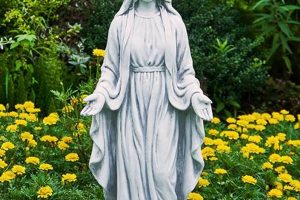
Figurines depicting the Virgin Mary, specifically designed for outdoor placement, constitute a form of garden art. These representations often serve as focal points in landscaping, intended to inspire reflection and provide a sense of peace within the outdoor environment. For example, a concrete cast depicting Our Lady of Grace, positioned amidst a rose garden, exemplifies this application.
The inclusion of such devotional art can offer multiple advantages. Historically, these representations have served as expressions of faith and devotion, offering comfort and solace to individuals. Moreover, they can contribute aesthetically to a garden’s design, enhancing its visual appeal and creating a tranquil atmosphere. The presence of the statue can encourage contemplation and connection to spiritual values.
The subsequent sections will explore various aspects related to the selection, placement, and maintenance of these garden features, focusing on materials, styles, and ensuring their longevity within an outdoor setting. Considerations for creating a harmonious design and integrating them seamlessly into existing landscaping will also be examined.
Selection and Placement Guidance
The following guidelines address crucial considerations for incorporating a representation of the Virgin Mary within a garden setting. These recommendations aim to ensure both aesthetic harmony and lasting preservation.
Tip 1: Material Durability Assessment: Prioritize materials resistant to weathering. Concrete, resin, or treated stone exhibit greater longevity compared to less durable options. Consider the local climate and potential for frost damage when making this determination.
Tip 2: Scale and Proportion: The size of the representation should be proportional to the garden’s overall dimensions. An excessively large statue may overwhelm a small space, while a diminutive one could become lost in a larger landscape.
Tip 3: Strategic Site Selection: Identify a location that offers visual prominence while remaining protected from direct, harsh sunlight. Partial shade can help prevent fading and cracking of the statue’s surface.
Tip 4: Foundation Stability: Ensure a solid and level foundation to prevent tilting or toppling, particularly in areas prone to strong winds or ground movement. A concrete base or compacted gravel bed provides adequate support.
Tip 5: Harmonious Integration: Coordinate the statue’s style and finish with the existing garden design. A classical representation may complement a formal garden, while a simpler design could integrate seamlessly into a more naturalistic landscape.
Tip 6: Regular Maintenance Procedures: Implement a consistent cleaning schedule to remove dirt, moss, and algae. Gentle cleaning with a soft brush and mild soap is typically sufficient to maintain the statue’s appearance.
Tip 7: Winter Protection Measures: In colder climates, consider covering the statue with a protective tarp or moving it indoors during periods of prolonged freezing temperatures to mitigate potential damage.
Adherence to these guidelines will help ensure the enduring beauty and structural integrity of the garden feature, allowing it to serve as a lasting symbol of faith and inspiration.
The subsequent sections will delve into specific artistic styles and historical influences pertaining to devotional garden art, offering a deeper understanding of their cultural significance.
1. Material Durability

Material durability represents a critical factor in the enduring suitability of any devotional sculpture designed for outdoor exhibition. In the context of the phrase, “mary statue for garden,” material choice directly influences the statue’s resistance to weathering, physical damage, and aesthetic degradation, impacting its long-term presence within the landscape.
- Resistance to Environmental Degradation
Exposure to elements such as ultraviolet radiation, precipitation, and temperature fluctuations necessitates materials with inherent resistance to degradation. For example, unsealed porous materials like certain types of sandstone are prone to erosion and staining, whereas cast concrete or treated resins demonstrate superior weather resistance. Choosing a weather-resistant material preserves the statue’s structural integrity and aesthetic appeal over time.
- Structural Integrity Under Stress
The statue must withstand physical stresses resulting from wind, impact, or freeze-thaw cycles. A brittle material like untreated terracotta may crack or shatter under stress, while reinforced concrete or metal frameworks provide enhanced structural support. This is particularly relevant in regions experiencing harsh weather conditions or where vandalism is a concern.
- Colorfastness and Surface Treatment
The material’s ability to retain its color and surface finish under prolonged exposure to sunlight and moisture affects the statue’s aesthetic longevity. Pigments used in the material should be UV-resistant to prevent fading or discoloration. Similarly, surface treatments such as sealants or protective coatings can enhance the material’s resistance to staining, algae growth, and other forms of surface degradation.
- Long-Term Maintenance Requirements
The chosen material influences the frequency and complexity of required maintenance. While some materials, such as bronze, develop a natural patina over time that can be aesthetically desirable, others may require periodic cleaning, sealing, or repair. Selecting a low-maintenance material reduces the ongoing effort and expense associated with preserving the statue’s condition.
In summation, the selection of durable materials plays a pivotal role in ensuring the longevity and visual integrity of a “mary statue for garden.” By carefully considering the environmental conditions, potential stresses, and maintenance requirements associated with different materials, one can select a statue that will endure as a lasting testament to faith and a valued addition to the garden landscape.
2. Stylistic Harmony

The concept of stylistic harmony is paramount when incorporating a representation of the Virgin Mary within a garden environment. The aesthetic congruence between the statue and its surroundings directly impacts the visual appeal and overall ambiance of the space. A lack of stylistic cohesion can result in a jarring juxtaposition, detracting from both the artistic merit of the statue and the intended serenity of the garden. For instance, a highly ornate, baroque-style statue placed within a minimalist, modern garden could appear discordant, disrupting the clean lines and simple aesthetic of the space. Conversely, a simple, rustic statue could seem out of place within a formal, manicured garden featuring elaborate fountains and meticulously trimmed hedges.
Achieving stylistic harmony involves careful consideration of various elements. The material, color, and overall design of the statue should complement the existing architectural features, planting schemes, and hardscape elements within the garden. A garden dominated by cool-toned foliage and natural stone might benefit from a statue crafted from light-colored stone or concrete, featuring flowing lines and organic forms. Conversely, a garden with a more structured layout and vibrant floral displays could accommodate a statue made from darker materials, such as bronze or wrought iron, exhibiting more geometric or classical designs. The selected style should also align with the homeowner’s personal tastes and spiritual inclinations, as the statue serves as a focal point for reflection and devotion.
In conclusion, the attainment of stylistic harmony between a devotional figure and its garden setting is essential for creating a visually pleasing and spiritually resonant environment. Neglecting this aspect can lead to aesthetic dissonance, diminishing the impact of both the statue and the garden. By carefully evaluating the existing design elements and selecting a statue that complements those elements, one can cultivate a harmonious and tranquil space that fosters contemplation and spiritual connection. Furthermore, ensuring consistency across all elements statue style, garden design, and personal preference contributes to a seamless and meaningful outdoor experience.
3. Placement Significance

The strategic placement of a devotional figure within a garden environment, specifically a representation of the Virgin Mary, significantly impacts its perceived meaning and the overall aesthetic of the space. Placement significance dictates the visual prominence, the accessibility for contemplation, and the integration of the sculpture within the pre-existing garden design. An improper location diminishes the statue’s intended purpose, while thoughtful placement enhances its symbolic value and creates a focal point for reflection. For instance, positioning the statue in a secluded grotto fosters introspection, whereas placing it prominently near a pathway facilitates wider communal viewing.
Effective placement considers several factors. Sunlight exposure, for example, influences the statue’s visual impact and the potential for material degradation. A location shielded from harsh sunlight protects the finish and prevents fading. Proximity to other garden elements, such as water features or floral arrangements, creates visual narratives that augment the statue’s symbolic meaning. Furthermore, the statue’s orientation, whether facing east towards the rising sun or oriented towards a specific viewpoint, can imbue it with additional layers of significance. Consider a statue strategically placed to be viewed from a kitchen window, providing a daily source of comfort and inspiration for the homeowner. Neglecting these placement considerations reduces the artwork to a mere decorative element, undermining its spiritual significance.
In conclusion, placement significance is a fundamental component of integrating a “mary statue for garden.” Careless placement undermines the statue’s intent, while thoughtful consideration amplifies its spiritual resonance and enhances the garden’s aesthetic appeal. Prioritizing thoughtful placement ensures the representation becomes a meaningful element in the landscape and a source of inspiration for those who encounter it. Overcoming the challenge of finding the optimal location requires balancing aesthetic considerations, environmental factors, and the desired devotional impact, solidifying the statue’s role as a powerful symbol within the garden’s overall design.
4. Scale Appropriateness

Scale appropriateness is a crucial design consideration when incorporating a representation of the Virgin Mary into a garden setting. The relationship between the statue’s dimensions and the surrounding landscape directly influences the aesthetic harmony and visual impact of the installation. An inappropriate scale can diminish the statue’s significance, creating a sense of imbalance within the garden.
- Garden Size and Statue Proportion
The overall dimensions of the garden dictate the appropriate size range for the statue. A diminutive garden will be overwhelmed by an excessively large statue, creating a sense of visual congestion. Conversely, a small statue placed in a sprawling garden may appear insignificant and lost within the landscape. Therefore, assessing the garden’s square footage and plant density is essential for determining the optimal statue height and width. For instance, a small cottage garden might best accommodate a statue of 24 inches in height, while a large formal garden could support a statue of 48 inches or more.
- Architectural Style and Statue Design
The architectural style of the adjacent buildings and the design of the garden should inform the statue’s stylistic characteristics and its scale. A modern, minimalist garden typically benefits from a statue with clean lines and a relatively small footprint, while a traditional Victorian garden may accommodate a more ornate and larger statue. Discrepancies between the statue’s design and the surrounding architecture can create visual dissonance, detracting from the overall aesthetic appeal. A Romanesque-style statue would likely appear out of place in a sleek, contemporary garden.
- Viewing Distance and Visual Impact
The typical viewing distance from key vantage points within the garden influences the perceived size and impact of the statue. A statue intended to be viewed from a distance of 50 feet will require a larger scale to maintain visual prominence compared to a statue viewed primarily from within a few feet. Consider the sightlines from patios, walkways, and windows to ensure the statue remains a focal point without dominating the view. A statue placed at the far end of a long garden path needs to be proportionally larger than one positioned closer to the primary viewing area.
- Surrounding Vegetation and Vertical Space
The height and density of the surrounding vegetation influence the perceived scale of the statue. A statue surrounded by tall trees or dense shrubs may require a larger scale to maintain its visibility and prevent it from being visually obscured. Conversely, a statue placed in a relatively open area with low-lying plants may appear disproportionately large if its scale is not carefully considered. Trimming or selectively removing vegetation can help balance the statue’s scale with its surroundings. A statue placed near a mature oak tree needs to be larger to avoid being visually overshadowed.
In conclusion, the appropriate scale of a representation intended for a garden is determined by a confluence of factors, including garden size, architectural style, viewing distance, and surrounding vegetation. Neglecting these considerations can result in a visually unbalanced and aesthetically unappealing installation. Thoughtful assessment and careful planning will ensure the statue becomes a harmonious and meaningful addition to the garden landscape, fulfilling its intended role as a symbol of faith and a source of inspiration.
5. Devotional Impact

Devotional impact, in the context of a representation of the Virgin Mary designed for garden placement, extends beyond mere aesthetic appeal. It signifies the statue’s capacity to inspire faith, evoke contemplation, and foster a deeper connection to religious or spiritual values within the garden environment.
- Focal Point for Prayer and Reflection
The statue serves as a visual cue, prompting moments of prayer, meditation, and personal reflection. Its presence encourages individuals to pause and engage in spiritual contemplation amidst the often-frenetic pace of daily life. For example, a homeowner might regularly visit the statue in the morning to offer a prayer or find solace during times of stress. The statue functions as a tangible reminder of faith and a source of inner peace.
- Symbolic Representation of Faith and Hope
The depiction of the Virgin Mary carries profound symbolic weight, representing faith, compassion, and hope for many individuals. Its presence within the garden reinforces these values, providing a visual embodiment of spiritual ideals. A family, for instance, might place the statue in their garden to commemorate a significant religious event or to serve as a constant reminder of their shared faith. The statue becomes a symbol of enduring belief and familial connection.
- Enhancement of Garden Serenity and Tranquility
The statue contributes to the overall sense of serenity and tranquility within the garden, creating a peaceful atmosphere conducive to spiritual reflection. Its presence fosters a sense of calm and reverence, transforming the garden into a sanctuary for contemplation. For example, a garden surrounding the statue might incorporate calming elements such as flowing water, fragrant flowers, and comfortable seating, further enhancing its devotional impact. The statue anchors the garden’s design and reinforces its purpose as a place of peace.
- Educational and Intergenerational Value
The statue can serve as a tool for educating younger generations about religious traditions and spiritual values, fostering an appreciation for faith and heritage. It provides a tangible object for discussions about religious history, art, and symbolism. For example, grandparents might use the statue to teach their grandchildren about the life of Mary and the significance of her role in religious narratives. The statue becomes a conduit for transmitting faith and cultural heritage across generations.
These facets of devotional impact, when effectively realized through careful selection and placement, transform a simple garden sculpture into a powerful symbol of faith, hope, and inspiration. The statue becomes more than just an aesthetic element; it evolves into a focal point for spiritual growth, personal reflection, and intergenerational connection, enriching the lives of those who encounter it within the garden environment. Consider, for example, the placement of rosary beads alongside the figure, creating a distinct sacred space in a regular garden.
Frequently Asked Questions
This section addresses common inquiries regarding the selection, placement, and maintenance of devotional figures within a garden setting. The information provided is intended to assist in making informed decisions to ensure the longevity and aesthetic integration of such statuary.
Question 1: What materials are best suited for outdoor representations designed for garden installation?
Materials exhibiting high resistance to weathering and physical degradation are recommended. Concrete, cast stone, and certain treated resins provide superior durability compared to materials such as terracotta or untreated wood. Local climate conditions should be considered when selecting a material.
Question 2: How does one determine the appropriate size of a representation relative to the garden’s dimensions?
The statue’s size should be proportional to the garden’s overall scale. A diminutive representation may become lost in a large garden, while an excessively large statue can overwhelm a smaller space. Consider the visual impact from key viewing points within the garden.
Question 3: What considerations should guide the selection of a suitable location for the placement of the statuary?
The selected location should offer protection from direct sunlight and excessive moisture to prevent fading or material degradation. Proximity to existing garden features, such as floral arrangements or water elements, can enhance the visual harmony of the installation.
Question 4: What maintenance procedures are required to ensure the long-term preservation of an outdoor sculpture?
Regular cleaning with mild soap and water is recommended to remove dirt, moss, and algae. Applying a sealant or protective coating can provide additional protection against weathering and staining. In colder climates, winter protection measures may be necessary.
Question 5: How can one ensure that the style of the statuary complements the overall design aesthetic of the garden?
The style of the representation should align with the existing architectural features and planting schemes within the garden. A formal garden may accommodate a classical design, while a more naturalistic landscape may benefit from a simpler, rustic style.
Question 6: What symbolic considerations should inform the placement and orientation of the garden art?
The statue’s orientation and placement can be imbued with additional meaning. Facing the statue east, toward the rising sun, may symbolize renewal. Thoughtful placement can also create a focal point for reflection and prayer within the garden.
Careful consideration of these factors contributes significantly to the creation of a harmonious and enduring devotional space within the garden. Selecting the appropriate materials, scale, location, and style ensures the statue becomes a meaningful and visually appealing addition to the landscape.
The following section will explore the historical significance of such representations and their impact on garden design across various cultures.
Mary Statue for Garden
This exploration has elucidated the critical considerations surrounding the integration of representations of the Virgin Mary within garden settings. The aspects of material durability, stylistic harmony, placement significance, scale appropriateness, and devotional impact have been examined to provide a comprehensive understanding of the factors influencing the success and longevity of these installations. The selection process requires careful assessment of environmental conditions, aesthetic congruity, and the intended symbolic meaning.
The integration of devotional art into garden design represents more than a purely aesthetic choice; it reflects a commitment to creating spaces conducive to contemplation and spiritual reflection. By thoughtfully applying the principles outlined, individuals can cultivate gardens that serve as lasting testaments to faith and sources of enduring inspiration. Future developments in material science and design innovation may further enhance the possibilities for creating resilient and meaningful outdoor devotional spaces. The enduring appeal of these garden features ensures their continued presence in landscapes across diverse cultures and personal expressions of faith.