



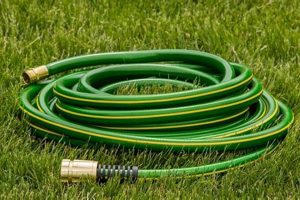
The capacity to reprocess and reuse materials from a common watering tool presents a complex challenge. This is due to the material composition typically involving blends of rubber, plastic, and reinforcing fibers, often making them unsuitable for standard recycling streams that focus on single-polymer materials. For instance, a typical green, rubberized hose might not be accepted at a municipal recycling center.
Addressing the environmental impact associated with discarding these items contributes to reducing landfill waste and conserving resources. Historically, the focus has been on durability and cost-effectiveness in manufacturing, with less emphasis on end-of-life management. However, growing awareness of plastic pollution and the circular economy is driving innovation in materials and recycling technologies.
Therefore, understanding the specific material composition, exploring specialized recycling options, and considering alternative disposal methods are crucial steps. Further investigation will delve into the challenges, potential solutions, and the role of consumers and manufacturers in improving the sustainability of these frequently used items.
Strategies for Managing End-of-Life Watering Tools
Effective management of discarded watering implements necessitates a multifaceted approach encompassing responsible usage, exploration of specialized recycling avenues, and proactive engagement with both manufacturers and municipal waste management programs.
Tip 1: Understand the Material Composition: Before attempting any disposal method, ascertain the precise materials used in its construction. Information on composition is often available from the manufacturer’s website or product packaging.
Tip 2: Explore Specialized Recycling Programs: Research local recycling centers or specialized waste management facilities that accept mixed plastics and rubber. Some facilities are equipped to handle complex material blends.
Tip 3: Contact Manufacturers Directly: Inquire with the product’s manufacturer regarding potential take-back programs or recommended disposal methods. Some companies are initiating extended producer responsibility initiatives.
Tip 4: Repurpose or Upcycle: Consider alternative uses for the discarded item. It can be repurposed for drainage, erosion control, or creative gardening projects.
Tip 5: Reduce Consumption Through Responsible Usage: Extend the lifespan by avoiding kinks, storing it properly during off-seasons, and repairing minor damages promptly.
Tip 6: Advocate for Sustainable Alternatives: Support companies and products that utilize recyclable materials or offer durable, long-lasting options. Consumer demand can drive market changes.
Implementing these strategies reduces environmental impact and promotes a circular economy approach to managing these common household items.
Adoption of these strategies contributes to a more sustainable approach to material consumption and waste management, fostering a cleaner environment.
1. Material Composition

The composition of a typical watering tool dictates its potential for reuse through recycling processes. The inherent properties of constituent materials and their interactions determine whether the item can be effectively processed within existing recycling infrastructure.
- Polymer Type
The primary polymer used, such as polyvinyl chloride (PVC), rubber (often synthetic blends), or thermoplastic elastomers (TPEs), influences recyclability. PVC, while technically recyclable, often contains additives that complicate the process. Rubber, especially when vulcanized, presents significant challenges. TPEs offer more favorable recycling characteristics due to their thermoplastic nature.
- Reinforcement Materials
Many implements incorporate reinforcing materials like nylon or polyester fibers for added strength and durability. These materials are typically embedded within the polymer matrix and can be difficult to separate during recycling, often requiring specialized equipment or chemical treatments.
- Additives and Stabilizers
Various additives, including plasticizers (phthalates or alternatives), UV stabilizers, and colorants, are incorporated into the formulation. These additives can contaminate the recycling stream, reducing the quality of the recycled material or rendering it unsuitable for certain applications. Some additives may also pose environmental or health concerns.
- Material Blends
The combination of different polymers and additives results in a complex material blend. This heterogeneity presents a significant hurdle for conventional recycling processes designed for single-polymer streams. Separation of these materials is often economically unfeasible or technically challenging, limiting the options for recycling.
The diverse range of materials and additives in typical watering implements significantly impacts its potential for recycling. The presence of contaminants, material blends, and difficult-to-separate components often necessitates specialized recycling approaches or results in the item being unsuitable for traditional recycling programs, underscoring the importance of considering material composition when evaluating this equipment’s recyclability.
2. Recycling Facility Capabilities

The capacity of a recycling facility directly influences whether a discarded watering implement can be processed and reintegrated into the materials economy. The technological infrastructure, sorting mechanisms, and processing techniques employed at these facilities determine their ability to handle the complex material composition of such items. If a facility lacks the specialized equipment to separate and process the various plastics, rubber, and reinforcing fibers commonly found in these watering tools, acceptance becomes impossible. The absence of necessary infrastructure effectively renders the item unrecyclable, regardless of inherent material properties.
For instance, a recycling center equipped primarily for handling single-stream polyethylene (PET) or high-density polyethylene (HDPE) would likely reject a typical PVC-based watering implement. Similarly, facilities that rely on basic mechanical sorting may struggle to separate the interwoven layers of plastic and fiber. Conversely, advanced facilities with chemical recycling capabilities or specialized shredding and separation technologies might be able to process these items, extracting valuable materials for reuse. The availability of such advanced facilities remains limited, and their accessibility to consumers varies significantly by location. This disparity creates inconsistencies in recycling rates and underscores the critical need for investment in infrastructure capabl
e of handling complex waste streams.
Therefore, the limitations or advancements of recycling facility capabilities act as a primary determinant in addressing the question of whether a watering implement can be effectively recycled. Overcoming these limitations requires a multi-pronged approach, including investment in advanced processing technologies, the development of standardized material compositions to facilitate easier sorting, and the establishment of collaborative partnerships between manufacturers, recycling facilities, and government agencies. Such coordinated efforts are crucial for enhancing the sustainability of these commonly used products and diverting them from landfills.
3. Polymer blending

Polymer blending is a critical factor influencing the recyclability of watering implements. The practice of combining different types of polymers to achieve desired material properties introduces complexity into the recycling process, often rendering these items unsuitable for conventional recycling streams.
- Compatibility Challenges
The combination of inherently incompatible polymers, such as PVC and rubber, creates challenges during reprocessing. These materials exhibit different melting points, viscosities, and chemical properties, hindering the creation of a homogenous, high-quality recycled material. The resulting blend may exhibit inferior mechanical properties, limiting its potential applications.
- Separation Difficulties
Separating blended polymers into their constituent components is often technically and economically unfeasible. While some advanced recycling technologies can selectively dissolve or separate certain polymers, these processes are not widely available or cost-effective for most watering implement waste streams. The inability to separate the polymers leads to downcycling or disposal.
- Contamination Risks
The presence of even small amounts of incompatible polymers can contaminate the entire recycling batch. For example, if a PVC-containing watering implement is mixed with a polyethylene (PE) recycling stream, the PVC can degrade the quality of the recycled PE, making it unsuitable for food-grade applications or other high-value uses. This contamination necessitates more stringent sorting and quality control measures.
- Impact on Material Properties
Polymer blending can negatively impact the mechanical properties of the recycled material. The resulting blend may be weaker, more brittle, or less durable than virgin polymers, limiting its use in demanding applications. This reduction in material performance often results in downcycling, where the recycled material is used for lower-value products or applications.
The ramifications of polymer blending directly affect the recyclability of watering implements, resulting in limited recycling options. Addressing these challenges requires innovative approaches such as designing for recyclability, utilizing more compatible polymer blends, or developing advanced separation technologies. These strategies are essential for promoting a circular economy and reducing the environmental impact of these widely used items.
4. Contamination

Contamination poses a significant impediment to the effective recycling of watering implements. The presence of foreign substances or incompatible materials within the waste stream compromises the quality and usability of recycled materials, potentially rendering the entire process economically unviable.
- Dirt and Debris
The accumulation of dirt, soil, and organic matter on a watering implement during its lifespan introduces contaminants that interfere with the recycling process. These substances can clog processing equipment, reduce the purity of recycled polymers, and increase the energy required for cleaning and reprocessing. For example, a hose used extensively in a garden may accumulate significant amounts of soil, making it difficult to clean effectively before recycling.
- Incompatible Materials
The presence of materials not intended for inclusion in a specific recycling stream constitutes contamination. This can include metal fittings, rubber components in plastic recycling, or PVC within a polyethylene stream. These incompatible materials disrupt the melting and reforming processes, leading to structural weaknesses and reduced performance in the recycled product. A brass fitting left attached to a plastic hose end would introduce metallic contamination.
- Chemical Residues
Watering tools exposed to chemicals, fertilizers, or pesticides may retain residues that contaminate the recycling stream. These chemicals can leach into the recycled material, posing environmental and health risks. Their presence may also compromise the structural integrity or functionality of the recycled product, limiting its applications. A hose used for spraying herbicides might retain chemical residues impacting its recyclability.
- Water Retention
Water trapped within the inner layers or crevices of a watering implement can lead to microbial growth and accelerate degradation of the material. The presence of water can also increase the weight of the material, adding to transportation costs and energy consumption during recycling. Furthermore, excess moisture can disrupt the melting process and compromise the quality of the recycled polymer.
These forms of contamination, whether physical, chemical, or material-based, collectively diminish the potential for effective recycling of watering implements. Addressing contamination requires comprehensive cleaning protocols, diligent sorting practices, and potentially, pretreatment processes to remove problematic substances. The implementation of robust quality control measures is essential for ensuring the integrity of recycled materials and promoting a circular economy for these products.
5. Alternative recycling streams

The limited acceptance of discarded watering implements in conventional municipal recycling programs necessitates the exploration of alternative recycling streams. Standard facilities often lack the technology to process the mixed materials of these products. Specialized programs, however, can offer viable solutions, addressing the question of whether a used hose is recyclable. These alternative streams encompass a range of approaches, from advanced recycling technologies to specialized collection events, each designed to manage materials that fall outside the scope of typical recycling infrastructure. Their success hinges on the ability to efficiently separate and process the complex blend of polymers and reinforcing materials found in watering implements. For example, some companies are developing chemical recycling processes to break down the polymers into their original building blocks, which can then be used to create new materials. Similarly, specialized collection events organized by local communities or manufacturers can gather these items for processing at facilities equipped to handle them.
The effectiveness of alternative streams is influenced by
factors such as accessibility, cost, and consumer participation. A specialized program, while technically capable of recycling a watering implement, remains ineffective if it is geographically inaccessible or too costly for consumers to utilize. Education and awareness campaigns are crucial for encouraging participation and ensuring that these items are diverted from landfills to appropriate recycling facilities. Furthermore, collaboration between manufacturers, waste management companies, and government agencies is essential for establishing sustainable and scalable alternative recycling programs. This collaboration could involve the development of standardized material compositions to facilitate easier sorting and processing, as well as the implementation of extended producer responsibility schemes that incentivize manufacturers to design for recyclability and manage end-of-life products.
In summary, alternative recycling streams represent a crucial component in addressing the challenge of managing discarded watering implements. While conventional recycling programs often lack the capacity to process these items, specialized programs offer a pathway for recovering valuable materials and reducing landfill waste. The success of these alternative streams depends on factors such as technological innovation, accessibility, consumer participation, and collaborative partnerships. Continued investment in these areas is essential for promoting a circular economy and ensuring the sustainable management of watering implements.
6. Manufacturer responsibility

The recyclability of watering implements is intrinsically linked to manufacturer responsibility, encompassing design, material selection, and end-of-life management. The initial design choices directly impact the feasibility of recycling the product. If manufacturers prioritize cost and durability over recyclability, by using mixed materials or difficult-to-separate components, the product’s end-of-life management becomes significantly more challenging. For instance, a hose constructed with a complex blend of PVC, rubber, and reinforcing fibers without consideration for separation techniques essentially predetermines its non-recyclability through conventional streams. Conversely, a manufacturer proactively designing for disassembly, utilizing mono-materials, or implementing a take-back program directly enhances the prospect of its product being recycled. An example would be a company using thermoplastic elastomers (TPEs) known for easier recycling, and designing the hose without permanently affixed metal fittings, thus removing barriers to processing.
Extended Producer Responsibility (EPR) schemes, where manufacturers bear the financial or operational burden of managing their products at end-of-life, provide a strong incentive for designing for recyclability. Companies operating under EPR frameworks are more likely to invest in research and development to identify recyclable materials, simplify product design, and establish collection and processing infrastructure. This commitment extends beyond material selection to include clear labeling of material composition, facilitating easier identification and sorting at recycling facilities. Without manufacturer commitment, the burden of managing discarded watering implements falls disproportionately on consumers and municipal waste management systems, leading to increased landfill waste and environmental degradation.
Ultimately, the shift towards a circular economy for watering implements necessitates a fundamental change in manufacturer mindset. Considering the full lifecycle of their products, including end-of-life management, becomes paramount. This proactive approach, involving responsible material sourcing, design for recyclability, and investment in collection and processing infrastructure, is critical for overcoming the challenges associated with recycling watering implements. By embracing their responsibility, manufacturers can significantly improve the recyclability of these products, contributing to a more sustainable future and alleviating pressure on existing waste management systems.
7. Consumer awareness

Consumer awareness directly influences the lifecycle of watering implements and, consequently, addresses the question of whether a garden hose is recyclable. Informed consumers are more likely to make purchasing decisions favoring products constructed from recyclable materials or designed for disassembly. This demand can incentivize manufacturers to adopt more sustainable production practices. A consumer aware of the material composition of different watering implements, for instance, might choose a hose made from a single, easily recyclable polymer over one composed of a complex blend of materials. Furthermore, consumer awareness regarding proper disposal methods is crucial. A consumer knowledgeable about local recycling programs and the specific requirements for accepting watering implements is more likely to dispose of the item responsibly, maximizing its potential for recycling. Conversely, a lack of awareness often results in improper disposal, contributing to landfill waste.
The practical significance of enhanced consumer awareness extends beyond individual purchasing and disposal habits. Informed consumers are better equipped to advocate for improved recycling infrastructure and policies. They can exert pressure on manufacturers to adopt extended producer responsibility schemes, ensuring that producers are held accountable for the end-of-life management of their products. A community with a high level of environmental awareness, for example, might successfully lobby its local government to establish specialized collection programs for difficult-to-recycle items such as watering implements. This heightened consumer engagement can drive systemic changes, fostering a more circular economy and reducing the environmental impact of these products.
In summary, consumer awareness serves as a catalyst for sustainable practices related to watering implements. Informed purchasing decisions, responsible disposal habits, and advocacy for improved policies collectively enhance the likelihood of these items being recycled. Addressing the challenge of effectively recycling watering implements requires a multifaceted approach, with consumer awareness playing a critical role in driving demand for recyclable products and promoting responsible waste management practices. Increasing this awareness is essential for minimizing environmental impact and moving towards a more sustainable future.
Frequently Asked Questions
This section addresses common inquiries regarding the recyclability of watering implements, providing clear and concise information to promote responsible disposal practices.
Question 1: What materials commonly compose a watering tool, and how do these materials affect its ability to be recycled?
Watering implements typically comprise a blend of polyvinyl chloride (PVC), rubber (often synthetic), and reinforcing fibers (e.g., nylon or polyester). The mixture of these materials, coupled with additives, complicates the recycling process, as standard facilities are often equipped to handle single-polymer streams.
Question 2: Why are standard municipal recycling programs often unable to process these discarded items?
Municipal recycling programs generally lack the specialized technology required to separate and process the complex mix of materials found
in watering implements. The process of dismantling, sorting, and reprocessing is more intricate than with single-polymer plastics or metals.
Question 3: Are there any specialized recycling programs that accept them?
Yes, some specialized recycling programs are emerging, capable of handling mixed plastics and rubber. Contacting local waste management authorities or searching online for facilities accepting “mixed plastics recycling” can identify these options. Manufacturer take-back programs represent another potential avenue.
Question 4: What steps can be taken to prepare a watering implement for recycling?
Preparing a watering implement for recycling includes removing any metal fittings (e.g., nozzles or connectors), cleaning off dirt and debris, and cutting the item into manageable segments. Check with the recycling facility for their specific preparation requirements.
Question 5: How can extending the lifespan of a watering implement reduce environmental impact?
Extending the lifespan of a watering implement minimizes the need for frequent replacement and reduces the volume of discarded materials entering waste streams. Proper storage, avoiding kinks, and promptly repairing leaks can contribute to prolonging its usability.
Question 6: What is the role of manufacturers in improving the recyclability of watering implements?
Manufacturers can enhance the recyclability of their products by designing for disassembly, utilizing mono-materials (single-polymer construction), and implementing extended producer responsibility schemes (take-back programs). Transparency regarding material composition is equally crucial.
This FAQ clarified aspects relevant to the recyclability. Responsible disposal and manufacturer engagement.
Consider this for the next section.
Conclusion
The examination of “is garden hose recyclable” reveals a complex landscape. The blend of materials, limitations of conventional recycling facilities, and contamination challenges often preclude their acceptance in standard programs. However, specialized recycling streams and a heightened focus on manufacturer responsibility offer potential avenues for improved end-of-life management.
Ultimately, achieving widespread recyclability necessitates a concerted effort. Investment in advanced recycling technologies, adoption of sustainable design principles, and increased consumer awareness are crucial steps. The future hinges on a collaborative approach among manufacturers, waste management entities, and the public to divert these materials from landfills and promote a circular economy.
![Best 2 Inch Garden Hose For [X] & Reviews | The Ultimate Gardening Guide: Grow a Thriving Garden Year-Round](https://MyGardenPatch.com/wp-content/uploads/2025/07/th-5631-300x200.jpg "Best 2 Inch Garden Hose For [X] & Reviews The Ultimate Gardening Guide: Grow a Thriving Garden Year-Round")