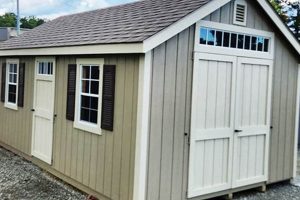
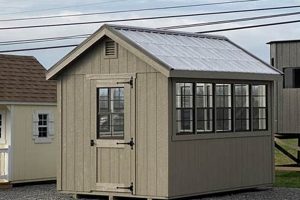
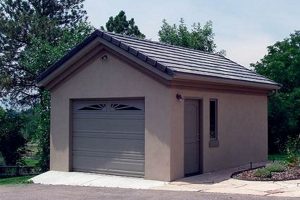
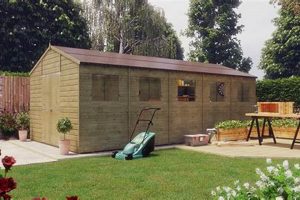
Structures marketed as outbuildings with thermal protection offer secure storage and workspace solutions. These units incorporate insulating materials within their walls, roof, and sometimes floor, creating a more consistent internal temperature. For example, one might utilize a structure featuring fiberglass batting within its walls to mitigate temperature fluctuations.
The primary benefit lies in temperature regulation, enabling comfortable use throughout the year. This facilitates hobby pursuits, gardening activities, or secure storage of sensitive items irrespective of external weather conditions. Historically, rudimentary insulation techniques were employed in outbuildings to protect livestock and supplies; modern insulated units represent a technologically advanced evolution of this concept.
The following sections will address construction materials and techniques, cost considerations, and appropriate applications for thermally regulated outdoor buildings.
Tips for Evaluating Thermally Protected Outdoor Structures
The selection of a suitable outdoor building with thermal protection requires careful consideration of several key factors. These tips aim to provide guidance for making an informed decision.
Tip 1: Assess Insulation Type and R-Value: The insulation material directly impacts thermal performance. Verify the R-value, a measure of thermal resistance; higher R-values indicate greater insulation effectiveness. Common materials include fiberglass, spray foam, and rigid foam boards. Consider the climate when determining the necessary R-value.
Tip 2: Evaluate Construction Materials: The building’s structural materials affect its longevity and thermal efficiency. Opt for durable materials like pressure-treated wood or metal framing. Examine the quality of siding and roofing materials, ensuring they contribute to weather resistance.
Tip 3: Inspect Sealing and Weatherproofing: Air leaks compromise insulation performance. Verify that all seams, joints, and openings are properly sealed with caulk or weather stripping. Pay attention to door and window seals; gaps can significantly reduce thermal efficiency.
Tip 4: Consider Ventilation: While insulation is crucial, proper ventilation is equally important. Adequate ventilation prevents moisture buildup, which can damage both the structure and insulation. Ensure the presence of vents, especially in the roof or eaves.
Tip 5: Review Foundation and Flooring: A well-insulated floor can significantly reduce heat loss. Consider a concrete slab with insulation underneath or a raised wooden floor with insulation between the joists. Ensure the foundation is properly constructed to prevent moisture intrusion.
Tip 6: Determine Intended Use: The intended application influences insulation requirements. A building used for year-round office space demands higher insulation levels than one used primarily for storage. Assess heating and cooling needs based on usage patterns.
Tip 7: Obtain Multiple Quotes: Pricing for thermally protected outdoor buildings can vary considerably. Obtain quotes from multiple suppliers, comparing not only the overall price but also the specifications and included features.
Prioritizing insulation quality, construction materials, and proper sealing ensures a comfortable and energy-efficient outdoor space. A careful approach to evaluation and selection contributes to long-term satisfaction and cost savings.
The subsequent sections will delve into specific applications and the potential return on investment associated with these thermally regulated structures.
1. Thermal Performance (R-value)

Thermal Performance, specifically quantified by its R-value, is a paramount consideration when evaluating structures marketed as insulated outdoor buildings. This value directly indicates the material’s resistance to heat flow, influencing the internal temperature stability of the building.
- R-Value as a Metric of Insulation Effectiveness
The R-value is a standardized measurement that quantifies the thermal resistance of a given material or assembly. Higher R-values indicate greater resistance to heat transfer, resulting in better insulation performance. For structures described as insulated, a specified R-value provides a benchmark for evaluating the building’s ability to maintain consistent internal temperatures.
- Impact of Climate on Required R-Value
The geographical location and prevailing climate dictate the necessary R-value for an outdoor structure. Regions with extreme temperature fluctuations require higher R-values to effectively mitigate heat gain during summer and heat loss during winter. Selecting an outdoor building with an insufficient R-value for the local climate results in increased heating and cooling costs, alongside reduced occupant comfort or compromised storage conditions.
- Material Selection and R-Value Correlation
The insulating material employed in the construction of a structure directly affects the overall R-value. Fiberglass batt insulation, spray foam insulation, and rigid foam boards exhibit varying R-values per inch of thickness. Product descriptions should clearly state the type and thickness of insulation used, enabling an informed assessment of its thermal performance characteristics.
- Long-Term Cost Implications
Initial cost savings on an outdoor building with subpar insulation may prove short-sighted. A lower R-value translates to higher energy consumption for heating or cooling, leading to increased utility expenses over the lifespan of the structure. Investing in a building with an appropriate R-value for the intended use and climate yields long-term cost savings and enhanced usability.
The R-value, therefore, serves as a critical metric for evaluating the suitability of structures marketed with thermal protection. Careful consideration of the R-value, in conjunction with climate and intended use, ensures a worthwhile investment in outdoor storage or workspace solutions.
2. Material Durability

The longevity and structural integrity of insulated outdoor structures are inextricably linked to the durability of the materials employed in their construction. This attribute directly influences the building’s resistance to environmental factors, including moisture, temperature fluctuations, and physical wear, impacting its lifespan and maintenance requirements. For example, a building constructed with untreated lumber will degrade more rapidly than one utilizing pressure-treated wood, necessitating earlier repairs or replacement. Similarly, flimsy siding materials are susceptible to damage from wind and impact, compromising both the aesthetic appeal and the structural integrity of the enclosure.
Material selection impacts the effectiveness of the insulation itself. Moisture intrusion, often resulting from the use of non-durable materials, can degrade insulation performance, leading to reduced thermal efficiency and potential mold growth. Proper construction techniques, coupled with durable, weather-resistant materials, are essential for maintaining a consistent internal environment and preventing the need for costly remediation. Structures utilizing high-quality materials typically offer extended warranties, reflecting the manufacturer’s confidence in their product’s resilience.
In summation, material durability is a primary determinant of the long-term value and performance of insulated outdoor buildings. Compromising on material quality to reduce initial costs often results in accelerated deterioration and increased maintenance expenses. Therefore, thorough evaluation of construction materials and their resistance to environmental stressors is crucial for making an informed investment decision.
3. Sealing Integrity

Sealing integrity is a fundamental attribute of insulated garden buildings, critically affecting their capacity to maintain a stable internal environment. Breaches in the building envelope compromise the effectiveness of the insulation, diminishing its ability to mitigate heat transfer. For example, gaps around doors or windows, or inadequately sealed seams in the wall panels, create thermal bridges, allowing heat to escape in colder months and enter during warmer periods. This loss of temperature control increases the energy demand for heating and cooling, negating the intended benefits of the insulation. The design and construction of the structure must prioritize airtightness to maximize the performance of the insulation layer.
The effects of compromised sealing extend beyond energy efficiency. Air leaks often facilitate moisture intrusion, creating conditions conducive to mold growth and wood rot. These issues can degrade the structural integrity of the building, necessitating costly repairs and potentially shortening its lifespan. Furthermore, inadequate sealing can compromise the storage environment for temperature-sensitive items, such as electronics or horticultural supplies. A building marketed as insulated loses significant value if its sealing integrity is not rigorously maintained. Careful inspection of seals around windows, doors, and penetrations for wiring or plumbing is, therefore, paramount during evaluation.
In conclusion, sealing integrity is not merely a detail; it is an essential component of an effective insulated garden building. Poor sealing undermines the insulation’s performance, leading to increased energy costs, potential structural damage, and compromised storage conditions. Therefore, rigorous attention to sealing during construction and ongoing maintenance are crucial for realizing the full benefits of an insulated outdoor structure, delivering enhanced value and a longer useful life.
4. Ventilation
While insulation serves to regulate temperature within structures marketed as thermally protected, ventilation addresses moisture control and air quality. The interplay between these two elements is vital for ensuring the long-term integrity and usability of an insulated garden building. Without adequate ventilation, moisture generated internally through respiration, storage of damp items, or minor leaks accumulates, creating an environment conducive to mold growth and wood rot. Consider a building where condensation forms on the interior surfaces during cooler months due to inadequate airflow; the accumulated moisture damages stored items and degrades the insulation’s effectiveness, leading to diminished thermal performance.
Ventilation strategies in these structures often involve passive and active systems. Passive ventilation relies on natural airflow through vents strategically positioned to promote air circulation. For example, soffit and ridge vents create a convection current, drawing warm, moist air out of the building. Active ventilation systems, such as exhaust fans, provide a more controlled means of removing moisture and stale air. Selection of an appropriate ventilation strategy depends on the size of the building, the climate, and the intended use. A structure used for storing damp gardening supplies requires more robust ventilation than one primarily housing dry goods. Careful consideration of the ventilation needs ensures that the insulation performs optimally and the building remains structurally sound.
In summary, ventilation is an indispensable component of thermally protected garden buildings. It complements insulation by mitigating moisture buildup, preventing mold growth, and preserving air quality. The integration of appropriate ventilation strategies is crucial for maximizing the lifespan and utility of these structures. Neglecting ventilation compromises the investment in insulation and can lead to costly repairs or premature building failure. Therefore, ventilation warrants thorough evaluation when assessing the overall value and suitability of an insulated garden building.
5. Foundation

The foundation is a critical element influencing the performance and longevity of insulated garden buildings. A properly constructed foundation provides a stable, level base, preventing structural issues such as warping, sagging, and uneven settling. This stability is particularly important for insulated structures, as any movement can compromise the integrity of the insulation and sealing, leading to reduced thermal efficiency and potential moisture intrusion. For example, a building erected on an unstable or improperly prepared surface may experience shifting over time, creating gaps in the insulation and seals, negating the benefits of thermal protection. A robust foundation is therefore essential for realizing the full potential of an insulated garden building.
Various foundation types are suitable for insulated garden buildings, each with its advantages and disadvantages. Concrete slabs offer a stable, level surface and excellent moisture resistance when properly installed with a vapor barrier. Gravel pads provide good drainage and are relatively inexpensive but may be less stable over time, particularly on sloping sites. Wooden skids offer portability and can be suitable for smaller structures on level ground but are more susceptible to rot if not properly treated and elevated. The choice of foundation should consider the size and weight of the building, site conditions, local climate, and budget constraints. Regardless of the chosen type, proper preparation of the site, including leveling and compaction, is crucial for ensuring a stable and durable foundation.
In summary, the foundation is an indispensable component of insulated garden buildings. A well-constructed foundation provides a stable, level base, protecting the building from structural damage and preserving the integrity of the insulation and sealing. Selecting an appropriate foundation type and ensuring proper installation are critical for maximizing the lifespan and performance of an insulated garden building. Neglecting the foundation can lead to premature failure and negate the benefits of thermal protection. Therefore, a thorough assessment of foundation requirements should be a primary consideration when investing in insulated outdoor buildings, contributing to enhanced value and long-term reliability.
Frequently Asked Questions
This section addresses common inquiries regarding outdoor buildings with thermal protection, aiming to provide clarity and dispel misconceptions about their performance and suitability.
Question 1: What R-value is optimal for an insulated garden building?
The optimal R-value is contingent upon the local climate and the intended use. Regions experiencing extreme temperature variations necessitate higher R-values to maintain consistent internal temperatures. Structures intended for year-round use, such as workshops or offices, also benefit from higher insulation levels than those primarily used for storage.
Question 2: How does moisture affect the performance of insulation?
Moisture significantly reduces the thermal resistance of most insulation materials. Water accumulation within the insulation diminishes its ability to impede heat transfer, leading to increased energy consumption and potential structural damage from rot and mold. Proper sealing and ventilation are crucial for mitigating moisture intrusion.
Question 3: What foundation types are appropriate for insulated garden buildings?
Suitable foundation types include concrete slabs, gravel pads, and wooden skids. Concrete slabs provide a stable, level surface and excellent moisture resistance. Gravel pads offer good drainage but may be less stable over time. Wooden skids allow for portability but are more susceptible to rot if not properly treated. The choice depends on the size and weight of the building, site conditions, and budget.
Question 4: Is ventilation necessary in an insulated garden building?
Ventilation is essential for removing moisture and maintaining air quality. Without adequate ventilation, moisture can accumulate, leading to mold growth and wood rot. Proper ventilation strategies often involve passive vents strategically positioned to promote airflow, preventing moisture buildup and preserving the integrity of the structure.
Question 5: How can one assess the quality of the sealing in an insulated garden building?
Thorough inspection of seals around windows, doors, and penetrations for wiring or plumbing is critical. Gaps or inadequate sealing allow for air leaks, compromising the insulation’s performance. Caulk or weather stripping should be present and in good condition at all seams and joints.
Question 6: Are DIY insulation methods effective for garden buildings?
DIY insulation can be effective if executed properly. However, improper installation can lead to reduced thermal performance and potential moisture issues. Adherence to best practices, including proper vapor barrier installation and sealing of all gaps, is crucial for achieving satisfactory results. Professional installation often provides superior performance and long-term durability.
In conclusion, informed decision-making requires careful consideration of insulation type, R-value, moisture control, foundation selection, and sealing integrity. Addressing these aspects ensures the long-term performance and value of the insulated garden building.
The following sections will explore maintenance considerations and strategies for optimizing the thermal performance of insulated garden buildings.
Conclusion
The preceding discussion has elucidated critical aspects of structures represented by the phrase “insulated garden sheds for sale.” Understanding insulation types, R-values, material durability, sealing techniques, proper ventilation, and appropriate foundation types are essential for evaluating their suitability. Considerations of usage, climate, and budget are paramount to selecting a product that meets individual needs and provides long-term value. The importance of adequate sealing and a solid foundation has been highlighted to maintain structure.
In summary, selection of thermally protected outbuildings requires diligent assessment to maximize usability and return on investment. Failure to address these considerations risks diminished performance and long-term satisfaction. Prospective purchasers are encouraged to diligently apply these principles for optimal results and value.