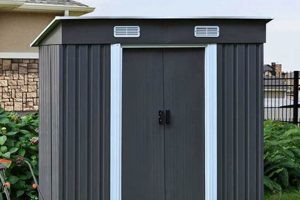
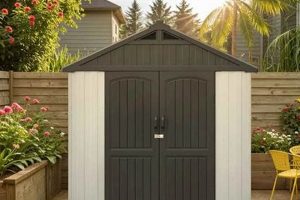
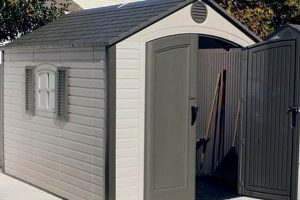
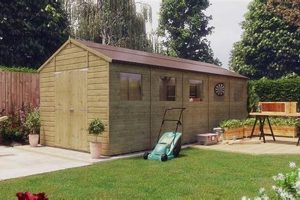
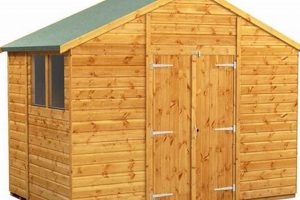
Securing a small outdoor structure to the ground is a process that prevents movement due to wind, ground shifting, or other external forces. This stabilization involves connecting the structure’s base to the earth using various anchoring methods and materials, ensuring its stability over time.
Stabilizing these structures protects them from damage during storms, extends their lifespan by preventing structural stress, and may be required by local building codes in certain areas. Properly affixed structures also offer increased security against theft and vandalism.
The subsequent sections will detail several effective methods for ensuring the stability of such structures, outlining the materials required, the steps involved, and considerations for different soil types and structural designs.
Essential Stabilization Guidance
The following recommendations outline crucial considerations for ensuring the long-term stability of a small outdoor structure. Diligent adherence to these guidelines contributes significantly to the structure’s resilience and longevity.
Tip 1: Site Evaluation is Paramount: Prior to initiating any anchoring procedure, a comprehensive assessment of the ground composition is essential. Soil type dictates the appropriate anchoring method. Sandy soils, for example, require different techniques than clay-rich or rocky terrains.
Tip 2: Implement a Ground Anchor System: Ground anchors, typically screw-in or driven, provide robust resistance against uplift. These anchors are embedded deep within the earth and connected to the base of the structure using galvanized steel cables or straps.
Tip 3: Consider Concrete Pier Footings: For enhanced stability, particularly in areas prone to high winds or unstable ground, consider establishing concrete pier footings. The structure’s base is then securely attached to these solid foundations.
Tip 4: Utilize Anchor Brackets: Anchor brackets affixed to the structure’s frame and subsequently bolted to a concrete slab or embedded in the ground provide a direct and reliable connection. This method is suitable for smaller structures on relatively level surfaces.
Tip 5: Cable Anchoring for Lightweight Structures: For lighter-weight constructions, cable anchoring offers a cost-effective solution. Cables are secured to the frame and then anchored to ground stakes driven at an angle away from the structure.
Tip 6: Prioritize Corrosion Resistance: All anchoring materials, including cables, brackets, and fasteners, must be corrosion-resistant. Galvanized steel or stainless steel are recommended, particularly in environments with high humidity or coastal proximity.
Tip 7: Comply with Local Building Codes: Prior to commencing any anchoring work, it is imperative to consult local building codes and regulations. Certain jurisdictions may mandate specific anchoring methods or require permits.
Effective implementation of these recommendations significantly mitigates the risk of damage or displacement, safeguarding the structural integrity of the enclosure.
The next section will address frequently encountered challenges during the anchoring process and propose solutions for overcoming them.
1. Ground Composition

The composition of the ground directly influences the efficacy and selection of appropriate anchoring methods for garden sheds. Different soil types exhibit varying load-bearing capacities and drainage characteristics, thereby affecting the stability of any structure placed upon them. A thorough understanding of the soil is therefore paramount to ensuring long-term structural integrity.
- Soil Type and Anchor Selection
The primary determinant of anchor type is the prevailing soil. Sandy soils, characterized by poor compaction and high permeability, necessitate anchors with broad bearing surfaces or helical designs to maximize resistance to pull-out. Clay soils, conversely, offer greater cohesion but can be subject to expansion and contraction due to moisture content fluctuations, potentially compromising anchor stability over time. Rocky soils present unique challenges, requiring anchors capable of penetrating or bypassing subsurface obstructions. Proper identification of the soil type allows for the selection of anchors best suited to its specific properties.
- Bearing Capacity and Load Distribution
Bearing capacity refers to the soil’s ability to withstand applied loads without undergoing excessive settlement or failure. Different soil types exhibit varying bearing capacities, which must be accounted for when determining the size and spacing of anchors. Structures with substantial weight or those located in areas prone to high winds require a greater number of anchors or anchors with larger bearing surfaces to distribute the load effectively. Failure to adequately assess bearing capacity can result in anchor failure and subsequent structural instability.
- Drainage and Frost Heave
Soil drainage characteristics significantly impact the long-term stability of structures. Poorly drained soils can become saturated, leading to reduced bearing capacity and increased susceptibility to frost heave. Frost heave occurs when water within the soil freezes, expands, and exerts upward pressure on the structure and its anchors. This cyclical freezing and thawing can gradually displace anchors and compromise the structural integrity of the shed. Proper site grading and the incorporation of drainage systems, such as French drains, can mitigate the effects of poor drainage and frost heave.
- Soil Testing and Analysis
For critical applications or when uncertainty exists regarding soil properties, professional soil testing and analysis are recommended. Soil testing involves collecting samples from the site and subjecting them to laboratory analysis to determine parameters such as soil type, bearing capacity, drainage characteristics, and chemical composition. This information can be used to select the most appropriate anchoring method and to ensure that the anchors are installed correctly and can withstand the anticipated loads and environmental conditions. Consulting with a geotechnical engineer may be necessary for complex or challenging sites.
In summary, evaluating the ground composition is a foundational step in ensuring the safe and stable anchoring of garden sheds. Ignoring this crucial factor can lead to premature failure and costly repairs. Prioritizing proper site assessment and selecting anchors appropriate for the specific soil conditions guarantees the long-term structural integrity of the shed.
2. Anchoring Method

The anchoring method is a crucial determinant of a garden shed’s stability and resilience against external forces. Its selection is not arbitrary; it is a direct response to site-specific conditions and structural characteristics. Employing an inappropriate anchoring method can render even the most robust shed vulnerable to displacement or damage, underscoring the integral connection between the two. For example, a shed situated in a hurricane-prone region necessitates a deep anchoring system with substantial pull-out resistance, whereas a shed in a sheltered location with stable soil may suffice with a simpler, less invasive method.
The practical significance of understanding this connection lies in risk mitigation. Proper anchoring prevents common issues such as wind uplift, ground shifting, and structural settling. Consider the case of a shed secured only with surface-level stakes in an area subject to expansive clay soil. The seasonal cycles of wetting and drying cause the clay to expand and contract, gradually loosening the stakes and eventually compromising the shed’s foundation. A more appropriate method, such as concrete piers extending below the frost line, would counteract this effect, ensuring long-term stability. Similarly, sheds built on slopes require specialized anchoring techniques, such as helical anchors, to resist downslope creep and maintain structural integrity.
Therefore, the anchoring method represents a proactive measure to safeguard a garden shed’s longevity and utility. It is a multifaceted decision-making process informed by factors such as soil type, climate conditions, shed size and weight, and local building codes. By carefully considering these variables and selecting an anchoring method accordingly, owners can significantly reduce the risk of structural failure and ensure their sheds remain secure and functional for years to come.
3. Material Durability
The longevity and efficacy of any structure stabilization method are intrinsically linked to the durability of the materials employed. When considering the methods used to secure an outdoor structure, the selection of robust and resistant materials is not merely a supplementary consideration, but a foundational element directly influencing the system’s lifespan and reliability. The materials involved in the anchoring process are exposed to environmental stressors, including moisture, temperature fluctuations, and ground chemistry, making durability a paramount concern.
For example, if untreated steel anchors are used in a corrosive soil environment, they will degrade over time, weakening the entire stabilization system. This degradation can ultimately lead to anchor failure and subsequent displacement of the structure. Conversely, the utilization of galvanized steel or stainless steel anchors in the same environment provides significantly enhanced resistance to corrosion, extending the lifespan of the system and ensuring long-term stability. Similarly, the cables, straps, or brackets used to connect the structure to the anchors must also be constructed from durable materials to prevent premature failure. The cost savings associated with using less durable materials initially are quickly negated by the expenses associated with repairs or replacements resulting from corrosion or degradation.
In conclusion, the selection of durable materials is an indispensable component of any plan to stabilize structures. Careful consideration must be given to the environmental conditions to which the anchoring system will be exposed, and materials must be chosen accordingly to ensure long-term performance and prevent costly failures. The use of inferior materials compromises the entire anchoring strategy, highlighting the critical importance of prioritizing durability in material selection.
4. Code Compliance
Code compliance is a critical component of securing outdoor structures. Building codes, often enforced at the local or regional level, establish minimum standards for structural safety and resistance to environmental factors, including wind and seismic activity. Failure to adhere to these regulations can result in penalties, rejection of building permits, and, more importantly, compromised structural integrity. Compliance with the relevant regulations ensures that the chosen anchoring methods are deemed sufficient to withstand anticipated loads and environmental conditions.
The anchoring requirements stipulated in building codes frequently specify minimum anchor depths, spacing, and load-bearing capacities. These specifications are derived from engineering analyses and historical data, designed to prevent structural failure under extreme conditions. For example, in coastal regions prone to hurricanes, building codes may mandate the use of specific anchoring systems capable of resisting high wind uplift forces. Similarly, in areas with expansive soils, regulations may require the use of deep foundations or specialized anchoring techniques to mitigate the effects of soil movement. Compliance with these codes demonstrates a commitment to safety and provides assurance that the structure is adequately secured against foreseeable hazards.
Ignorance of applicable building codes is not a viable defense for non-compliance. It is the responsibility of the property owner or contractor to familiarize themselves with the relevant regulations and ensure that all anchoring work is performed in accordance with those standards. This may involve consulting with local building officials, obtaining necessary permits, and undergoing inspections to verify compliance. Although adherence to code requirements may entail additional costs or effort, the long-term benefits of structural integrity and safety far outweigh any perceived inconvenience. Code compliance serves as a safeguard against potential liabilities and ensures that the structure meets established standards for performance and safety, thereby protecting both property and occupants.
5. Structural Load

The structural load borne by a garden shed directly dictates the necessary anchoring requirements. Structural load encompasses all forces acting upon the shed, including its own weight (dead load), the weight of stored items (live load), and external forces such as wind and snow. Accurately assessing these loads is paramount for selecting an anchoring system capable of maintaining the shed’s stability and preventing displacement. Insufficient anchoring, relative to the structural load, can result in catastrophic failure, particularly during periods of high wind or heavy snowfall. For example, a shed constructed of heavy materials like concrete blocks and filled with gardening equipment will exert a significantly greater dead load on its anchors than a lightweight structure used for storing only a few tools. This necessitates the selection of stronger anchors and potentially a more robust anchoring method, such as concrete piers, to adequately support the increased weight.
Understanding structural load is also critical for addressing dynamic forces. Wind load, in particular, can exert significant uplift and lateral forces on a shed, especially in exposed locations. Sheds with large surface areas or those situated on elevated platforms are more susceptible to wind damage. To counteract these forces, anchoring systems must be designed to provide sufficient resistance against uplift and overturning. This may involve using ground anchors with high pull-out resistance, securing the shed to a concrete slab, or employing a combination of anchoring methods. Snow load is another important consideration in regions with heavy snowfall. Accumulated snow on the roof can add significant weight to the structure, potentially exceeding the load-bearing capacity of the anchors and leading to structural collapse. In such cases, it may be necessary to reinforce the roof structure or implement a snow removal plan to mitigate the risk of overload.
Accurate assessment of all potential loads is vital for selecting the appropriate anchoring system. Neglecting structural load considerations can lead to insufficient anchoring, increasing the risk of damage or complete structural failure. By understanding the various forces acting upon the shed and selecting anchoring methods that can effectively counteract those forces, it is possible to ensure the shed’s long-term stability and prevent costly repairs or replacements. Therefore, proper load assessment forms the foundation for a reliable and effective anchoring strategy.
6. Drainage Systems

Effective drainage systems are integral to the long-term stability of any anchored garden shed. Water accumulation around the base of a structure can compromise the anchoring system and the surrounding soil, leading to potential structural instability. The connection between these systems and secure anchoring lies in the prevention of soil saturation and erosion, which directly affect the holding power of anchors and the overall integrity of the foundation. Without adequate drainage, water can infiltrate the soil, reducing its bearing capacity and increasing the risk of anchor displacement due to frost heave or soil expansion and contraction. For instance, a shed anchored with ground screws in an area lacking proper drainage may experience loosening of the screws over time as the surrounding soil becomes waterlogged and unstable.
Specific drainage solutions include grading the surrounding land to direct water away from the structure, installing French drains to collect and divert subsurface water, and using gravel or other permeable materials around the shed’s base to promote drainage. Furthermore, the design of the shed itself can incorporate features to minimize water accumulation, such as overhanging eaves to deflect rainwater away from the foundation. In areas prone to heavy rainfall or poor soil drainage, a more comprehensive approach involving a combination of these techniques may be necessary to ensure the continued effectiveness of the anchoring system. Neglecting these measures can lead to accelerated deterioration of the anchors and the shed’s foundation, resulting in costly repairs or even structural failure.
In summary, drainage systems are not merely an ancillary consideration but rather a fundamental component of a successful anchoring strategy. By preventing water accumulation and maintaining stable soil conditions, these systems contribute directly to the longevity and security of the anchored structure. The integration of effective drainage solutions is a proactive measure that mitigates the risks associated with soil instability and ensures the continued effectiveness of the anchoring system, ultimately safeguarding the integrity of the garden shed for years to come.
7. Installation Precision
The correlation between installation precision and effective anchoring is demonstrably significant. A well-engineered anchoring system, irrespective of its inherent strength, is rendered ineffective if improperly installed. Installation Precision directly impacts the load-bearing capacity and overall stability of the structure. Deviations from specified installation procedures introduce weaknesses that can compromise the system’s ability to withstand external forces such as wind, snow, or seismic activity. For instance, a ground anchor not installed to the prescribed depth will exhibit reduced pull-out resistance, potentially leading to structural displacement during a high-wind event. Similarly, brackets that are misaligned or improperly fastened will create stress points, increasing the risk of material failure and subsequent structural instability. The practical significance of this understanding lies in the recognition that meticulous adherence to manufacturer guidelines and industry best practices is not merely a matter of procedural compliance but a crucial determinant of long-term structural integrity.
Consider the case of concrete pier footings. The precision with which these footings are poured and leveled directly impacts the stability of the shed. Footings that are not perfectly level can induce uneven stress distribution throughout the structure, leading to warping, cracking, or even collapse. Furthermore, the proper curing of the concrete is essential for achieving its maximum strength. Failure to follow recommended curing procedures can result in weakened concrete that is susceptible to cracking and spalling, thereby compromising the integrity of the entire foundation. The alignment and securement of the structure to these footings must also be executed with precision to ensure a solid and stable connection. These examples illustrate the crucial role that meticulous execution plays in maximizing the effectiveness of the anchoring system.
In summary, the efficacy of any stabilization technique hinges on the accuracy of its installation. Improperly installed anchors, irrespective of their design or material composition, pose a significant risk to structural integrity. Addressing this challenge requires a commitment to meticulous adherence to established procedures, the use of calibrated tools, and a thorough understanding of the principles underlying anchoring technology. Prioritizing installation precision is paramount to ensuring the long-term stability and safety of the shed.
Frequently Asked Questions
This section addresses common inquiries regarding the effective stabilization of small outdoor structures. The following questions and answers provide essential guidance for ensuring long-term stability and preventing structural damage.
Question 1: Why is stabilization necessary?
Stabilization prevents displacement due to wind, ground shifting, and other external forces. It enhances structural integrity, extends lifespan, and may be mandated by local building codes.
Question 2: What factors influence the choice of stabilization methods?
Crucial factors include soil type, climate conditions, structural load, and local building code requirements. A comprehensive assessment of these variables is essential.
Question 3: What are the potential consequences of inadequate stabilization?
Insufficient stabilization can lead to structural damage, displacement, collapse, and potential code violations, incurring repair costs and safety hazards.
Question 4: How does soil type affect stabilization?
Soil composition dictates the appropriate anchoring method. Sandy soils necessitate different techniques than clay or rocky terrains. Soil testing may be advisable.
Question 5: What materials are recommended for stabilization?
Corrosion-resistant materials, such as galvanized steel or stainless steel, are recommended for anchors, cables, and fasteners, particularly in damp environments.
Question 6: Is professional assistance recommended?
For complex projects, challenging sites, or uncertainty regarding code compliance, consulting a qualified engineer or contractor is highly recommended.
Effective stabilization is a proactive measure that significantly mitigates risks to these small structures. By addressing the factors outlined above, one can safeguard the structural integrity and extend the lifespan of the unit.
The following section will outline strategies for selecting an appropriate contractor or engineer for stabilization services, ensuring optimal project outcomes.
Stabilizing Structures
The preceding analysis has detailed the critical aspects of how to anchor a garden shed, emphasizing the significance of ground composition, appropriate anchoring methods, material durability, code compliance, and precise installation. Each element contributes to the overall stability and longevity of the structure.
Diligent application of these guidelines protects the investment and ensures the structure withstands environmental forces. Prioritizing structural integrity through proper anchoring is a sound practice, reducing the likelihood of damage and promoting sustained utility.