



Connectors designed to attach hoses to water sources, sprinklers, nozzles, and other irrigation components are essential for efficient and effective watering systems. These components, often made of brass, plastic, or aluminum, allow for secure and leak-proof connections, enabling water to be delivered precisely where needed in gardens and landscapes. Examples include couplings, adapters, and various types of spray nozzles.
Reliable connections significantly reduce water waste, conserving resources and minimizing costs associated with excess water usage. Historically, the development of standardized sizing and threading has greatly improved the usability and interoperability of watering systems, promoting greater accessibility and convenience for gardeners and landscapers alike. The consistent connection points allow diverse irrigation tools to function seamlessly.
The subsequent sections will delve into specific types of connectors, materials used in their construction, factors to consider when selecting appropriate hardware, and best practices for maintaining watering system integrity and longevity. A detailed overview of these elements will provide a comprehensive understanding of maintaining effective outdoor water delivery systems.
Practical Advice for Optimal Use
Maximizing the efficiency and lifespan of outdoor watering systems requires careful selection and maintenance of the hardware connecting hoses to various components. The following tips offer guidance on ensuring reliable performance and minimizing water loss.
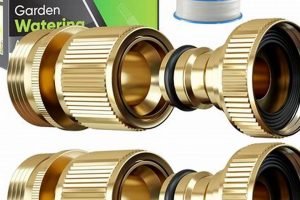
Tip 1: Select appropriate materials. Brass fittings offer superior durability and resistance to corrosion compared to plastic alternatives, particularly in areas with hard water or frequent temperature fluctuations. Consider brass for connections subjected to high pressure or regular use.
Tip 2: Ensure proper sizing. Mismatched threading or incompatible diameters will lead to leaks and reduced water pressure. Verify compatibility between all components before assembly and utilize thread seal tape (PTFE tape) for a secure, watertight seal.
Tip 3: Inspect regularly for wear and tear. Check for cracks, rust, or deformation in the connectors. Replace damaged items promptly to prevent leaks and potential system failures. Pay particular attention to areas exposed to direct sunlight or extreme temperatures.
Tip 4: Protect from freezing temperatures. Disconnect and drain all hoses and fittings before the onset of freezing weather. Expansion of water during freezing can cause cracking and irreversible damage, necessitating costly replacements.
Tip 5: Use appropriate tools for tightening. Avoid over-tightening connections, which can strip threads or crack plastic components. Employ adjustable wrenches or specialized tools designed for specific types to ensure a secure but not overly stressed connection.
Tip 6: Store appropriately during off-season. Keep connectors in a dry, sheltered location, away from direct sunlight and extreme temperatures, to prolong their lifespan and prevent degradation of materials.
Adhering to these guidelines will contribute to a robust and efficient watering system, minimizing water waste and ensuring consistent performance. Proper selection and consistent upkeep are paramount to a reliable system.
The final section summarizes crucial considerations for selecting the right connectors and their overall contribution to effective garden maintenance.
1. Materials
The selection of materials directly dictates the performance, longevity, and reliability of all connecting hardware. The inherent properties of different substancessuch as brass, plastic polymers (PVC, polypropylene), aluminum, and stainless steeldetermine their suitability for specific applications. Brass alloys, for example, are favored for their resistance to corrosion, particularly in environments with hard water or high mineral content. This resistance translates to fewer leaks, less frequent replacements, and reduced water wastage. Plastic, while more cost-effective, may degrade under prolonged exposure to UV radiation or extreme temperature fluctuations, leading to brittleness and cracking. Consequently, its use is often limited to low-pressure applications or protected environments.
A concrete illustration lies in the choice between brass and plastic couplings in an agricultural irrigation system. A farm employing plastic couplings may experience a higher rate of failure and water loss due to the constant exposure to sunlight and the high water pressure demands. This necessitates more frequent maintenance and increased water bills. Conversely, a farm utilizing brass couplings experiences less downtime, lower water costs, and a more sustainable irrigation system. The material choice has a direct and measurable impact on operational efficiency and resource utilization.
In conclusion, the material composition of connectors constitutes a fundamental design consideration. While cost remains a factor, the long-term benefits of selecting durable, corrosion-resistant materials far outweigh the initial savings associated with less robust alternatives. Understanding the properties of different materials and their interactions with environmental factors is crucial for implementing effective and sustainable outdoor water management practices. The selection impacts not only the functionality of the fittings themselves but also the overall efficiency of the entire watering system.
2. Compatibility

The integration of watering system components hinges on their compatibility, which ensures seamless functionality and prevents system failures. A lack of conformity in threading, diameter, or material can lead to leaks, reduced water pressure, and compromised irrigation efficiency. Proper connection hardware is critical for reliable operation.
- Thread Standards
Different regions and manufacturers adhere to varying thread standards, most commonly National Pipe Thread (NPT) and Garden Hose Thread (GHT). Mixing incompatible thread types invariably leads to leaks or the inability to connect components at all. For instance, attempting to connect an NPT fitting directly to a GHT fitting will result in a loose connection, necessitating the use of adapters.
- Diameter Matching
The diameter of connectors must correspond to the inner diameter of the hose to maintain optimal water pressure and flow rate. Using a connector with a smaller diameter than the hose restricts water flow, reducing irrigation effectiveness. Conversely, an oversized connector may create a weak point, prone to leaks or detachment under pressure.
- Material Compatibility
Combining dissimilar materials can lead to galvanic corrosion, particularly when moisture is present. For example, connecting a brass fitting directly to an aluminum valve in a wet environment accelerates
corrosion of the aluminum, potentially causing failure of the valve or leakage at the connection point. The use of dielectric unions can mitigate this risk by electrically isolating the two metals. - Pressure Rating Alignment
Connectors must be rated to withstand the maximum water pressure of the system. Using connectors with insufficient pressure ratings poses a risk of bursting or detachment under pressure, leading to water wastage and potential property damage. Ensuring all components have appropriate pressure ratings is essential for system safety and reliability.
These facets underscore the importance of carefully assessing compatibility when selecting and installing system components. Adherence to industry standards, accurate measurement of diameters, awareness of material interactions, and verification of pressure ratings are essential steps in creating a robust and efficient water delivery network. Ignoring these considerations results in inefficiencies, increased maintenance costs, and compromised system performance.
3. Durability
Durability is a paramount consideration in the selection of system components, directly influencing their lifespan, performance consistency, and long-term cost-effectiveness. Connectors are subject to constant environmental exposure, water pressure fluctuations, and physical stress, making their robustness a critical factor in system integrity.
- Material Composition & Structural Integrity
The choice of material directly impacts the connector’s ability to withstand environmental degradation and physical strain. Brass and stainless steel offer superior resistance to corrosion and mechanical wear compared to plastic. Reinforced construction and thicker walls enhance resistance to bursting under high pressure. Improper material selection leads to premature failure and system downtime.
- Resistance to Environmental Factors
Exposure to ultraviolet (UV) radiation, extreme temperatures, and harsh chemicals degrades materials over time. UV exposure can cause plastic connectors to become brittle and crack, while freezing temperatures can lead to expansion and rupture. Connectors designed with UV-resistant additives and freeze-resistant materials offer extended lifespans and reduced maintenance. Seals also need to have resistance to environmental factors.
- Thread Integrity & Connection Strength
The quality of threading and the design of the locking mechanism determine the security and leak-proof nature of the connection. Precision-machined threads ensure a tight seal and prevent stripping, while robust locking mechanisms prevent accidental disconnection under pressure. Inferior threading and weak locking mechanisms lead to leaks and system inefficiencies.
- Resistance to Physical Stress
Connectors in frequently used systems are subject to repeated connection and disconnection, as well as potential physical impacts. Connectors made of durable materials and featuring reinforced designs resist damage from accidental bumps or drops. Systems employing flimsy connectors experience higher rates of breakage and require more frequent replacements.
These elements collectively define the longevity and reliability of the system. Prioritizing robust connectors with enhanced durability translates to reduced maintenance, lower replacement costs, and a more sustainable and efficient watering system. Compromising on durability results in short-term savings but ultimately leads to increased long-term expenses and system inefficiencies. Proper design ensures a reduced risk of failure and prolonged service life.
4. Pressure Rating

The pressure rating of a system dictates its operational limits and safety parameters. Connectors form integral parts of this system; therefore, their pressure ratings must equal or exceed the system’s maximum operating pressure to prevent failure and ensure safe operation. Mismatched ratings create points of vulnerability where connectors can burst, leak, or detach, leading to water wastage, equipment damage, and potential injury.
For example, consider a high-pressure irrigation system designed to operate at 80 PSI (pounds per square inch). If the connectors used in this system have a pressure rating of only 60 PSI, they are highly likely to fail under normal operating conditions. This can cause sudden disconnection, sending pressurized water and potentially hazardous connector fragments flying, creating a dangerous situation for anyone nearby. Alternatively, consider a standard residential system with a maximum pressure of 40 PSI. While using 150 PSI connectors may seem excessive, it adds a safety margin and ensures that the connectors will not be the weakest point, increasing overall system reliability and longevity. It is also important to consider any spikes in pressure that may occur within the system.
Therefore, matching or exceeding the pressure rating of system components with system demands is essential. Prioritizing appropriate pressure ratings during selection mitigates risks and enhances long-term system reliability, contributing to safer and more efficient outdoor water management practices. Understanding this connection is vital for anyone involved in the design, installation, or maintenance of such systems, ensuring both operational integrity and user safety. Failure to properly consider pressure ratings can lead to catastrophic system failures and unnecessary hazards.
5. Sealing

Effective sealing is an indispensable characteristic of connecting hardware. Its function is to prevent water leakage, which minimizes waste, conserves resources, and maintains optimal water pressure within irrigation systems. Without proper sealing, water escapes at connection points, reducing the volume and pressure available at the intended delivery point, such as a sprinkler or nozzle. This deficiency not only leads to inefficient watering but also contributes to increased water bills and potential environmental damage. An example of the consequence of faulty sealing can be observed in a residential garden where leaking couplings result in localized overwatering, promoting weed growth and fungal diseases, while other areas remain inadequately irrigated. The practical significance of understanding the importance of sealing is therefore apparent in both economic and ecological terms.
The integrity of sealing depends on several factors, including the material used for gaskets or O-rings, the precision of threading, and the applied torque during installation. Over-tightening can damage threads or deform sealing elements, while under-tightening fails to create a sufficient seal. The selection of appropriate sealing materials must also consider the chemical properties of the water being conveyed. For instance, highly chlorinated water can degrade certain rubber compounds, necessitating the use of more chemically resistant materials like EPDM or silicone. Proper installation techniques, including the use of thread seal tape (PTFE tape) and the application of appropriate torque, are essential for achieving a reliable and long-lasting seal. A common application of this understanding involves assessing the condition of O-ring
s within quick-connect fittings, where hardened or cracked O-rings are promptly replaced to prevent leaks and maintain system pressure.
In summary, effective sealing represents a crucial element in system performance. Challenges related to sealing often stem from improper installation, material degradation, or incompatible components. Overcoming these challenges requires meticulous attention to detail during installation, regular inspection of sealing components, and the selection of materials appropriate for the intended application. These practices ensure minimal water loss, optimal system pressure, and sustained irrigation efficiency, aligning with the broader theme of responsible water resource management.
6. Thread type

Thread type is a fundamental determinant of compatibility and sealing effectiveness for all components. Thread standards define the geometry of the helical ridges (threads) cut into connectors, influencing how tightly and securely components mate. Incompatible thread types preclude proper connections, inevitably leading to leaks, reduced water pressure, and potential system failure. Predominant types encountered include National Pipe Thread (NPT), commonly used for rigid piping and plumbing applications, and Garden Hose Thread (GHT), specifically designed for system attachments. The dimensional disparities between NPT and GHT necessitate the use of adapters when attempting to connect components using different thread types. An unsuccessful coupling illustrates the problem: Attempting to join an NPT-threaded sprinkler directly to a GHT-threaded spigot results in a loose, leaky connection, demonstrating the practical significance of matching thread types.
Different thread types also exhibit varying sealing characteristics. NPT relies on a tapered thread design, which creates a tight seal as the threads are compressed during tightening, often augmented with thread seal tape (PTFE tape). GHT, on the other hand, typically employs straight threads and relies on a rubber or silicone washer to create a watertight seal. Consequently, the proper installation technique varies depending on the thread type. Failure to use thread seal tape on NPT connections or omitting the washer on GHT connections compromises the seal, resulting in water leakage. Practical applications involving quick-connect couplings often utilize GHT for ease of use, while more permanent installations, such as connecting a system to a main water line, favor NPT for its robust sealing capability.
Therefore, understanding thread types and their respective characteristics is crucial for designing, installing, and maintaining functional outdoor water systems. Challenges associated with thread compatibility often arise from mixing components from different manufacturers or regions that adhere to varying thread standards. These difficulties can be mitigated by carefully inspecting thread types before assembly, using appropriate adapters when necessary, and adhering to recommended installation procedures for each thread type. The mastery of thread type compatibility is instrumental for minimizing water waste, maximizing irrigation efficiency, and ensuring the longevity of irrigation systems.
Frequently Asked Questions
The following questions address common inquiries regarding the selection, application, and maintenance of connectors used in outdoor water delivery systems. These answers provide insights to optimize performance and extend the lifespan of related equipment.
Question 1: What are the primary materials used in the construction of connectors and what are their relative advantages?
Brass, plastic polymers (PVC, polypropylene), aluminum, and stainless steel are the primary materials used. Brass offers superior corrosion resistance, plastic provides cost-effectiveness, aluminum provides lightweight durability, and stainless steel delivers exceptional strength and corrosion resistance. The optimal selection depends on the specific application and environmental conditions.
Question 2: How can one ensure compatibility between connectors and other system components?
Verify thread types (NPT, GHT), diameter, and material compatibility. Incompatible thread types require adapters. Mismatched diameters restrict water flow. Dissimilar materials can lead to galvanic corrosion. Prioritize components that adhere to industry standards to ensure proper integration.
Question 3: What factors contribute to the durability of a connector, and how can one extend its lifespan?
Material composition, resistance to environmental factors (UV radiation, extreme temperatures), thread integrity, and resistance to physical stress influence durability. To extend lifespan, select connectors constructed from robust materials, protect from UV exposure, ensure proper installation torque, and store in a sheltered location during off-season.
Question 4: What is the significance of a connector’s pressure rating, and how does one select the appropriate rating?
The pressure rating indicates the maximum pressure the connector can withstand without failure. Select components with pressure ratings equal to or exceeding the maximum operating pressure of the system to prevent bursting, leaks, and potential injuries. Consider any pressure spikes when determining the appropriate rating.
Question 5: What measures can be taken to ensure effective sealing and prevent water leakage?
Use appropriate thread seal tape (PTFE tape) on NPT connections, ensure the presence of rubber or silicone washers on GHT connections, and apply proper torque during installation. Regularly inspect sealing components (O-rings, gaskets) for damage and replace as needed. Select sealing materials that are compatible with the chemical properties of the water being conveyed.
Question 6: How does one identify different thread types, and why is this important?
Thread types can be identified by visual inspection (tapered vs. straight threads) and by using thread gauges. The most common types are NPT and GHT. Identifying thread types is crucial to ensure compatibility between components. Using mismatched thread types inevitably leads to leaks and system inefficiencies.
Proper connector selection, installation, and maintenance are crucial for efficient watering. The insights in the questions above contribute to enhanced performance and extended lifespan, promoting responsible water resource management.
The following section discusses advanced features available in select connectors, contributing to sophisticated outdoor water management.
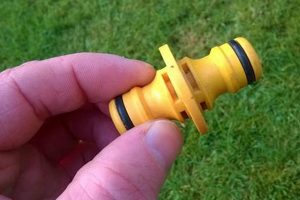
Hose Garden Fittings
The preceding exploration has detailed critical aspects of reliable water delivery for landscapes. It is clear that material selection, thread compatibility, pressure ratings, effective sealing methods, and overall durability are fundamental considerations. Understanding these principles ensures efficient water use, minimizes waste, and contributes to the long-term sustainability of resources.
Effective outdoor water management hinges on a comprehensive understanding of the vital components discussed herein. Employing this knowledge empowers landscape professionals and home gardeners to cultivate thriving landscapes while conserving water, thus safeguarding resources for future generations. Vigilant application of best practices in fitting selection and maintenance is crucial for ecological stewardship.
![Best 2 Inch Garden Hose For [X] & Reviews | The Ultimate Gardening Guide: Grow a Thriving Garden Year-Round](https://MyGardenPatch.com/wp-content/uploads/2025/07/th-5631-300x200.jpg "Best 2 Inch Garden Hose For [X] & Reviews The Ultimate Gardening Guide: Grow a Thriving Garden Year-Round")