



![[Guide] Hose Adapter for Garden Hose: Uses & Types](data:image/svg+xml;base64,PHN2ZyB4bWxucz0iaHR0cDovL3d3dy53My5vcmcvMjAwMC9zdmciIHdpZHRoPSI0NzQiIGhlaWdodD0iMTAwIiB2aWV3Qm94PSIwIDAgNDc0IDEwMCI+PHJlY3Qgd2lkdGg9IjEwMCUiIGhlaWdodD0iMTAwJSIgc3R5bGU9ImZpbGw6I2NmZDRkYjtmaWxsLW9wYWNpdHk6IDAuMTsiLz48L3N2Zz4= "[Guide] Hose Adapter for Garden Hose: Uses & Types The Ultimate Gardening Guide: Grow a Thriving Garden Year-Round")
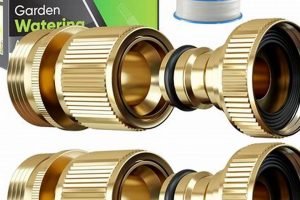
A coupling device designed to connect a garden hose to a dissimilar fitting or another hose provides a secure and leak-proof junction. These devices come in various materials, such as brass, aluminum, or plastic, and are manufactured with different thread types and sizes to ensure compatibility between components. For instance, such a device might connect a standard garden hose to a faucet with a non-standard thread or join two hoses with different diameters.
These items are essential for maximizing the utility of watering systems, irrigation setups, and cleaning equipment. They eliminate restrictions caused by incompatible fittings, facilitating efficient water delivery and preventing wasteful leaks. Historically, the need for these components arose from the standardization of hose threads and the proliferation of diverse water-related tools and fixtures, requiring flexible connection options.
The remainder of this article will delve into the various types of these connectors, including their materials, applications, and selection criteria. Further discussion will address troubleshooting common issues and explore optimal maintenance practices to ensure longevity and reliable performance.
Usage Recommendations
The following are recommendations for optimizing the utilization of garden hose connection devices to enhance their functionality and lifespan.
Tip 1: Verify Thread Compatibility. Before connecting, meticulously inspect the thread type and size of both the hose and the target fixture. Incompatible threads can lead to cross-threading and permanent damage.
Tip 2: Employ Thread Sealant. Apply Teflon tape or pipe dope to the threads to create a watertight seal. This is particularly important for metal fittings which are prone to corrosion and leakage.
Tip 3: Avoid Over-Tightening. Over-tightening can strip the threads, especially with plastic fittings. Tighten only until a secure connection is achieved, without excessive force.
Tip 4: Protect from Freezing. During freezing temperatures, disconnect and store hoses and associated connectors indoors to prevent cracking and damage from expanding ice.
Tip 5: Regularly Inspect for Wear. Periodically examine fittings for signs of corrosion, cracks, or leaks. Replace damaged connectors promptly to prevent water waste and system inefficiencies.
Tip 6: Choose Appropriate Materials. Select fitting materials based on the intended application and environmental conditions. Brass fittings offer superior durability for high-pressure or frequent use, while plastic is suitable for lighter applications.
Tip 7: Use a Wrench Properly. When tightening metal connections, always use appropriately sized wrenches to avoid rounding off corners and ensure a secure grip. Misusing tools can damage both the connector and the hose.
Adhering to these recommendations will ensure a secure, efficient, and long-lasting connection, reducing the risk of leaks, damage, and water waste.
The subsequent section will address the practical applications of various fitting types in diverse garden and landscaping scenarios.
1. Compatibility

Compatibility is a paramount consideration when selecting a connecting device, as its success hinges upon the ability to establish a secure and leak-free connection between dissimilar components. A mismatch can result in system inefficiency or complete failure. Therefore, a comprehensive understanding of compatibility factors is crucial.
- Thread Standards
Varying thread standards, such as National Pipe Thread (NPT) and Garden Hose Thread (GHT), necessitate appropriately matched connecting devices. Using an incompatible fitting will lead to cross-threading or an incomplete seal. In North America, GHT is the common standard for garden hoses, while NPT is prevalent for plumbing fixtures. An mismatch between these standards requires specific thread converters.
- Material Compatibility
The materials used in both the hose and the connecting device must be chemically compatible to prevent degradation or corrosion. For instance, brass fittings are generally compatible with most hose materials, whereas certain plastics may react negatively with specific chemicals present in some water sources. Selecting materials resistant to corrosion and chemical attack is essential for longevity.
- Size and Diameter Matching
The inner diameter of both the hose and the connecting device must be aligned to ensure optimal flow and pressure. A significant reduction in diameter at the connection point can restrict water flow, reducing system efficiency. If joining hoses of different diameters, a reducing connector is necessary to maintain adequate flow.
- Pressure Rating Alignment
The pressure rating of the connecting device must equal or exceed the maximum pressure within the hose system. Using a connecting device with an insufficient pressure rating can lead to catastrophic failure and potential property damage. Always consult the manufacturer’s specifications to ensure adequate pressure handling capabilities.
Effective utilization of connecting devices depends on precise evaluation of these facets of compatibility. By selecting appropriate components, users can ensure efficient water delivery, prevent costly leaks, and extend the lifespan of their watering systems. Failure to address compatibility concerns results in compromised performance and potential hazards.
2. Thread specifications

Thread specifications are a foundational element in the selection and application of connecting devices, directly influencing the integrity and functionality of any hose system. Understanding thread types, sizes, and standards is essential to ensure a secure and leak-free connection.
- Thread Type (GHT vs. NPT)
Garden Hose Thread (GHT) and National Pipe Thread (NPT) represent two distinct thread standards. GHT is specifically designed for garden hoses and related attachments, while NPT is primarily used in plumbing and industrial applications. Connecting a GHT fitting to an NPT fitting without a compatible converter will invariably result in leakage or damage due to incompatible thread geometry. An example of this is attempting to directly connect a standard garden hose to a residential water faucet that uses NPT threads. An suitable device is required to bridge the discrepancy between standards.
- Thread Size (Diameter and Pitch)
Thread size encompasses both the diameter and pitch of the threads. The diameter refers to the physical width of the thread, while the pitch denotes the distance between thread peaks. Even within a single thread standard like GHT, variations in size can occur. Mismatched thread sizes can lead to
loose connections, leaks, or complete inability to connect components. A typical garden hose has a 3/4 inch GHT fitting; any device intended for connection must also possess the same specification. - Thread Material Compatibility
The material composition of the threads directly affects their durability and resistance to corrosion. Brass threads are generally more robust and corrosion-resistant compared to plastic threads. Mixing dissimilar metals can also lead to galvanic corrosion over time. For instance, connecting a brass fitting directly to an aluminum hose bib in the presence of moisture can accelerate corrosion of the aluminum. It’s crucial to choose thread materials suited to the application environment.
- Thread Sealant Application
Proper application of thread sealant is vital for creating a watertight connection, regardless of thread specifications. Sealants like Teflon tape or pipe dope fill microscopic imperfections in the threads, preventing leaks. Incorrect or absent sealant application can result in persistent water leakage, even with properly matched thread types and sizes. When joining threaded connections, it is advisable to apply thread sealant to ensure a robust and reliable seal.
The effective implementation of these components relies heavily on meticulous attention to thread specifications. Correctly identifying thread types, sizes, and material compatibility, combined with proper sealant application, ensures the integrity of the hose system and prevents water wastage. Disregarding these factors results in compromised functionality and increased risk of system failure.
3. Material Durability
Material durability exerts a direct and significant influence on the longevity and performance of a garden hose adapter. The adapter’s capacity to withstand environmental stressors, mechanical strain, and chemical exposure dictates its operational lifespan and reliability. Selection of an inappropriate material leads to premature failure, resulting in water wastage, system downtime, and increased replacement costs. A brass adapter, for instance, offers superior resistance to corrosion and physical damage compared to a plastic alternative. This becomes critically important in environments where adapters are frequently exposed to harsh weather or high water pressure.
The choice of material also impacts the adapter’s ability to maintain a secure connection over time. Continuous exposure to ultraviolet radiation or fluctuations in temperature can cause plastic adapters to become brittle and crack, compromising the integrity of the seal. Brass, being more dimensionally stable and resistant to degradation, provides a more consistent and reliable connection. This is evident in irrigation systems where adapters are subject to prolonged exposure to sunlight and varying moisture levels. The practical application of understanding material durability is apparent in selecting adapters made of corrosion-resistant materials such as stainless steel or marine-grade alloys in coastal regions where saltwater exposure is prevalent.
In conclusion, material durability is a non-negotiable factor in the effective application of garden hose adapters. Proper material selection minimizes the risk of failure, reduces maintenance requirements, and ensures efficient water delivery. Addressing the challenges posed by environmental factors and operational demands through informed material choices is paramount for optimal system performance. The subsequent sections will address practical considerations such as leak prevention, application-specific adapter types, and strategies for proper maintenance.
4. Leak prevention

Effective sealing within a garden hose system directly depends on the quality and installation of the connecting device. Inadequate sealing results in water wastage, reduced system pressure, and potential damage to surrounding areas. The primary cause of leaks at these connections is often attributed to mismatched threads, damaged sealing surfaces, or improperly tightened fittings. For example, a low-quality plastic adapter, when subjected to elevated water pressure, may deform and fail to maintain a secure seal, leading to a continuous drip. The presence of debris or corrosion on the mating surfaces of the hose and connecting device further exacerbates leakage problems. Selecting adapters engineered for robust sealing, and ensuring proper installation techniques, are therefore of utmost importance.
Leak prevention is an inherent design consideration in high-quality connecting devices. Features such as integrated rubber washers, precision-machined threads, and durable materials contribute to a tighter, more reliable seal. For example, brass connecting devices with properly seated rubber washers provide a superior seal compared to plastic fittings lacking such features. Moreover, the use of Teflon tape or pipe dope on threaded connections creates a more watertight seal by filling microscopic imperfections in the threads. The absence of such preventative measures can result in substantial water loss over time, especially in large-scale irrigation systems. Regular inspection and timely replacement of worn or damaged connectors are critical components of a comprehensive leak prevention strategy.
In summation, leak prevention is an indispensable function of the connecting device. Selecting appropriate adapters based on material quality, thread compatibility, and sealing features, combined with proper installation and maintenance practices, is essential for minimizing water wastage and ensuring efficient system performance. The economic and environmental consequences of unchecked leaks underscore the importance of prioritizing leak prevention in the selection and utilization of these components. The next section will explore the application-specific types of adapters available to address the diverse needs of garden hose systems.
5. Application specificity

The selection of a particular connecting device is intrinsically linked to its intended application, and therefore application specificity is a critical component of any effective connection strategy. Different watering tasks demand varied functionalities from their connection components. For instance, connecting a pressure washer requires a robust, high-pressure capable connecting device constructed from durable materials like brass or stainless steel. Conversely, a simple connection for a soaker hose might only necessitate a plastic fitting designed for lower pressure applications. Failure to match the device to the intended use can result in premature failure, leaks, or even dangerous situations. The consequence of neglecting application specificity is a compromise in system efficiency and safety.
Examining specific scenarios further elucidates this point. In agricultural irrigation, where large volumes of water are delivered over extended periods, quick-connect adapters facilitate rapid hose changes and minimize downtime. These adapters often incorporate shut-off valves to prevent water loss during connection and disconnection. Conversely, residential use might prioritize aesthetics and ease of use, leading to the selection of decorative brass fittings or ergonomic plastic c
ouplings. Fire departments require specialized adapters to connect to hydrants with non-standard threads, underscoring the life-saving implications of having the correct device for a given situation. Each use-case highlights the need for connectors specifically engineered to meet the unique demands of the application.
In conclusion, application specificity is not merely a supplementary consideration but an essential determinant in choosing the appropriate connecting device. The interplay between intended use, pressure requirements, material compatibility, and connection type dictates the optimal choice. A thorough understanding of application-specific needs ensures efficient water delivery, minimizes risks, and extends the lifespan of watering systems. Ignoring this principle introduces vulnerabilities that can undermine the entire system’s effectiveness and safety.
6. Pressure ratings

The pressure rating of a connecting device represents its capacity to withstand internal pressure without failure. A connecting device’s pressure rating is a critical specification, directly impacting its suitability for a given application. Exceeding a device’s pressure rating can result in rupture, leakage, or complete failure, leading to property damage and potential injury. For instance, using a plastic connecting device with a low-pressure rating in a system with high water pressure will likely result in the connector bursting, releasing water under pressure. A brass connector, with a significantly higher pressure rating, would be a more appropriate choice in such a scenario. It is imperative that the pressure rating of the device equals or exceeds the maximum pressure exerted within the hose system to ensure safe and reliable operation.
Consider the practical implications of pressure ratings in various settings. In agricultural irrigation systems, where water pressure can be substantial, high-pressure-rated connectors are necessary to prevent leaks and maintain consistent water delivery. In residential settings, connecting devices used for power washers must also possess high-pressure ratings to withstand the force of the water stream. Furthermore, material choice significantly impacts pressure tolerance. Brass and stainless steel connectors generally exhibit higher pressure ratings compared to plastic connectors, making them suitable for more demanding applications. Regular inspection and replacement of worn or damaged connectors are essential components of maintaining system integrity and preventing pressure-related failures.
In summary, the pressure rating of a connecting device is a non-negotiable factor in ensuring the safe and efficient operation of any watering system. Mismatched pressure ratings can lead to catastrophic failures and potential hazards. Therefore, thorough assessment of system pressure requirements and selection of appropriately rated connecting devices are critical steps in establishing a reliable and durable water delivery system. Subsequent topics will address the installation and maintenance procedures necessary to maximize the lifespan and performance of these essential components.
Frequently Asked Questions About Garden Hose Adapters
This section addresses common inquiries regarding the application, selection, and maintenance of garden hose adapters.
Question 1: What is the expected lifespan of a garden hose adapter?
The lifespan of a device depends on several factors, including the material of construction, frequency of use, and environmental conditions. Brass or stainless steel fittings generally exhibit a longer lifespan than plastic fittings. Regular inspection and proper storage can extend the service life of these components.
Question 2: How does one determine the correct size adapter for a garden hose?
Garden hoses typically utilize a standard 3/4-inch Garden Hose Thread (GHT). Verify the thread size of both the hose and the intended connection point before selecting an adapter. Using a thread gauge can aid in accurate measurement.
Question 3: Can Teflon tape prevent leaks at a garden hose connection?
Yes, Teflon tape, also known as PTFE tape, creates a tighter seal by filling microscopic imperfections in the threads. It is recommended to apply Teflon tape to threaded connections to minimize the risk of leaks.
Question 4: What are the common signs of a failing garden hose adapter?
Common signs include visible cracks, leaks at the connection point, difficulty tightening the fitting, and corrosion. Any of these signs indicates the need for replacement.
Question 5: Is it possible to connect two garden hoses with different thread types?
Connecting hoses with dissimilar thread types requires the use of a thread adapter. These adapters are designed to bridge the gap between different thread standards, such as GHT and NPT.
Question 6: Are there specific adapters designed for high-pressure applications?
Yes, high-pressure applications, such as those involving power washers, necessitate adapters constructed from durable materials like brass or stainless steel. These adapters are engineered to withstand elevated water pressure without failing.
Proper selection and maintenance are crucial for ensuring the reliable performance of garden hose adapters. Understanding thread types, material properties, and pressure ratings will facilitate informed decision-making.
The subsequent section will provide a comparative analysis of different adapter materials and their suitability for various applications.
Conclusion
This examination has detailed the functionalities, specifications, and application-specific considerations surrounding hose adapter for garden hose. The multifaceted nature of these components, ranging from material durability to thread compatibility and pressure ratings, has been thoroughly addressed. Selecting the correct adapter hinges upon a comprehensive understanding of these variables to ensure optimal system performance and prevent premature failure.
The information presented serves as a foundational resource for informed decision-making in water management practices. Proper implementation and maintenance of these connectors yield significant benefits in terms of water conservation, system longevity, and overall operational efficiency. Further exploration of innovative adapter designs and emerging material technologies will undoubtedly shape the future of water delivery systems.
![Best 2 Inch Garden Hose For [X] & Reviews | The Ultimate Gardening Guide: Grow a Thriving Garden Year-Round](https://MyGardenPatch.com/wp-content/uploads/2025/07/th-5631-300x200.jpg "Best 2 Inch Garden Hose For [X] & Reviews The Ultimate Gardening Guide: Grow a Thriving Garden Year-Round")