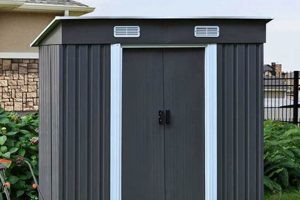
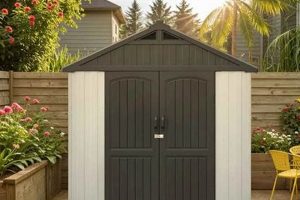
This structure represents a dual-purpose outdoor building that integrates plant cultivation space with storage for gardening tools and supplies. It offers a consolidated area for both nurturing plants and organizing related equipment. A typical example might include a transparent section for seedlings and a separate, enclosed section for potting soil and hand tools.
The appeal of this design stems from its efficient use of space and the convenience it provides. It centralizes gardening activities, reducing the need to travel between a separate greenhouse and storage shed. Historically, such integrated structures evolved from the need for practical and compact solutions in smaller gardens or allotments, maximizing functionality within limited areas.
The following sections will explore the key factors to consider when planning, constructing, or purchasing such a unit. This includes structural considerations, environmental control options, design choices, and practical applications to ensure a functional and aesthetically pleasing addition to the garden landscape.
Essential Considerations for Integrated Gardening Structures
Effective planning is critical when considering a structure that combines plant cultivation and equipment storage. Thoughtful design ensures optimal functionality and longevity.
Tip 1: Site Selection: Prioritize locations that offer adequate sunlight for the greenhouse portion while also providing a stable and level base for the entire structure. Consider drainage patterns to prevent water accumulation around the foundation.
Tip 2: Structural Integrity: Ensure that the supporting framework is robust enough to withstand local weather conditions, including wind, snow, and heavy rain. Select durable materials that resist rot, insect infestation, and corrosion.
Tip 3: Ventilation and Temperature Control: Implement a ventilation system to regulate temperature and humidity within the greenhouse section. Automatic vent openers or fans can assist in maintaining optimal growing conditions.
Tip 4: Efficient Space Utilization: Design the storage area to maximize vertical space through shelving and organizational systems. Allocate specific zones for different types of tools and supplies to maintain order.
Tip 5: Zoning and Separation: Establish a clear barrier between the greenhouse and storage sections to prevent cross-contamination. This may involve a solid wall or partition to isolate humidity and potential pests.
Tip 6: Foundation Considerations: A well-constructed foundation is crucial for structural stability. Options include concrete slabs, gravel pads, or treated wood frames, depending on local climate and soil conditions. Consider local building codes for foundation requirements.
Tip 7: Accessibility and Ergonomics: Design entry points and pathways that allow for ease of movement and accessibility, especially when carrying tools or plants. Consider ergonomic heights for potting benches and work surfaces to reduce strain.
Careful attention to these aspects will result in a durable, functional, and aesthetically pleasing addition to any garden.
The next section will delve into specific design options and aesthetic considerations for such an integrated structure.
1. Spatial Efficiency

Spatial efficiency, in the context of combined plant cultivation and storage structures, refers to the maximization of usable area within a defined footprint. This is a primary concern when land resources are limited, necessitating the consolidation of multiple functions into a single building.
- Vertical Space Utilization
Optimizing vertical space is crucial. Shelving systems, hanging planters, and tiered storage solutions exploit otherwise unused overhead areas. This approach can significantly increase the capacity for both plant cultivation and tool storage without expanding the building’s ground-level dimensions. Example: Utilizing multi-tiered shelving for seed trays in the greenhouse section and overhead racks for long-handled tools in the shed section.
- Multi-Purpose Design Elements
Implementing design features that serve multiple functions enhances spatial efficiency. A potting bench with integrated storage underneath, or a raised garden bed that doubles as a retaining wall, exemplifies this approach. This minimizes the need for separate, dedicated structures for each purpose. Example: A fold-down workbench that provides workspace when needed and folds away to free up floor space when not in use.
- Compartmentalization and Zoning
Effective spatial efficiency also involves deliberate compartmentalization. Clearly defined zones for specific activities, such as propagation, potting, and tool maintenance, prevent clutter and optimize workflow. This requires careful consideration of traffic flow and the proximity of frequently used items. Example: Separating the greenhouse area from the storage area with a partial wall and designated entrances to minimize humidity transfer.
- Compact Footprint and Modular Design
Choosing a compact footprint maximizes available garden space. Modular designs allow for expansion or reconfiguration as needs evolve. This flexibility ensures that the structure can adapt to changing requirements without requiring a complete rebuild. Example: Selecting a lean-to design that attaches to an existing building, utilizing an existing wall as one side of the structure, thus reducing material costs and footprint.
The principles of spatial efficiency are fundamental to realizing the full potential of an integrated gardening structure. By strategically utilizing vertical space, incorporating multi-purpose elements, implementing zoning strategies, and opting for compact designs, the overall utility and practicality of the structure are significantly enhanced. This results in a more functional and organized gardening environment, even in areas with limited space.
2. Climate Control

The integration of plant cultivation and storage necessitates careful climate control measures. The primary purpose of the cultivated section is to create an environment conducive to plant growth, requiring precise regulation of temperature, humidity, and ventilation. Simultaneously, the storage section benefits from controlled conditions that minimize moisture and temperature fluctuations, preventing damage to stored tools and materials. The connection is cause-and-effect: inadequate climate control in the cultivation area directly impairs plant health and yield, while insufficient climate control in the storage area leads to equipment degradation. For example, excess humidity in the greenhouse section may promote fungal diseases, while high humidity in the storage section can cause rust on metal tools.
The practical application of climate control strategies varies depending on the specific design and location. Ventilation systems, shading mechanisms, and heating or cooling units are common components. Automated controls, such as thermostats and humidity sensors, provide responsive adjustments to maintain optimal conditions. Insulation is also a critical element, reducing heat loss in colder months and preventing excessive heat gain during warmer periods. In regions with significant temperature extremes, geothermal systems or heat sinks may be integrated to enhance energy efficiency and stabilize the environment. Consider a structure where an automated ventilation system in the greenhouse section expels excess heat, while insulation in the storage section maintains a stable temperature, preventing condensation and corrosion.
Effective climate control within such an integrated structure presents unique challenges. Balancing the differing needs of plant cultivation and tool storage requires careful consideration of airflow, insulation, and temperature gradients. Overcoming these challenges requires a holistic approach, encompassing passive design principles, active climate control systems, and ongoing monitoring. Understanding the practical significance of climate control, and its direct impact on both horticultural success and equipment longevity, is essential for the successful operation of this integrated gardening solution.
3. Material Durability

Material durability is a foundational requirement for any structure combining plant cultivation and equipment storage. The longevity and functionality of the integrated unit are directly correlated with the ability of its constituent materials to withstand environmental stressors. Cause-and-effect relationships are readily apparent; for instance, untreated wood exposed to constant moisture will decay, compromising the structural integrity. Material selection is not merely an aesthetic choice; it is a critical design parameter that dictates the service life and maintenance requirements of the building. As a component of this combined structure, durable materials resist rot, corrosion, UV degradation, and insect infestation. For example, using pressure-treated lumber for the foundation and frame significantly extends its lifespan compared to using untreated lumber, especially in areas with high soil moisture. The practical significance of this understanding is reflected in reduced repair costs and sustained functionality of the integrated structure over time.
Considerations extend to the cladding materials used for both the greenhouse and shed portions. Polycarbonate panels, known for their impact resistance and UV protection, are a superior choice for greenhouse glazing compared to standard glass, which is more susceptible to breakage and offers less insulation. Similarly, metal siding treated with anti-corrosive coatings provides robust protection for the shed section, safeguarding stored tools and supplies from the elements. Moreover, the fastening hardware employed is also pivotal. Using stainless steel screws and bolts minimizes the risk of rust, which can weaken connections and necessitate premature replacement. These design decisions are not isolated; they interact synergistically to contribute to the overall resilience of the structure. Proper installation techniques, such as sealing joints and flashing around openings, further bolster the resistance to water infiltration and prolong the material’s lifespan.
In summary, material durability is a non-negotiable aspect of any integrated structure designed for both plant cultivation and equipment storage. Selecting materials resistant to environmental degradation, employing appropriate construction techniques, and conducting routine maintenance are essential for maximizing the structure’s longevity and minimizing life-cycle costs. The initial investment in durable materials translates into long-term savings and a sustainable, functional gardening environment. Ignoring this principle results in structural instability, increased maintenance expenses, and ultimately, a diminished return on investment.
4. Structural Integration

The concept of structural integration is paramount in the design and construction of any combined plant cultivation and storage building. It encompasses the harmonious blending of various structural elements to ensure stability, durability, and efficient load distribution, while accommodating the specific functional requirements of both the greenhouse and the storage components. Proper structural integration directly influences the safety, longevity, and overall utility of the combined unit. Without such integration, the entire structure may be compromised, leading to premature failure or compromised functionality. The consequences of neglecting structural integration are multifaceted, ranging from increased maintenance costs to potential safety hazards.
- Load Bearing Capacity
The design must adequately distribute the combined weight of the structure itself, plus anticipated loads from environmental factors (snow, wind), stored tools and materials, and the weight of plants and growing media. Improper load distribution can cause structural stress, leading to deformation or collapse. Structural integrity assessments must account for both static and dynamic loads. For example, a snow load exceeding the design capacity can cause roof failure, while strong winds can exert significant lateral forces on the sidewalls. The foundation design must be robust enough to support the entire structure and prevent settling or shifting.
- Material Compatibility
The selection of building materials requires consideration of their compatibility and interaction within the integrated structure. Dissimilar materials may exhibit differential expansion and contraction rates due to temperature changes, creating stress at their interface. This can lead to cracks, leaks, and eventual structural weakening. For instance, combining wood and metal components without proper insulation can accelerate corrosion due to condensation. Therefore, material selection must prioritize compatibility, and appropriate connection methods, such as corrosion-resistant fasteners and expansion joints, must be implemented to mitigate potential problems.
- Interdependence of Components
The structural design must acknowledge the interdependence of different components within the integrated structure. The load-bearing capacity of a wall may be affected by the presence of openings for doors or windows, necessitating reinforcement around these areas. Similarly, the greenhouse section’s framing must be integrated seamlessly with the shed’s framing to ensure a unified structural system. Neglecting this interdependence can result in localized stress concentrations and premature failure. For example, improperly supported roof trusses can sag, placing undue stress on the supporting walls.
- Resistance to Environmental Factors
The overall structural design must account for exposure to various environmental factors, including moisture, temperature fluctuations, UV radiation, and wind. Inadequate protection against these factors can lead to material degradation and structural weakening. For example, a structure located in a high-wind area requires enhanced bracing and anchoring to resist wind loads. Similarly, structures located in humid climates require adequate ventilation to prevent moisture buildup and rot. The integration of appropriate weatherproofing measures, such as flashing, sealants, and water-resistant coatings, is crucial for maintaining structural integrity over time.
In conclusion, structural integration is not merely a technical detail but a fundamental principle that governs the overall performance and durability of any such structure. Effective structural design requires a holistic approach that considers load-bearing capacity, material compatibility, component interdependence, and resistance to environmental factors. By prioritizing structural integration, one can ensure a safe, functional, and long-lasting gardening environment.
5. Accessibility Planning
Accessibility planning, in the context of combined plant cultivation and storage structures, addresses the design and implementation of features that enable individuals with varying levels of physical ability to safely and comfortably utilize the space. Its importance is underscored by demographic trends indicating an aging population and a growing awareness of inclusive design principles. Cause and effect are evident; inadequate accessibility planning directly limits the usability of the structure, excluding individuals with mobility challenges and potentially creating safety hazards. This planning is not merely an add-on; it is an integral component that influences layout, material selection, and the incorporation of specific adaptive features. An example illustrates this: a narrow doorway and uneven flooring within such a structure will preclude wheelchair access, effectively rendering the greenhouse and storage space unusable for individuals with mobility impairments. The practical significance of proper accessibility planning translates directly into broader community inclusion and extended usability of the gardening space for a wider range of individuals.
Further practical applications of accessibility planning extend beyond basic mobility considerations. Ergonomic design principles dictate the placement of work surfaces, tool storage, and planting areas to minimize bending, reaching, and heavy lifting. Raised garden beds, adjustable-height workbenches, and accessible tool storage systems exemplify these principles. Pathway surfaces should be firm, level, and non-slip to facilitate safe navigation, even in wet conditions. Consideration should also be given to visual accessibility, including adequate lighting and clear signage. Power-assisted doors and automated watering systems may be incorporated to reduce the physical demands of gardening tasks. A structure with wide, smooth pathways, raised beds at varying heights, and easy-to-reach tool storage demonstrates the effective implementation of accessibility planning principles, creating a user-friendly environment for all individuals.
Effective accessibility planning requires a holistic approach that integrates universal design principles from the outset. Challenges include balancing accessibility considerations with aesthetic preferences and budgetary constraints. However, the long-term benefits of creating an inclusive and user-friendly space far outweigh the initial costs. By prioritizing accessibility planning, combined plant cultivation and storage structures can become valuable assets that promote community engagement, therapeutic gardening opportunities, and sustained horticultural enjoyment for individuals of all abilities. Ultimately, the successful integration of accessibility principles transforms a functional structure into an empowering environment that fosters independence and well-being.
6. Zonal Separation

Zonal separation is a critical design consideration within the context of a combined plant cultivation and storage building. It entails the physical segregation of distinct functional areas to prevent cross-contamination, maintain optimal environmental conditions, and ensure the efficient operation of both the greenhouse and the storage components. The absence of effective zonal separation can lead to a range of problems, including pest infestations spreading from the storage area to the greenhouse, humidity fluctuations damaging stored tools, and the unintended introduction of herbicides or fertilizers into the plant cultivation zone. For example, inadequate separation between a storage area containing pesticides and a greenhouse section housing edible plants presents a significant risk of contamination and potential health hazards. Thus, proper zonal separation constitutes a vital safeguard for both plant health and tool preservation within a combined structure. This is a component of the integrated design ensuring best practices in the field of garden and agriculture.
Practical applications of zonal separation involve the construction of physical barriers, such as solid walls or partitions, to isolate the greenhouse and storage areas. These barriers may extend from the foundation to the roof, creating a completely enclosed separation. Alternatively, partial barriers combined with strategic ventilation systems can be employed to control airflow and minimize the transfer of humidity or contaminants. Additionally, dedicated entry points for each zone can prevent the unintentional transfer of pests or pathogens. For example, a double-door entry system, where individuals must pass through an intermediate space to remove contaminants, can be implemented for the greenhouse section. Similarly, designated storage areas for specific types of tools and supplies, with clear labeling and organizational systems, can reduce the risk of cross-contamination within the storage zone. This may come in a combination with other methods to ensure separation between the areas.
In summary, zonal separation is a non-negotiable aspect of any well-designed plant cultivation and storage combination. Its effective implementation minimizes the risk of contamination, promotes optimal environmental conditions, and ensures the long-term health and productivity of the system. The challenge lies in integrating zonal separation seamlessly into the overall design, while maintaining ease of access and efficient workflow. However, the benefits of a well-executed zonal separation strategy far outweigh the initial design and construction costs. This leads to a more sustainable and functional gardening environment.
7. Sustainable Design

Sustainable design, when applied to plant cultivation and storage structures, prioritizes resource efficiency, environmental responsibility, and long-term ecological impact reduction. The fundamental connection resides in minimizing the building’s carbon footprint throughout its lifecycle, from material sourcing to operational energy consumption and eventual decommissioning. The construction of such a structure inherently consumes resources and generates waste; therefore, sustainable design principles are critical for mitigating these environmental burdens. For instance, the selection of locally sourced, recycled, or renewable materials reduces transportation emissions and minimizes reliance on virgin resources. Similarly, incorporating passive solar design elements and efficient insulation minimizes the need for active heating and cooling systems, reducing energy consumption. The cause and effect are clear: unsustainable construction practices deplete natural resources and contribute to environmental degradation, while sustainable design promotes resource conservation and ecosystem preservation. The practical significance of this understanding lies in the ability to create a gardening space that not only supports plant growth but also minimizes its negative impact on the planet. The importance of sustainable design as a core component of a plant cultivation and storage combination is thereby established.
Further analysis reveals numerous practical applications of sustainable design principles in this context. Rainwater harvesting systems can be integrated to provide irrigation for plants, reducing reliance on municipal water supplies. Composting systems can be incorporated to recycle organic waste into nutrient-rich soil amendments, minimizing the need for synthetic fertilizers. Solar panels can be installed to generate electricity for lighting, ventilation, and heating, reducing dependence on fossil fuels. Green roofs can provide insulation, reduce stormwater runoff, and create habitat for pollinators. Moreover, the design can optimize natural ventilation and daylighting to reduce energy consumption. These measures collectively contribute to a more self-sufficient and environmentally friendly gardening environment. An example of this integration can be seen in community gardens incorporating a combination structure featuring recycled materials, a rainwater harvesting system, and solar panels to power a small ventilation fan, creating a demonstrably sustainable model for urban agriculture.
In conclusion, sustainable design is an indispensable element in the creation of plant cultivation and storage combinations. It provides a framework for minimizing environmental impact, conserving resources, and promoting ecological stewardship. Challenges remain in balancing sustainability goals with budgetary constraints and aesthetic preferences. However, the long-term benefits of adopting sustainable design practices, including reduced operating costs, enhanced environmental performance, and increased resilience, far outweigh the initial investment. By embracing sustainable design, these buildings can become exemplars of environmentally responsible construction and contribute to a more sustainable future for gardening and agriculture.
Frequently Asked Questions
This section addresses common inquiries regarding the design, construction, and practical application of integrated gardening structures.
Question 1: What are the primary benefits of integrating a greenhouse and garden shed?
The primary benefits include efficient space utilization, centralized gardening operations, reduced travel between separate structures, and protection of tools and plants from adverse weather.
Question 2: What are the key considerations when selecting a site for a greenhouse and garden shed combination?
Key considerations include adequate sunlight for the greenhouse portion, a level and stable foundation, proper drainage to prevent water accumulation, and accessibility to utilities such as water and electricity.
Question 3: What materials are most suitable for constructing a durable greenhouse and garden shed combination?
Suitable materials include pressure-treated lumber for the foundation and framing, polycarbonate panels for greenhouse glazing, metal siding with anti-corrosive coatings for the shed portion, and stainless steel fasteners to prevent rust.
Question 4: How can temperature and humidity be effectively controlled within an integrated structure?
Effective climate control can be achieved through ventilation systems, shading mechanisms, automated vent openers, insulation, and, in some cases, heating or cooling units. Consider also separating the greenhouse from the shed section to control humidity.
Question 5: What design strategies can enhance accessibility for individuals with mobility limitations?
Accessibility enhancements include wide, smooth pathways, raised garden beds at varying heights, adjustable-height workbenches, accessible tool storage systems, and power-assisted doors.
Question 6: How can sustainable design principles be incorporated into a greenhouse and garden shed combination?
Sustainable design elements include using recycled or renewable materials, implementing rainwater harvesting systems, incorporating composting systems, installing solar panels, and optimizing natural ventilation and daylighting.
In summary, integrating a greenhouse and garden shed requires careful planning and attention to detail to ensure functionality, durability, and accessibility.
The next section will delve into specific case studies and examples of successful greenhouse and garden shed combinations.
Conclusion
This exploration has highlighted crucial elements in the construction and utilization of integrated gardening structures. Key considerations encompass spatial efficiency, climate control, material durability, structural integration, accessibility planning, zonal separation, and sustainable design principles. Proper application of these principles is vital for creating functional, durable, and environmentally responsible gardening spaces.
The successful implementation of a greenhouse and garden shed combination hinges on a comprehensive understanding of design, materials, and environmental factors. Further research and careful planning are encouraged to maximize the benefits and minimize the potential drawbacks of this integrated approach. The cultivation of knowledge in this area will lead to the creation of more productive and sustainable gardening environments for generations to come.