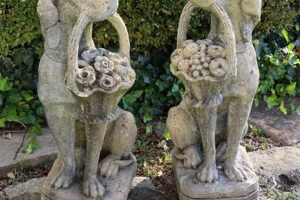
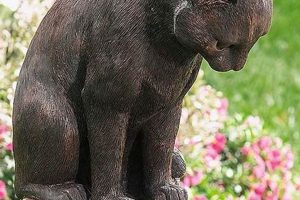
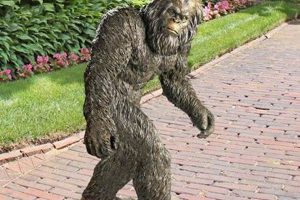
Representations of grotesque figures, often winged and reminiscent of mythical beasts, serve as decorative elements for outdoor spaces. These sculpted objects, typically crafted from materials like stone or resin, are placed within landscaped areas to introduce an element of gothic or whimsical aesthetics. An example would be a crouching, winged figure placed near a flower bed or atop a pedestal within a yard.
The use of such figurative sculpture in gardens offers visual interest and can complement architectural styles. Historically, similar figures functioned as functional waterspouts on buildings, diverting rainwater away from foundations. Their application in modern gardens provides a connection to historical architectural traditions and a means of expressing personal style through landscape design.
The subsequent sections will delve into the specific materials employed in their construction, the variety of design options available, and considerations for their placement and maintenance within diverse outdoor environments.
Essential Considerations for Placement and Maintenance
Selecting and caring for decorative figures intended for outdoor use requires careful consideration to ensure longevity and aesthetic integration within the garden environment.
Tip 1: Material Selection: Opt for materials resistant to weathering. Cast stone, resin, or treated metal offer superior durability compared to untreated materials. Consider the local climate when making a decision.
Tip 2: Placement Strategy: Strategically position the figure to enhance the garden’s visual appeal without obstructing walkways or overshadowing plant life. Consider sightlines from key vantage points within the property.
Tip 3: Foundation Stability: Ensure the sculpture rests on a stable, level surface to prevent tipping or damage from ground movement. Use a concrete paver or a prepared gravel base for heavier pieces.
Tip 4: Seasonal Protection: In regions with harsh winters, consider covering or moving the figure indoors to protect it from freeze-thaw cycles that can cause cracking and deterioration.
Tip 5: Regular Cleaning: Periodically clean the sculpture with a soft brush and mild soap to remove dirt, moss, and algae buildup. Avoid using abrasive cleaners that can damage the surface.
Tip 6: Inspection and Repair: Regularly inspect the figure for cracks, chips, or other signs of damage. Address minor repairs promptly to prevent further deterioration. Utilize appropriate patching compounds or adhesives designed for outdoor use.
Tip 7: Consider Sun Exposure: Be mindful of the sun’s intensity. Darker colored pieces may absorb more heat and be prone to fading. Strategic placement can mitigate these effects.
Adhering to these guidelines will ensure the continued beauty and structural integrity of decorative garden figures, contributing to the overall aesthetic of the outdoor space for years to come.
The following sections will explore the artistic and cultural significance, further enriching the understanding of this decorative element.
1. Material Durability

Material durability is paramount in the context of figurative sculpture intended for outdoor display. Exposure to environmental elements necessitates the selection of robust materials capable of withstanding degradation, ensuring the longevity and aesthetic integrity of the piece. The choice of material directly influences the lifespan and maintenance requirements.
- Resistance to Freeze-Thaw Cycles
The capacity of a material to endure repeated cycles of freezing and thawing is critical, particularly in temperate climates. Water absorbed within porous materials expands upon freezing, exerting internal pressure that can lead to cracking and fragmentation. Dense, non-porous materials exhibit greater resistance to this phenomenon.
- Ultraviolet (UV) Radiation Stability
Prolonged exposure to UV radiation can cause discoloration, embrittlement, and surface degradation in certain materials, notably some plastics and resins. UV inhibitors are often incorporated into these materials to mitigate these effects. Stone and metal, generally, exhibit greater inherent stability in the face of UV exposure.
- Water Resistance and Corrosion
Materials must resist water absorption to prevent internal decay and the growth of moss or algae. Metals are susceptible to corrosion, necessitating protective coatings or the selection of inherently corrosion-resistant alloys. Stone can also suffer from water damage, requiring sealing or specific stone types with low water absorption rates.
- Impact Resistance
The ability to withstand physical impacts is crucial, particularly in areas prone to vandalism or accidental damage. Certain materials, such as reinforced concrete or specific metal alloys, offer superior impact resistance compared to more brittle substances like some types of resin or soft stone.
The selection of a material with appropriate durability characteristics is a fundamental consideration in ensuring that figurative garden sculpture retains its aesthetic appeal and structural integrity over extended periods, minimizing the need for frequent repairs or replacements. Investing in durable materials upfront translates to long-term cost savings and sustained visual enjoyment.
2. Sculptural Aesthetics

Sculptural aesthetics constitutes a primary determinant of the visual impact and perceived value of any figurative sculpture. With respect to representations of grotesque figures intended for garden display, aesthetics define the artistic merit and contribution to the overall landscape design. Variations in style, detailing, and artistic interpretation directly influence the emotional response elicited by the object and its compatibility with surrounding elements. For example, a meticulously carved limestone figure in a traditional gothic style will evoke a markedly different response compared to a minimalist, abstract rendering crafted from polished steel. The perceived success of either, however, depends on the coherence of its aesthetics with the broader garden context.
The aesthetic considerations extend beyond mere imitation or replication of historical forms. Contemporary artists and designers often reinterpret traditional themes, employing novel materials and design principles to create unique and thought-provoking pieces. The application of digital sculpting techniques and advanced casting methods allows for intricate detailing and complex forms previously unattainable through conventional means. Careful attention to proportion, balance, and surface texture contributes significantly to the overall aesthetic appeal. Furthermore, the intentional use of symbolism and narrative elements can imbue the sculpture with deeper meaning, enhancing its artistic value and engaging the viewer on a more profound level. Consider the juxtaposition of a rough-hewn, weathered figure against the smooth, manicured lawn of a formal garden, creating a striking contrast and provoking contemplation.
In summary, sculptural aesthetics is not merely an optional attribute but a core component in determining the value and impact of figurative sculpture designed for garden application. The skillful integration of artistic principles, material selection, and contextual awareness results in pieces that transcend mere decoration, becoming focal points that enrich the visual landscape and engage the viewer’s imagination. Understanding the interplay between these elements is crucial for informed selection and appreciation of these decorative objects, ensuring their harmonious integration within the garden environment.
3. Historical Context

Examining the historical antecedents of grotesque figures used in gardens provides essential context for understanding their aesthetic and symbolic significance. These figures are not merely decorative elements but are rooted in centuries of artistic and architectural tradition.
- Medieval Architectural Function
Gargoyles originated primarily as functional components of medieval cathedrals and other large buildings. Their purpose was to divert rainwater away from the structure’s walls, preventing erosion and damage. The grotesque forms were often dictated by the need to project the water far enough to avoid damaging the foundation. This functionality is often absent in modern garden versions, which serve purely decorative purposes.
- Symbolic and Protective Roles
Beyond their practical function, medieval gargoyles were believed to possess apotropaic qualities, warding off evil spirits and protecting the sacred space. Their monstrous appearances were intended to frighten away malevolent entities. Garden versions, while lacking the overt religious context, often retain a sense of guardianship, subtly conveying protection and territoriality.
- Evolution of Grotesque Imagery
The imagery employed in these figures evolved over time, drawing inspiration from mythology, folklore, and the bestiary. Representations of hybrid creatures, demonic figures, and distorted human forms became commonplace. Modern garden versions reflect this diversity, incorporating elements from various historical periods and cultural traditions.
- Revival and Adaptation
The Gothic Revival movement of the 19th century saw a renewed interest in medieval architecture, including the use of gargoyles. This revival led to the adoption of grotesque figures as decorative elements in gardens and landscapes, often divorced from their original architectural context. Today, these figures continue to be adapted and reinterpreted, reflecting contemporary artistic sensibilities while retaining echoes of their historical origins.
The historical context underscores that grotesque figures in gardens represent more than mere ornamentation. They embody a complex interplay of functional origins, symbolic meaning, and evolving artistic expression, making them intriguing additions to outdoor spaces. Understanding their historical roots enhances appreciation for their aesthetic and cultural significance.
4. Symbolic Representation

The symbolic dimension inherent in sculpted grotesque figures significantly enhances their presence within a garden environment. These figures transcend mere decoration, serving as potent symbols that evoke a range of interpretations and associations. Understanding these symbolic layers is crucial to fully appreciating their role in landscape design.
- Protection and Guardianship
Grotesque figures, often modeled after mythical beasts or demonic entities, traditionally functioned as guardians, warding off malevolent forces. In the context of a garden, this symbolism persists, imbuing the space with a sense of protection and security. The figure’s intimidating appearance serves as a visual deterrent, metaphorically safeguarding the garden from harm. This is particularly evident in figures placed at entryways or strategic points within the landscape.
- Apotropaic Power and Deflection
The apotropaic function, the power to avert evil or misfortune, is a central aspect of these symbolic representations. The exaggerated features and monstrous visages are designed to repel negative influences. Placement near vulnerable areas, such as ponds or delicate plant life, suggests a symbolic deflection of harm. The symbolic power can offer psychological comfort.
- Mortality and the Macabre
Some representations evoke themes of mortality and the macabre, serving as memento mori, reminders of the transience of life. These symbols encourage contemplation and introspection, adding a layer of philosophical depth to the garden setting. Figures with skeletal features or decaying forms contribute to this symbolic dimension.
- Mythological and Cultural Allusions
Grotesque figures frequently draw inspiration from mythology and folklore, incorporating elements from diverse cultural traditions. Winged figures, horned demons, and hybrid creatures all carry specific symbolic weight, alluding to ancient narratives and belief systems. These allusions enrich the garden environment by connecting it to a broader cultural heritage.
In summation, the symbolic representation inherent in sculpted grotesque figures designed for outdoor display elevates their status beyond mere decorative objects. They serve as potent symbols of protection, aversion, mortality, and cultural heritage, enriching the garden environment and engaging the viewer on a deeper, more meaningful level. The strategic incorporation of these symbolic dimensions can transform a garden into a space of contemplation, intrigue, and psychological significance.
5. Placement Strategy

The strategic positioning of figurative sculptures within a garden environment is paramount to maximizing their aesthetic impact and achieving a cohesive design. In the context of grotesque sculptures, careful consideration of placement amplifies their symbolic presence and ensures harmonious integration with surrounding landscape elements.
- Focal Point Establishment
Strategic placement can transform a grotesque sculpture into a focal point, drawing the eye and creating a visual anchor within the garden. Positioning a figure at the end of a pathway, at the center of a formal garden bed, or atop a raised pedestal immediately commands attention and establishes a sense of visual hierarchy. For instance, a large, winged figure placed prominently within a courtyard garden can serve as a unifying element, connecting various architectural and horticultural features. Improper placement, however, can result in the sculpture being overlooked or appearing disjointed from the surrounding landscape.
- Contextual Narrative Reinforcement
The placement of a grotesque sculpture can reinforce a particular narrative or theme within the garden. Positioning a figure near a water feature, such as a pond or fountain, might allude to ancient myths or legends associated with water spirits or guardians. Alternatively, placing a figure amidst overgrown vegetation can evoke a sense of mystery and enchantment, enhancing the garden’s atmosphere. Consideration of the surrounding flora and fauna is crucial to creating a coherent and compelling narrative. For example, placing a particularly menacing figure near a rose garden could create an unsettling juxtaposition, while placing it among dark, leafy plants could enhance its ominous presence.
- Scale and Proportion Harmonization
The scale and proportion of the sculpture relative to its surroundings significantly impact its visual effectiveness. A large, imposing figure might overwhelm a small, intimate garden, while a diminutive figure could be lost within a vast, expansive landscape. Careful consideration of the dimensions of both the sculpture and its intended location is essential to achieving visual harmony. For instance, a smaller, more intricately detailed figure might be better suited to a secluded corner of the garden, where its finer features can be appreciated up close, while a larger, more robust figure can command attention from a distance.
- Light and Shadow Exploitation
Strategic placement can exploit the interplay of light and shadow to enhance the sculpture’s form and create dramatic effects. Positioning a figure to receive direct sunlight can accentuate its contours and textures, while placing it in a shaded area can create a sense of mystery and intrigue. Consider the daily and seasonal variations in sunlight when determining placement. A figure placed to cast a long shadow across a lawn during the late afternoon can create a striking visual effect, while a figure placed in perpetual shade might appear gloomy and uninviting.
The considered application of placement strategy allows grotesque sculptures to become integral components of a garden’s overall design, maximizing their aesthetic and symbolic impact. By carefully considering factors such as focal point establishment, contextual narrative reinforcement, scale harmonization, and light exploitation, a garden can be transformed into a captivating and meaningful space.
6. Weather Resistance
Weather resistance is a critical attribute influencing the longevity and aesthetic appeal of grotesque garden sculptures. These decorative objects, intended for permanent outdoor display, are continuously exposed to environmental stressors. Precipitation, temperature fluctuations, ultraviolet radiation, and windborne debris contribute to material degradation over time. Inadequate weather resistance leads to cracking, fading, discoloration, and structural weakening, thereby diminishing the value and visual impact of the sculpture. For example, a sculpture crafted from porous stone without protective sealant will absorb moisture, leading to expansion and contraction during freeze-thaw cycles, ultimately causing surface damage and potential structural failure. Resin-based sculptures lacking UV inhibitors will experience fading and embrittlement with prolonged sun exposure.
The selection of appropriate materials and protective coatings directly impacts the weather resistance of these sculptures. High-density concrete, treated metals, and UV-stabilized resins offer enhanced durability compared to untreated or lower-quality materials. Furthermore, the application of sealants, paints, or waxes provides an additional barrier against environmental damage. Regular maintenance, including cleaning and reapplication of protective coatings, extends the lifespan of the sculpture and preserves its aesthetic qualities. Consider the example of bronze sculptures, which develop a protective patina over time, enhancing their weather resistance. However, this process requires regular monitoring and cleaning to prevent excessive corrosion.
Understanding the relationship between weather resistance and the long-term viability of grotesque garden sculptures is essential for both manufacturers and consumers. Selecting durable materials, implementing protective measures, and performing routine maintenance are crucial for ensuring that these decorative objects retain their beauty and structural integrity for years to come. The investment in weather-resistant features translates to reduced maintenance costs and prolonged enjoyment of these garden embellishments. Ignoring weather resistance considerations results in premature deterioration, necessitating costly repairs or replacements. The integration of weather-resistant features is, therefore, a fundamental component of the overall value proposition.
7. Garden Integration

The successful incorporation of a grotesque figure into a garden depends on meticulous planning and execution. “Garden Integration,” in this context, defines the degree to which the sculpture harmonizes with its surroundings. This involves considering scale, style, and placement to ensure the figure complements rather than clashes with the existing landscape. A poorly integrated sculpture, regardless of its individual artistic merit, detracts from the overall aesthetic value of the garden. Conversely, a well-integrated figure enhances the garden’s visual appeal, creating a sense of cohesion and purpose. The interaction between light, shadow, and the figure’s texture is paramount, allowing the sculpture to appear as an organic extension of the landscape, rather than an extraneous element. Cause and effect are evident: deliberate planning leads to seamless integration; lack of planning results in aesthetic discord.
The importance of thoughtful “Garden Integration” is illustrated by considering various garden styles. In a formal, symmetrical garden, a grotesque figure might be strategically positioned to disrupt the rigidity, introducing an element of surprise or whimsy. In a more naturalistic garden, the figure could be partially concealed amongst foliage, evoking a sense of mystery and discovery. A real-life example includes the placement of a weathered stone figure amidst a lush fern grotto, creating a captivating juxtaposition of textures and forms. Such integration demands an understanding of horticultural principles, ensuring the chosen plants accentuate, rather than obscure, the sculpture’s features. Further, the impact of “gargoyle garden statue” on soil chemistry should be negligible, confirming the symbiotic relationship between “Garden Integration” and “gargoyle garden statue”.
In conclusion, the efficacy of a grotesque figure in a garden hinges on its skillful integration into the existing environment. This process demands careful consideration of scale, style, placement, and the interplay of light and shadow. Overcoming the challenge of seamless integration requires meticulous planning and a deep understanding of both horticultural and artistic principles. The achievement of successful “Garden Integration” transforms the sculpture from a mere decoration into an integral component of the garden’s overall aesthetic and narrative.
Frequently Asked Questions
The following addresses common inquiries regarding the selection, placement, and maintenance of grotesque figurative sculpture designed for garden environments.
Question 1: What materials offer the best longevity for outdoor figurative sculptures?
High-density cast stone, treated metals (bronze, aluminum), and UV-stabilized resins generally exhibit superior durability when exposed to environmental elements. Material selection should consider local climate conditions, particularly freeze-thaw cycles.
Question 2: How does the size and scale of a figurative sculpture impact its aesthetic effect in a garden?
The dimensions of the sculpture must be proportional to the surrounding space. Overly large figures overwhelm small gardens, while diminutive figures are easily lost in expansive landscapes. Consider sightlines and vantage points when determining appropriate scale.
Question 3: Is regular maintenance required for figurative garden sculpture?
Yes, routine maintenance is essential for preserving the appearance and structural integrity of outdoor sculpture. This includes periodic cleaning to remove dirt, moss, and algae, as well as the reapplication of protective coatings or sealants.
Question 4: How can figurative sculptures be effectively integrated into existing garden designs?
Integration involves considering the sculpture’s style, color, and texture in relation to the surrounding plants and architectural elements. Placement should enhance the garden’s visual narrative and create a sense of cohesion.
Question 5: What symbolic meanings are commonly associated with grotesque garden figures?
These figures often represent protection, guardianship, and the warding off of evil spirits. Their symbolic weight can add a layer of depth and intrigue to the garden environment.
Question 6: Should figurative sculpture be protected during harsh winter months?
In regions with severe winters, covering or moving sculpture indoors mitigates the risk of damage from freeze-thaw cycles. This preventative measure extends the lifespan and preserves the structural integrity of the piece.
In summary, informed selection, strategic placement, and diligent maintenance are essential for maximizing the aesthetic impact and ensuring the long-term viability of figurative sculpture in garden settings. Careful consideration of these factors contributes to the creation of a visually appealing and enduring outdoor space.
The subsequent section will explore case studies of successful figurative sculpture installations, providing practical examples and design insights.
Conclusion
This exploration has detailed the multifaceted considerations surrounding the integration of grotesque figurative sculpture, specifically gargoyle garden statue, into outdoor spaces. Key points emphasized include material durability, aesthetic harmony, historical context, symbolic representation, strategic placement, and essential maintenance practices. The long-term visual impact of such decorative elements hinges upon the informed application of these principles.
Ultimately, the purposeful integration of gargoyle garden statue transcends mere ornamentation; it represents a conscious engagement with artistic tradition, symbolic meaning, and the enhancement of the garden’s overall aesthetic narrative. Continued awareness of best practices will ensure the enduring presence and appreciation of these unique sculptural forms in outdoor environments.