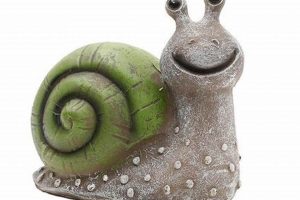
Sculptural ornamentation crafted from mineral aggregates, often granite, marble, or sandstone, designed for outdoor display within cultivated landscapes, represents a tangible intersection of artistic expression and horticultural design. These durable objects, frequently depicting figures, animals, or abstract forms, contribute aesthetic value to their surroundings. An example would be a granite depiction of a reclining lion placed near a garden entrance.
The incorporation of these durable adornments enhances the visual appeal of garden environments, providing focal points and adding character. Historically, their use signifies refinement and an appreciation for artistic craftsmanship. These structures offer longevity and resistance to environmental factors, making them a practical choice for permanent landscape features. Their presence can evoke a sense of timelessness and elegance, complementing the natural beauty of plants and flowers.
The subsequent discussion will explore specific materials used in the construction of these items, examine various design styles and themes prevalent in their creation, and detail considerations for their placement and maintenance within the landscape to ensure lasting beauty and structural integrity.
Guidance on the Selection and Care of Sculptural Garden Adornments
The following recommendations are provided to assist in the informed selection and proper maintenance of durable mineral aggregate-based garden features, ensuring their longevity and sustained aesthetic contribution to the landscape.
Tip 1: Material Selection: Prioritize materials based on climate and expected exposure. Granite and slate offer superior resistance to freeze-thaw cycles, while marble, though aesthetically appealing, requires more sheltered placement to avoid erosion. Consider the porosity of the mineral aggregate to mitigate potential damage from water absorption.
Tip 2: Scale and Proportion: Ensure that the dimensions of the chosen ornamentation are appropriately scaled to the surrounding garden space. An oversized piece can overwhelm a small garden, while a diminutive feature may be lost in a large landscape. Consider the visual weight and ensure it complements existing architectural elements.
Tip 3: Placement Considerations: Strategically position the object to maximize visual impact and minimize potential for damage. Avoid locations prone to excessive moisture or direct impact. Consider the interplay of light and shadow to enhance the three-dimensional quality of the sculpture.
Tip 4: Secure Mounting: For larger or more fragile items, ensure secure mounting to a stable base. This prevents accidental toppling due to wind or other disturbances, minimizing the risk of damage or injury. Consider utilizing concealed anchoring systems for enhanced stability.
Tip 5: Routine Cleaning: Implement a regular cleaning schedule to remove accumulated dirt, moss, and algae. Use a soft brush and mild detergent diluted in water. Avoid harsh chemicals or abrasive cleaners, which can damage the material’s surface.
Tip 6: Winter Protection: In regions with freezing temperatures, take preventative measures to protect against potential damage. Cover the object with breathable material or move smaller pieces indoors. Ensure adequate drainage to prevent water accumulation and subsequent freezing within the material’s pores.
Tip 7: Professional Consultation: For particularly valuable or intricate pieces, consider consulting with a professional conservator for guidance on specialized cleaning and repair techniques. Expert intervention can help preserve the integrity of the art piece and extend its lifespan.
By adhering to these recommendations, owners can ensure the enduring beauty and structural integrity of mineral aggregate sculptural adornments, enhancing the overall aesthetic value of their garden landscapes for years to come.
The subsequent section will delve into the artistic and historical significance of these landscape features, further enriching the understanding of their role in garden design.
1. Material Durability

Material durability is a critical determinant of the long-term viability and aesthetic appeal of sculptural garden features constructed from mineral aggregates. The inherent properties of the stone used directly influence its resistance to weathering, erosion, and biological growth, factors that profoundly impact its structural integrity and visual characteristics over time. A less durable stone will exhibit accelerated deterioration, necessitating frequent maintenance or, ultimately, replacement. The selection of an appropriate material is, therefore, paramount.
The cause-and-effect relationship between material composition and environmental impact is evident in comparing different types of stone. For example, marble, composed primarily of calcium carbonate, is susceptible to acid rain, resulting in surface etching and loss of detail. In contrast, granite, a dense, igneous rock rich in quartz and feldspar, demonstrates superior resistance to chemical weathering and physical abrasion. Similarly, porous materials like sandstone are prone to freeze-thaw damage in colder climates as absorbed water expands upon freezing, leading to cracking and fragmentation. Real-life examples include the visibly degraded marble statues in historic European gardens exposed to decades of air pollution, contrasted with the well-preserved granite monuments found in similar environments.
Understanding material durability has practical significance for both consumers and designers. Informed selection mitigates future costs associated with repair or replacement. Furthermore, understanding the specific vulnerabilities of each stone type enables the implementation of appropriate preventative measures, such as applying protective coatings or selecting sheltered locations. The correlation between material durability and longevity underscores its vital role in the sustainable integration of mineral aggregate sculpture within the landscape, ensuring both its enduring presence and continued aesthetic contribution. Choosing a material based on durability ensures the lasting beauty and integrity of these garden features, safeguarding the investment and enhancing the overall garden experience.
2. Sculptural Style

Sculptural style exerts a profound influence on the aesthetic integration of mineral aggregate garden features within a landscape. The chosen style, encompassing classical, neoclassical, modern, or abstract forms, dictates the visual language and contextual resonance of the piece. A disconnect between the sculptural style and the surrounding garden design can result in visual disharmony, diminishing the overall aesthetic impact. The stylistic choice, therefore, functions as a critical element in the successful incorporation of these sculptural elements. For instance, a highly ornate Baroque-style marble sculpture would appear incongruous in a minimalist, Zen-inspired garden, while a sleek, geometric granite sculpture would similarly clash with a traditional cottage garden. Historical examples demonstrate this principle; formal French gardens of the 17th and 18th centuries routinely featured neoclassical sculptures reflecting the prevailing artistic sensibilities of the era. These sculptures were intentionally chosen to complement the rigid geometry and formality of the garden layout.
The practical significance of understanding this connection lies in the ability to create a cohesive and visually appealing garden environment. Careful consideration of the sculptural style allows designers and owners to establish thematic consistency. This consideration extends beyond mere aesthetics, influencing the perceived atmosphere and emotional response evoked by the garden. A garden featuring classical sculptures, for example, might evoke a sense of timelessness and grandeur, while one incorporating modern abstract forms might convey a sense of innovation and artistic experimentation. The process of selecting a sculptural style also necessitates awareness of the material properties of the stone. Certain styles lend themselves more readily to specific materials. Intricate detailing, common in classical sculptures, is best achieved with fine-grained materials such as marble or limestone, while bold, geometric forms are well-suited to the robust nature of granite or slate.
In conclusion, sculptural style serves as an indispensable component in the selection and integration of mineral aggregate garden features. Its importance transcends mere aesthetic preference, influencing the overall harmony, thematic consistency, and emotional impact of the garden environment. Challenges arise in balancing personal artistic preferences with the need to maintain visual coherence. Ultimately, a thoughtful and informed approach to sculptural style, combined with an understanding of material properties, ensures the successful and enduring contribution of these features to the landscape. This harmony bridges art and nature, transforming a garden into a unified expression of aesthetic vision.
3. Scale and Proportion

Scale and proportion serve as fundamental design principles governing the visual harmony between mineral aggregate garden statuary and its surrounding environment. Appropriate application of these principles ensures that the selected sculpture integrates seamlessly into the landscape, enhancing rather than detracting from the overall aesthetic.
- Statue Size Relative to Garden Size
The dimensions of the sculpture must correspond appropriately with the spatial dimensions of the garden. An oversized statue in a small garden overwhelms the space, creating a sense of claustrophobia. Conversely, an undersized statue in a large garden appears insignificant and fails to command visual attention. For example, a monumental sculpture exceeding ten feet in height would be ill-suited for a compact residential garden, while a small, decorative piece less than two feet tall might be lost within a sprawling estate. The goal is to achieve visual balance, where the statue serves as a focal point without dominating the landscape.
- Proportion within the Statue Itself
Internal proportions within the sculpture itself must also adhere to aesthetic standards. A figure with disproportionately large limbs or an unnaturally small head appears distorted and visually jarring. Classical sculptures, for instance, are often revered for their adherence to idealized human proportions, reflecting a pursuit of aesthetic perfection. Deviations from established proportional norms can be intentional, employed to convey specific artistic expressions or evoke particular emotional responses. However, such deviations must be executed with skill and intention to avoid appearing simply as errors in craftsmanship.
- Relationship to Surrounding Vegetation
The scale and proportion of the statue should be considered in relation to the surrounding vegetation. A statue placed amongst towering trees may need to be larger to maintain visual prominence, while a statue nestled within a flower bed may require a smaller scale to avoid overshadowing the plants. The statue should complement, rather than compete with, the natural elements of the garden. Consideration should be given to the mature size of the vegetation to ensure that the visual balance is maintained over time. For example, a small statue placed near a rapidly growing shrub may eventually become obscured.
- Visual Weight and Massing
Visual weight, determined by the statue’s size, shape, and material, contributes significantly to its perceived scale and proportion within the garden. A dark, solid statue possesses greater visual weight than a light, openwork sculpture of the same size. Careful consideration of massing is essential to prevent the statue from appearing either too heavy or too insubstantial for its setting. Grouping multiple smaller statues can achieve a similar visual impact as a single larger statue, providing flexibility in design. This approach allows for a more nuanced integration of sculptural elements within the landscape.
In summary, the successful integration of mineral aggregate garden statuary hinges upon a careful evaluation of scale and proportion. The statues size relative to the garden, its internal proportions, its relationship to surrounding vegetation, and its visual weight all contribute to its overall aesthetic impact. By attending to these factors, designers and owners can ensure that the statue enhances the beauty and harmony of the garden environment.
4. Placement Aesthetics

Placement aesthetics, concerning the strategic positioning of mineral aggregate statuary within cultivated landscapes, directly influences the visual impact and contextual significance of these elements. Effective placement integrates the sculpture into the existing environment, enhancing its beauty and harmonizing it with the surrounding elements. In contrast, inappropriate placement can diminish the sculpture’s visual appeal and disrupt the overall aesthetic coherence of the garden.
- Focal Point Creation
Strategic positioning establishes sculptural features as focal points within the garden. Placement at the terminus of a pathway, within a formal garden bed, or against a backdrop of contrasting foliage draws the eye and anchors the visual composition. For example, a strategically illuminated stone statue placed at the end of a long lawn creates a dramatic focal point, guiding the viewer’s gaze and adding depth to the landscape. Improper location, however, can result in the sculpture being overlooked or perceived as an afterthought.
- Contextual Harmony
The surrounding environment should complement the style and theme of the sculptural element. A classical marble statue, for instance, benefits from placement within a formal garden setting characterized by symmetrical planting and manicured lawns. Conversely, a more abstract or contemporary sculpture might be better suited to a naturalistic landscape with irregular plantings and native vegetation. Placing a traditional piece in a modern setting can create visual dissonance, while a modern sculpture in a traditional garden might appear out of place.
- Light and Shadow
Orientation relative to sunlight influences the interplay of light and shadow across the sculpture’s surface, enhancing its three-dimensional form and creating visual interest. Placement that maximizes sunlight exposure can accentuate the texture and detail of the stone, while strategic shading can create a sense of mystery and depth. For example, an eastward-facing sculpture will be bathed in morning light, highlighting its features, while a sculpture placed in deep shade may lose its visual impact. Considerations for seasonal light variations are also important.
- Spatial Relationships
The relationship between the sculpture and other elements within the garden, such as trees, shrubs, and water features, contributes to the overall spatial composition. Placing a statue near a reflecting pool can double its visual impact, creating a sense of depth and tranquility. Similarly, positioning a sculpture beneath a canopy of trees can frame it and create a sense of enclosure. Poorly considered spatial relationships can result in visual clutter or a lack of visual cohesion, detracting from the beauty of both the sculpture and the garden.
Effective placement, therefore, transcends mere positioning; it necessitates a holistic understanding of design principles, environmental context, and aesthetic intent. The ultimate goal is to create a harmonious and visually compelling landscape where the mineral aggregate statuary enhances the overall beauty and character of the garden environment, serving as a testament to thoughtful planning and artistic expression. By integrating the sculptural element thoughtfully, the design achieves a unified aesthetic that elevates the garden space.
5. Long-Term Maintenance

The enduring aesthetic and structural integrity of mineral aggregate garden features hinges directly upon consistent and appropriate long-term maintenance. These objects, inherently exposed to environmental stressors, require proactive care to mitigate degradation and preserve their intended visual characteristics. Neglecting maintenance precipitates a cascade of detrimental effects, ranging from superficial discoloration to irreversible structural damage. The causal relationship between maintenance practices and the longevity of these items underscores the vital role of preventative measures.
Maintenance strategies must address both physical and biological factors. Physical threats include freeze-thaw cycles, abrasion from wind-borne particles, and the gradual accumulation of particulate matter. Biological threats encompass the proliferation of moss, lichen, and algae, which not only obscure the surface but also contribute to material erosion through the secretion of acids. A routine cleaning regimen, employing gentle detergents and soft-bristled brushes, effectively removes surface contaminants and inhibits biological growth. Protective coatings, specifically formulated for mineral aggregates, provide a barrier against moisture penetration and UV radiation, further mitigating weathering effects. Real-world examples include the contrast between meticulously maintained sculptures in European gardens, retaining their original detail and color, and neglected sculptures exhibiting extensive cracking, staining, and biological overgrowth. Proper drainage around the base of the statue is also vital to prevent water damage.
Effective long-term maintenance of mineral aggregate sculptural features constitutes an investment in their sustained beauty and structural soundness. Adopting a proactive approach, integrating routine cleaning, protective treatments, and environmental considerations, extends the lifespan of these items, ensuring their continued contribution to the landscape’s aesthetic value. The challenge lies in balancing the need for preservation with the desire to maintain the natural character of the stone. Careful selection of cleaning agents and protective measures is crucial to avoid unintended alterations to the material’s appearance. Ultimately, the consistent application of appropriate maintenance practices safeguards the long-term viability of these features, preserving their artistic merit and enhancing the overall garden environment.
Frequently Asked Questions
The subsequent section addresses frequently encountered inquiries concerning the selection, care, and longevity of garden features crafted from mineral aggregates, offering clarifications and practical guidance to ensure informed decision-making and optimal maintenance.
Question 1: What stone types offer the greatest longevity in climates with significant freeze-thaw cycles?
Granite and slate exhibit superior resistance to freeze-thaw damage compared to other mineral aggregates due to their low porosity and high density. These materials minimize water absorption, thereby reducing the risk of cracking or fragmentation caused by ice expansion.
Question 2: What constitutes appropriate cleaning procedures for the removal of biological growth on sculptural surfaces?
Employ a soft-bristled brush and a diluted solution of mild, pH-neutral detergent in water. Avoid abrasive cleaners or high-pressure washing, as these can damage the stone’s surface and accelerate erosion. Ensure thorough rinsing to remove any residual detergent.
Question 3: How does statue placement influence its vulnerability to environmental damage?
Statues situated in areas prone to excessive moisture, direct sunlight, or exposure to pollutants experience accelerated degradation. Placement in sheltered locations with adequate drainage minimizes these environmental stressors, extending the statue’s lifespan.
Question 4: Are protective coatings advisable for mineral aggregate garden features, and if so, what types are recommended?
Protective coatings, specifically formulated for mineral aggregates, can enhance resistance to weathering and staining. Select coatings that are breathable, allowing moisture vapor to escape, and UV-resistant to prevent discoloration. Consult with a stone care professional for recommendations tailored to the specific stone type.
Question 5: How can one mitigate the risk of theft or vandalism of valuable sculptural garden elements?
Securely mount the statue to a stable base using concealed anchoring systems. Install motion-activated lighting to deter nighttime activity. Consider installing security cameras to monitor the area. For particularly valuable pieces, explore insurance options to cover potential losses.
Question 6: What are the implications of improper drainage surrounding the base of the statue?
Inadequate drainage leads to water accumulation around the statue’s base, creating a conducive environment for biological growth and accelerating material erosion. Standing water can also seep into the stone, exacerbating freeze-thaw damage in colder climates. Ensure proper grading and drainage to divert water away from the statue.
In summary, the longevity and aesthetic integrity of these garden features relies on the careful selection of materials and preventative maintenance.
The subsequent section provides guidance on selecting a vendor for these sculptures.
Conclusion
The preceding exploration has illuminated the multifaceted considerations inherent in selecting, placing, and maintaining sculptural garden features constructed from mineral aggregates. Material durability, stylistic coherence, proportional harmony, strategic placement, and diligent maintenance constitute critical determinants of their enduring aesthetic contribution to the landscape. A comprehensive understanding of these factors enables informed decision-making, mitigating potential degradation and ensuring the longevity of these artistic elements.
The integration of “garden statues stone” into designed landscapes signifies more than mere ornamentation; it reflects a commitment to artistic expression, historical appreciation, and environmental stewardship. As landscape design continues to evolve, a nuanced understanding of these features will remain essential for creating visually compelling and enduring outdoor spaces. Further research and careful attention to best practices will undoubtedly enhance the role of these elements in enriching the human experience within the natural environment.