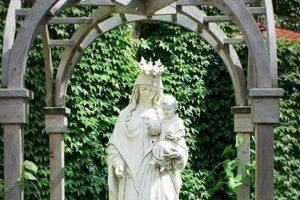
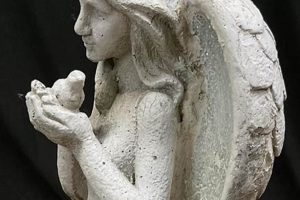
Representations of the Virgin Mary, crafted from various materials like concrete, resin, or stone, intended for outdoor display, constitute a distinct form of religious art and garden ornamentation. These figures, often depicted in poses of prayer or blessing, are designed to withstand the elements while providing a visual focal point within a landscape. For example, a statue portraying Our Lady of Grace might be placed amidst flowerbeds or near a water feature.
The placement of such religious iconography in gardens offers both spiritual and aesthetic benefits. They can serve as a source of personal reflection and devotion, creating a tranquil and meditative atmosphere. Historically, the inclusion of religious imagery in gardens reflects a long tradition of integrating faith and the natural world, providing a tangible expression of belief within a personal or communal space. This practice often fosters a sense of peace and connection to something larger than oneself.
The following discussion will delve into the diverse styles, materials, and placement considerations associated with these devotional objects, examining their role in landscape design and their enduring significance as symbols of faith and hope.
Placement and Care Considerations
Proper placement and maintenance are crucial for ensuring the longevity and aesthetic impact of devotional garden art. Careful consideration of environmental factors and material properties is essential.
Tip 1: Site Selection. Select a location that complements the statue’s scale and style. A larger piece may be more suitable for an open lawn, while a smaller figurine might be better suited for a more intimate garden nook. Consider prevailing wind patterns to minimize potential damage.
Tip 2: Foundation and Stability. Ensure a stable base for the statue to prevent tipping or damage from settling soil. For heavier statues, a concrete pad or deeply buried foundation may be necessary. Level the ground meticulously before installation.
Tip 3: Material-Specific Cleaning. Different materials require specific cleaning methods. Concrete statues can be gently scrubbed with a mild detergent and water, while resin statues may benefit from a sealant to protect against UV damage. Avoid abrasive cleaners, which can damage the surface.
Tip 4: Seasonal Protection. In colder climates, consider covering or moving statues indoors to prevent damage from freezing temperatures and ice. Porous materials are particularly susceptible to cracking from freeze-thaw cycles.
Tip 5: Algae and Moss Control. Regularly inspect statues for algae or moss growth, particularly in shady or damp locations. A diluted bleach solution can be used to carefully clean affected areas, followed by a thorough rinsing.
Tip 6: Landscape Integration. Integrate the statue into the surrounding landscape with complementary plants and hardscaping. Avoid overcrowding, ensuring sufficient space for viewing and appreciation. Consider using ground cover to prevent soil splashback during rain.
Effective placement and maintenance preserve the beauty and integrity of devotional garden art, allowing it to serve as a lasting source of inspiration. By adhering to these guidelines, one can safeguard this object for years to come.
The subsequent section will explore the artistic and symbolic significance of various representations, further enriching an understanding of its cultural value.
1. Devotional representation

The devotional representation inherent in garden statues of Mary forms the core of their significance, transforming them from mere decorative objects into potent symbols of faith, prayer, and spiritual connection. Their presence within a garden space signifies a deliberate act of devotion, imbuing the environment with religious meaning.
- Iconographic Accuracy
The faithfulness of the statue to established Christian iconography is paramount. Statues of Mary often adhere to specific visual conventions representing key aspects of her life and role. For instance, depictions of the Immaculate Conception typically portray her with a white dress and blue mantle, standing on a globe and crushing a serpent, while Our Lady of Lourdes is often shown kneeling in prayer. Accuracy in these details reinforces the statue’s symbolic weight and ensures it is readily recognized and understood within a devotional context.
- Material Reverence
The choice of materials and the craftsmanship employed in creating the statue reflects the respect and reverence afforded to the subject. Durable materials like marble, bronze, or high-quality resin are frequently selected to ensure longevity and convey a sense of timelessness. The artistic execution, including the detail of the facial features and the fluidity of the drapery, contributes to the statue’s overall impact and its ability to evoke feelings of piety and contemplation.
- Placement Intentionality
The strategic placement of the statue within the garden is a crucial aspect of its devotional representation. Statues are often positioned in prominent locations, such as near a prayer bench, a rosary garden, or a tranquil water feature, to facilitate personal reflection and prayer. The surrounding landscape may be designed to complement the statue, with carefully chosen plants and flowers symbolizing virtues associated with Mary, such as lilies for purity or roses for love.
- Liturgical Alignment
Some gardens may incorporate statues that reflect specific liturgical seasons or Marian feast days. A statue of Our Lady of Sorrows might be more prominently displayed during Lent, while a statue of Our Lady of the Rosary could be featured during October. This alignment with the liturgical calendar enhances the devotional aspect of the garden, creating a dynamic and spiritually enriching environment.
The convergence of iconographic accuracy, material reverence, placement intentionality, and liturgical alignment underscores the profound devotional dimension of garden statues of Mary. These elements transform the garden into a sacred space, fostering an environment conducive to prayer, contemplation, and a deeper connection with faith.
2. Material Composition

The material composition of garden statues of Mary directly influences their durability, aesthetic appeal, and overall longevity. The choice of material is not merely an aesthetic consideration; it dictates the statue’s ability to withstand environmental stressors such as temperature fluctuations, precipitation, and UV radiation. For instance, a statue crafted from porous sandstone, while visually appealing with its natural texture, will degrade more rapidly in climates with frequent freeze-thaw cycles compared to a statue made of dense granite. The selection process, therefore, requires careful consideration of the local climate and the statue’s intended placement.
Different materials offer distinct advantages and disadvantages. Concrete, a common choice due to its affordability and moldability, can be reinforced with additives to increase its resistance to cracking and weathering. Resin, a synthetic polymer, provides a lightweight and versatile option, allowing for intricate detailing and diverse finishes. Metal statues, often made of bronze or aluminum, offer superior durability and a timeless aesthetic, but can be more expensive and require protective coatings to prevent corrosion. Consequently, the cost, aesthetic preferences, and expected lifespan are critical factors in determining the appropriate material.
Understanding the material composition of garden statues of Mary is of practical significance for both consumers and artisans. Knowledge of material properties informs purchasing decisions, enabling individuals to select statues that are best suited for their specific needs and environmental conditions. Artisans, in turn, can leverage this understanding to optimize their crafting techniques, ensuring the production of durable and aesthetically pleasing works that serve as enduring symbols of faith. Ultimately, the careful selection and skilled manipulation of materials contribute to the lasting value and devotional significance of these religious artifacts.
3. Outdoor durability
The concept of outdoor durability is intrinsically linked to the value and longevity of garden statues of Mary. These statues, intended for open-air placement, are continuously exposed to environmental elements that can compromise their structural integrity and aesthetic appeal. The selection of appropriate materials and construction techniques is paramount to ensuring the statue’s ability to withstand these challenges.
- Material Resistance to Weathering
The capacity of the statue’s constituent material to resist degradation caused by exposure to precipitation, temperature fluctuations, and ultraviolet radiation is a primary factor. Materials like bronze and certain types of stone exhibit inherent resistance to weathering, while others, such as untreated wood, are susceptible to rapid decay. The application of protective coatings can mitigate the effects of weathering on less durable materials, but these coatings require periodic reapplication.
- Structural Integrity Against Physical Stress
Garden statues are subject to physical stress from wind, impacts, and ground movement. The statue’s design and construction must account for these forces. A well-engineered base and a balanced weight distribution can minimize the risk of tipping or structural failure. Reinforcements, such as internal metal armatures in resin or concrete statues, can enhance their ability to withstand physical stress.
- Resistance to Biological Growth
The growth of algae, moss, and lichens on the statue’s surface can detract from its appearance and, in some cases, contribute to its deterioration. Materials that are porous or retain moisture are more susceptible to biological growth. The application of algaecides and regular cleaning can help control biological growth, but the choice of material should also consider its inherent resistance to these organisms.
- Protection from Freeze-Thaw Cycles
In regions with cold climates, the expansion and contraction of water within the statue’s material during freeze-thaw cycles can cause cracking and spalling. Materials with low porosity and high compressive strength are better able to withstand these cycles. The use of sealants and protective coverings can further mitigate the risk of damage from freeze-thaw cycles.
Therefore, effective outdoor durability extends beyond the simple choice of material; it involves a holistic approach that encompasses design, construction, and maintenance. By prioritizing these factors, individuals can ensure that garden statues of Mary maintain their beauty and devotional significance for years to come.
4. Symbolic Portrayal

The symbolic portrayal inherent in garden statues of Mary elevates them beyond mere decorative elements, transforming them into potent visual representations of theological concepts and spiritual values. These depictions, laden with symbolic meaning, serve as a constant reminder of faith and provide a tangible focal point for devotion.
- Gestures and Postures
Gestures and postures in these statues convey specific messages. For instance, outstretched hands signify grace and blessing, while a bowed head indicates humility and submission to divine will. The placement of hands over the heart symbolizes love and compassion. Statues portraying Mary with open arms invite viewers to seek solace and refuge. The specific posture adopted significantly influences the statue’s overall message and its impact on the observer.
- Iconographic Colors
Colors within the statue’s design carry symbolic weight. The blue mantle commonly associated with Mary symbolizes purity, royalty, and her connection to heaven. White garments represent innocence and virtue. Red, though less common, signifies divine love or, in some contexts, suffering. The deliberate use of color enhances the statue’s visual impact and reinforces its symbolic message.
- Symbolic Objects and Attributes
Statues often include objects that hold symbolic significance. A rosary symbolizes prayer and devotion. Lilies represent purity and virginity. A crown signifies Mary’s role as Queen of Heaven. The presence of a serpent beneath her feet symbolizes her triumph over evil. These objects, carefully integrated into the statue’s design, amplify its symbolic meaning and enrich its narrative.
- Variations in Depiction
The specific depiction of Mary can vary widely, each representing a different aspect of her role in Christian theology. Statues of Our Lady of Grace emphasize her role as a mediator between God and humanity. Depictions of the Immaculate Conception celebrate her sinless nature. Statues of Our Lady of Sorrows commemorate her suffering during the Passion of Christ. These variations allow for a diverse range of symbolic portrayals, catering to different devotional preferences and theological emphases.
The interplay of gestures, colors, objects, and variations in depiction contributes to the rich symbolic language of garden statues of Mary. These elements, when carefully considered, transform the statue into a powerful instrument of faith, capable of inspiring devotion, contemplation, and a deeper understanding of Christian teachings.
5. Aesthetic integration
Aesthetic integration, in the context of garden statues of Mary, refers to the harmonious blending of the statue with its surrounding environment, a critical component influencing the overall impact and effectiveness of the devotional artwork. The statues visual characteristics, including size, style, and material, must complement the existing garden design, landscape features, and architectural elements to create a cohesive and visually pleasing space. A poorly integrated statue can appear jarring and out of place, detracting from both its aesthetic and spiritual value. For instance, a highly ornate, classical-style marble statue may seem incongruous in a minimalist, modern garden setting, where simpler, more abstract forms would be more appropriate.
The importance of aesthetic integration extends beyond mere visual appeal; it also contributes to the statue’s ability to evoke a sense of peace, tranquility, and spiritual connection. When the statue is seamlessly integrated into its surroundings, it becomes a natural focal point, inviting contemplation and prayer. Consider, for example, a statue of Our Lady of Lourdes placed near a natural spring or a rock garden, with surrounding plants chosen to reflect the flora of the Pyrenees. This intentional design creates a cohesive narrative, enhancing the spiritual significance of the statue and fostering a sense of immersion in the devotional experience. Furthermore, the scale of the statue should be proportional to the size of the garden; a large statue may overwhelm a small garden, while a tiny figurine might be lost in a vast landscape.
In conclusion, aesthetic integration is paramount to the successful incorporation of garden statues of Mary. By carefully considering the statues visual characteristics and its relationship to the surrounding environment, one can create a harmonious and spiritually enriching space. Achieving this integration requires thoughtful planning and attention to detail, ensuring that the statue serves as a focal point for beauty, contemplation, and faith. Overlooking this aspect can diminish the statue’s impact, underscoring the practical significance of understanding and prioritizing aesthetic cohesion.
6. Spiritual focal point
The presence of garden statues of Mary invariably establishes a spiritual focal point within the landscape, acting as a tangible representation of faith and devotion. This is not merely an aesthetic addition; it fundamentally alters the garden’s purpose, transforming it from a purely recreational or ornamental space into one conducive to contemplation and prayer. The statue serves as a visual reminder of religious beliefs, encouraging reflection on spiritual matters and facilitating a deeper connection with the divine. The cause-and-effect relationship is clear: the statue’s presence (cause) leads to the creation of a spiritual focal point (effect), imbuing the surroundings with an atmosphere of reverence.
The importance of this spiritual focal point as a component of garden statues of Mary is paramount. Without it, the statue risks becoming simply another garden ornament, divorced from its religious significance. Consider the example of a small, unassuming statue of Our Lady of Fatima placed within a family’s rose garden. The statue, surrounded by the beauty of nature, serves as a daily reminder to pray for peace. Its practical application lies in providing a designated space for prayer and reflection, fostering a sense of tranquility and spiritual well-being. Similarly, larger statues placed in public gardens can provide visitors with a moment of solace and spiritual connection amidst the hustle and bustle of daily life. This understanding also allows for the intentional design of gardens around these statues, incorporating elements that amplify their spiritual impact, such as prayer benches, rosary paths, and symbolic plantings.
In summary, garden statues of Mary serve as potent spiritual focal points, transforming ordinary spaces into places of prayer and reflection. This understanding underscores the importance of careful consideration when selecting, placing, and maintaining these statues. The challenge lies in ensuring that the statue remains a true expression of faith, rather than simply a decorative object. By recognizing and embracing the statue’s role as a spiritual focal point, individuals can create gardens that nurture the soul and foster a deeper connection with the divine. This principle extends to various settings, from private residences to public spaces, highlighting the enduring relevance of integrating faith and beauty in the landscape.
Frequently Asked Questions
This section addresses common inquiries regarding garden statues of Mary, offering clarification on aspects of selection, maintenance, and spiritual significance.
Question 1: What materials are most suitable for outdoor garden statues of Mary?
Durable materials like cast stone, bronze, and high-quality resin are generally recommended for outdoor use. These materials exhibit resistance to weathering, UV radiation, and temperature fluctuations. Specific material choice should consider the local climate and the desired aesthetic.
Question 2: How should garden statues of Mary be properly cleaned and maintained?
Cleaning methods depend on the statue’s material. For most materials, a gentle washing with mild soap and water is sufficient. Abrasive cleaners should be avoided. Regular inspection for algae or moss growth is advisable, and appropriate cleaning solutions should be used to address these issues.
Question 3: What is the significance of different poses or depictions in garden statues of Mary?
Various poses and depictions represent different aspects of Mary’s role in Christian theology. For example, the Immaculate Conception is often depicted with outstretched arms, while Our Lady of Sorrows is shown with a sorrowful expression. These depictions carry specific symbolic meanings and offer diverse avenues for devotion.
Question 4: How does one select an appropriate size for a garden statue of Mary?
The appropriate size depends on the scale of the garden and the intended focal point. A large statue may overwhelm a small garden, while a small figurine might be lost in a larger landscape. Consider the surrounding elements and the desired visual impact when determining the appropriate size.
Question 5: Is it necessary to provide a foundation for a garden statue of Mary?
Providing a stable foundation is highly recommended, especially for larger statues. A concrete pad or buried foundation can prevent tipping or damage from settling soil. Ensure the ground is level before installing the statue.
Question 6: How can one ensure a garden statue of Mary is aesthetically integrated into the landscape?
Consider the statue’s style, material, and color in relation to the surrounding plants, hardscaping, and architectural elements. Choose a statue that complements the existing design and enhances the overall aesthetic. Avoid overcrowding and ensure sufficient space for viewing and appreciation.
Effective selection and maintenance are critical to preserving the beauty and spiritual significance of garden statues of Mary. Careful consideration of these factors ensures these statues serve as lasting symbols of faith.
The following discussion will delve into relevant cultural aspects regarding it.
Conclusion
Garden statues of Mary, as explored, represent a multifaceted intersection of art, faith, and landscape design. Their enduring appeal stems from their ability to function as both aesthetic enhancements and tangible expressions of spiritual devotion. The selection, placement, and maintenance of these statues require a nuanced understanding of materials, symbolism, and environmental factors to ensure their longevity and preserve their inherent significance.
The integration of garden statues of Mary remains a powerful statement, reflecting a continued desire to imbue personal spaces with meaning and to create environments conducive to contemplation and spiritual reflection. Further engagement with the artistic and cultural dimensions of these devotional objects will enrich their appreciation and contribute to their continued relevance in contemporary society.
![Serene Garden Mary Statue: [Add Detail] for Your Yard | The Ultimate Gardening Guide: Grow a Thriving Garden Year-Round](https://MyGardenPatch.com/wp-content/uploads/2025/07/th-3727-300x200.jpg "Serene Garden Mary Statue: [Add Detail] for Your Yard The Ultimate Gardening Guide: Grow a Thriving Garden Year-Round")