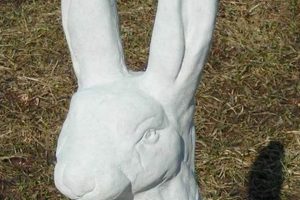
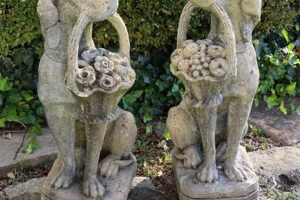
Ornamental figures and three-dimensional artworks designed for outdoor display comprise an integral part of landscape and garden design. These decorative elements, often crafted from materials such as stone, metal, or resin, serve to enhance the aesthetic appeal of exterior spaces. Examples range from classical representations of mythological figures to abstract forms and contemporary designs.
The inclusion of these artistic pieces can significantly elevate the visual interest and perceived value of a property. Historically, their presence has signified wealth, cultural sophistication, and a cultivated appreciation for art and nature. Beyond mere decoration, they can establish focal points, define areas within a garden, and contribute to a tranquil and reflective atmosphere.
Subsequent sections will delve into the diverse styles available, material considerations for longevity and suitability, factors influencing placement, and the ongoing trends shaping the realm of outdoor ornamentation.
Practical Considerations for Incorporating Outdoor Ornamentation
Selecting and positioning decorative figures within a landscape requires careful consideration to ensure visual harmony and long-term satisfaction. The following guidelines address crucial aspects of the integration process.
Tip 1: Material Selection: Opt for weather-resistant materials suitable for the local climate. Stone, bronze, and certain high-density resins offer superior durability compared to less robust alternatives. Consider the potential for fading, cracking, or corrosion when exposed to sunlight, rain, and temperature fluctuations.
Tip 2: Scale and Proportion: Ensure the size of the artwork is appropriate for its surroundings. A monumental sculpture in a small garden will overwhelm the space, while a diminutive figure in a vast landscape may be lost. Maintain a sense of balance and proportion to create visual coherence.
Tip 3: Placement and Perspective: Strategically position pieces to maximize their impact. Consider sightlines from various vantage points within the garden and the home. Utilize existing landscape features, such as pathways, water features, or mature trees, to frame and accentuate the artwork.
Tip 4: Style Compatibility: Select pieces that complement the overall aesthetic of the garden and the architecture of the house. A formal, geometric garden typically benefits from classical or symmetrical designs, while a more naturalistic landscape may be enhanced by organic or abstract forms.
Tip 5: Base and Foundation: Provide a stable and level base for larger items to prevent tipping or settling. A properly prepared foundation ensures the longevity and visual integrity of the installation. For smaller items, consider using decorative plinths or pedestals to elevate them and enhance their prominence.
Tip 6: Lighting Considerations: Incorporate strategically placed lighting to showcase artwork during evening hours. Uplighting, spotlights, or submersible lights can dramatically alter the appearance and create a sense of drama. Ensure lighting fixtures are weather-resistant and properly installed.
Effective integration requires a thoughtful approach, considering material durability, scale, style, and environmental factors. Careful planning ensures the artwork enhances the overall aesthetic and provides enduring enjoyment.
The subsequent sections will explore the artistic merit and the history of these garden features.
1. Material Durability

Material durability is a paramount consideration in the selection of ornamentation intended for sustained outdoor exposure. The longevity and visual integrity of these garden features are directly contingent upon their resistance to environmental stressors.
- Resistance to Weathering
The capacity to withstand the effects of precipitation, temperature fluctuations, and ultraviolet radiation dictates the lifespan of outdoor art. Materials exhibiting inherent resistance to these elements, such as granite or certain high-grade polymers, minimize degradation and maintain aesthetic appeal over extended periods. Conversely, materials susceptible to weathering may require frequent maintenance or replacement, incurring additional costs and diminishing the visual impact.
- Structural Integrity
A material’s structural integrity, defined by its ability to resist physical stress and impact, is crucial in preventing damage from wind, accidental contact, or vandalism. Bronze, for example, possesses high tensile strength and resists deformation, making it a suitable choice for large or intricate designs. Materials with lower structural integrity may be prone to cracking, chipping, or complete failure under duress.
- Resistance to Biological Growth
Outdoor environments foster the growth of algae, moss, and other biological organisms on surfaces. Materials that are non-porous or treated with anti-microbial agents can inhibit this growth, preserving the artwork’s original appearance and reducing the need for cleaning. Porous materials, such as untreated sandstone, are more susceptible to biological colonization, potentially leading to discoloration and surface damage.
- Resistance to Chemical Degradation
Exposure to pollutants in the air and soil can cause chemical reactions that degrade certain materials. Acid rain, for instance, can erode limestone and marble. Materials resistant to chemical degradation, such as stainless steel or specific types of resin, offer greater protection against these effects, ensuring the long-term preservation of the artwork’s surface and structural integrity.
The judicious selection of materials, informed by a thorough understanding of their durability characteristics, is essential for ensuring that garden figures and sculptures remain enduring enhancements to the landscape, resisting the detrimental effects of the environment and retaining their aesthetic value for years to come.
2. Style Compatibility
Style compatibility, in the context of ornamental figures and garden design, denotes the harmonization of artistic expression with the prevailing aesthetic of the surrounding environment. This principle dictates that the selected statuary should complement, rather than clash with, the existing landscape and architectural elements.
- Architectural Harmony
The architectural style of the residence often serves as the primary determinant of stylistic alignment. A classical villa, for example, typically benefits from the addition of neoclassical sculptures depicting mythological figures or allegorical themes. Conversely, a modern, minimalist home may be better suited to abstract or geometric forms that mirror its clean lines and unadorned aesthetic. Disregarding this architectural context can result in visual dissonance and detract from the overall appeal of the property.
- Garden Design Concordance
The established design of the garden itself exerts a significant influence on stylistic compatibility. A formal, symmetrical garden characterized by manicured lawns and precisely arranged flowerbeds often calls for statues with a similar sense of order and balance, such as symmetrical urns or topiary sculptures. In contrast, a more naturalistic or informal garden, featuring winding paths and loosely arranged plantings, may be enhanced by figures with organic forms or a rustic, weathered appearance. The goal is to create a seamless integration between the artwork and its natural setting.
- Material Consistency
The materials used in the construction of the residence and the garden can also inform the selection of statuary materials. If the house is primarily constructed of brick, sculptures crafted from terracotta or weathered stone can create a sense of visual unity. Similarly, if the garden features elements of metalwork, such as wrought iron gates or fences, metal sculptures can provide a cohesive aesthetic. Maintaining material consistency contributes to a harmonious and well-integrated design.
- Thematic Resonance
Thematic resonance refers to the alignment of the artwork’s subject matter or symbolism with the overall purpose or atmosphere of the garden. A tranquil Japanese garden, for instance, might feature stone lanterns or contemplative figures that evoke a sense of peace and serenity. A playful children’s garden could incorporate whimsical sculptures of animals or fairytale characters. By selecting artwork that resonates thematically with the garden’s intended atmosphere, one can enhance its emotional impact and create a more immersive experience.
In summation, style compatibility is not merely a matter of personal preference but a critical design principle that ensures that ornamental figures and statues enhance, rather than detract from, the overall aesthetic of the garden and the residence. Through careful consideration of architectural harmony, garden design concordance, material consistency, and thematic resonance, one can achieve a visually unified and aesthetically pleasing outdoor environment.
3. Scale and Proportion

Scale and proportion are fundamental design principles governing the visual relationship between ornamental figures and their surrounding environment. An understanding of these principles is crucial in ensuring that statues and sculptures enhance, rather than detract from, the aesthetic appeal of garden spaces. The scale of a piece refers to its absolute size, while proportion concerns the relative dimensions and ratios within the piece and its context. A mismatch in either scale or proportion can disrupt visual harmony, leading to an unsettling or aesthetically displeasing outcome. For example, a monumental statue positioned within a small, enclosed garden will likely overwhelm the space, creating a sense of claustrophobia and diminishing the impact of both the artwork and the garden itself. Conversely, a diminutive sculpture placed in a vast, open landscape may become visually insignificant, failing to command attention or contribute meaningfully to the overall design. Successful integration requires careful consideration of the dimensions of the sculpture in relation to the size of the garden, the height of surrounding vegetation, and the scale of adjacent architectural elements.
Practical application of these principles involves assessing the intended viewing distance, the existing sightlines, and the desired focal points within the garden. A sculpture intended to be viewed from a distance may require a larger scale to maintain visual presence. Similarly, a statue designed to serve as a central focal point should be proportionally larger than surrounding elements to draw the eye and establish visual hierarchy. Conversely, a piece intended to blend seamlessly with its environment may necessitate a smaller scale and more subtle proportions. The choice of materials can also influence the perceived scale and proportion. Dark, heavy materials tend to appear more substantial, while light, airy materials can create a sense of lightness and delicacy. Consider the placement of the artwork carefully. Raising statues on pedestals or plinths is one way to adjust the proportion of the sculpture to its surrounding environment, so that it can become an eye-catching feature.
Achieving proper scale and proportion presents challenges, particularly in gardens with varied topography or densely planted areas. Accurately assessing the visual impact of a sculpture before installation often requires the use of scaled models or digital simulations. Furthermore, the perception of scale and proportion can be subjective, influenced by individual preferences and cultural contexts. Despite these challenges, adhering to these design principles remains essential for creating visually balanced and aesthetically pleasing garden spaces. Neglecting them can result in disjointed designs that fail to realize the full potential of both the landscape and the artwork itself.
4. Placement Aesthetics

Placement aesthetics, in the context of garden statues and sculptures, directly influences the visual impact and experiential value of these artistic elements. The strategic positioning of such objects within a landscape amplifies their inherent characteristics and forges connections with the surrounding environment. Erroneous placement diminishes the artwork’s intended effect and can disrupt the overall harmony of the garden design.
Effective placement considers several factors. Firstly, sightlines are crucial. A statue strategically positioned at the end of a pathway creates a focal point and encourages exploration. Secondly, the relationship to surrounding vegetation is essential; framing a sculpture with greenery can enhance its prominence and integrate it into the landscape. Thirdly, light and shadow play a vital role; a statue oriented to capture sunlight at specific times of day can create dramatic visual effects. For example, the gardens of Versailles exemplify meticulous placement, where each statue is carefully situated along axes and within carefully designed parterres to maximize its impact and contribute to the overall grandeur of the site.
Challenges arise from the subjective nature of aesthetic judgment and the dynamic nature of garden environments. As plants grow and seasons change, the initial placement may require adjustment. Furthermore, personal preferences and the intended purpose of the garden (e.g., relaxation, contemplation, entertainment) influence the optimal arrangement. Despite these complexities, an understanding of placement aesthetics enables a more deliberate and effective integration of statues and sculptures into garden design, transforming outdoor spaces into curated artistic experiences.
5. Artistic Expression

The incorporation of statuary within garden landscapes serves as a potent avenue for artistic expression, reflecting individual aesthetic sensibilities and enriching the visual narrative of the outdoor environment.
- Personal Aesthetic Representation
Garden statuary affords the opportunity to externalize individual artistic preferences through the selection of styles, materials, and themes. The choice of a classical marble figure, a modern abstract sculpture, or a whimsical folk art piece directly conveys the homeowner’s unique perspective and cultural affiliations. This representation transforms the garden into a personal gallery, showcasing a curated collection of aesthetic ideals. For instance, a preference for Renaissance art might be embodied by a replica of Donatello’s David, strategically placed to complement the surrounding foliage and architectural elements.
- Thematic Narrative Construction
Statues and sculptures can be employed to construct a thematic narrative within the garden, imbuing the space with symbolic meaning and evocative imagery. A collection of animal sculptures might suggest a celebration of wildlife and natural ecosystems. Alternatively, religious iconography could transform the garden into a meditative sanctuary. The positioning of these elements in relation to one another and to the broader landscape further refines the narrative, inviting contemplation and interpretation. A Zen garden, for example, frequently utilizes carefully placed stones and minimalist sculptures to evoke a sense of tranquility and spiritual awareness.
- Emotional Ambiance Modulation
The presence of specific statuary can profoundly influence the emotional ambiance of a garden. Serene depictions of deities or tranquil natural scenes promote relaxation and contemplation. Conversely, more dynamic or abstract forms can introduce a sense of energy and excitement. The choice of material, color, and texture further contributes to the emotional impact, influencing the overall mood and atmosphere of the space. A water feature incorporating a playful cherub sculpture, for example, may foster a sense of joy and lightheartedness.
- Cultural and Historical Allusion
Garden statuary often functions as a conduit for cultural and historical allusion, referencing specific artistic movements, historical periods, or mythological traditions. A reproduction of a Roman bust evokes the grandeur of classical antiquity, while a contemporary sculpture might reflect modern artistic sensibilities. These allusions enrich the garden’s intellectual depth and connect it to broader cultural narratives. A garden featuring replicas of ancient Egyptian sculptures, for instance, might evoke a sense of timelessness and the enduring power of artistic expression.
Ultimately, the integration of statuary into garden design transcends mere decoration, providing a tangible means of artistic expression that reflects personal values, constructs thematic narratives, modulates emotional ambiance, and alludes to cultural and historical contexts. The deliberate selection and placement of these elements transform the garden into a dynamic and evocative artistic statement.
Frequently Asked Questions
This section addresses common inquiries regarding the selection, care, and integration of ornamental figures within garden landscapes.
Question 1: What are the primary considerations when selecting materials for outdoor statuary?
Material selection necessitates a thorough assessment of durability, weather resistance, and aesthetic compatibility. Stone, bronze, and certain high-density resins offer superior longevity compared to less robust alternatives. Factors such as climate, exposure to sunlight, and potential for vandalism should inform the choice.
Question 2: How does scale and proportion impact the visual effectiveness of a garden statue?
Scale and proportion dictate the harmony between the statue and its surroundings. A statue that is too large overwhelms the space, while one that is too small becomes visually insignificant. Careful consideration of sightlines, surrounding vegetation, and architectural elements is essential.
Question 3: What are the best practices for cleaning and maintaining outdoor sculptures?
Cleaning protocols vary depending on the material. Stone sculptures may benefit from gentle pressure washing, while bronze requires specialized cleaning agents to prevent corrosion. Regular inspection and prompt removal of biological growth are crucial for preserving the statue’s appearance.
Question 4: How can garden statuary be effectively integrated into an existing landscape design?
Integration requires careful consideration of style compatibility, thematic resonance, and strategic placement. The statue should complement the architectural style of the residence and enhance the existing garden design. Utilizing sightlines and framing with vegetation can maximize visual impact.
Question 5: Are there legal restrictions or regulations regarding the placement of statues in residential gardens?
Local ordinances and homeowner association guidelines may impose restrictions on the size, height, or visibility of garden ornaments. It is advisable to consult with local authorities or review relevant regulations before installing large or prominent statues.
Question 6: How can lighting be used to enhance the appearance of garden statuary at night?
Strategic placement of lighting fixtures can dramatically alter the appearance of statuary during evening hours. Uplighting, spotlights, and submersible lights can create dramatic visual effects and highlight specific features. Ensure that lighting fixtures are weather-resistant and properly installed.
In summary, the successful integration of statuary into garden landscapes hinges on careful material selection, attention to scale and proportion, regular maintenance, and a thorough understanding of design principles.
Subsequent sections will explore innovative trends in garden ornamentation.
Conclusion
The preceding analysis has underscored the multifaceted role of garden statues and sculptures in landscape design. From material considerations impacting longevity to aesthetic principles governing placement, the effective integration of these elements demands careful planning and informed decision-making. The exploration has revealed their capacity not only to enhance visual appeal but also to serve as expressions of personal taste and reflections of cultural heritage.
As aesthetic preferences evolve and technological advancements introduce new materials and fabrication techniques, the future of garden ornamentation promises continued innovation. A commitment to thoughtful design and responsible sourcing will ensure that garden statues and sculptures remain enduring enhancements to outdoor environments, enriching both the aesthetic experience and the cultural landscape.