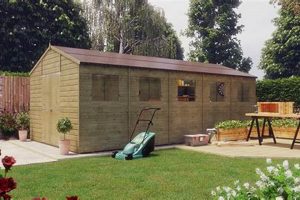
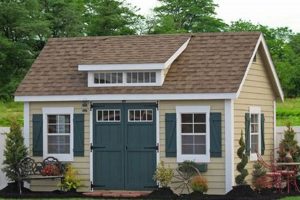
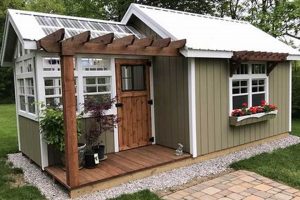
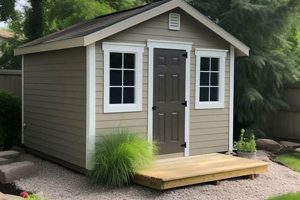
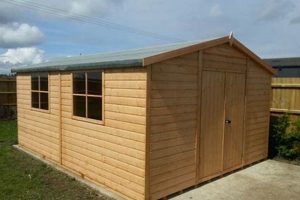
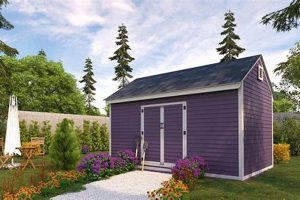
These structures represent a fusion of traditional storage solutions and horticultural cultivation spaces. Characterized by an enclosed building, partially or entirely dedicated to sheltering tools and equipment, they incorporate an attached or integrated transparent section designed to nurture plant growth. This transparent area leverages sunlight to create a controlled environment suitable for seedlings, vegetables, or other flora.
The combination offers numerous advantages, primarily maximizing space utilization in gardens of any size. The storage area provides organized safekeeping for gardening implements, while the greenhouse component extends the growing season, offering protection from inclement weather and pests. Historically, this efficient design reflects a desire for self-sufficiency and resourcefulness in both domestic and commercial gardening practices.
Further discussion will explore the various types of these combined structures, suitable material choices for construction, optimal placement considerations, and strategies for efficient climate control within the integrated greenhouse component. The analysis will also cover cost implications, maintenance requirements, and popular models available in the current market.
Enhancing the Utility of Integrated Garden Storage and Cultivation Structures
The following recommendations aim to optimize the functionality and longevity of garden sheds incorporating greenhouse spaces. These suggestions address critical factors in design, construction, and maintenance.
Tip 1: Foundation Integrity: Ensure a stable and level foundation to prevent structural stress and maintain proper door and window alignment. A concrete slab or well-compacted gravel base is recommended.
Tip 2: Optimal Orientation: Position the greenhouse section to maximize sunlight exposure, typically facing south in the northern hemisphere. Consider shading options during peak summer months to prevent overheating.
Tip 3: Material Selection: Choose durable, weather-resistant materials for both the shed and greenhouse components. Pressure-treated lumber, polycarbonate panels, and rust-proof hardware are crucial for longevity.
Tip 4: Ventilation Management: Implement adequate ventilation to regulate temperature and humidity within the greenhouse. Automated vents or manually operated windows are essential for airflow control.
Tip 5: Efficient Space Utilization: Optimize interior layout with shelving, hanging baskets, and vertical gardening techniques to maximize growing space within the greenhouse and storage capacity within the shed.
Tip 6: Water Management: Incorporate a rainwater harvesting system to collect and store water for irrigation. Proper drainage is also crucial to prevent water accumulation around the foundation.
Tip 7: Security Considerations: Secure the shed portion with robust locks and reinforced entry points to protect tools and equipment from theft. Consider an alarm system for added security.
These strategies, when implemented effectively, will contribute significantly to the efficient operation and extended lifespan of garden sheds with integrated greenhouse features. They promote optimal plant growth, secure storage, and reduced maintenance requirements.
The subsequent sections will explore specific design variations and advanced climate control techniques for specialized cultivation purposes.
1. Material Durability
Material durability represents a critical determinant in the longevity and functional efficacy of combined garden storage and cultivation structures. The inherent resistance of construction materials to environmental stressors, such as moisture, ultraviolet radiation, and temperature fluctuations, directly influences the overall lifespan of the building. Inadequate material selection inevitably leads to premature degradation, necessitating costly repairs or complete replacement.
Consider, for example, a garden shed with an integrated greenhouse constructed primarily from untreated softwood. Prolonged exposure to humidity and precipitation will promote fungal growth and wood rot, compromising the structural integrity of both the shed and the greenhouse attachment. Conversely, utilizing pressure-treated lumber for the shed frame and UV-resistant polycarbonate panels for the greenhouse covering significantly extends the structure’s service life, mitigating the risk of structural failure and maintaining optimal growing conditions for plants. The selection of corrosion-resistant hardware further safeguards against deterioration.
In summary, the careful consideration of material durability is paramount in ensuring the lasting value and performance of garden sheds with greenhouse functionality. Investing in robust, weather-resistant materials translates to reduced maintenance costs, enhanced structural stability, and a prolonged operational lifespan, contributing to a more sustainable and economically viable gardening solution. The initial expense associated with higher-quality materials is typically offset by the avoidance of future repair or replacement costs.
2. Structural Integrity

Structural integrity is a paramount consideration in the design and construction of garden sheds with greenhouse integration. It dictates the capacity of the combined structure to withstand external forces wind, snow load, and soil pressure without deformation or failure. Compromised structural integrity can lead to collapse, rendering the structure unusable and potentially causing significant damage or injury. The interdependence of the shed and greenhouse components necessitates a unified approach to structural design, considering both individual and combined loads.
The materials selected and the method of assembly directly influence structural integrity. For example, a garden shed with a greenhouse extension constructed using inadequate framing techniques and lightweight materials is vulnerable to wind damage. In contrast, a structure employing robust framing, properly sized and spaced support members, and secure fastening methods demonstrates enhanced resistance to external forces. The greenhouse component, often constructed with glass or polycarbonate panels, requires a framework capable of supporting its weight and resisting wind loads. Proper foundation design is equally critical; a stable and level foundation prevents uneven settling and minimizes stress on the superstructure. Real-world examples frequently showcase the consequences of neglecting structural integrity, with poorly constructed sheds collapsing under heavy snow loads or succumbing to high winds, leading to significant material loss and potential safety hazards.
In conclusion, the structural integrity of garden sheds with greenhouse features is not merely an aesthetic consideration but a fundamental requirement for safety and long-term functionality. The integration of robust materials, sound engineering principles, and meticulous construction practices are essential for ensuring that the combined structure can withstand environmental stresses and provide a secure and reliable environment for both storage and plant cultivation. Neglecting structural integrity can have severe repercussions, emphasizing the need for careful planning and execution in the design and construction phases.
3. Ventilation Efficiency

Ventilation efficiency within garden sheds incorporating greenhouse features is critically linked to plant health, temperature regulation, and humidity control. The enclosed environment of the greenhouse component, if improperly ventilated, can lead to excessively high temperatures during daylight hours, fostering conditions conducive to disease and inhibiting optimal plant growth. Inadequate airflow also results in elevated humidity levels, increasing the risk of fungal infections and other moisture-related problems. Conversely, efficient ventilation facilitates the exchange of air, reducing temperature extremes, lowering humidity, and providing a consistent supply of carbon dioxide necessary for photosynthesis. A system lacking sufficient air circulation demonstrates stunted plant development and increased susceptibility to pathogens. The absence of proper ventilation directly impairs the ability to effectively cultivate plants within the integrated greenhouse space.
Practical applications of efficient ventilation in these structures involve various methods. Passive ventilation systems, relying on strategically placed vents and windows, can effectively manage airflow based on natural convection. Automated ventilation systems, employing thermostatically controlled fans and louvers, offer a more precise approach to temperature and humidity regulation. An example of the benefits of automated systems is seen in regions with significant temperature fluctuations. During warm days, sensors trigger fans to exhaust hot air, while on cooler evenings, the system reduces ventilation to retain warmth. This dynamic adjustment optimizes growing conditions, mitigating the impact of external weather changes. Properly designed ventilation not only enhances plant health but also reduces the risk of condensation buildup, which can damage the structure itself.
In summary, ventilation efficiency is an indispensable element in garden sheds with greenhouse capabilities. The challenges associated with maintaining a controlled environment necessitate a thoughtful approach to ventilation design, encompassing both passive and active methods. Failure to prioritize ventilation compromises plant health, reduces structural longevity, and undermines the overall purpose of integrating a greenhouse component into a garden storage structure. Effective ventilation strategies contribute directly to successful cultivation and the sustainable operation of the combined unit.
4. Light Optimization
Light optimization is a crucial factor determining the effectiveness of garden sheds incorporating greenhouse sections. Proper light management directly impacts plant growth, yield, and overall health within the controlled environment.
- Orientation and Placement
The orientation of a structure relative to the sun’s path significantly influences light exposure. A south-facing orientation in the Northern Hemisphere maximizes sunlight capture, particularly during winter months when sunlight is less intense. Careful site selection, considering surrounding structures or vegetation that may create shade, is essential. Improper orientation can result in insufficient light, hindering plant development.
- Glazing Materials
The choice of glazing materials affects the amount and quality of light transmitted to plants. Glass, while traditional, can block certain wavelengths and may require shading during peak sunlight hours. Polycarbonate panels offer higher light transmission rates and diffusion, reducing hotspots and providing more even illumination. Selecting appropriate glazing enhances plant photosynthesis and minimizes the risk of scorching.
- Internal Reflectivity
Internal surfaces within the greenhouse impact light distribution. Highly reflective materials, such as white paint or reflective films, can bounce light back onto plants, increasing overall light intensity. This is particularly beneficial in areas that receive limited direct sunlight. Utilizing reflective surfaces promotes more uniform light distribution and reduces shadows, optimizing plant growth.
- Supplemental Lighting
Supplemental lighting becomes necessary when natural light is insufficient, particularly during winter or in regions with limited sunlight. LED grow lights offer an energy-efficient and customizable solution, allowing growers to tailor the light spectrum to specific plant needs. Implementing supplemental lighting extends the growing season and ensures consistent light levels, promoting optimal plant health and productivity.
These considerations collectively emphasize the necessity of thoughtful light optimization strategies in garden sheds with greenhouse components. Integrating these aspects results in an environment that supports vigorous plant growth and maximizes the potential of the combined structure for year-round cultivation.
5. Space Utilization

In the context of garden sheds with greenhouse components, space utilization becomes a paramount consideration, directly influencing the overall functionality and efficiency of the combined structure. Optimized space management ensures both adequate storage capacity and sufficient growing area within a limited footprint.
- Vertical Gardening Systems
The implementation of vertical gardening techniques, such as tiered shelving, hanging baskets, and wall-mounted planters, maximizes the growing area within the greenhouse portion. This approach efficiently utilizes vertical space, accommodating a greater number of plants in a confined area. Example: Utilizing a multi-tiered shelving unit against the back wall of the greenhouse allows for the cultivation of various herbs and seedlings, effectively expanding the usable growing space. The alternative, relying solely on ground-level planting, severely limits the number of plants that can be accommodated.
- Multi-Purpose Storage Solutions
Integrating storage solutions that serve dual purposes within the shed optimizes space. Fold-down workbenches, wall-mounted tool racks, and overhead storage compartments provide organized storage while minimizing the encroachment on usable floor space. Example: A fold-down workbench can serve as a potting station within the greenhouse during the growing season and be stowed away when not in use, freeing up valuable floor space for other activities. This adaptability ensures efficient space allocation throughout the year.
- Modular Design Elements
Incorporating modular design elements, such as interchangeable shelves and adjustable dividers, allows for flexible adaptation of the storage space to changing needs. This modularity ensures that the storage area can be configured to accommodate tools and equipment of varying sizes, optimizing space utilization over time. Example: Adjustable shelving units can be reconfigured to accommodate different-sized pots or storage containers, adapting to the evolving needs of the gardener.
- Integrated Compost Systems
Integrating a compact composting system within or adjacent to the shed minimizes waste and provides a valuable soil amendment for the greenhouse plants. This integration reduces the need for external compost storage and promotes a closed-loop gardening system. Example: A small compost bin located beneath a raised planting bed in the greenhouse allows for the direct application of compost to the plants, reducing transportation and storage requirements. This integrated approach optimizes space utilization and promotes sustainable gardening practices.
These facets demonstrate that optimized space utilization is not merely an aesthetic consideration but a fundamental aspect of maximizing the utility and efficiency of garden sheds with greenhouse integration. By implementing these strategies, users can effectively manage space, promote plant health, and enhance the overall functionality of the combined structure.
Frequently Asked Questions
The following addresses common inquiries regarding the design, construction, and maintenance of garden sheds integrated with greenhouse functionality. It aims to provide clarity on essential aspects, facilitating informed decision-making.
Question 1: What structural considerations are paramount when integrating a greenhouse with a garden shed?
The primary consideration is ensuring the combined structure can withstand prevailing environmental conditions, including wind load, snow load, and soil pressure. A unified foundation is essential to prevent differential settling and maintain structural integrity. The framing must adequately support both the shed and greenhouse components, employing appropriate materials and fastening techniques.
Question 2: Which glazing materials are best suited for greenhouse sections integrated with garden sheds?
Polycarbonate panels offer a favorable balance of light transmission, impact resistance, and insulation. Glass provides excellent clarity but may be susceptible to breakage and heat loss. The selection depends on budget, climate, and desired level of light diffusion. Double-walled polycarbonate enhances insulation and reduces energy costs.
Question 3: How does proper ventilation contribute to the success of a combined garden shed and greenhouse?
Adequate ventilation regulates temperature and humidity levels, preventing overheating, fungal growth, and the accumulation of stagnant air. Passive ventilation systems, utilizing vents and windows, can be effective in moderate climates. Automated ventilation systems, employing thermostatically controlled fans, provide more precise environmental control in extreme conditions.
Question 4: What steps can be taken to maximize space utilization within a compact garden shed with greenhouse?
Vertical gardening techniques, such as tiered shelving and hanging baskets, effectively expand the growing area. Multi-purpose storage solutions, including fold-down workbenches and wall-mounted tool racks, optimize storage efficiency. Integrated compost systems reduce waste and provide a valuable soil amendment, minimizing the need for external storage.
Question 5: What are the common maintenance requirements for garden sheds with integrated greenhouses?
Regular inspection and cleaning are essential. This includes removing debris from vents and gutters, cleaning glazing materials to maintain light transmission, and addressing any signs of structural damage promptly. Applying weather sealant and wood preservative extends the lifespan of the structure.
Question 6: Are there any regulatory considerations or permits required for constructing a garden shed with greenhouse on residential property?
Local building codes and zoning regulations vary significantly. It is imperative to consult with local authorities to determine permit requirements, setback restrictions, and any applicable building standards. Failure to comply with local regulations can result in fines and potential removal orders.
In conclusion, informed planning and diligent maintenance are key to maximizing the benefits of garden sheds integrated with greenhouse capabilities. Careful attention to structural integrity, material selection, and environmental control ensures a productive and sustainable gardening solution.
The subsequent section explores advanced cultivation techniques suitable for implementation within these integrated structures.
Conclusion
The preceding discussion has illuminated the multifaceted nature of garden sheds with greenhouse components. This comprehensive exploration encompassed structural integrity, material selection, ventilation efficiency, light optimization, and space utilization. Successful integration of these elements yields a versatile structure capable of extending the growing season, providing secure storage, and optimizing resource management within domestic gardening practices.
However, the successful implementation of garden sheds with greenhouse functionality necessitates meticulous planning and adherence to sound construction principles. Prospective adopters should carefully consider local climate conditions, regulatory requirements, and personal gardening objectives. Such diligence will ensure that these combined structures serve as both practical and aesthetically pleasing additions to the landscape, offering long-term benefits for both the gardener and the environment.