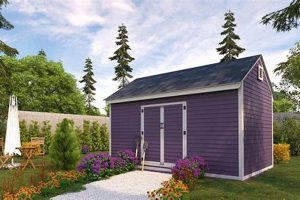
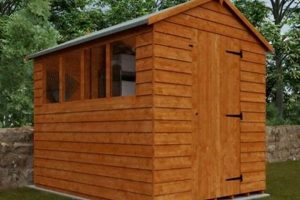
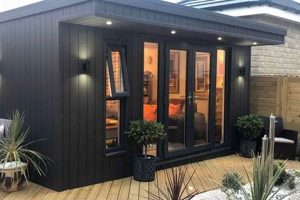
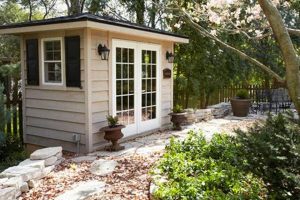
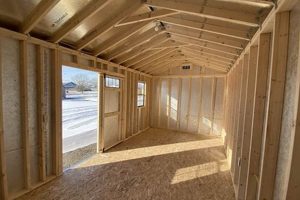
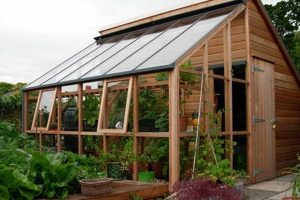
A dual-purpose structure combining secure storage with a plant cultivation area represents a practical solution for gardeners. It integrates a traditional outdoor storage unit with a transparent or translucent enclosure designed to foster plant growth. The attachment feature is the crucial element defining the configuration, linking the two distinct areas into a single, unified entity. Examples range from small, prefabricated units to larger, custom-built structures incorporating sophisticated environmental controls.
This type of integrated design offers several advantages. It provides a secure space for tools, potting mixes, and other gardening essentials, while simultaneously enabling year-round plant propagation or cultivation, extending growing seasons. The combination conserves space, particularly valuable in smaller gardens or urban environments. Historically, these structures evolved as gardeners sought efficient ways to manage limited outdoor space and prolong the availability of fresh produce. The integration streamlines gardening activities and provides enhanced environmental control for plants.
This article will delve into the various design considerations, materials, and functionalities of these combined garden structures. It will explore factors influencing their selection, placement, and maintenance, as well as discuss techniques for maximizing their utility and promoting successful plant growth within the enclosed environment. The subsequent sections will provide guidance on optimizing the integration of storage and cultivation spaces for effective gardening.
Optimizing a Combined Garden Structure
Effective utilization of a storage unit integrated with a plant cultivation enclosure requires careful planning and ongoing management to maximize its benefits. The following tips provide guidance on achieving optimal performance and longevity.
Tip 1: Foundation Stability: Ensure a level and stable foundation to prevent structural stress and maintain alignment of doors and glazing. Concrete pads or treated timber frames provide reliable support, particularly in areas prone to soil movement.
Tip 2: Strategic Orientation: Position the glazed section to maximize sunlight exposure. A south-facing orientation in the northern hemisphere, or a north-facing orientation in the southern hemisphere, is generally recommended. Consider local shading patterns from trees or buildings.
Tip 3: Ventilation Management: Implement adequate ventilation to regulate temperature and humidity within the cultivation area. Automatic vent openers or manually adjustable vents are essential for preventing overheating and promoting air circulation.
Tip 4: Efficient Space Utilization: Optimize internal space within both the storage and cultivation zones. Utilize shelving, hanging baskets, and vertical gardening techniques to maximize plant-growing capacity and tool storage.
Tip 5: Pest and Disease Control: Implement preventative measures to minimize pest and disease outbreaks. Regularly inspect plants, maintain cleanliness, and utilize appropriate organic pest control methods.
Tip 6: Water Management System: Install an efficient watering system, such as drip irrigation, to conserve water and ensure consistent moisture levels for plants. Consider rainwater harvesting to supplement water supplies.
Tip 7: Material Selection for Durability: Select durable, weather-resistant materials for both the storage and cultivation sections. Treated lumber, composite materials, and UV-resistant glazing will extend the lifespan of the structure.
Effective implementation of these tips will result in a productive and well-maintained structure, providing both secure storage and a thriving environment for plant cultivation.
The subsequent section will address specific considerations for selecting the appropriate size and design based on individual gardening needs and spatial constraints.
1. Integrated Design

Integrated design, in the context of a garden structure combining storage and cultivation areas, is paramount to its overall functionality and efficiency. This design approach goes beyond merely attaching two separate units; it involves a holistic plan where the storage component and the cultivation area are conceived and built as a single, cohesive entity. Its success hinges on the seamless incorporation of both elements, maximizing space utilization and operational synergy.
- Structural Unity
Structural unity implies shared load-bearing elements and a unified aesthetic. For example, the roof of the storage section may extend to cover part or all of the cultivation area, reducing material costs and visually unifying the structure. This minimizes potential weak points where two independent structures might be joined, improving weather resistance and longevity. An example is designing a building where the supporting posts are strategically located to support both the shed roof and greenhouse frame.
- Environmental Harmony
Environmental harmony refers to the design’s consideration of the internal microclimates. The storage area can act as a thermal buffer, moderating temperature fluctuations within the cultivation area. Strategic placement of vents and windows allows for optimal airflow, preventing overheating and promoting healthy plant growth. An illustration would be designing the storage area on the north side to serve as windbreak in winter.
- Functional Interconnectivity
Functional interconnectivity ensures that the storage and cultivation areas complement each other. The storage area may house tools, potting mixes, and watering systems, all readily accessible for use within the cultivation area. The layout should minimize travel distance between the two zones, streamlining gardening tasks and maximizing productivity. For instance, include a potting bench inside of the garden shed that has a through window to a greenhouse.
- Resource Efficiency
Resource efficiency focuses on minimizing material waste and maximizing resource utilization. Integrated designs can share building materials, such as cladding or framing, reducing overall construction costs. A water collection system could supply water to both the garden and for washing dirty gardening tools. Efficient energy use by sharing lights or heating also enhances value.
The facets of integrated design described above are directly related to the effective construction and usage of a garden structure combining storage and cultivation functions. By focusing on structural unity, environmental harmony, functional interconnectivity, and resource efficiency, the resulting structure offers superior performance, enhanced aesthetics, and optimized utilization of resources.
2. Material Durability

Material durability is a critical factor influencing the long-term performance and cost-effectiveness of a garden structure that combines storage and plant cultivation capabilities. The inherent resistance of construction materials to environmental stressors dictates the structure’s lifespan and maintenance requirements. This necessitates careful consideration of material properties during the design and construction phases.
- Weather Resistance
Weather resistance refers to a material’s capacity to withstand prolonged exposure to elements such as rain, snow, wind, and sunlight. Structures are vulnerable to degradation if built with materials lacking adequate weather resistance. For instance, untreated timber is susceptible to rot and insect infestation, necessitating frequent repairs or replacements. Conversely, pressure-treated lumber or composite materials offer superior protection against moisture and biological decay, extending the structure’s lifespan. The choice of roofing material, such as asphalt shingles or metal roofing, significantly affects the structure’s resistance to water penetration and wind damage.
- UV Resistance
Ultraviolet (UV) radiation from sunlight can degrade certain materials over time, causing discoloration, cracking, and loss of structural integrity. Polycarbonate panels used for glazing, for example, should be UV-stabilized to prevent premature yellowing and embrittlement. Similarly, exterior paints and coatings must contain UV inhibitors to protect the underlying wood or metal from sun damage. Neglecting UV resistance can lead to costly replacements and aesthetic degradation.
- Impact Resistance
Impact resistance is the ability of a material to withstand sudden forces, such as hail, falling branches, or accidental collisions. Brittle materials, such as thin glass panes, are prone to shattering upon impact, requiring immediate repair. Polycarbonate or acrylic glazing offers greater impact resistance than glass, minimizing the risk of damage. Reinforced framing members can also enhance the structure’s overall resistance to impact forces.
- Corrosion Resistance
Corrosion resistance is crucial for metal components exposed to moisture or chemical fertilizers. Steel fasteners, hinges, and framing members should be galvanized or coated with corrosion-resistant materials to prevent rust and degradation. Aluminum is a naturally corrosion-resistant metal, making it a suitable choice for structural elements in humid environments. Neglecting corrosion protection can compromise the structural integrity and aesthetic appeal of the integrated garden structure.
Selecting durable materials that exhibit high resistance to weather, UV radiation, impact, and corrosion is essential for ensuring the longevity and structural integrity of a garden structure that integrates both storage and cultivation spaces. By carefully considering material properties during the design phase, owners can minimize maintenance costs, extend the lifespan of the structure, and maximize their investment.
3. Spatial Optimization

Spatial optimization, within the context of a combined garden storage and plant cultivation structure, refers to the strategic arrangement and utilization of the available area to maximize functionality and efficiency. This is of particular importance given that space is often a limiting factor in gardens, especially in urban environments. Effective spatial optimization directly influences the utility, accessibility, and productivity of the integrated structure.
- Vertical Gardening Implementation
Vertical gardening involves utilizing vertical surfaces for plant cultivation, thereby increasing the growing area within a limited footprint. Trellises, hanging baskets, and stacked planters are examples of vertical gardening techniques applicable within the cultivation area of the structure. The implementation of vertical gardening not only increases plant capacity but also can improve air circulation and sunlight exposure, benefiting plant health. Vertical Gardening is a great solution to maximize your limited gardening areas with a garden shed with a greenhouse attached.
- Multi-Purpose Furniture Integration
Multi-purpose furniture integrates storage and functionality into single units, allowing for efficient use of space. A potting bench with built-in storage drawers or shelves is a prime example. Such furniture provides a work surface for potting and transplanting while simultaneously storing essential gardening tools and supplies. The incorporation of multi-purpose furniture minimizes clutter and maximizes the usable space within both the storage and cultivation areas of the structure. It is essential to integrate multi-purpose garden furniture if the goal is to have a garden shed with a greenhouse attached.
- Zonal Allocation Strategy
Zonal allocation involves dividing the structure into distinct zones based on function and environmental requirements. The storage area might be separated into zones for tools, fertilizers, and potting mixes. The cultivation area can be divided into zones based on light exposure, temperature, and humidity needs of different plants. Implementing zonal allocation ensures efficient organization and facilitates targeted environmental control within the integrated structure.
- Maximization of Natural Light Penetration
Maximizing natural light penetration is essential for plant growth within the cultivation area. Strategic placement of transparent or translucent panels, combined with reflective surfaces, optimizes the distribution of sunlight. Furthermore, interior design elements can play a crucial role. For instance, bright, reflective paint on the interior walls of the storage section facing the glazing can enhance light diffusion within the cultivation space. Proper light distribution is important to ensure optimal conditions for plant growth to occur and thus the spatial area for the attached structure must be maximized.
The discussed aspects of spatial optimization are fundamentally important to maximizing the usability of an integrated garden structure combining storage and cultivation functions. By incorporating strategies such as vertical gardening, multi-purpose furniture, zonal allocation, and maximizing natural light penetration, owners can create an efficient, productive, and aesthetically pleasing gardening environment within their space. Spatial optimization enables the integration of functions within a limited area, offering a valuable solution for those seeking to blend gardening with storage.
4. Environmental Control

Environmental control is a central determinant of success for any combined garden storage and plant cultivation structure. The internal environment directly influences plant health, growth rate, and overall yield. Without adequate environmental management, the benefits of an attached greenhouse can be severely limited, potentially leading to plant stress, disease outbreaks, and reduced productivity. The interconnectedness of storage and cultivation spaces within the structure means that careful management of factors such as temperature, humidity, ventilation, and light is essential for optimizing the growing environment. For example, if the storage area is poorly insulated, extreme temperature fluctuations can negatively impact the adjacent greenhouse, especially during winter.
Effective environmental control within these structures requires a multi-faceted approach. Ventilation systems, including both manually adjustable vents and automated climate control units, are necessary to regulate temperature and humidity. Shading mechanisms, such as shade cloth or whitewashing, can mitigate excessive sunlight exposure during peak summer months. Supplemental heating may be required to maintain optimal temperatures during colder periods. Real-world examples include incorporating a thermostatically controlled vent that opens automatically when the internal temperature exceeds a pre-set threshold, or using a small electric heater with a built-in thermostat to prevent freezing during cold nights. The success of these measures rests on the gardener’s ability to monitor and adjust the environment based on plant needs and external conditions.
In summary, environmental control is not merely an ancillary aspect, but an integral component of a combined garden storage and plant cultivation structure. Challenges in achieving optimal environmental conditions include the initial cost of climate control equipment, the need for ongoing monitoring, and the potential for system failures. However, by understanding the interplay between storage space, cultivation environment, and external conditions, and by implementing appropriate control measures, gardeners can maximize the productivity and resilience of their combined garden structure. The ability to manipulate the internal environment enables extended growing seasons, protection from adverse weather, and optimized conditions for a wider range of plant species.
5. Structural Integrity

Structural integrity is paramount to the longevity and safe operation of a garden structure that combines storage and plant cultivation areas. The inherent design of such a structure, incorporating both enclosed storage and transparent or translucent cultivation spaces, necessitates careful attention to its overall structural stability. Any compromise in structural integrity can lead to premature failure, posing risks to property, plants, and individuals. This is due to the added load bearing requirements from heavy tools to the added pressure points given the design of the greenhouse structure.
A primary cause of structural failure is inadequate foundation support. Soil settlement, frost heave, or insufficient load-bearing capacity can induce stress on the frame. For instance, a shed-greenhouse structure built on poorly compacted soil may experience differential settling, causing racking of the frame and potential collapse of glazing panels. Another example is using the wrong material for framing. For a greenhouse structure to be considered structurally sound, it needs materials that won’t degrade after prolonged exposure to water and moisture. Furthermore, high wind loads or heavy snow accumulation can overwhelm a structure with insufficient bracing or inadequate material strength. This effect can be more damaging to poorly maintained gardens sheds with greenhouse attached.
In conclusion, the structural integrity of these structures is essential for safety and longevity. Proper foundation preparation, appropriate material selection, adherence to building codes, and regular maintenance are critical to preventing structural failures. Understanding the potential causes and consequences of compromised structural integrity allows for informed design and construction practices. Prioritizing structural stability ensures a durable and safe environment for gardening activities and protects against costly repairs or catastrophic failure.
6. Functional Versatility

Functional versatility defines the capacity of a garden structure to accommodate multiple purposes beyond simple storage and plant cultivation. In the context of a combined garden storage and plant cultivation structure, this characteristic enhances its value and utility, adapting to diverse gardening needs and maximizing the use of limited space.
- Seed Starting and Propagation
The integrated design allows for seed starting and propagation in the greenhouse portion during early spring, providing a controlled environment for delicate seedlings. Once the weather permits, the hardened-off plants can be transplanted directly into the garden. This capability extends the growing season and expands the range of plants that can be cultivated, offering a significant advantage over relying solely on direct sowing. For example, gardeners might use the structure to start tomatoes, peppers, and herbs indoors, providing them with a head start before transplanting them outdoors.
- Tool and Supply Storage
The storage shed component provides secure and organized storage for gardening tools, equipment, fertilizers, and potting mixes. This eliminates the need for separate storage structures, consolidating gardening essentials in one convenient location. For instance, a gardener could store shovels, rakes, pruning shears, and watering cans in the shed portion, ensuring easy access when needed. The organized storage reduces clutter and enhances efficiency, making gardening tasks more convenient.
- Potting and Transplanting Station
The structure can serve as a dedicated potting and transplanting station, providing a sheltered workspace for these essential gardening activities. A workbench or potting table within the greenhouse or shed portion allows for comfortable and efficient handling of plants and soil. An example is a gardener using the structure to prepare seedlings for transplanting, repotting container plants, or mixing custom soil blends. This dedicated space improves organization and minimizes mess, making potting and transplanting tasks more enjoyable.
- Overwintering Tender Plants
The greenhouse component provides a protected environment for overwintering tender plants that are not hardy enough to survive local winter conditions. Potted plants can be moved into the greenhouse during the fall and kept relatively dormant until spring. This allows gardeners to preserve valuable plants that would otherwise be lost to frost and cold temperatures. For example, a gardener might overwinter geraniums, fuchsias, and citrus trees in the greenhouse, ensuring their survival until the following growing season.
These functional aspects illustrate the versatility inherent in a combined garden storage and plant cultivation structure. By offering capabilities such as seed starting, tool storage, potting, and overwintering, these structures provide a comprehensive solution for a wide range of gardening needs. Their adaptability enhances their value, making them a worthwhile investment for both novice and experienced gardeners seeking to maximize their gardening productivity and enjoyment.
Frequently Asked Questions
This section addresses common inquiries regarding structures combining a storage unit with a plant cultivation enclosure. The information aims to clarify misconceptions and provide practical guidance.
Question 1: What are the primary advantages of a garden shed with a greenhouse attached compared to separate structures?
Combining a storage unit and greenhouse conserves space, offering both storage and cultivation areas in a single footprint. It streamlines gardening activities, centralizing tools and plant care within one accessible location. The integrated design potentially reduces construction costs compared to building two separate structures.
Question 2: Are there specific building codes or regulations governing the construction of a structure that combines storage and cultivation spaces?
Building codes vary significantly depending on local jurisdictions. It is essential to consult local authorities to determine specific requirements for permits, structural standards, and zoning regulations. Factors such as size, height, and proximity to property lines may influence code compliance.
Question 3: What are the most suitable materials for constructing a combined garden structure to ensure durability and longevity?
Durable materials such as pressure-treated lumber, composite materials, and UV-resistant polycarbonate glazing are recommended. These materials offer resistance to weather, rot, insect infestation, and UV degradation, extending the lifespan of the structure.
Question 4: How does one effectively manage temperature and humidity within the greenhouse component of the combined structure?
Ventilation systems, including manually adjustable vents and automated climate control units, are essential. Shading mechanisms, such as shade cloth, can mitigate excessive sunlight. Supplemental heating may be necessary during colder periods. Consistent monitoring and adjustment based on plant needs and external conditions are critical.
Question 5: What are the key considerations for optimizing space utilization within a combined garden structure?
Vertical gardening techniques, multi-purpose furniture, and strategic zonal allocation are crucial. Vertical gardening maximizes growing area within a limited footprint. Multi-purpose furniture integrates storage and functionality. Zonal allocation divides the structure based on function and environmental requirements.
Question 6: How can one minimize the risk of pest infestations and diseases within the greenhouse environment?
Implement preventative measures such as regular inspection of plants, maintaining cleanliness, and utilizing appropriate organic pest control methods. Proper ventilation and humidity control can also help prevent disease outbreaks.
In summary, these combined structures offer several benefits but necessitate careful planning and execution. Compliance with local regulations, material selection, environmental control, and space optimization are crucial for success.
The subsequent section will provide a checklist for selecting the most appropriate type and size of combined garden structure based on individual needs and site conditions.
Garden Shed with Greenhouse Attached
The preceding discussion has detailed critical aspects pertaining to the design, construction, and utilization of a “garden shed with greenhouse attached”. Key points addressed encompassed integrated design principles, the necessity of material durability, strategies for spatial optimization, the importance of environmental control, structural integrity considerations, and the versatility of functional applications. This combination offers a synergistic advantage, consolidating storage and plant cultivation within a single structure.
Implementing these principles requires careful planning and informed decision-making. A well-executed “garden shed with greenhouse attached” provides a durable and efficient gardening solution, extending growing seasons and enhancing overall productivity. Continued adherence to best practices in maintenance and environmental management will ensure the structure’s sustained performance and contribution to successful gardening endeavors.