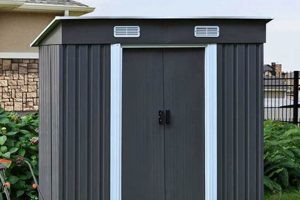
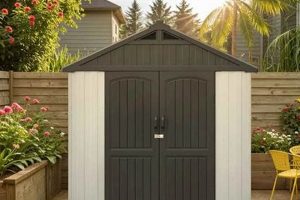
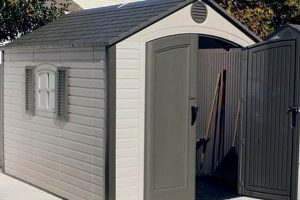
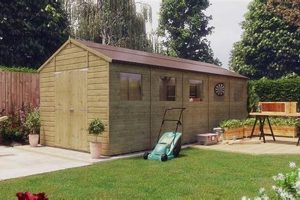
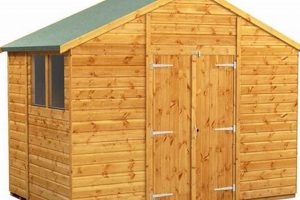
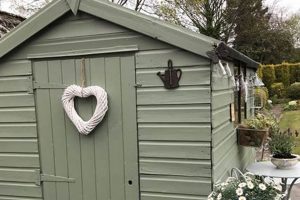
Exterior cladding for a small, detached outdoor structure intended for storage or workspace in a yard can be made from a variety of materials. These materials, which protect the shed from weather and enhance its aesthetic appeal, determine the building’s longevity and maintenance requirements. Examples include wood, metal, and vinyl, each offering distinct advantages regarding cost, durability, and appearance.
The selection of appropriate exterior material is crucial as it directly impacts the structure’s resistance to environmental factors such as moisture, pests, and temperature fluctuations. Furthermore, the chosen material influences the visual harmony of the shed with its surrounding landscape and the overall property value. Historically, locally sourced wood was the predominant choice, but modern alternatives offer enhanced performance and reduced maintenance needs.
Therefore, this discussion will delve into the diverse array of choices available for covering an exterior storage structure, considering factors such as material properties, installation methods, maintenance requirements, and overall cost-effectiveness to aid in informed decision-making.
Exterior Cladding Considerations
Selecting the correct materials for enclosing a freestanding backyard building is a critical decision. Several factors must be weighed to ensure the longevity, functionality, and aesthetic integration of the structure with its surroundings.
Tip 1: Material Durability: Consider the climate and environmental conditions to which the structure will be exposed. High moisture environments necessitate materials resistant to rot, mold, and insect infestation. For instance, vinyl or fiber cement demonstrate superior performance in damp conditions compared to untreated wood.
Tip 2: Maintenance Requirements: Evaluate the ongoing maintenance commitment associated with different materials. Wood, while aesthetically pleasing, requires regular painting or staining to prevent deterioration. Metal and vinyl generally offer lower maintenance alternatives.
Tip 3: Aesthetic Compatibility: Choose a material that complements the style of the primary residence and the surrounding landscape. The exterior should not appear discordant with its environment. Consider color, texture, and overall design when making a selection.
Tip 4: Cost-Effectiveness: Analyze the total cost of ownership, including material costs, installation expenses, and long-term maintenance requirements. Cheaper materials may incur higher maintenance costs over time, diminishing their initial savings.
Tip 5: Ease of Installation: Assess the ease of installation based on personal skills and available resources. Certain materials, such as pre-cut wood panels or interlocking vinyl, offer simpler installation processes, potentially reducing labor costs.
Tip 6: Resistance to Pests: Select materials that are unattractive to pests, such as rodents or insects. Metal and certain composite materials provide better pest resistance compared to traditional wood.
Tip 7: Consider Sustainability: Opt for materials with sustainable sourcing or recycled content, minimizing the environmental impact of the project. Reclaimed wood or recycled plastic represent more environmentally conscious options.
Careful evaluation of these considerations will contribute to the selection of an enclosure material that optimally balances performance, aesthetics, and cost-effectiveness. These choices ultimately determine the long-term value and utility of the structure.
With these tips in mind, the next phase involves exploring the specific material options and their respective attributes in greater detail.
1. Material Durability

Material durability is a paramount consideration in selecting exterior cladding for a backyard storage building. The longevity and protective capacity of the structure are directly contingent upon the material’s ability to withstand environmental stressors. A durable exterior minimizes the frequency of repairs and replacements, offering long-term cost savings and reducing the consumption of resources. For example, in regions with high humidity, using untreated wood as external cladding will likely result in rot and decay within a few years, necessitating costly repairs or complete replacement. In contrast, employing fiber cement boards or metal external cladding can offer decades of protection with minimal degradation.
The interaction between material selection and durability also extends to resistance against physical impacts and pests. Composite materials and treated wood are more resilient to insect infestation than standard untreated wood. Similarly, thicker gauge metal sheets offer better resistance to dents and punctures compared to thinner alternatives. Therefore, understanding the inherent properties of different materials and their suitability for specific environmental conditions is critical. In areas prone to severe weather events like hail or strong winds, impact-resistant materials like engineered wood or metal offer a distinct advantage. Failure to account for these factors can lead to premature degradation, compromising the integrity of the structure and its contents.
In summary, the durability of external cladding dictates the lifespan and protective efficacy of a backyard storage structure. Proper material selection, predicated on a comprehensive understanding of environmental conditions and potential stressors, is essential. While upfront costs may be higher for more durable materials, the long-term benefits in terms of reduced maintenance, fewer replacements, and enhanced protection of stored items justify the investment. Prioritizing durability translates to a sustainable and cost-effective approach to building and maintaining outdoor storage spaces.
2. Cost Considerations

Cost constitutes a pivotal determinant in the selection of exterior cladding materials for garden storage structures. Initial material expense, installation labor, and long-term maintenance expenditures are integral components of the overall cost profile. Inexpensive materials, such as basic untreated wood, present a lower upfront investment. However, the susceptibility to rot, insect infestation, and weathering necessitates frequent repairs, staining, or replacement, thereby escalating the total cost over the structure’s lifespan. Conversely, materials with a higher initial outlay, such as fiber cement or composite options, offer enhanced durability and reduced maintenance requirements, potentially yielding long-term savings.
The interplay between material choice and installation complexity significantly influences the overall cost. Pre-fabricated or easily installed materials can minimize labor expenses, particularly for those undertaking a do-it-yourself approach. Conversely, materials requiring specialized tools or skilled labor contribute to higher installation costs. Practical examples illustrate these dynamics: Installing interlocking vinyl siding can often be accomplished by homeowners with basic carpentry skills, while the installation of natural stone veneer necessitates professional expertise. Consequently, a comprehensive cost analysis must encompass both material and labor considerations, accounting for the skill level required for effective installation.
Ultimately, informed decision-making regarding exterior cladding entails a holistic evaluation of the budgetary implications across the entire lifecycle of the garden structure. A balanced approach considers the initial investment, anticipated maintenance costs, and potential replacement expenses. Choosing the most cost-effective solution involves determining the optimal trade-off between upfront affordability and long-term durability. Factoring in environmental variables, such as climate and local pest prevalence, further refines the cost assessment. This comprehensive approach ensures the selection of an exterior cladding that aligns with both budgetary constraints and the functional requirements of the garden structure.
3. Maintenance Needs
The requisite upkeep associated with a storage structure’s exterior is inextricably linked to the choice of cladding. Understanding and anticipating these demands is crucial for ensuring the structure’s longevity and preserving its aesthetic appeal, thereby minimizing long-term costs and effort.
- Painting and Staining Requirements
Certain cladding materials, notably wood, necessitate periodic painting or staining to safeguard against moisture damage, insect infestation, and ultraviolet degradation. The frequency and complexity of these tasks directly influence the long-term maintenance burden. Failure to adhere to a regular painting or staining schedule can result in accelerated deterioration of wooden elements, requiring more extensive and costly repairs.
- Cleaning Frequency and Methods
All exterior surfaces accumulate dirt, debris, and biological growth over time. The ease with which a specific material can be cleaned is a critical factor. Smooth, non-porous materials like vinyl generally require only occasional washing with soap and water. Conversely, textured surfaces or those prone to algae growth may necessitate more aggressive cleaning methods and specialized solutions, increasing maintenance effort.
- Repair and Replacement Frequency
The inherent durability of a cladding material dictates the frequency with which repairs or replacements are required. Materials susceptible to impact damage, such as thin metal sheets, may necessitate more frequent repairs. Similarly, materials prone to rot or decay may require partial or complete replacement over time, representing a significant maintenance cost.
- Preventative Measures and Inspections
Proactive maintenance, including regular inspections for signs of damage or deterioration, is essential for prolonging the lifespan of any exterior. Identifying and addressing minor issues early on can prevent them from escalating into more significant and costly problems. Preventative measures may include applying sealants to joints, clearing debris from drainage paths, and ensuring adequate ventilation to minimize moisture buildup.
Therefore, a thorough understanding of the maintenance implications associated with different options enables informed decision-making. Prioritizing low-maintenance options can significantly reduce the long-term burden, freeing up time and resources for other activities. By proactively addressing maintenance needs, the longevity and aesthetic appeal of the structure can be preserved, maximizing its value and utility.
4. Aesthetic Compatibility

The selection of exterior cladding exerts a significant influence on the overall aesthetic integration of a garden structure with its surrounding environment. The visual harmony between the structure and its setting is crucial for maintaining or enhancing property value, creating a cohesive landscape design, and avoiding visual discordance. The external material selection directly impacts the style, color palette, and textural elements, thus defining the structure’s contribution to the overall aesthetic composition of the property. For example, a structure clad in natural wood siding can seamlessly blend into a wooded landscape, while a brightly colored metal shed might appear incongruous within a traditional garden setting.
The impact of aesthetic compatibility extends beyond immediate visual appeal. Cohesive design choices can contribute to a sense of order and tranquility within a landscape, fostering a more pleasant and inviting outdoor space. Furthermore, adherence to established architectural styles and color schemes can enhance property value by creating a unified and well-maintained appearance. Conversely, visually jarring or incongruous structures can detract from the overall aesthetic quality of a property, potentially diminishing its value. Consider a suburban home with neutral-toned siding; a garden structure clad in brightly colored vinyl siding might disrupt the established aesthetic rhythm, while a structure finished with siding that complements the home’s color and style would enhance the property’s overall appeal.
Achieving aesthetic compatibility requires careful consideration of several factors, including the architectural style of the primary residence, the existing landscape design, and the desired visual impact. Thoughtful selection of color, texture, and material can transform a utilitarian structure into an aesthetically pleasing element that complements its surroundings. While personal preferences play a role, prioritizing cohesion and visual harmony ensures that the exterior structure contributes positively to the overall aesthetic quality of the property, maximizing its value and creating a more enjoyable outdoor environment. Overlooking compatibility can lead to a visually disruptive element, whereas mindful choices result in a cohesive and aesthetically pleasing outcome.
5. Installation Complexity
The ease or difficulty with which external cladding is applied to a garden structure significantly influences project timelines, labor costs, and the overall success of the undertaking. The inherent complexity of the installation process is a critical consideration when evaluating various exterior material choices.
- Tool and Skill Requirements
Different exterior materials necessitate varying degrees of expertise and specialized tools for proper installation. For example, interlocking vinyl siding can often be installed with basic carpentry tools and skills, making it a suitable option for DIY projects. Conversely, fiber cement boards typically require specialized cutting tools and precise installation techniques to ensure proper sealing and weather resistance, often necessitating professional installation. The availability of appropriate tools and the required skill level directly impact the time and expense associated with the project.
- Substrate Preparation
The preparation of the underlying structure to receive the exterior is an often-overlooked aspect of installation complexity. Certain materials require perfectly level and square surfaces for proper attachment and alignment. Correcting imperfections in the substrate can add significant time and expense to the project. For instance, if the framing is not perfectly square, installing rigid materials like metal sheeting can be significantly more challenging than installing flexible materials like wood siding.
- Fastening Methods and Material Handling
The method of securing the exterior cladding to the structure and the weight and size of the material influence the installation process. Some materials can be easily fastened with nails or screws, while others require more complex attachment systems or specialized adhesives. Heavy or bulky materials necessitate additional manpower or specialized equipment for safe and efficient handling. Small, lightweight vinyl siding panels are considerably easier to manage than large, heavy fiber cement boards.
- Sealing and Weatherproofing
Proper sealing and weatherproofing are essential for preventing water damage and ensuring the long-term durability of the structure. Some exterior materials inherently provide better weather protection than others. Ensuring proper overlaps, flashing around openings, and sealing of seams can add significant complexity to the installation process. Incorrectly sealed exterior can lead to moisture intrusion and structural damage, negating any cost savings from selecting a cheaper material.
These facets of installation complexity should be carefully evaluated when selecting exterior materials for a garden structure. Choosing a material that aligns with one’s skill level, available tools, and willingness to invest in professional installation is essential for ensuring a successful and long-lasting outcome. Ignoring the intricacies of the installation process can lead to frustration, increased costs, and compromised structural integrity.
6. Environmental Impact

The selection of exterior cladding materials for garden structures exerts a tangible influence on environmental sustainability. The production, transportation, installation, and eventual disposal of external materials all contribute to an ecological footprint. Consideration of these factors is increasingly critical in responsible construction practices. The extraction and processing of raw materials, such as wood from old-growth forests or virgin metals, result in habitat destruction, energy consumption, and greenhouse gas emissions. For instance, the production of aluminum siding involves energy-intensive processes that release significant quantities of carbon dioxide into the atmosphere. Conversely, the utilization of recycled or sustainably sourced materials can substantially reduce these adverse environmental effects.
The longevity and maintenance requirements of exterior cladding directly impact resource consumption over the structure’s lifespan. Materials requiring frequent replacement or extensive maintenance, such as untreated wood susceptible to rot and pest infestation, necessitate a greater expenditure of resources. In contrast, durable and low-maintenance options, such as recycled plastic lumber or sustainably harvested wood treated with non-toxic preservatives, minimize the need for replacements and reduce the use of harmful chemicals. Furthermore, the disposal of materials at the end of their service life presents environmental challenges. Non-biodegradable materials, such as vinyl, contribute to landfill waste, while materials treated with hazardous chemicals can contaminate soil and water resources. Selecting materials that can be recycled or repurposed at the end of their service life mitigates these adverse effects.
In summary, the environmental impact of exterior choices for garden structures is a multifaceted consideration encompassing resource extraction, manufacturing processes, maintenance requirements, and end-of-life disposal. Prioritizing materials with recycled content, sustainable sourcing, low maintenance needs, and recyclability is essential for minimizing the environmental footprint of these structures. Informed decision-making regarding exterior cladding contributes to a more sustainable approach to construction and promotes responsible stewardship of natural resources. Neglecting these environmental considerations results in increased pollution, resource depletion, and habitat degradation, while mindful choices foster environmental preservation and long-term sustainability.
Frequently Asked Questions
This section addresses common inquiries regarding choices of external materials for backyard structures, providing clarity on performance, durability, and maintenance considerations.
Question 1: What factors determine the lifespan of different exterior materials?
The longevity is primarily influenced by inherent resistance to environmental stressors, including moisture, ultraviolet radiation, and pest infestation. Material composition, protective coatings, and proper installation techniques are also critical determinants.
Question 2: How does cost correlate with the quality and durability of exterior cladding?
While a higher initial price often indicates improved durability and reduced maintenance needs, this is not universally true. A thorough cost-benefit analysis should consider both upfront expenses and long-term ownership costs, including repairs and replacements.
Question 3: What maintenance tasks are generally required for different types of exterior finishes?
Maintenance regimens vary significantly depending on the material. Wood typically requires periodic painting or staining, while vinyl generally requires only occasional cleaning. Metal may require rust prevention measures in certain environments.
Question 4: How does the choice of exterior impact the overall structural integrity of a backyard structure?
Exterior cladding provides a protective barrier against the elements, preventing moisture intrusion and structural damage. Properly installed, durable materials enhance the structure’s resistance to wind, snow, and other environmental loads.
Question 5: Are there environmentally friendly alternatives to traditional choices for cladding?
Sustainable options include recycled plastic lumber, reclaimed wood, and sustainably harvested wood treated with non-toxic preservatives. These materials minimize environmental impact compared to virgin materials.
Question 6: How important is professional installation versus DIY installation?
The necessity of professional installation depends on the complexity of the material and the homeowner’s skill level. Certain materials, such as fiber cement, often require professional expertise to ensure proper installation and weatherproofing.
In conclusion, selecting suitable covering requires careful evaluation of material properties, environmental conditions, budgetary constraints, and maintenance preferences. Informed decision-making ensures a durable, aesthetically pleasing, and cost-effective outdoor storage solution.
The subsequent section will provide a detailed comparison of specific materials commonly used for exterior coverings.
Conclusion
This exploration has provided a detailed examination of garden shed siding options, encompassing material properties, cost considerations, maintenance needs, aesthetic compatibility, installation complexity, and environmental impact. The selection of an appropriate material requires a holistic assessment of these factors to ensure a durable, aesthetically pleasing, and economically sound structure.
Ultimately, the decision regarding which exterior finish is most suitable demands careful deliberation. By understanding the characteristics of different materials and aligning them with specific needs and priorities, one can ensure that the chosen exterior effectively protects the structure while complementing its surroundings for years to come.