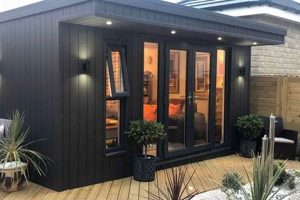
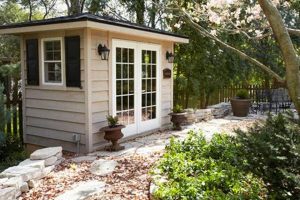
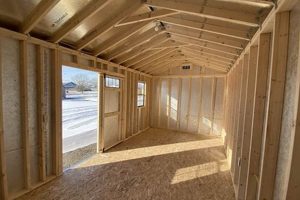
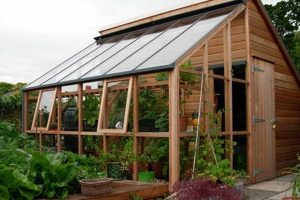
Elements used to cover and protect the top of an outdoor storage structure constitute its roof. These components shield the shed’s contents from rain, snow, sun, and wind, contributing to the overall durability and longevity of the building. Examples include asphalt shingles, metal sheeting, wooden shakes, and composite tiles.
Appropriate selection is crucial for preserving the structural integrity of the garden shed and safeguarding stored items. A well-chosen roofing solution provides weather resistance, prevents leaks, and can enhance the aesthetic appeal of the shed. Historically, readily available, inexpensive materials like wood were commonly employed; however, modern options offer improved durability and performance characteristics.
The following sections will detail the various options available, discussing their advantages and disadvantages in terms of cost, lifespan, ease of installation, and environmental impact. Factors influencing material selection, such as local climate and shed design, will also be examined.
Selection Guidance
Considerations for choosing elements used to cover the structure that protects the garden shed’s content are detailed below.
Tip 1: Assess Structural Load Capacity: Ensure the shed’s framework is capable of supporting the weight of the selected covering. Heavier options, such as slate or concrete tiles, may require additional reinforcement.
Tip 2: Evaluate Local Climate: Select a solution appropriate for regional weather conditions. In areas with heavy snowfall, materials designed to withstand significant weight loads are essential. Coastal regions may necessitate solutions resistant to salt spray corrosion.
Tip 3: Determine Desired Lifespan: Different options possess varying lifespans. Asphalt shingles typically last 15-30 years, while metal can endure for 50 years or more. Factor in the expected lifespan of the shed itself when making a decision.
Tip 4: Consider Installation Complexity: Some are easier to install than others. Asphalt shingles are relatively straightforward, whereas slate or tile installation requires specialized skills. Factor in labor costs if professional installation is necessary.
Tip 5: Analyze Cost-Effectiveness: Compare the upfront cost with the long-term expenses, including maintenance and replacement. A cheaper upfront solution may prove more costly over time if it requires frequent repairs or replacement.
Tip 6: Research Aesthetic Compatibility: Choose a style that complements the existing architecture of the property. The visual appeal of the shed can contribute to the overall value and aesthetics of the garden.
Tip 7: Check Building Codes and Regulations: Confirm that the selected solution complies with local building codes and regulations. Certain areas may have restrictions on material types or require permits for installation.
Careful selection based on structural capacity, climate, desired lifespan, installation complexity, cost, and regulatory compliance is vital for optimal protection and longevity of the garden shed.
The subsequent section will provide a comprehensive overview of various types, exploring their specific characteristics and suitability for different applications.
1. Durability

Durability, in the context of garden shed roofing, refers to the capacity of the chosen material to withstand environmental stressors and maintain its structural integrity over an extended period. This characteristic is paramount, directly influencing the roof’s lifespan and the protection afforded to the shed’s contents.
- Material Composition and Resistance to Degradation
The inherent composition dictates its resistance to degradation from factors such as ultraviolet radiation, moisture, and temperature fluctuations. For instance, metal possesses high resistance to UV degradation but may be susceptible to corrosion in certain environments. Asphalt shingles offer moderate resistance but can deteriorate over time due to granule loss and cracking. The choice of material directly impacts the roof’s ability to withstand these environmental challenges.
- Resistance to Physical Damage
Physical damage can arise from impacts, such as falling branches, hail, or strong winds. Materials with higher impact resistance, like metal or reinforced composites, offer better protection against such events. Conversely, brittle materials, like some types of clay tiles, are more prone to cracking and damage. The level of resistance is critical in regions prone to severe weather.
- Maintenance Requirements and Long-Term Performance
Materials with high long-term performance often require less maintenance. For example, metal roofing may necessitate minimal upkeep for decades, whereas asphalt shingles typically require periodic inspections and repairs to address granule loss and potential leaks. A durable material minimizes the need for frequent interventions, reducing long-term ownership costs.
- Lifespan Expectancy and Cost-Effectiveness
Lifespan expectancy is a key indicator of a materials overall viability. Materials with extended lifespans, though potentially more expensive upfront, can prove more cost-effective over the long term by reducing the frequency of replacements. Factors such as the initial cost, installation expenses, and projected maintenance requirements must be considered to determine the true cost-effectiveness of the roofing solution.
In summary, the durability directly influences a garden shed’s weatherproofing, structural soundness, and the value of the items it houses. Therefore, durability-related factors must be carefully evaluated. The best roofing choice balances with initial expense to prevent future, costly replacements. The ideal decision considers environmental conditions, maintenance ability, and initial budget.
2. Weight

The weight of material significantly influences the structural demands placed upon a garden shed. The mass per unit area of the covering directly correlates with the load-bearing requirements of the supporting framework. Heavier options, such as concrete or slate tiles, necessitate a more robust and substantial framework than lighter alternatives like asphalt shingles or metal sheeting. Inadequate structural support can result in deflection, collapse, or premature failure of the shed. For example, replacing lightweight asphalt shingles with heavy clay tiles without reinforcing the shed’s frame can lead to structural instability and potential safety hazards.
Properly calculating the weight of the intended covering is critical during the shed design phase. This calculation must account for both the inherent mass of the roofing and any anticipated snow or ice loads, depending on the region’s climate. Manufacturers typically provide weight specifications for their materials, allowing for accurate load assessment. Furthermore, building codes often stipulate minimum load-bearing capacities for structures, ensuring adequate safety margins. Ignoring these considerations can lead to costly repairs or even necessitate complete reconstruction of the shed.
In summary, careful attention to the weight is crucial for ensuring the structural integrity and longevity of a garden shed. Selecting an overly heavy option without adequate support can compromise the shed’s safety and functionality. Conversely, a lightweight material may be suitable for smaller or less structurally demanding sheds, but it may not offer the same level of durability or aesthetic appeal. The choice should be informed by a thorough assessment of the shed’s design, local climate conditions, and the load-bearing capacity of the supporting framework.
3. Cost

The expense associated with garden shed roofing options constitutes a significant factor in the selection process. Cost considerations encompass not only the initial purchase price of the selected material but also associated expenses such as delivery charges, installation labor, and any required preparatory work. For example, while asphalt shingles present a relatively low upfront investment, professional installation can substantially increase the overall cost. Conversely, metal, although initially more expensive, may offer a longer lifespan and reduced maintenance needs, potentially yielding long-term savings. The correlation between price and lifespan dictates the overall cost-effectiveness of the chosen roofing solution.
The economic implications also extend to the structural requirements imposed by different options. Heavier materials necessitate a sturdier and, consequently, more expensive shed framework. The decision must therefore consider the interplay between material cost and structural support costs. Furthermore, local market conditions and availability influence pricing. Regions with limited access to specific materials may experience elevated prices due to transportation costs. Careful assessment of all direct and indirect expenses is essential for making an informed and economically sound decision.
In summary, the financial aspect is integral to selecting appropriate garden shed elements to be used to cover the structure. The goal is to balance upfront investment with long-term value. Consideration includes purchase price, installation costs, structural implications, and market influences. A holistic economic analysis ensures the chosen material aligns with budgetary constraints and long-term needs. Ignoring these financial factors can result in unforeseen expenses and potentially compromise the overall value and functionality of the garden shed.
4. Installation

The installation process is intrinsically linked to the success and longevity of any garden shed roofing material. Incorrect application can negate the benefits of even the highest quality material, leading to premature failure, leaks, and structural damage. The skill level required for installation varies significantly depending on the chosen material. For instance, asphalt shingles are generally considered a DIY-friendly option, whereas installing slate or cedar shakes typically necessitates professional expertise. Neglecting proper installation techniques, such as overlapping shingles correctly or using appropriate fasteners, can compromise the roof’s weather resistance. A real-world example is a homeowner attempting to install metal sheeting without properly sealing the seams, resulting in water infiltration and subsequent wood rot.
The specific steps involved in installation also depend on the material type. Asphalt shingle installation requires underlayment, proper alignment, and secure fastening with roofing nails. Metal roofing demands careful cutting, overlapping, and the use of specialized screws with rubber washers to prevent leaks around the fasteners. Failure to follow manufacturer’s instructions can void warranties and lead to costly repairs. Moreover, site conditions, such as the pitch of the roof and accessibility, can influence the complexity and difficulty of the installation. A steep roof, for example, may require additional safety measures and specialized equipment.
In summary, the quality of the installation is as important as the choice of material itself. Improperly installed roofing, regardless of its initial quality, will inevitably lead to problems. Selecting a material that aligns with the installer’s skill level, whether DIY or professional, is crucial. Careful adherence to manufacturer’s instructions, attention to detail, and consideration of site-specific challenges are essential for achieving a durable, weather-resistant, and long-lasting roof for a garden shed.
5. Weather Resistance
Weather resistance, in the context of garden shed roofing components, constitutes the ability of a covering to withstand environmental elements and protect the shed’s contents. This protective capacity directly influences the shed’s structural integrity, the longevity of its contents, and the overall utility of the structure. Compromised weather resistance leads to water damage, rot, and potentially, structural failure. Therefore, the capacity to withstand weathering is paramount in selecting appropriate roofing.
- Water Penetration Resistance
Water penetration resistance denotes the material’s capacity to prevent water infiltration. Rain, snow, and ice can penetrate through seams, cracks, or porous surfaces, causing damage to the shed’s contents and structural components. Asphalt shingles, when properly installed with overlapping layers, provide a barrier against water penetration. Metal roofing, with its interlocking panels and sealed seams, offers superior water resistance. Ineffective water penetration resistance leads to rot, mold growth, and premature deterioration of the shed’s structural members.
- Wind Uplift Resistance
Wind uplift resistance refers to the roofing material’s ability to withstand the forces exerted by strong winds. High winds can lift or tear off roofing components, exposing the shed’s interior to the elements. Materials with high wind uplift resistance, such as metal roofing and properly installed asphalt shingles with adequate fastening, are crucial in regions prone to severe weather events. Inadequate wind uplift resistance results in costly repairs and potential damage to the shed’s contents.
- Impact Resistance
Impact resistance defines the material’s capacity to withstand impacts from hail, falling branches, or other debris. Roofing components with high impact resistance, such as impact-resistant asphalt shingles or metal, can minimize damage from such events. Clay tiles, conversely, are more susceptible to cracking or breakage upon impact. The selection of impact-resistant material is particularly important in areas prone to hailstorms or locations with overhanging trees.
- UV Degradation Resistance
UV degradation resistance pertains to the material’s capacity to withstand prolonged exposure to ultraviolet (UV) radiation from the sun. UV radiation can cause materials to fade, crack, or become brittle over time, reducing their effectiveness and lifespan. Materials with UV-resistant coatings or inherent UV stability, such as certain types of metal roofing and modified asphalt shingles, are better suited for long-term exposure to sunlight. Lack of UV degradation resistance leads to premature aging and reduced performance.
The above facets are essential to consider when choosing materials. The choice of roofing should prioritize these properties to ensure durable defense against the weather. This selection enhances the functional lifespan of the shed. The end result of effective weather resistance is the safekeeping of the storage structure and the preservation of its stored objects.
Frequently Asked Questions
The following addresses common inquiries regarding choices in the elements used to cover the structures that protect garden sheds.
Question 1: What factors primarily influence the selection of the most suitable covering for a garden shed?
Selection is influenced by several key factors, including budget constraints, the desired aesthetic, local weather conditions, and the shed’s structural load-bearing capacity. The decision should also consider the material’s lifespan, ease of installation, and maintenance requirements.
Question 2: What are the relative merits and demerits of asphalt shingles?
Asphalt shingles are generally cost-effective and easy to install, making them a popular choice. However, their lifespan is shorter compared to other options, and they may require more frequent maintenance. They also offer limited resistance to extreme weather conditions.
Question 3: How do metal options compare in terms of longevity and cost?
Metal materials boast superior longevity, often lasting 50 years or more. While the initial cost may be higher than asphalt shingles, their durability and low maintenance requirements can result in long-term cost savings. Metal also offers excellent resistance to fire and extreme weather.
Question 4: Is specialized expertise required for installation of all varieties?
The need for specialized expertise varies. While asphalt shingles can often be installed by homeowners with basic DIY skills, materials like slate, tile, or certain metal configurations typically necessitate professional installation to ensure proper sealing and adherence to building codes.
Question 5: What role do local building codes play in the choice of garden shed covering?
Local building codes establish minimum standards for structural integrity and weather resistance. These codes may dictate permissible materials, installation methods, and load-bearing requirements. Compliance with local building codes is essential to ensure safety and avoid potential fines or legal issues.
Question 6: What are some environmentally conscious or sustainable choices?
Environmentally conscious options include reclaimed materials, recycled metal, and sustainably sourced wood shakes. These materials minimize environmental impact by reducing waste and promoting responsible resource management. Consider the energy consumption associated with manufacturing and transportation when evaluating the overall sustainability of a material.
In summary, the optimal solution balances economic realities with aesthetic goals and the environmental impact. A thorough understanding of these various factors is essential for making an informed selection.
The subsequent section provides guidance on finding reliable suppliers and installers.
Conclusion
This exploration of garden shed roofing materials has underscored the multifaceted nature of the selection process. Factors ranging from structural integrity and weather resistance to cost-effectiveness and aesthetic considerations must be meticulously evaluated. Furthermore, adherence to local building codes and an awareness of environmental impact remain paramount.
The longevity and functionality of a garden shed hinge directly on the informed selection and proper installation of its covering. Neglecting due diligence in this crucial aspect can lead to premature structural failure, costly repairs, and compromised utility. Therefore, a comprehensive understanding of the available options and their respective attributes is indispensable for ensuring a durable and sustainable storage solution.